Best Nymph Rig for the Green River Tailwater
Navigating the famed Green River tailwater, particularly below Flaming Gorge Dam, presents a unique and sometimes humbling challenge for even seasoned fly anglers. Many find themselves scratching their heads when their usual nymphing setups just aren't producing, especially when the river's clear, cold waters reveal selective trout seemingly ignoring every drift. This comprehensive guide is here to unravel those frustrations, detailing the absolute best nymph rigs and techniques to consistently fool the Green River's finicky, magnificent trout.
Understanding the Green River Tailwater's Unique Challenges
The Green River below Flaming Gorge Dam is a true gem, renowned worldwide for its prolific trout fishery. However, its tailwater nature, fed from the depths of the reservoir, creates a distinct environment that demands specific approaches.
The Consistent Flow and Cold Water
One of the defining characteristics of the Green River tailwater is its remarkably consistent flow and perpetually cold water temperatures. This isn't your typical freestone stream that fluctuates wildly with snowmelt or rain. The dam regulates the flow, creating a stable aquatic ecosystem where trout thrive but also become accustomed to predictable conditions. The cold water, often staying in the mid-40s to low 50s Fahrenheit, means that trout metabolism can be a bit slower, and they often hold in specific seams and current breaks to conserve energy. This consistency also means that insects have a stable environment, leading to massive hatches and robust aquatic life year-round. It means your nymph rig needs to be designed to get down quickly and stay in the feeding lane for as long as possible in a specific water column, even if the current looks deceptively slow on the surface.
Abundant Insect Life and Selective Trout
The Green River boasts an incredible diversity and abundance of aquatic insects. From tiny midges and robust sowbugs to various caddis and mayfly species, the smorgasbord available to trout is immense. This wealth of food, however, often leads to highly selective fish. When a massive hatch is underway, trout can become incredibly dialed into a specific size, color, and even life stage of an insect, ignoring anything that doesn't perfectly match their current preference. This selectivity is what makes nymphing here both exciting and maddening. You might be drifting a perfect pattern, but if it's the wrong size by a hook, or a shade off in color, those wary brown trout and rainbow trout will often refuse it. Understanding the prevalent insect life and having a diverse fly box is paramount, much like knowing the various Best Flies for Utah Trout Streams.
Pressure and Presentation Demands
The Green River's popularity means it sees significant fishing pressure, especially during peak seasons. Trout in these waters are not naive; they've seen countless flies drift by and have developed a keen sense of what looks natural and what doesn't. This heightened awareness elevates the importance of impeccable presentation. Drag-free drifts are non-negotiable. Any unnatural drag on your line, no matter how subtle, will often send a Green River trout scurrying. Furthermore, anglers often fish from drift boats, which requires mastering the art of casting and presenting a nymph rig from a moving platform. Whether you're wading or drifting, stealth and precision are key to success on these hallowed waters, demanding a careful approach similar to How to Fly Fish the Provo River.
The Core Components of an Effective Nymph Rig
A successful nymph rig on the Green River isn't just about the fly; it's a symphony of rod, line, leader, tippet, and weight all working in harmony to get your imitation to the fish's level and maintain a natural drift.
Rod, Reel, and Line Selection
For general nymphing on the Green River, a 9-foot to 10-foot, 4-weight or 5-weight rod is often ideal. The extra length provides better line control for mending and high-sticking, which is crucial for achieving drag-free drifts, especially from a drift boat. A 10-foot rod, in particular, excels when you're wading and need to keep as much line off the water as possible. Your reel should balance the rod and hold enough backing and line, but since you're typically not fighting huge fish on long runs, a high-end drag system isn't strictly necessary. The fly line choice is more critical. A weight-forward floating line is standard for indicator nymphing. For Euro nymphing, a specialized Euro nymphing line or a level monofilament line is often preferred due to its thinner diameter and sensitivity. You can find a good selection of these specialized lines on Amazon, offering various brands and weights.
Leader and Tippet Specifics
The leader and tippet system is the most critical link between you and the fish when nymphing. For indicator nymphing, a standard 9-foot tapered leader (3X or 4X) is a good starting point. You'll then attach 2-4 feet of tippet (4X or 5X, sometimes 6X for highly selective fish) to the end of the leader. When adding a dropper fly, use additional tippet (often a lighter size) tied off the bend of the first fly or with a surgeon's knot. For Euro nymphing, the leader system is much longer and more specialized. It often starts with a long section of colored sighter material (typically 2-3 feet of two-tone monofilament), followed by a long, thin monofilament or fluorocarbon section (often 10-20 feet) down to your tippet rings and then your tippet. The overall length can be quite extensive, sometimes 20 feet or more, to maximize sensitivity and maintain contact with your flies.
Weighting Strategies for Depth
Getting your nymphs to the correct depth is paramount on the Green River, where trout often feed on or near the bottom. Split shot is the most common method for indicator nymphing. Start with one or two small split shot (BB or 1/0 size) placed 6-12 inches above your first fly. Adjust the amount and placement as needed to achieve the desired depth and drift speed. You want your nymphs ticking the bottom occasionally, but not snagging constantly. For Euro nymphing, the weight primarily comes from the flies themselves. Heavily weighted tungsten nymphs are the norm, designed to sink rapidly. The finesse of this technique relies on the angler's ability to "feel" the bottom and detect subtle takes without external weight. Carrying a variety of tungsten-beaded nymphs in different weights is essential. For any of these systems, understanding How to Rig a Jig for Utah Trout can provide transferable skills for weighting nymphs.
Building Your Go-To Green River Nymph Rigs
While there are many variations, three primary nymphing rigs tend to dominate success on the Green River: the indicator rig, the Euro nymphing setup, and the dry-dropper combination. Each has its strengths and ideal applications.
The Indicator Nymph Rig
This is arguably the most common and versatile nymphing rig. It involves suspending one or more weighted nymphs under a strike indicator, which acts as a bobber to signal strikes and help maintain a drag-free drift.
Setup:
- Attach your indicator: Place your strike indicator (often a small, highly buoyant foam or yarn indicator) on your leader, typically 1.5 to 2 times the depth of the water you're fishing. For example, in 6 feet of water, set your indicator 9-12 feet up from your first fly.
- Add split shot: Crimp 1-3 small split shot about 6-12 inches above your first nymph. Adjust the amount and position to ensure your nymphs are ticking the bottom occasionally.
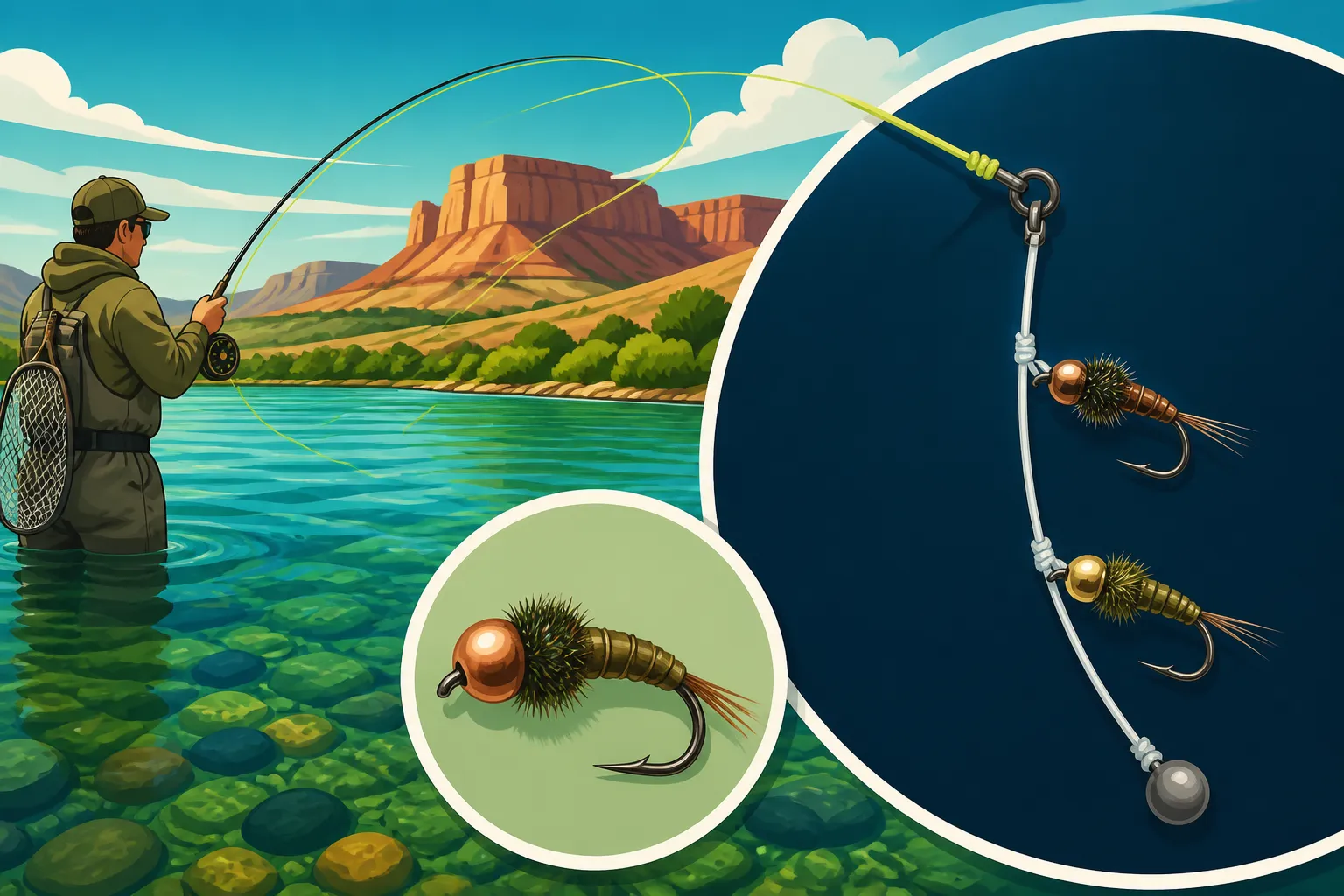
- Tie on your flies: Attach your first nymph to the tippet section of your leader using a strong knot like a Davy knot or an improved clinch knot. From the bend of the hook of your first fly, tie another 12-18 inches of tippet (often one size lighter, e.g., 5X for the top fly, 6X for the bottom) and attach your second nymph. You can even run a third fly, though this increases tangle potential. Common Green River patterns like a sowbug or a larva imitation often make a great lead fly, followed by a smaller midge or baetis pattern as the dropper.
- Presentation: Cast upstream and slightly across, allowing the flies to sink. Mend your line as needed to keep the indicator drifting at the same speed as the current, creating a perfect drag-free presentation. Watch the indicator intently for any pause, twitch, or subsurface movement that signals a take.
This rig is excellent for covering large sections of water, especially from a drift boat, and is generally easier for beginners to master than Euro nymphing.
The Euro Nymphing Setup (Tightline Nymphing)
Euro nymphing, also known as tightline nymphing, is a highly effective technique that relies on direct contact with your flies and extreme sensitivity to detect subtle strikes. It's fantastic for targeting specific pockets, seams, and faster water.
Setup:
- Specialized leader: Instead of a traditional tapered leader and indicator, you'll use a very long, thin leader (often 15-25 feet) with a colored sighter section (the "sighter") near the top. This sighter helps you detect strikes visually.
- No indicator, weighted flies: The weight comes entirely from heavily weighted tungsten nymphs. You typically fish two or three flies, with the heaviest fly at the bottom (the "point fly") to get down quickly, and lighter flies above it as droppers.
- Direct connection: The goal is to keep your fly line off the water as much as possible, maintaining a direct, "tight line" connection from your rod tip to your flies. This allows you to feel the subtle bumps and takes that an indicator might miss.
- Presentation: Cast upstream or slightly quartering upstream, then immediately raise your rod tip high to keep the line taut and off the water. Lead your flies through the current with your rod tip, detecting strikes by feel or by watching the subtle movements of your sighter. This technique allows for exceptional control over depth and speed, often making it the Best Nymph Rig for the Green River Tailwater in tricky situations.
This method requires practice but can be incredibly deadly, particularly when fish are holding tight to the bottom in faster currents.
The Dry-Dropper Combination
Sometimes, the Green River offers the best of both worlds: rising fish and subsurface feeders. The dry-dropper rig allows you to target both simultaneously.
Setup:
- Buoyant dry fly: Start with a large, buoyant dry fly that can support the weight of a nymph (e.g., a Chubby Chernobyl, Hopper, or large Stimulator).
- Attach the nymph: From the bend of the dry fly's hook, tie 12-36 inches of tippet (often 5X or 6X) and attach a single, unweighted or lightly weighted nymph. The length of the dropper tippet depends on the depth you want to fish.
- Presentation: Cast the dry fly upstream or across, and allow it to drift naturally. The dry fly acts as your strike indicator. Watch it for any subtle hesitation, drag, or disappearance, which indicates a strike on the nymph below. Also, be ready for a fish to take the dry fly itself!
This rig is fantastic during prolific hatches or when fish are sporadically rising, allowing you to prospect both the surface and subsurface at the same time. It's a great option in areas where fish might be looking up for adults but are primarily feeding on emerging nymphs just below the surface.
Essential Nymph Patterns for the Green River
Having the right flies is just as important as the right rig. The Green River's trout can be highly selective, so a diverse selection of patterns is crucial. You can stock up on these essential patterns through online retailers like Amazon.
Dependable Imitations
- Midges: These are arguably the most important insects on the Green River year-round. Carry a variety of midge patterns in sizes #18-#24, including zebra midges (black, red, olive), thread midges, and disco midges. They imitate the abundant larval and pupal stages.
- Sowbugs & Scuds: These small crustaceans are a staple food source, especially in slower currents and weed beds. Sizes #14-#20 in natural gray, tan, and olive are essential.
- Baetis (Blue-Winged Olives): These small mayflies hatch profusely, particularly in spring and fall. Have baetis nymphs like Pheasant Tail Nymphs, Barr's Emergers, and Juju Baetis in sizes #18-#22.
- Caddis: While not as dominant as midges or baetis, caddis larvae and pupae are present. Patterns like Hare's Ear Nymphs, LaFontaine's Sparkle Pupa, and Chartreuse Caddis Larvae in sizes #14-#18 can be effective, especially when dead-drifted.
- Worms: San Juan Worms (red, pink, wine) can be incredibly effective after flow changes or when fishing slightly off-color water.
- Eggs: Glo-Bugs or other egg patterns can be hot during trout spawning seasons or when fish are feeding on loose eggs.
These are just a few of the many nymph patterns for Utah tailwaters that prove effective.
Size and Color Considerations
When fishing the Green River, paying close attention to the size and color of your nymphs is often the difference between success and frustration. It's not uncommon for fish to reject a nymph that is only one hook size off or a shade too dark or light.
- Size: Always err on the side of smaller flies unless you observe larger insects or baitfish. #18 to #22 are frequently used sizes for midges and baetis, while sowbugs and caddis might range from #14 to #18. Observing naturals in the water or consulting local fly shops for current hatch information is invaluable.
- Color: Natural tones like olive, gray, brown, and black are universally effective. However, don't shy away from subtle variations. Sometimes a red midge out-fishes a black one, or a tan sowbug is preferred over a gray one. Having a range of colors in your most important patterns will increase your odds. For example, knowing the subtle differences between a BWO nymph and a PMD nymph, both small mayflies, can make a difference.
Mastering the Presentation and Drift
Even with the perfect rig and flies, sloppy presentation will yield meager results on the Green River. Mastering the drift is paramount.
Reading the Water and Identifying Lies
Before you even cast, take the time to observe the water. Look for seams where faster current meets slower water, often indicated by foam lines. Trout love to sit in the slower water, waiting for food to be delivered by the faster current. Look for subtle changes in depth, rocks, submerged structures, and undercut banks – these are all prime lies where fish conserve energy and ambush food. Deeper pools, riffles, and oxygenated water below rapids are also excellent spots. Knowing Fish Species in the Green River Below Flaming Gorge can help you predict where different species might hold. Brown trout often prefer structure and undercut banks, while rainbows can be found in a wider variety of runs and riffles.
Achieving a Drag-Free Drift
A drag-free drift means your flies are moving at precisely the same speed as the current they are in, just like a natural insect would. Any unnatural pull or acceleration on your line, known as "drag," will immediately alert wary trout that something is amiss.
- Upstream Casts and Mending: For indicator nymphing, cast upstream and slightly across the current. As your flies drift downstream, watch your line. If it starts to pull or create a bow, "mend" it by flipping an upstream loop of line to reposition it, allowing your flies to continue their natural drift. The goal is to keep as little fly line on the water as possible, directly above your indicator.
- High-Sticking and Leading: In Euro nymphing, the technique of "high-sticking" is essential. This involves holding your rod tip high, almost directly over your flies, to keep virtually all your fly line off the water. You lead your flies downstream with your rod tip, keeping direct contact. This allows for unparalleled sensitivity and eliminates almost all drag.
- Casting Accuracy: Precise casts are crucial. You want your flies to land gently and accurately in the feeding lane you've identified, minimizing splash and disturbance.
Setting the Hook and Fighting Fish
Green River trout can take a nymph incredibly subtly. Strikes might be a slight twitch of the indicator, a momentary pause, or simply a feeling of resistance if you're Euro nymphing.
- Indicator Strikes: At the slightest suspicion of a strike – any stop, stutter, or downstream movement of the indicator – set the hook. A quick, upward flick of the wrist is usually all it takes. Don't overthink it; if in doubt, set the hook!
- Euro Nymphing Strikes: With tightline nymphing, you'll feel more takes as subtle bumps or pressure. Your sighter also serves as a visual cue for any slight movement that isn't natural. Again, a swift, firm upward or sideways sweep of the rod tip is the standard hookset.
- Fighting Fish: Once hooked, Green River trout are strong fighters. Keep your rod tip up, maintain steady pressure, and let your reel's drag do its job. Avoid horsing the fish in, as many of these trout are large and valuable. Bring them in quickly but gently to minimize stress, especially if you plan to release them.
Here's a comparison of the primary nymphing rigs:
| Rig Type | Key Features | Best Suited For | Pros | Cons |
|---|---|---|---|---|
| Indicator Nymph | Strike indicator, split shot, multiple flies | Covering broad water, drift boat fishing, beginners | Visual strike detection, good depth control, relatively easy to learn | Less sensitive to subtle takes, potential for drag, bulkier setup |
| Euro Nymphing | Long, thin leader (sighter), weighted flies, no indicator | Targeting specific pockets, faster water, wary fish | Extreme sensitivity, excellent depth control, minimal drag, precise | Steep learning curve, requires constant focus, less effective in deep/slow water |
| Dry-Dropper | Buoyant dry fly as indicator, single nymph below | Mixed feeding behavior, scouting, shallow water, hatches | Targets surface and subsurface, highly versatile, exciting takes | Limited nymph weight, can be difficult to cast in wind, dry fly must float well |
To truly immerse yourself in the Green River experience, consider joining a guided trip. Guides can quickly help you dial in your Utah Fishing Techniques for Beginners and show you the nuances of each rig. Remember to always check current Utah Fishing Regulations Explained and Utah Aquatic Invasive Species Rules for Anglers before heading out. And don't forget the practicalities like Best Waders for Cold Provo River Water which apply equally to the Green River, ensuring your comfort during those long days on the water. Finally, for an in-depth understanding of fishing the area, check out a Flaming Gorge Fishing Guide, as the Green River tailwater is a direct extension of that incredible fishery. If you're planning on using a boat, make sure to read up on How to Fly Fish From a Drift Boat on the Green River.
Disclaimer
This article is for general informational purposes only and does not constitute professional advice. Laws, prices and regulations vary by location and change over time. Consult a qualified professional for guidance on your specific situation.