How to Know When a Utah Lake Is About to Ice Over
That lingering question of "Is it frozen yet?" can be agonizing for any Utah angler eager to get out on the ice, or for those who simply want to know if their favorite boating spot is still safe for a final fall excursion. Navigating the transition from open water to solid ice can be tricky and even dangerous if you don't know what to look for. This guide will help you understand the precise signs and conditions that indicate when a Utah lake is on the cusp of freezing over, ensuring you're both prepared and safe.
Understanding the Science Behind Ice Formation on Utah Lakes
Before we dive into the tell-tale signs, it's really helpful to grasp the fundamental science of how lakes freeze. It's not just about a single cold night; there’s a whole dance between water, air, and geography that determines when and how a lake locks up for the winter.
The Role of Air Temperature and Water Temperature
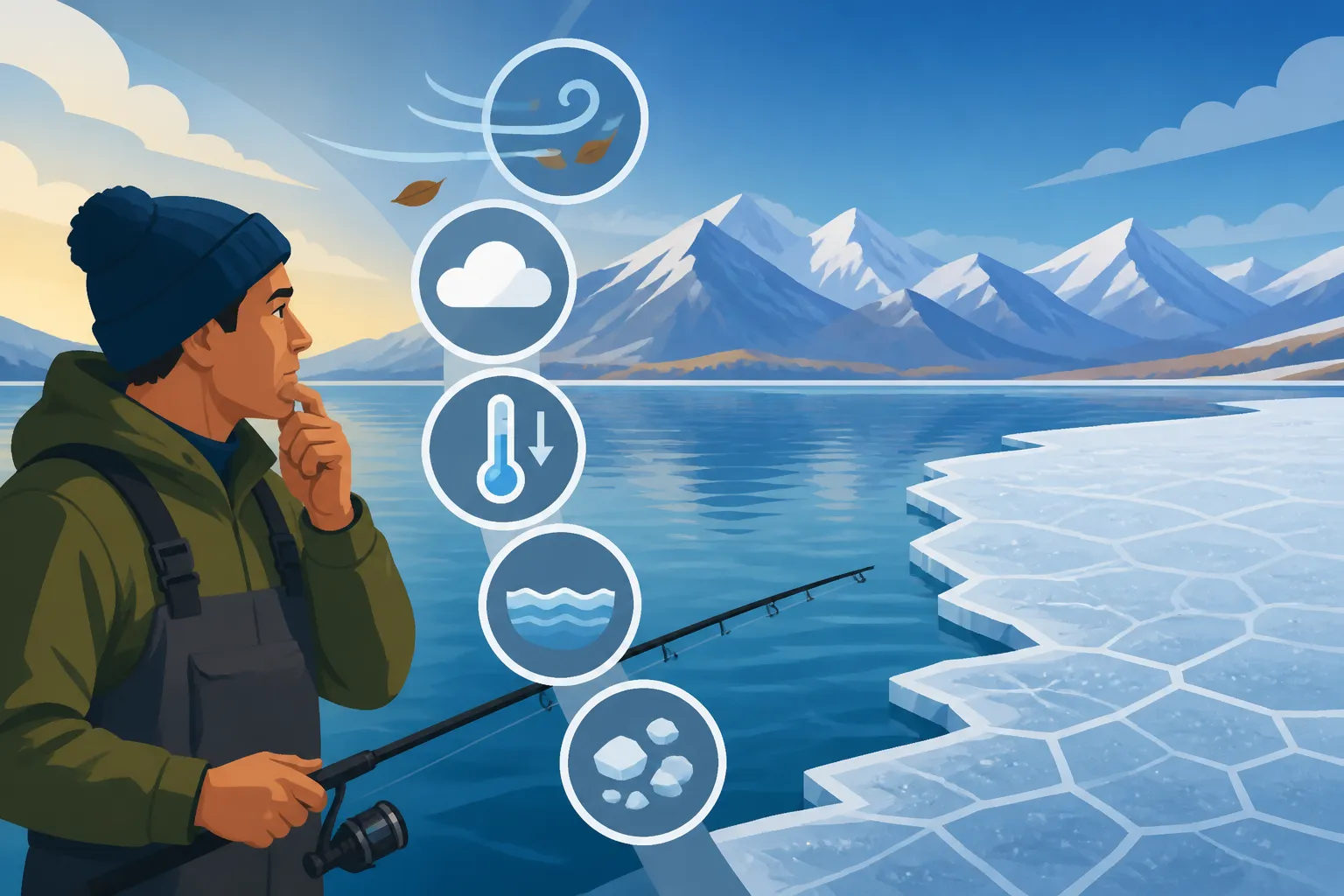
The most obvious factor, of course, is the air temperature. When the air temperature consistently drops below freezing (32°F or 0°C) for an extended period, the surface water of a lake begins to cool down. It's a gradual process, but those sustained cold nights, especially when paired with clear skies that allow heat to escape easily, are the real workhorses in ice formation. You might see daytime highs creep above freezing, but if the nighttime lows are consistently well below, that cumulative effect starts to make a big difference.
Water itself has a peculiar property: it's densest at about 39°F (4°C). In the fall, as the surface water cools, it gets denser and sinks, allowing warmer, less dense water from below to rise. This process, known as "fall turnover," continues until the entire water column reaches that 39°F mark. Once the whole lake is at its densest, further cooling of the surface water makes it less dense, so it stays on top, exposed to the cold air. This is the crucial stage, because once that surface layer hits 32°F, it starts to turn into ice. Without that turnover, a deep lake might take ages to freeze, but the mixing helps distribute the cold.
Think about those chilly evenings when you can practically see your breath – that’s the kind of air that’s efficiently drawing heat right out of the water. The longer these conditions persist, the more heat the lake loses, bringing it closer to that freezing point. A sudden cold snap might produce some skim ice, but it's the consistent, relentless cold that truly signals an impending freeze.
Impact of Lake Depth, Size, and Geography
Not all lakes are created equal when it comes to freezing. The depth, size, and even the surrounding geography play enormous roles in how quickly and thoroughly a body of water will freeze over. You’ll notice distinct patterns depending on where you are in Utah.
Shallow lakes and protected coves are almost always the first to freeze. They simply have less water mass to cool down, and their sheltered locations mean less wind disruption. Places like the high-altitude Uinta Mountains High Lakes Fishing will often freeze solid much earlier than larger, deeper reservoirs at lower elevations. Conversely, massive lakes like Bear Lake or Flaming Gorge, especially their main bodies, have an immense thermal mass. This means they can absorb a huge amount of cold air before their surface temperatures drop to freezing. You might see them stay open weeks after smaller, nearby waters have become ice fishing havens.
Wind exposure is another massive factor. A lake that’s wide open and exposed to prevailing winds will stay agitated and resist freezing much longer than a sheltered lake of similar size and depth. Wind breaks up fragile ice, constantly mixes the surface water, and even creates small waves that prevent a solid sheet from forming. This is why you often see ice form first in protected bays and then slowly spread across the main lake as the wind dies down and temperatures plummet further. The orientation of the lake, how it sits in the landscape, and any surrounding topography that offers a windbreak will also influence the speed of ice formation.
The Influence of Wind and Snowfall
It might seem counterintuitive, but both wind and snowfall have complex effects on ice formation, sometimes speeding it up and sometimes hindering it. Understanding these nuances is key to accurately predicting ice-up.
As mentioned, wind is generally the enemy of early ice. Even if the air temperature is well below freezing, a strong, persistent wind will keep the water surface agitated, preventing that still, smooth layer from forming that is necessary for ice to develop. It constantly churns the water, bringing slightly warmer water to the surface and making it difficult for the freezing process to take hold. You’ll often see a lake with perfect sub-freezing temperatures but still wide open if the wind has been ripping through. This is why many anglers watch for those calm, clear, bitterly cold nights as the ideal conditions for a rapid freeze.
Snowfall, on the other hand, presents a dual challenge. While a heavy snowfall might make you think "winter has arrived," it can actually slow the initial freeze-up. A thick blanket of fresh snow falling on open water acts like an insulating layer, trapping residual heat in the water below and making it harder for the cold air to penetrate and freeze the surface. However, once a layer of ice has formed, snow becomes an insulating blanket for the ice itself. It slows down the rate at which the ice thickens, but it also protects the ice from melting during warmer daytime temperatures. The biggest danger of snow on new ice is that it masks the ice conditions, hiding thin spots, cracks, or areas of slush, making it incredibly dangerous to walk on without proper safety precautions. This is why early ice exploration can be so treacherous; the snow covers up vital clues about the ice's stability.
Key Indicators That a Lake is About to Freeze Over
Knowing the science is one thing, but actually observing the signs on and around the lake is how you'll make real-time predictions. There are several clear indicators that your favorite fishing spot is getting ready to go from liquid to solid.
Visual Cues on the Water Surface
Your eyes are your best tools when trying to gauge an impending freeze. As temperatures drop and the lake approaches its freezing point, the water surface starts to change in noticeable ways. The first thing you might observe is a complete lack of whitecaps or even ripples, even on days with a gentle breeze. The water will appear unusually still and glassy. This calm surface is essential for ice crystals to form and link together.
Next, you might start to see what's called "skim ice" or "grease ice." This looks like a thin, oily sheen on the water, often in the most protected areas like shallow bays, inlets, or along the shoreline, especially where reeds or cattails offer a buffer from any breeze. This skim ice is incredibly fragile, often no thicker than a pane of glass, and will shatter easily if disturbed. However, it's a critical first step. As temperatures continue to drop, this skim ice will thicken and spread, eventually forming a thin, clear sheet. You might also notice frost forming on docks, rocks, or any low-lying vegetation right at the water's edge, even before the water itself freezes solid.
Sometimes, you'll see peculiar patterns of crystallization, especially during sustained cold, windless periods. The water surface might look like it's developing intricate, delicate patterns, almost like a fractal design. This is the water molecules aligning themselves into ice crystals. Seeing these visual cues is a clear signal that the lake is actively working towards a full freeze. Take pictures and observe these early stages to better understand the process.
Weather Patterns and Forecasts to Watch For
While visual cues are important, you also need to be a meteorologist in training to predict ice-up reliably. The weather forecast, particularly extended outlooks, will be your crystal ball.
What you're truly looking for are periods of sustained freezing temperatures. A single night dropping to 20°F won't do it if the next day warms up to 45°F and sunny. You need a prolonged stretch where both daytime and nighttime temperatures remain below freezing, ideally with nighttime lows dipping into the teens or single digits. These are the conditions that really draw heat out of the entire water column and allow a thick, stable ice sheet to form.
Equally important is the absence of strong wind. As we discussed, wind disrupts ice formation. So, look for forecasts that predict calm conditions, especially for several days in a row. Clear skies are another significant factor. Cloudy nights act like a blanket, trapping heat in the atmosphere, while clear nights allow heat to radiate directly into space, accelerating the cooling of the lake's surface. So, a forecast of clear, calm, and consistently sub-freezing temperatures is the holy grail for rapid and widespread ice formation. You can use apps like The Weather Channel or AccuWeather, or even more localized forecasts found on sites like NOAA, to track these conditions. Keep an eye on the "real feel" temperature as well, as wind chill can accelerate surface cooling.
Observing Wildlife and Local Activity
Sometimes, the most subtle indicators come from the natural world and the local community itself. These can offer valuable insights into a lake's readiness for ice.
Observe the behavior of waterfowl. Ducks, geese, and other aquatic birds are smart; they know where the open water is. As a lake begins to freeze, you'll notice them congregating in the last remaining open spots, usually near inlets, outlets, or deeper sections that are still liquid. If you see large flocks huddled together in a shrinking patch of open water, it's a strong sign that the surrounding areas are already frozen or very close to it. Eventually, they'll move on to other, still-open waters further south or simply closer to rivers that resist freezing. A sudden absence of waterfowl on a lake where they were plentiful just days before often means the ice has taken hold.
Additionally, pay attention to local human activity. Are boaters pulling their boats out for the season en masse? Are marinas quiet, with empty slips? This suggests that even the larger, more robust boats are finding it difficult or dangerous to navigate the increasingly icy waters. Conversely, if you notice an uptick in activity at local bait shops selling ice fishing gear or seeing trucks with ice shanties starting to appear, it's a good indication that local anglers are anticipating or have already found safe ice somewhere nearby. Many small bait shops, like those found near Strawberry Reservoir or Flaming Gorge, often have the most up-to-date, hyper-local information on ice conditions, often gleaned from anglers who just returned. Checking Where to Buy a Utah Fishing License in Person might lead you to a shop that also provides these valuable real-time reports.
Practical Tools and Resources for Predicting Ice-Up
You don't have to go it alone when trying to figure out if a lake is about to freeze. There are several practical tools and resources that can help you gather information and make informed decisions.
Using Online Resources and Weather Apps
In today's connected world, a significant amount of data is at your fingertips, making it easier than ever to track conditions that lead to ice formation. General weather apps are a fantastic starting point. Look beyond just the current temperature and check the hourly forecasts, especially for overnight lows, and the extended 7-10 day outlooks. What you're really interested in is a prolonged cold snap, not just a fleeting dip. Many apps will provide "feels like" temperatures, which, while not direct water temperature, give you a sense of the chilling power of the air.
Beyond general weather, some specialized fishing and outdoor recreation apps or websites might offer more targeted information. While direct "ice thickness" reports usually come later, some may show surface water temperatures for popular reservoirs. Observing a consistent downward trend in surface water temperatures, especially as they dip below 40°F and continue toward 32°F, is a clear indicator of impending ice. Many state wildlife or park service websites in other states offer current lake conditions, and while Utah's specific system might vary, checking official sources for things like Where to Find Current Fishing Conditions for Utah Reservoirs can sometimes include thermal data or at least anecdotal reports that hint at freezing conditions. Even a quick search on Amazon for "weather thermometer" or "water temperature gauge" can show you tools that boaters or shore anglers use to directly measure water temperatures in the fall, offering another layer of insight for those who live near their favorite waters.
Local Knowledge and Fishing Reports
While digital tools are great, there's absolutely no substitute for local knowledge when it comes to predicting ice formation. The people who live and breathe fishing in a particular area are often the most accurate source of real-time conditions.
The first place to check is your local bait and tackle shop. These small businesses are the heartbeat of the fishing community. The owners and employees often have direct relationships with anglers who are out on the water daily, and they hear all the gossip, successes, and warnings. They’ll know which small ponds are skimming over, which coves are freezing first, and which main lake bodies are still wide open. Don’t be shy – walk in, buy some bait or a new lure, and ask about the ice. They're usually eager to share their insights and keep the community informed.
Online fishing forums and local social media groups dedicated to Utah fishing are another goldmine. Anglers often post real-time updates, including photos of skim ice, slush, or even early, thin ice. These communities can be incredibly helpful for getting boots-on-the-ground reports, but always remember to exercise caution and verify information. Just because one person says there's ice on a small pond doesn't mean the main reservoir is safe. Look for consensus and multiple reports before making any plans. These local sources are often the first to report on specific conditions that official channels might not track, like a certain bay on Strawberry Reservoir Ice Fishing Spots starting to cap over.
Monitoring Water Body Inlets and Outlets
When observing a lake for signs of freezing, pay close attention to its inlets and outlets. These areas often behave differently from the main body of water due to current, and understanding their dynamics can help you predict the overall freeze-up.
Inlets, where streams or rivers flow into a lake, generally tend to be the last areas to freeze. The moving water from a stream, even if it's cold, carries kinetic energy that resists the formation of a solid ice sheet. The current continuously breaks up any fragile ice that tries to form, and often, the incoming water might be slightly warmer than the still water of the main lake, especially if it's coming from a larger, slower river or an underground spring. You'll often see open water persist much longer at the mouth of the Provo River as it flows into Utah Lake, for example, long after the lake's shallower bays have frozen over.
Outlets, where water flows out of the lake, also tend to resist freezing for similar reasons. The constant flow keeps the water agitated and prevents ice from forming easily. However, in very prolonged cold snaps, even these areas can develop ice, but they'll typically be the last bastions of open water. Observing how these dynamic areas are behaving can give you clues about how much colder the water needs to get before the entire lake succumbs to winter's grip. If the inlets and outlets are starting to show signs of skim ice or slush, you know the freeze-up is imminent for the rest of the lake.
Safety Considerations During Freeze-Up
As exciting as the prospect of ice fishing is, the period leading up to a full freeze-up is inherently dangerous. It's when ice conditions are most unpredictable and treacherous. Your safety should always be the absolute priority.
The Dangers of Early Ice
I cannot stress this enough: early ice is the most dangerous ice. It's often inconsistent, unpredictable, and can change rapidly. The primary danger, of course, is falling through. Unlike later in the season when ice might be uniformly thick, early ice can have varying thicknesses across just a few feet. One step could be on four inches of solid ice, and the next could be on an inch of slush over open water.
This inconsistency arises from a multitude of factors: varying depths, currents, underwater springs, decomposing vegetation releasing heat, or even underwater structures like old docks or logs that hold heat differently. Snowfall, as mentioned earlier, can further mask these dangerous thin spots, making it incredibly difficult to assess the actual ice quality visually. The validation here is real: many experienced anglers have had close calls on early ice, and unfortunately, some have not made it back. The temptation to be the "first out" is strong, but the risks are simply too high when the ice is forming. Always remember that no fish is worth risking your life for.
Essential Gear for Early Ice Exploration
If you absolutely must venture out during the early ice period – perhaps to check ice thickness or access a spot that has historically frozen well – you need to be equipped with specific safety gear. This isn't just for fishing; it's for survival.
- Spud Bar: This is your most important tool. A heavy steel bar with a chisel-like end, it's used to test ice thickness with every step. You hit the ice ahead of you; if it breaks through in one or two hits, it's too thin. If it takes three or more solid hits, it's generally safer (but still requires caution). You can find these at most sporting goods stores or on Amazon.
- Ice Picks: These are small, sharp metal picks connected by a cord, worn around your neck. If you fall through, you can use them to gain purchase on the ice and pull yourself out. They are absolutely non-negotiable for early ice.
- Flotation Device/Life Vest: Wearing a life vest, even over your winter clothing, can be a lifesaver. It keeps you afloat and conserves energy if you do go through.
- Rope: Carry a length of rope (at least 50 feet) that can be thrown to someone who has fallen through, or used to help pull gear.
- Buddy System: Never, ever go out on early ice alone. Always fish with a friend or group, and make sure everyone knows what to do in an emergency.
- Cell Phone in a Waterproof Bag: For calling for help if needed.
- Extra Set of Warm, Dry Clothes: Kept in a dry bag on shore, or in your vehicle, ready for immediate change if you get wet.
Remember, even with this gear, caution is paramount. Knowing How to Check Ice Thickness Safely Before Ice Fishing is just as important as having the tools.
When to Hold Off and Wait for Safe Ice
This is perhaps the most critical piece of advice: Patience saves lives. If you have any doubt whatsoever about the ice conditions, the smart and safe decision is to wait. There will always be more days to fish.
General guidelines often suggest a minimum of four inches of clear, solid ice for foot travel. However, this is a minimum, and conditions can vary widely. If the ice has snow on it, if it's cloudy or slushy, or if there are noticeable cracks or open water in areas, it's simply not worth the risk. The official Utah Ice Fishing Regulations will not save you from thin ice. The best approach is to wait until several days of sustained, severe cold have passed, and other, credible reports indicate uniform and safe ice thickness.
Here's a quick reference for general ice safety guidelines:
| Ice Thickness (Clear, Hard Ice) | Activity Level |
|---|---|
| Less than 2 inches | STAY OFF – Extremely dangerous. |
| 2-3 inches | STAY OFF – Too dangerous for individual foot travel. |
| 4 inches | Safe for individual ice fishing or walking (with extreme caution, spread out). |
| 5-7 inches | Safe for small groups of people, snowmobiles, or ATVs. |
| 8-12 inches | Safe for small cars or light trucks (always check local regulations and specific ice conditions first). |
| 12-15 inches | Safe for medium-sized pickups. |
Note: These are general guidelines. Always verify local conditions, know How Thick Does Utah Ice Need to Be Before You Can Fish On It?, and prioritize safety.
Remember that ice conditions can change even within a day due to sunny conditions or hidden currents. Even if a spot was safe yesterday, re-evaluate it today. There are plenty of fantastic ice fishing opportunities in Utah once the ice is truly safe, and waiting for those conditions will ensure you get to enjoy them for many seasons to come. You'll find many resources about Utah Fishing Season Dates and Limits but none are more important than the real-world ice safety rules.
Disclaimer
This article is for general informational purposes only and does not constitute professional advice. Laws, prices and regulations vary by location and change over time. Consult a qualified professional for guidance on your specific situation.