Panfish Species in Utah Ponds
There's something incredibly pure and joyful about fishing a local pond, isn't there? Away from the vastness of the big reservoirs and roaring rivers, the humble pond offers a serene backdrop for anglers of all skill levels, especially those just starting out. Often, the stars of these smaller, accessible waters are panfish – those feisty, fun-to-catch species that don't require fancy gear or expert techniques. If you've ever wondered what kind of panfish might be tugging on your line in Utah's community ponds, this guide is for you. We'll explore the most common species you'll encounter, offer tips for finding them, and share some pointers to make your next pond adventure a success.
The Enduring Appeal of Panfish in Utah Ponds
Let's be honest, not every fishing trip needs to be an epic quest for a trophy lake trout or a cunning brown trout. Sometimes, the most memorable days on the water are spent with a simple setup, a bucket of worms, and the anticipation of a bobber disappearing under the surface. This is where panfish truly shine, offering accessible and consistent action that builds confidence and creates lasting memories.
Why Panfish are Perfect for All Ages
Panfish are the unsung heroes of fishing, especially for families and beginners. Their willingness to bite makes them incredibly forgiving, transforming what could be a frustrating day into an exciting one filled with frequent catches. For kids, there's nothing quite like the thrill of feeling a fish on the end of their line, even if it's just a palm-sized bluegill. It teaches them patience, basic angling skills, and a respect for nature, all while keeping their attention piqued with regular action.
It's not just about the kids, though. Even seasoned anglers find immense pleasure in targeting panfish. It's a chance to strip away the complexities of modern fishing and reconnect with the simple joy of the sport. Plus, many panfish species are absolutely delicious, offering a fresh meal that's hard to beat after a relaxing day by the water. They truly are a gateway to a lifelong love of fishing. You can often find fantastic spots close to home; check out our guide on Best Community Ponds for Kids to Fish in Salt Lake City for some ideas.
The Simple Joy of Pond Fishing
There’s a unique charm to a small pond. It feels less intimidating than a huge reservoir, more intimate than a sprawling river. These waters are often well-maintained by local communities and the Utah Division of Wildlife Resources (UDWR), making them clean, safe, and regularly stocked. This means less time traveling and more time fishing. You can often just grab your basic gear, a small cooler, and be on the water within minutes.
Pond fishing fosters a sense of community too. You'll often see other families, friends, and solo anglers sharing the banks, sometimes even trading tips or sharing bait. It’s a low-stress environment where the focus isn't necessarily on landing a monster, but on enjoying the fresh air, the quiet moments, and the simple act of fishing itself. It’s the perfect antidote to a busy week, a chance to unwind and recharge.
Common Panfish You'll Find in Utah Ponds
When you're wetting a line in a Utah community pond, you're most likely to encounter a few specific species of panfish that thrive in these environments. Knowing what they look like, how they behave, and what they prefer to eat can greatly increase your chances of a successful outing. Let's dive into the most common ones.
Bluegill: The Ubiquitous Sunfish
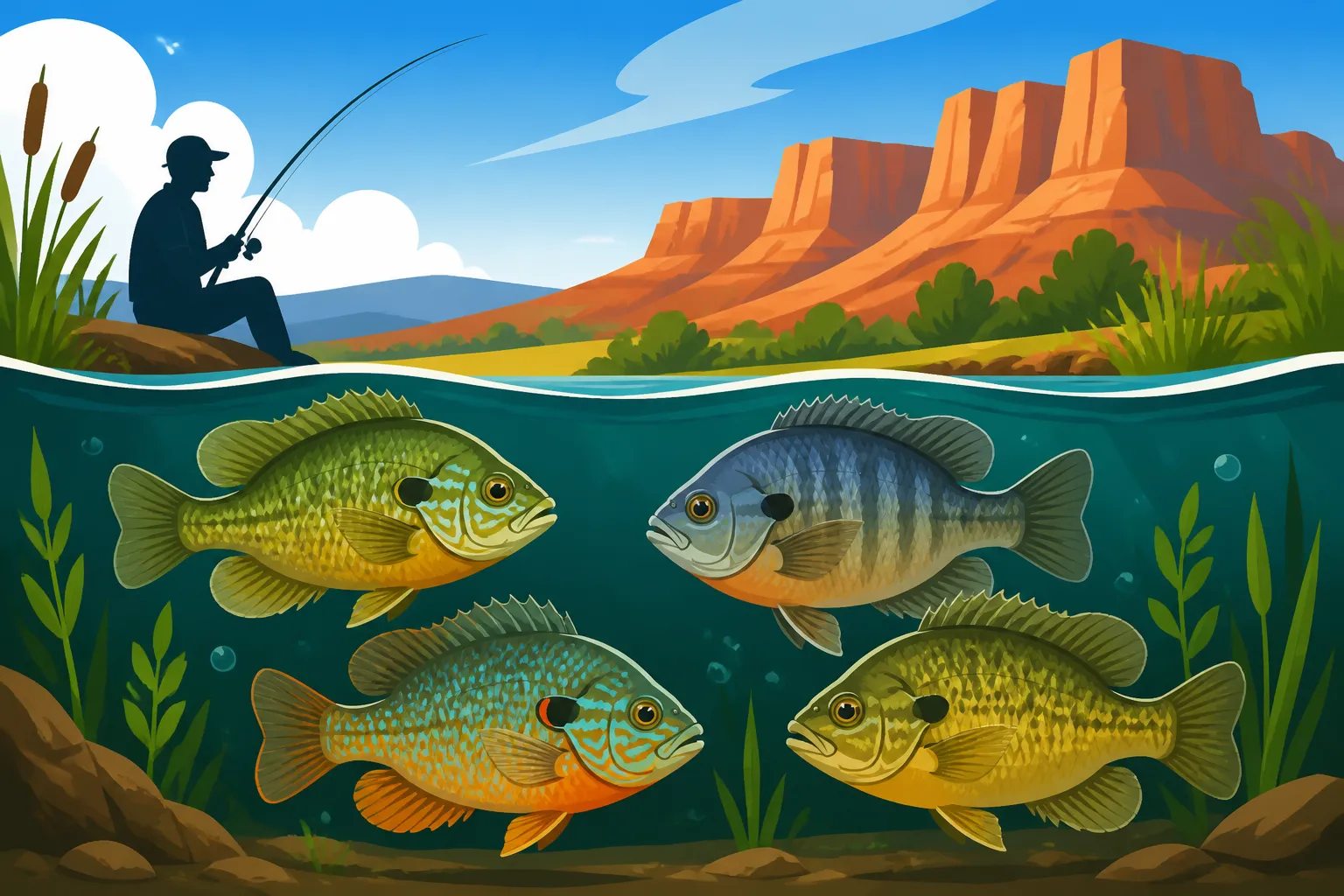
The bluegill ( Lepomis macrochirus ) is perhaps the most iconic panfish you'll find, not just in Utah, but across North America. They're easily recognizable by their deep, disc-shaped body, dark olive-green to bluish coloring on the back, and lighter yellow to orange on their belly. A distinctive feature is the dark "ear flap" on their gill cover and a small, dark spot near the base of the dorsal fin. Some males will develop a vibrant orange throat during spawning season, which is quite a sight!
Bluegill are incredibly aggressive eaters, which is why they're so popular with anglers. They'll readily take small baits and lures, making them fantastic targets for beginners. In Utah ponds, they love to hang out around submerged structure like weeds, fallen trees, or dock pilings, where they can ambush insects and small invertebrates. They're often schooling fish, so where you catch one, there are usually many more nearby. These fish rarely grow very large in ponds, typically ranging from 4 to 8 inches, but they put up a surprisingly good fight for their size!
Green Sunfish: Tough and Tenacious
Often mistaken for bluegill, the green sunfish (Lepomis cyanellus) is another common resident of Utah's ponds. While they share the "sunfish" family resemblance with a disc-shaped body, they tend to be a bit more elongated and robust than the bluegill. Their coloration is usually a dark green to olive on the back, fading to lighter green or yellowish on the sides, often with iridescent blue or green spots on their opercula (gill covers). The key distinguishing features are their much larger mouth, which extends back past the front of the eye, and a black blotch on the rear of their dorsal and anal fins.
Green sunfish are exceptionally hardy and can tolerate a wider range of water conditions than many other fish, making them very common in smaller, sometimes less-than-pristine ponds. They're also incredibly aggressive, sometimes even more so than bluegill, and will attack baits with gusto. While they don't typically grow large, often staying under 7-8 inches, their larger mouth means they can swallow bigger baits. If you've ever had trouble telling the two apart, our guide on Bluegill vs Green Sunfish Differences offers a more detailed comparison. They're not picky eaters and provide consistent action, perfect for a relaxed day of fishing.
Yellow Perch: The Striped Delicacy
The yellow perch (Perca flavescens) is another panfish favorite, particularly known for its delicious white flesh. Unlike the rounder sunfish, perch have a more elongated, torpedo-shaped body. They're easily identified by their vibrant yellow sides marked with 6-8 distinct dark, vertical bands that extend from their back down to their belly. They also have two separate dorsal fins, with the front one being spiny, and often have orange or reddish fins.
Yellow perch thrive in a variety of Utah's waters, including many ponds and smaller reservoirs. They prefer slightly cooler, clearer water than some of the sunfish, and often forage in open water as well as around structure. Perch are schooling fish, so like bluegill, where you find one, you'll likely find a school. They're active feeders, especially during cooler parts of the day or year, and are a blast to catch through the ice too. Their average size in ponds is generally 6-10 inches, making them a nice catch for the frying pan. For more details on their typical sizes, you can refer to our Yellow Perch Size in Utah article.
Less Common, But Still Possible, Panfish Encounters
While bluegill, green sunfish, and yellow perch are your most likely catches in Utah's community ponds, there are a couple of other panfish species you might encounter, especially in larger ponds or those with connections to bigger bodies of water. These offer a different kind of angling challenge and are a pleasant surprise when they show up on your line.
Black Crappie: The Slabs of Stillwater
Black crappie (Pomoxis nigromaculatus) are highly prized panfish, often sought after for their larger size and excellent table fare. They have a very deep, compressed body, giving them a "slab" appearance, and are silvery-olive to dark green with irregular black splotches and speckles across their sides. What truly sets them apart from sunfish is their distinctively large mouth, similar to a bass, and their dorsal and anal fins, which are almost identical in size and shape. They also have seven or eight dorsal fin spines, which can help differentiate them from white crappie (which have five or six).
In Utah, black crappie prefer clear, calm waters with plenty of submerged structure like brush piles, fallen trees, or dense aquatic vegetation. You're more likely to find them in larger ponds or smaller reservoirs that are connected to bigger systems. They tend to school, often suspending themselves around structure or in open water. Crappie fishing can be very seasonal, with spring and fall being prime times when they move into shallower water to spawn or feed aggressively. They can grow quite large for a panfish, often reaching 10-15 inches, offering a much more substantial fight than their smaller sunfish cousins.
Warmouth: The Lesser-Known Fighter
The warmouth (Lepomis gulosus) is a fascinating, though far less common, panfish in Utah compared to bluegill or green sunfish. If you do encounter one, it's often a delightful surprise. They resemble a robust, stout sunfish with a large mouth and a more pointed snout. Their coloration can vary quite a bit, but they generally have an olive-brown to mottled dark green body, often with dark spots or streaks, and sometimes red or orange on their belly. A key identifier is the three to five dark lines radiating backward from their eye, giving them a somewhat "warrior-painted" look. They also have a dark ear flap, often with a reddish or orange margin.
Warmouth prefer murky, vegetated waters, typically found in sluggish streams, shallow lakes, and, yes, some specific ponds with dense cover. They are ambush predators, often hiding in the weeds waiting for small fish, insects, or crayfish to pass by. While they don't typically grow very big, usually 6-8 inches, they are known for their feisty nature on the line, punching well above their weight. Catching a warmouth in Utah is a special treat, as they are not as widely distributed as other sunfish species, making them a true "trophy" for the panfish enthusiast.
Tips for Catching Utah Pond Panfish
Now that you know what to look for, let's talk about how to get these fun little fish to bite! Panfish fishing doesn't require a truckload of expensive gear, and that's part of its appeal. A simple approach is often the most effective, especially when you're targeting those hungry bluegill and perch.
Essential Gear for Panfish Fun
You don't need to break the bank to have a fantastic panfish outing. A simple spinning rod and reel combo is really all you need. Look for a lightweight rod, typically 5 to 6 feet long, with a light to ultralight action. This allows you to feel those subtle bites and makes even a small bluegill feel like a monster. Pair it with a small spinning reel spooled with 4 to 6-pound test monofilament line. This line is thin enough to be discreet but strong enough to handle any panfish you might hook. Many sporting goods stores and online retailers like Amazon offer great Best Rod and Reel Combo for Beginners that are perfectly suited for panfish.
Beyond the rod and reel, you'll want some basic terminal tackle:
- Small hooks: Size 8 to 12 hooks are perfect for panfish mouths.
- Small split shot sinkers: Just enough to get your bait down.
- Bobbers: These are essential for visual bite detection and suspending your bait at the right depth. Both clip-on and slip bobbers work well.
- Needle-nose pliers: For removing hooks and crimping split shot.
- Small cooler: To keep your drinks cool and your catches fresh if you plan to keep them.
- A bucket or stringer: For keeping your fish alive until you're ready to head home.
It really is that simple! A small tackle box that fits neatly into a backpack or even a small shoulder bag will do the trick. If you're wondering What Gear Does a First-Time Utah Angler Need?, panfish setups are an excellent starting point.
| Gear Item | Description | Why it's important |
|---|---|---|
| Light Spinning Rod | 5-6 feet, light to ultralight action | Sensitive to small bites, makes panfish fun to fight |
| Small Spinning Reel | Spooled with 4-6 lb monofilament line | Matches rod, light line for discreet presentation |
| Small Hooks | Sizes #8, #10, #12 | Fits panfish mouths, prevents swallowing too deep |
| Small Split Shot | Various small weights | Gets bait to desired depth, easy to add/remove |
| Bobbers | Small clip-on or slip bobbers | Visual strike indicator, suspends bait |
| Needle-Nose Pliers | For hook removal and crimping weights | Safety for fish and angler, versatile tool |
| Bait | Worms, mealworms, corn, small jigs, PowerBait | What fish eat! |
| Small Cooler | For drinks and keeping catches fresh | Hydration, food safety for harvested fish |
Best Baits and Techniques
Panfish are rarely picky eaters, which is another reason they're so much fun. Live bait is almost always a winner. Nightcrawlers or red worms cut into small pieces are absolute panfish magnets. Mealworms, wax worms, and even crickets can also be incredibly effective. For an easy, non-live option, kernel corn or small bits of hot dog can sometimes entice a bite, especially if fish are used to being fed by park visitors. Many anglers also have great success with PowerBait, particularly the small, brightly colored nuggets designed for trout, which panfish will readily consume.
When it comes to techniques, simplicity reigns. A classic bobber rig is hard to beat. Tie on a small hook, add a piece of bait, crimp on a small split shot about 6-12 inches above the hook, and set a bobber above that. Adjust the bobber so your bait is suspended anywhere from 1 to 3 feet deep. Cast it out near structure – like weeds, lily pads, or submerged logs – and watch that bobber! Any twitch or dip usually means a panfish is nibbling. Our guide on How to Fish With Bobber and Bait for Beginners provides a step-by-step approach to this effective method.
You can also try very small jigs, either tipped with a piece of bait or a tiny soft plastic grub. Work these slowly with subtle twitches near the bottom or suspended under a bobber. The key is small presentations, as panfish have relatively small mouths, and they prefer an easy meal.
Respecting the Resource: Catch and Release vs. Keeping
Part of being a responsible angler is understanding when to release fish and when it's appropriate to keep them. For many panfish species in Utah's community ponds, there are generous daily bag and possession limits, which means you can often keep a good number for a delicious meal. Always check the current Utah Daily Bag and Possession Limits before you head out, as regulations can vary by specific water body and species. For instance, while you might keep a limit of bluegill, there are sometimes very specific rules for other species, such as Utah Trout Daily Limit Explained, which is often more restrictive.
If you plan to keep fish, make sure you have a way to keep them fresh – either on a stringer in the water or in a cooler with ice. Only keep what you will eat, and avoid wasting any fish. If you're practicing catch and release, handle the fish as little as possible, wet your hands before touching them, and release them gently back into the water as quickly as you can. This ensures the health of the fishery for future generations. It’s important to teach ethical angling practices, especially when you’re out with new or young anglers, as discussed in How to Teach a Kid to Fish in Utah. Community ponds are a valuable resource, and it’s up to all of us to treat them with care and respect.
Disclaimer
This article is for general informational purposes only and does not constitute professional advice. Laws, prices and regulations vary by location and change over time. Consult a qualified professional for guidance on your specific situation.