Best Rod and Reel Combo for Beginners
Stepping into the world of fishing can feel incredibly exciting, but for many newcomers, the sheer array of rods, reels, and tackle can quickly turn that excitement into a dizzying headache. Choosing the right first rod and reel combo often feels like deciphering a secret code, and a wrong choice can lead to endless tangles and frustration, rather than the peaceful, rewarding experience you're hoping for on Utah's beautiful waters. This guide is here to cut through the confusion and help you select the perfect beginner-friendly rod and reel combo that will have you confidently casting and catching fish in no time.
Why the Right Beginner Combo Matters for Utah Fishing
When you're first getting into fishing, it's easy to think "any rod will do," but trust me, that's a quick path to a frustrating day on the water. Utah offers such diverse fishing experiences, from tranquil community ponds brimming with stocked trout to larger reservoirs holding feisty bass and panfish. Having a combo that's forgiving, versatile, and easy to use makes all the difference in turning a novice angler into a lifelong enthusiast.
Avoiding Frustration and Building Confidence
Imagine spending your first few fishing trips constantly battling bird's nests in your reel, struggling to cast more than a few feet, or feeling like your gear isn't quite right for the fish you're targeting. That's a common scenario for beginners who pick up an ill-suited or overly complex setup. A good beginner combo is designed with simplicity in mind. It balances a rod that's easy to load and cast with a reel that manages line smoothly, minimizing frustrating tangles. When your gear works with you, not against you, you can focus on learning the basics – casting, retrieving, and feeling for bites – which quickly builds confidence. It allows you to actually enjoy the scenery and the company, rather than wrestling with your equipment. This foundation of positive experiences is crucial for sticking with the sport and eventually exploring more advanced techniques and Utah Fishing Techniques for Beginners.
Versatility for Utah's Diverse Waters and Species
Utah truly is an angler's paradise, boasting everything from high-mountain lakes and crystal-clear rivers to large, productive reservoirs and urban community ponds. As a beginner, you don't want a highly specialized combo that's only good for one type of fish or one specific water. Instead, you need versatility. The ideal beginner setup should be capable of handling the most common species a new angler will encounter, such as stocked rainbow trout, bluegill, perch, and smaller bass. This means it needs to be light enough to feel the subtle nibbles of panfish but strong enough to manage a decent-sized trout or bass. A versatile combo means you can visit a local pond one weekend, then head to a smaller reservoir the next, without needing a whole new set of gear. It allows you to explore various Best Places to Fish in Utah without commitment to one style of fishing right away.
Understanding the Components: Rods and Reels for Beginners
Let's break down the two main parts of your combo: the rod and the reel. Understanding what each does and how they work together is key to making a smart choice. For beginners, we're generally talking about spinning gear – and for good reason!
The Spinning Rod: Your Go-To for Starting Out
The spinning rod is the long, flexible pole that you hold. For beginners, a spinning rod is usually the easiest and most forgiving type to learn on. Unlike baitcasting rods, which can be prone to backlashes, spinning rods are designed to cast lighter lures and baits with relative ease, making them perfect for smaller fish like trout and panfish that are often found in Utah's community ponds and smaller reservoirs.
When looking at spinning rods, you'll often hear terms like "length," "power," and "action." Don't let these scare you off!
- Length: For a beginner, a rod between 6 feet and 7 feet is a fantastic starting point. Shorter rods (like 5'6") are great for tight spaces or casting very light lures, while longer rods (7'6" or more) excel at casting farther and handling larger fish. The 6-7 foot range offers a sweet spot of castability and control.
- Power: This refers to how much force it takes to bend the rod. You'll see terms like "ultra-light," "light," "medium-light," "medium," and "heavy." For general beginner fishing in Utah, a medium-light to medium power rod is ideal.
- Ultra-light is fun for tiny fish but might struggle with a larger trout.
- Light is excellent for panfish and smaller trout.
- Medium-light is a great all-around choice for panfish, trout, and small bass.
- Medium gives you a bit more backbone for slightly larger fish or heavier lures.
- Heavy is overkill for most beginner scenarios.
- Action: This describes where along the rod the bend occurs when pressure is applied.
- Fast action rods bend mostly near the tip. This is great for sensitive bites and quick hook sets, but can be less forgiving for casting errors.
- Moderate-fast action rods bend in the top third or so. This is often recommended for beginners because it's a good compromise, offering decent casting distance and sensitivity without being too stiff.
- Moderate (or parabolic) action rods bend further down the blank, into the middle section. These are very forgiving for casting and great for fighting fish without tearing the hook out, but might feel less sensitive for detecting subtle bites.
For stocked trout, a medium-light power with a moderate-fast action will help you cast those small baits and lures effectively, even if you're just learning How to Cast a Spinning Rod for the First Time.
The Spinning Reel: Simplicity and Reliability
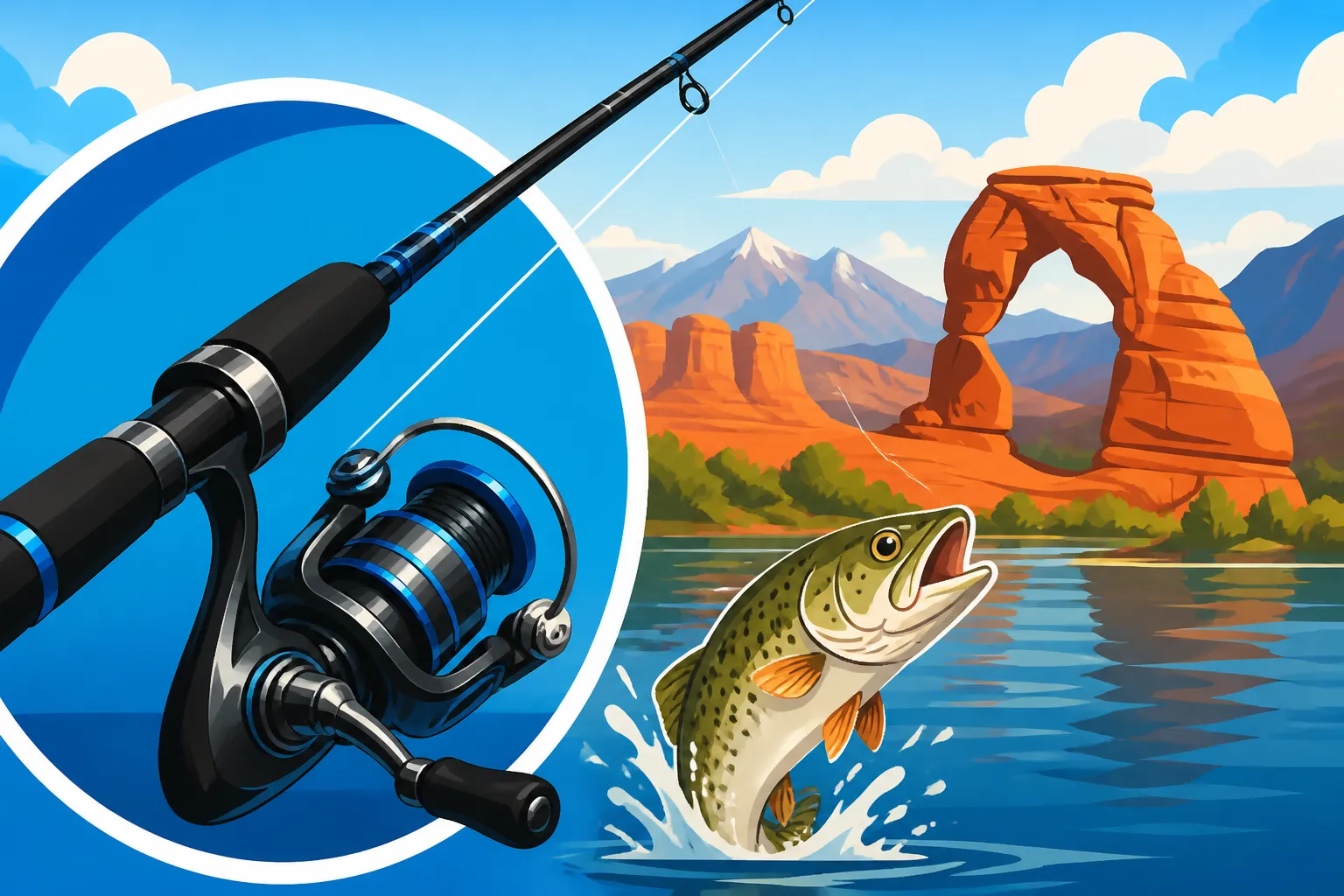
The spinning reel is the open-faced mechanism mounted underneath the rod, holding your fishing line. It's paired specifically with a spinning rod, and together, they make a highly efficient and user-friendly system. The open-face design means fewer opportunities for line tangles compared to a baitcaster, which is a huge plus for beginners.
Spinning reels are categorized by size, often using numbers like 1000, 2000, 3000, or sometimes 10, 20, 30. The higher the number, the larger the reel, meaning it holds more line and is generally designed for heavier fishing. For most beginner fishing in Utah, a reel in the 2000 to 3000 series (sometimes referred to as a 20 or 30 size) is an excellent choice. This size range perfectly complements the 6-7 foot medium-light to medium power spinning rod.
Key features to look for in a spinning reel:
- Smooth Drag System: The drag is a mechanism that allows line to peel off the reel when a fish pulls hard, preventing your line from breaking and the rod from snapping. A smooth drag is critical. You want it to release line consistently, without jerking. You can test this by pulling line off the reel by hand – it should come off steadily.
- Anti-Reverse Switch: Most spinning reels have a small switch that, when engaged, prevents the reel handle from turning backward. This is helpful for setting the hook or maintaining tension on a fish.
- Ball Bearings: More ball bearings generally mean a smoother retrieve, but for a beginner, you don't need a reel packed with them. A reel with 3-5 quality ball bearings will feel perfectly smooth enough.
Choosing a combo where the rod and reel are balanced—meaning the reel isn't too heavy for the rod, or vice-versa—makes a big difference in how comfortable and easy it is to cast all day.
Recommended Beginner Rod and Reel Combo Specifications for Utah
Okay, let's get down to the brass tacks. What should you actually look for when you walk into Bass Pro Shops, Cabela's, or browse online at Amazon? For a beginner in Utah, you're looking for a versatile, forgiving setup that can handle common freshwater species.
Ideal Rod Specifications for All-Around Utah Use
For an excellent all-around beginner rod for Utah, I highly recommend a spinning rod with these specifications:
- Length: 6 feet to 7 feet.
- A 6'6" rod is often cited as the perfect compromise for beginners. It's long enough to cast a good distance, but short enough to handle comfortably without feeling cumbersome. This length also works well whether you're fishing from the bank of a community pond or from a small boat on a reservoir.
- Power: Medium-Light (ML) to Medium (M).
- This power range is versatile enough to handle the 1-2 pound stocked trout found in many Utah waters, while still having enough backbone to land a 3-5 pound bass if you happen to hook into one. It allows for a wide range of lure and bait weights commonly used by beginners.
- Action: Moderate-Fast.
- This action gives you that nice bend that makes casting easier, helps absorb the shock of a fish strike, and prevents hooks from pulling out of a fish's mouth. It's sensitive enough to feel most bites without being overly stiff.
Imagine you're at Flatiron Park Pond or one of the many Salt Lake Valley Urban Fishing Ponds. A 6'6" medium-light, moderate-fast spinning rod will allow you to delicately cast PowerBait or a small jig for stocked trout, and then switch to a small spinner or soft plastic for bluegill or perch without missing a beat. This adaptability is exactly what a beginner needs.
Matching the Reel and Line
Once you have your rod picked out, matching the reel and selecting the right line is the next crucial step. The goal is balance and functionality.
For your chosen 6-7 foot medium-light to medium power rod, a 2000-3000 series spinning reel is the perfect companion. A 2500 size, if available, often hits the sweet spot. These reels will hold enough line, provide a smooth retrieve, and have a drag system capable of handling the fish you'll likely encounter.
When it comes to line, keep it simple and forgiving for your first few trips:
- Type: Monofilament (mono) is often the best choice for beginners. It's affordable, easy to cast, has good knot strength, and its stretchiness can be forgiving when a fish strikes aggressively. Some beginners also like fluorocarbon for its lower visibility, but mono is generally easier to handle when you're just starting out.
- Test Strength: For a medium-light to medium rod and a 2000-3000 size reel, 4-8 pound test monofilament is ideal.
- 4-6 pound test is excellent for trout and panfish, offering stealth and good casting distance for light lures.
- 8 pound test gives you a bit more strength for bigger fish or if you're fishing around light cover, which might be found at reservoirs like Deer Creek Reservoir Fishing Spots.
Using a line in this range means your reel won't be overloaded, and you'll have a much easier time managing your casts and retrieves. You can learn more about specific line choices in Best Fishing Line for Utah Trout.
Considering Brands and Budget
The wonderful news is that you don't need to spend a fortune to get a great beginner combo. Many reputable fishing brands offer excellent rod and reel combos specifically designed for entry-level anglers. These combos are often pre-matched, saving you the headache of figuring out compatibility.
When you're starting out, a combo in the range of, say, $50 to $100 (or slightly more) will usually get you a reliable setup that lasts for years if properly cared for. Brands like Ugly Stik, Shimano, Daiwa, Pflueger, and Penn often have excellent entry-level combos. You can find these readily available at sporting goods stores like Bass Pro Shops, which has knowledgeable staff who can guide you, or conveniently online at retailers like Amazon, where you can read reviews from other beginners. Don't feel pressured to buy the most expensive gear; a solid, mid-range beginner combo will serve you wonderfully as you learn the ropes.
Here's a quick look at how rod power aligns with typical beginner targets in Utah:
| Rod Power | Ideal Fish Species (Utah Beginner) | Common Lure/Bait Weights | Advantages for Beginners |
|---|---|---|---|
| Ultra-Light | Small Panfish (Bluegill, Perch) | 1/32 – 1/8 oz | Max sensitivity, fun for small fish |
| Light | Panfish, Stocked Trout | 1/16 – 1/4 oz | Good feel for subtle bites, casts light lures well |
| Medium-Light | Stocked Trout, Panfish, Small Bass | 1/8 – 3/8 oz | Excellent all-rounder, versatile for most waters |
| Medium | Larger Trout, Smallmouth Bass, Catfish | 1/4 – 1/2 oz | More backbone for bigger fish or slightly heavier cover |
This table shows why the medium-light to medium power is so versatile for a new angler.
Setting Up Your First Combo and Hitting the Water
Getting your hands on a new rod and reel combo is exciting, but the journey doesn't end there! There are a few crucial steps to take before you can cast your line into Utah's waters.
Spooling Your Line and Tying Basic Knots
One of the first things you'll need to do is get that fishing line onto your new reel. If you bought your combo at Bass Pro Shops, they might even offer to spool it for you! If not, it's a simple process you can do at home. The key is to spool the line evenly and with moderate tension to prevent twists. Place the spool of new line on the floor with the label facing up (or down, depending on how the line comes off the spool and onto your reel without twisting), then run the line through the rod guides and tie it to the reel's arbor (the center part of the spool). Crank the reel handle, keeping tension on the line with your fingers, until the spool is filled to about 1/8 inch from the rim. Overfilling can lead to frustrating tangles.
Next up, knots. Don't worry, you don't need to be a scout master to tie fishing knots. For beginners, two knots will cover almost all your needs:
- The Improved Clinch Knot: This is a fantastic all-around knot for tying lures, hooks, and swivels to your main line. It's strong and relatively easy to learn.
- The Palomar Knot: Another very strong and reliable knot, especially good for fluorocarbon lines or when using braided lines with a leader.
There are tons of great video tutorials online, and a little practice with a piece of string at home before you hit the water will save you a lot of headache. Understanding How to Tie a Basic Fishing Knot for Trout Fishing is a fundamental skill.
Practice Casting Techniques
Before you head out to the water, take your new combo to an open area, like a park or your backyard, and practice casting. Seriously, this step is invaluable! You can tie an old fishing weight or a practice plug (often sold at sporting goods stores or on Amazon) to your line instead of a hook.
The most common casting technique for spinning gear is the overhead cast:
- Hold the rod with the reel stem between your middle and ring fingers.
- Press the line with your index finger against the rod handle.
- Open the bail (the wire arm on the reel).
- Bring the rod tip up and slightly behind your shoulder.
- In a smooth, fluid motion, bring the rod forward, releasing your index finger when the rod is pointing roughly at your target.
Practice getting a smooth, controlled motion. You're not trying to muscle the cast; let the rod do the work. Focus on accuracy rather than distance initially. This practice will prevent a lot of frustration when you're trying to reach a specific spot in a pond or river.
Where to Go and What to Catch with Your New Gear
With your new combo spooled and a few casts under your belt, it's time to hit the water! For beginners in Utah, I highly recommend starting with community ponds or smaller reservoirs. These waters are regularly stocked with rainbow trout and often hold panfish like bluegill and perch, which are eager biters and fantastic for building confidence.
- Trout: For trout, a simple setup of a small hook, a bit of PowerBait or a nightcrawler, and a small sinker fished off the bottom, or suspended under a bobber, is incredibly effective.
- Panfish: For bluegill and perch, tiny jigs, worms, or even pieces of hot dog under a small bobber can lead to non-stop action, which is perfect for keeping spirits high, especially if you're bringing kids along.
Places like the ponds along the Wasatch Front or reservoirs such as Scofield Reservoir Fishing Access or Deer Creek Reservoir Fishing Spots offer accessible shore fishing and plenty of opportunities to catch fish with your versatile beginner combo. Don't forget to check the current Utah Fishing Regulations Explained for any water you plan to visit, as limits and rules can vary. The goal is to have fun, enjoy the beautiful Utah outdoors, and build those essential angling skills!
Disclaimer
This article is for general informational purposes only and does not constitute professional advice. Laws, prices and regulations vary by location and change over time. Consult a qualified professional for guidance on your specific situation.