Yellow Perch Size in Utah
It can be a little discouraging to head out fishing for yellow perch, hoping for a decent meal, only to reel in one tiny fish after another. You start to wonder if there are any respectable-sized perch in Utah waters at all! This comprehensive guide is here to shed some light on the typical size of yellow perch you can expect to catch in our beautiful state, what influences their growth, and most importantly, how you can adjust your strategy to target those larger, more desirable specimens for your dinner table.
What to Expect: Average Yellow Perch Size in Utah
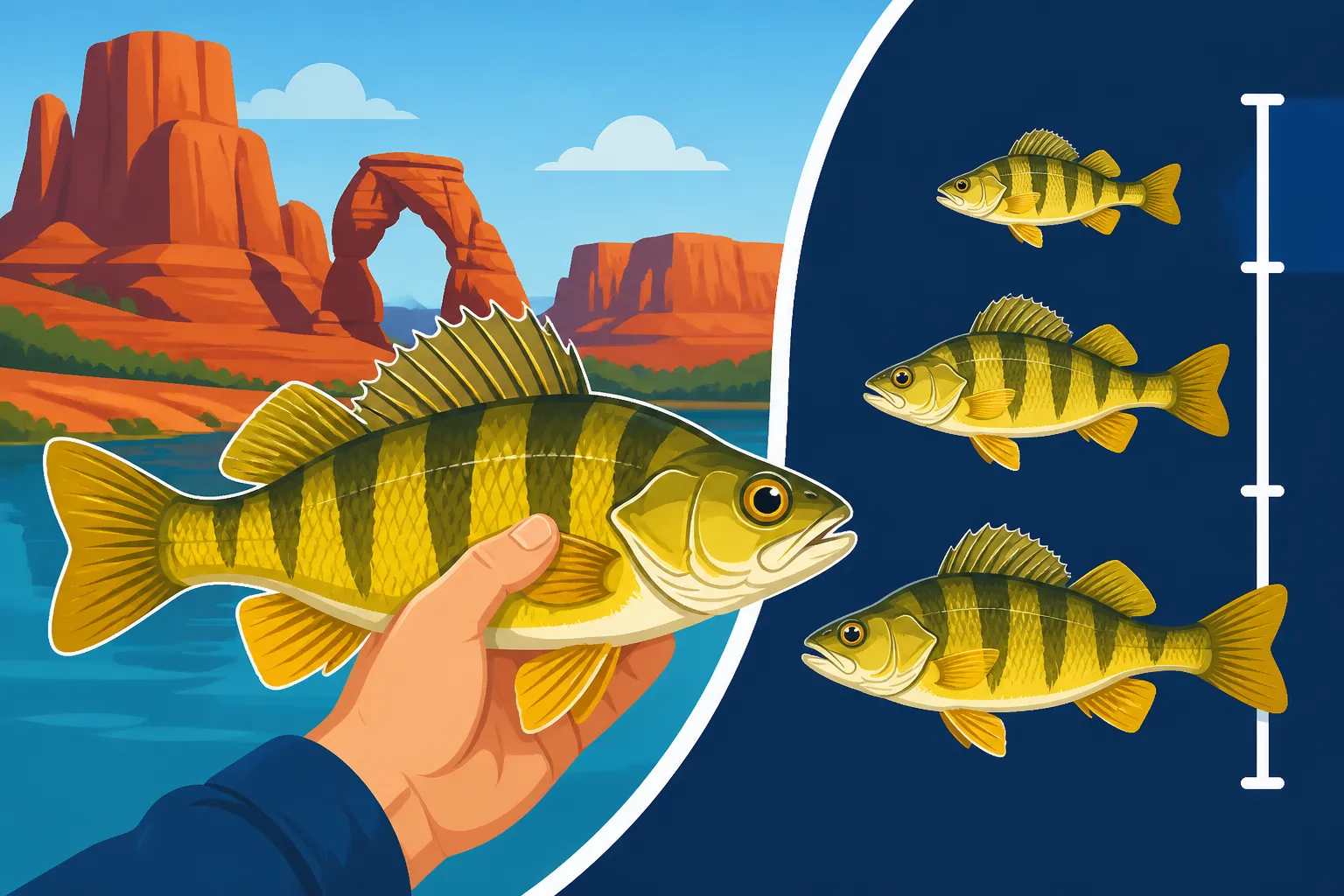
When you're out on the water targeting yellow perch in Utah, you'll quickly realize that these fish can vary quite a bit in size depending on where you're casting your line. Generally, most anglers catch yellow perch ranging from about 6 to 9 inches long. These are often referred to as "pan-sized" perch, and while they might not win any awards, they're perfect for a tasty fish fry. They're abundant in many of our reservoirs and provide fantastic action, especially for kids or beginner anglers who just want to feel a tug on the line.
These average-sized perch are often found in large schools, making them a fun target once you locate them. They tend to be a bit more aggressive and less wary than their larger counterparts, which is why they fill up stringers so quickly. If you're looking for a relaxing day with consistent bites, focusing on these schools of 6-9 inch fish can be incredibly rewarding and keep you busy. Just be sure to check the local regulations for specific waters, as limits can vary, though perch are often quite liberal in bag limits due to their prolific nature.
The Typical Catch
In many of Utah's productive perch fisheries, like sections of Utah Lake or Rockport Reservoir, the bulk of your catch will fall into that 6 to 9-inch range. These fish are generally healthy, active, and provide excellent sport on light tackle. For example, if you're fishing a popular spot at Utah Lake, you might pull up a dozen perch in an hour, and most will be around 7-8 inches. They’re still quite plump and offer a good fight for their size, especially through the ice. It’s a numbers game with these guys, and catching a high volume of these smaller perch is a classic Utah fishing experience.
Don't underestimate the culinary value of these smaller perch, either. Many seasoned anglers prefer the taste and texture of these younger, pan-sized fish. They cook up beautifully, with delicate, white meat. They are also fantastic for introducing new anglers to the sport, as the consistent action keeps boredom at bay. You can learn more about Best Fish Species for Eating From Utah Waters if you're keen on table fare.
"Jumbo" Perch: A Rare But Rewarding Find
While the average is 6-9 inches, Utah absolutely has waters where yellow perch can grow considerably larger, often reaching 10-12 inches, and occasionally even stretching to 13-15 inches. These are what anglers affectionately call "jumbo" perch, and they are truly a prize. Finding and catching these bigger fish requires a bit more skill, patience, and often different tactics than simply filling a bucket with their smaller relatives. They tend to be less numerous, more cautious, and prefer different habitats.
Lakes like Willard Bay Reservoir are particularly known for producing larger yellow perch, where double-digit length fish are not uncommon. Imagine the thrill of reeling in a solid 12-inch perch on ultralight tackle – it feels like a real tug-of-war! These larger perch often develop a noticeable "hump" behind their head, a characteristic that makes them easily identifiable and even more impressive visually. Targeting these giants means you might catch fewer fish, but the quality of each catch makes it all worthwhile.
Factors Influencing Perch Size in Utah Waters
The size of yellow perch in any given Utah water body isn't random; it's a direct result of several ecological factors. Understanding these elements can help you predict where you might find larger fish and even inform your fishing strategy. It's a complex interplay of food, space, and population dynamics that dictates how big these striped beauties get.
It’s often a balancing act: some waters have an abundance of food but also an overpopulation of perch, leading to smaller average sizes. Other waters might have fewer perch, but plenty of food and ideal conditions, allowing individual fish to grow much larger. Knowing these factors can transform your approach from simply "fishing for perch" to "strategically hunting for big perch."
Food Availability and Forage Base
Just like any other creature, yellow perch grow bigger when they have a consistent and abundant food source. Waters with a rich forage base, such as ample insect larvae, small crustaceans, and especially baitfish like minnows or shad, tend to produce larger perch. When food is plentiful, perch don't have to compete as fiercely, and they can expend more energy on growth rather than just survival.
Conversely, in lakes or reservoirs where the food supply is limited, or where there's intense competition from other fish species, perch growth can be stunted. You'll often find dense populations of smaller perch in these types of environments, as they struggle to find enough to eat to reach their full potential. This is why some lakes consistently produce smaller perch, even if they have a huge population. If you're seeing lots of small fish, it's a good sign that the forage might be spread thin among too many mouths.
Water Body Size and Habitat
The size and overall habitat structure of a water body play a significant role in perch growth. Larger reservoirs with diverse habitats, including expansive weed beds, rocky points, and deep channels, often provide optimal conditions for perch to grow large. These varied environments offer both abundant food sources and critical hiding places from predators, allowing perch to thrive without constant stress. Think of it like a spacious pantry with plenty of room to eat!
Smaller ponds or lakes, especially those with less diverse structure, might support large numbers of perch, but often at a smaller average size. These confined environments can quickly become overcrowded, leading to resource depletion and stunted growth. However, some well-managed community ponds can occasionally surprise you with decent-sized perch, particularly if they are regularly stocked with forage or have a healthy ecosystem. Understanding Where Yellow Perch Live in Utah is key to appreciating how habitat impacts their size.
Population Density and Competition
This is perhaps one of the most critical factors. High population density almost invariably leads to smaller average fish size, a phenomenon often called "stunting." When too many perch inhabit a given area, they compete heavily for the available food, and no single fish gets enough to grow truly large. This is a common scenario in many Utah waters where yellow perch reproduce prolifically.
Conversely, in waters with a more balanced population, or where management practices help control numbers, individual perch have a much better chance of growing into impressive sizes. In some cases, fish managers might even encourage harvest of smaller perch to reduce competition and allow the remaining fish to grow bigger. This dynamic explains why you might find "jumbo" perch in a lake with a lower overall perch population but excellent growth conditions, while a lake teeming with perch might only produce small ones.
How to Target Larger Yellow Perch in Utah
If your goal is to land those impressive "jumbo" yellow perch, you'll need to adjust your tactics beyond just dropping a worm. Targeting bigger fish means thinking like a bigger fish – what they eat, where they hide, and how they behave differently from their smaller counterparts. It's all about strategic angling rather than just hoping for a bite.
Many anglers find a true challenge in consistently hooking into the biggest perch in a lake, and it can be incredibly rewarding when you crack the code. It often involves more specialized gear, careful presentation, and a keen eye for subtle clues that indicate larger fish are present.
Gear and Presentation for Bigger Bites
To entice larger yellow perch, you often need to use slightly larger baits and lures. While smaller perch will readily hit tiny jigs and pieces of worm, bigger perch are often looking for a more substantial meal. Think small minnows, larger soft plastics, or spoons that imitate baitfish. Presentation is also crucial; larger perch can be warier, so a more natural, subtle presentation is usually more effective. Consider slow, deliberate retrieves rather than erratic jerks. You can find a vast array of effective jigs and spoons on platforms like Amazon, but always prioritize local tackle shops for expert advice on what's currently working.
For gear, ultralight spinning setups with sensitive rods are still ideal, but don't be afraid to step up your line strength slightly. Four to six-pound test monofilament or fluorocarbon is a good choice, offering a balance of sensitivity and strength for fighting a chunky perch. A good pair of fishing pliers, which you can easily find on Amazon, is essential for removing hooks from those bigger mouths without damaging the fish (if you plan to release) or your fingers.
Timing and Location are Key
Larger yellow perch often prefer deeper water, especially during warmer months or bright daylight hours. They'll relate to structure like submerged humps, rock piles, ledges, and the edges of weed lines. During low light periods, such as dawn and dusk, they might move shallower to feed. Ice fishing is a prime time for big perch, as they become more accessible and can often be found in predictable patterns on offshore structures. Learning How to Catch Perch Through the Ice in Utah can significantly improve your odds for bigger fish.
Beyond general timing, understanding the specific water body's patterns is crucial. For example, at Willard Bay, anglers targeting bigger perch might focus on specific depths near channels or old roadbeds. At Utah Lake, bigger perch might hold near the deeper sections of drop-offs or rock structures. Using maps and local knowledge can drastically narrow down your search.
Using Technology to Your Advantage
In today's fishing world, technology can be a huge asset in finding bigger perch. A good fish finder can help you locate schools of fish, identify larger individual marks near the bottom, and map out underwater structures where big perch are likely to hide. Down imaging or side imaging capabilities can give you a clearer picture of the bottom composition and any hidden gems. You can find a range of portable fish finders, some quite advanced, on Amazon that are perfect for boat or ice fishing.
For ice fishing, a flasher or a portable fish finder is almost indispensable. It allows you to see your lure, monitor fish activity below the ice, and understand how fish are reacting to your presentation. This instant feedback is invaluable for fine-tuning your technique and knowing when a bigger fish is checking out your bait. Knowing Best Ice Auger Size for Utah Ice Fishing can also help you quickly get to those deeper, more productive spots found with your electronics.
Where to Find Yellow Perch in Utah
Utah boasts several fantastic yellow perch fisheries, each with its own characteristics and potential for big fish. While perch are widespread, some locations are consistently better for targeting them, whether you're looking for quantity or quality.
Always remember that fishing conditions can change rapidly based on time of year, weather, and water levels. Checking current fishing reports from the Utah Division of Wildlife Resources (UDWR) or local bait shops can give you the most up-to-date information on where the perch are biting and what size they are.
Popular Perch Hotspots
Utah Lake: This massive lake is perhaps Utah's most prolific yellow perch fishery. While the average size tends to be on the smaller side (6-9 inches), the sheer numbers are incredible. It's an excellent spot for families or those who want consistent action. Perch can be found throughout the lake, often relating to submerged vegetation or subtle depth changes. Focus on the northern end near Provo Bay or the various marinas for easier access. To truly understand this fishery, consult a Utah Lake Fishing Guide.
Willard Bay Reservoir: Located north of Ogden, Willard Bay is renowned for its potential to produce "jumbo" yellow perch, often reaching 10-14 inches. The reservoir's unique ecosystem, with abundant gizzard shad as a forage base, contributes to the impressive growth rates of its perch. During the ice fishing season, especially, this lake becomes a magnet for perch anglers looking for trophy-sized fish. Exploring Willard Bay Fishing Access points can get you started.
Scofield Reservoir: Nestled in the mountains, Scofield is known for its trout, but it also hosts a healthy population of yellow perch. These perch can often grow to respectable sizes, offering a great mixed bag opportunity. They tend to school up, and once you find them, the action can be fast and furious. Ice fishing at Scofield can be particularly productive for perch. More details can be found in the Scofield Reservoir Fishing Access article.
Lesser-Known Gems
While the big names get most of the attention, several smaller or less-publicized waters can also offer excellent yellow perch fishing, sometimes with less crowded conditions.
Deer Creek Reservoir: While primarily known for its trout and smallmouth bass, Deer Creek also holds a good population of yellow perch that often reach a decent pan size. They provide a fun target, especially for anglers jigging in deeper sections or along submerged structure. The scenic beauty of the reservoir only adds to the experience.
Rockport Reservoir: Similar to Deer Creek, Rockport is a popular trout fishery that also contains yellow perch. While often smaller in average size, the perch here are plentiful and readily bite, making it another great spot for high-action days. Look for them around weed lines and rocky points.
Remember, the thrill of discovering your own hidden gem or unlocking the secret to bigger fish at a well-known spot is a huge part of the Utah fishing experience. Don't be afraid to explore, experiment, and enjoy the journey!
Disclaimer
This article is for general informational purposes only and does not constitute professional advice. Laws, prices and regulations vary by location and change over time. Consult a qualified professional for guidance on your specific situation.