Best Rod Holder Setup for Trolling Multiple Lines
Trying to manage multiple fishing lines while trolling on a Utah reservoir can quickly turn into a tangled mess of frustration, especially if your boat isn't set up efficiently. It's a common headache for anglers who want to cover different depths or present various lures, but without a proper system, you spend more time untangling and less time catching. This comprehensive guide will walk you through the best rod holder setups for trolling multiple lines, ensuring a smoother, more productive experience on the water.
Understanding Your Trolling Needs on Utah Waters
Before you even start looking at rod holders, it’s crucial to take a moment and genuinely assess your trolling habits and the specific challenges of fishing in Utah. What works for a bass boat on a small pond isn't going to cut it for chasing trophy lake trout on Flaming Gorge or kokanee salmon at Strawberry Reservoir. Your setup needs to match your ambition and your chosen waters.
Considering Your Boat Type and Size
The kind of boat you have plays a massive role in what rod holder setup will be most effective. A large, open deck on a dedicated fishing boat offers a lot more flexibility for mounting permanent rod holders and track systems than a smaller jon boat or even a kayak. If you're running a bigger cruiser or a pontoon, you might have plenty of rail space or flat surfaces for installation. On the flip side, smaller boats demand creative solutions that maximize space without sacrificing stability or ease of access. For instance, a compact boat might benefit more from clamp-on holders that can be repositioned easily, rather than permanent flush mounts that eat into valuable deck space. Think about your available gunwale space, railings, and even the transom area. Best Boats for Utah Reservoir Fishing provides more detail on selecting the right vessel for your fishing adventures.
Target Species and Trolling Methods
The fish you're after heavily dictates your rod holder requirements. Are you chasing aggressive walleye at Utah Lake with heavy jigging rods, or are you delicately presenting small spoons for kokanee salmon at Rockport Reservoir? For larger, harder-fighting fish like lake trout or tiger muskie, you'll need robust rod holders that can withstand powerful strikes and prolonged battles. These often require a more secure, heavy-duty mount. When trolling for kokanee or other schooling fish, you might use lighter setups but need to spread out your lines widely, often incorporating planer boards, which means your rod holders need to accommodate those angles and the extra strain. Understanding your target species' behavior and your preferred trolling technique—whether it's slow-trolling with bait, high-speed trolling with lures, or downrigging—will directly inform the strength, adjustability, and placement of your rod holders.
Number of Lines and State Regulations
Utah's fishing regulations typically allow for up to two fishing poles per licensed angler. However, if you have multiple licensed anglers on board, you could potentially have several lines in the water. This immediately raises the question of how many rod holders you’ll need and how to position them to avoid tangles. You want enough holders to keep your rods secure and spread out, but not so many that your deck becomes a hazardous obstacle course. Always double-check current Utah Fishing Regulations Explained before you head out, especially regarding the number of lines allowed. Planning for the maximum number of legal lines will help you design a versatile system that can handle different fishing scenarios, whether you're fishing solo or with a group.
Types of Rod Holders for Trolling Multiple Lines
Once you've considered your specific needs, it's time to explore the various rod holder options available. Each type has its own strengths and weaknesses, making some more suitable for certain boats, fishing styles, and budgets than others. Many of these can be found at reputable outdoor retailers like Bass Pro Shops or through online platforms such as Amazon.
Flush Mount Rod Holders
Flush mount rod holders are often seen as the sleekest and most integrated option. They require drilling a hole into your boat's gunwale or transom, with the holder sinking flush into the surface, leaving only the opening and a small collar visible. They offer a very clean look and are incredibly sturdy once installed correctly.
- Pros: Their primary advantage is their strength and low profile. Since they're essentially built into the boat, they can handle heavy pressure from large fish without flexing or moving. They won't snag lines or clothing as easily as external mounts. For anglers who value aesthetics and a permanent, reliable setup, flush mounts are an excellent choice. They are particularly popular for offshore fishing or when targeting powerful species that put a lot of strain on gear.
- Cons: The biggest drawback is the permanent nature of the installation. Drilling large holes in your boat is a commitment, and if you change your mind about placement or want to reconfigure your setup, you're left with holes to patch. They also offer limited adjustability in terms of angle; once installed, they point in a fixed direction. This can be restrictive if you need to quickly change your trolling spread or adapt to different conditions.
Rail Mount Rod Holders
Rail mount rod holders are designed to clamp directly onto your boat's existing rails. This makes them a popular choice for boats that already have a robust rail system, like many pontoon boats, center consoles, or even some smaller utility boats. They are generally made of sturdy plastic, aluminum, or stainless steel.
- Pros: Their main benefit is the ease of installation and removal. No drilling is required, meaning you can attach or detach them quickly, making them highly portable and adjustable. You can move them along the rail to experiment with different spacing and angles, which is incredibly useful when trying to fine-tune your trolling spread for specific species or conditions. They are a fantastic option for anglers who want flexibility without permanent modifications to their vessel. You can find a wide array of options at places like Bass Pro Shops.
- Cons: While generally sturdy, they might not offer the same absolute rigidity as a flush mount, especially if they are made of lighter materials or if the rail itself is not incredibly robust. Over time, constant clamping and unclamping could potentially scuff or wear on your boat's rails. Also, the strength of the hold is only as good as the clamp mechanism and the rail itself. If not tightened properly, they can sometimes slip or rotate under heavy load.
Clamp-On and Adjustable Rod Holders
Similar to rail mounts but often more versatile, clamp-on rod holders can attach to various surfaces beyond just rails, such as gunwales, transom, or even specific mounting brackets. Many models offer a high degree of angle adjustability, allowing you to position your rod tip exactly where you want it.
- Pros: The sheer versatility of clamp-on and adjustable holders is their strongest selling point. They can be attached and removed with minimal effort, making them ideal for smaller boats, rental boats, or anglers who want to quickly reconfigure their setup. The ability to adjust the rod's angle – both horizontally and vertically – is invaluable for creating a varied trolling spread, from rods pointing straight back to those fanning out to the sides. This adjustability is key for Utah Trolling Techniques for Lake Trout or How to Troll for Kokanee in Utah where precise lure placement is critical.
- Cons: Depending on the design and material, some clamp-on holders might not be as heavy-duty as flush mounts, potentially struggling with the heaviest trolling gear or largest fish. You need to ensure the clamping mechanism is robust and properly secured to prevent slippage or even loss of a rod and holder in a violent strike. Quality can vary greatly, so it's worth investing in reputable brands to ensure durability and reliability. Many anglers find durable, highly-rated models available on Amazon with customer reviews to guide their purchase.
Track System Rod Holders
Track systems represent the pinnacle of versatility and customization for rod holder setups. They involve installing a long track (often aluminum or stainless steel) along the gunwale, onto which you can then mount various accessories, including multiple rod holders, downriggers, and tool holders.
- Pros: This system allows for unparalleled flexibility. You can slide your rod holders along the track to instantly adjust spacing, add or remove holders as needed, and even change their angle with specific attachments. This is incredibly beneficial when experimenting with different trolling patterns or when adapting to changing wind and water conditions on large bodies like Lake Powell. Track systems allow you to create a highly organized and dynamic trolling spread, truly maximizing your multi-line capabilities.
- Cons: The initial investment can be higher than other individual rod holder options, as you're purchasing both the track and the compatible holders. Installation also requires drilling, though usually fewer holes than multiple flush mounts, and the track needs to be securely fastened to handle the stress. While highly adaptable, the system requires a bit more planning and initial setup to get it right. However, for serious multi-line trolling, the long-term benefits in efficiency and customization often outweigh these initial considerations.
Setting Up Your Trolling Spread for Maximum Coverage
Once you've got your rod holders, the real artistry begins: setting up your trolling spread. This isn't just about sticking rods in holders; it's about strategically placing your lines to cover the most water, avoid tangles, and present your baits effectively.
Angling Rods and Spacing Lines
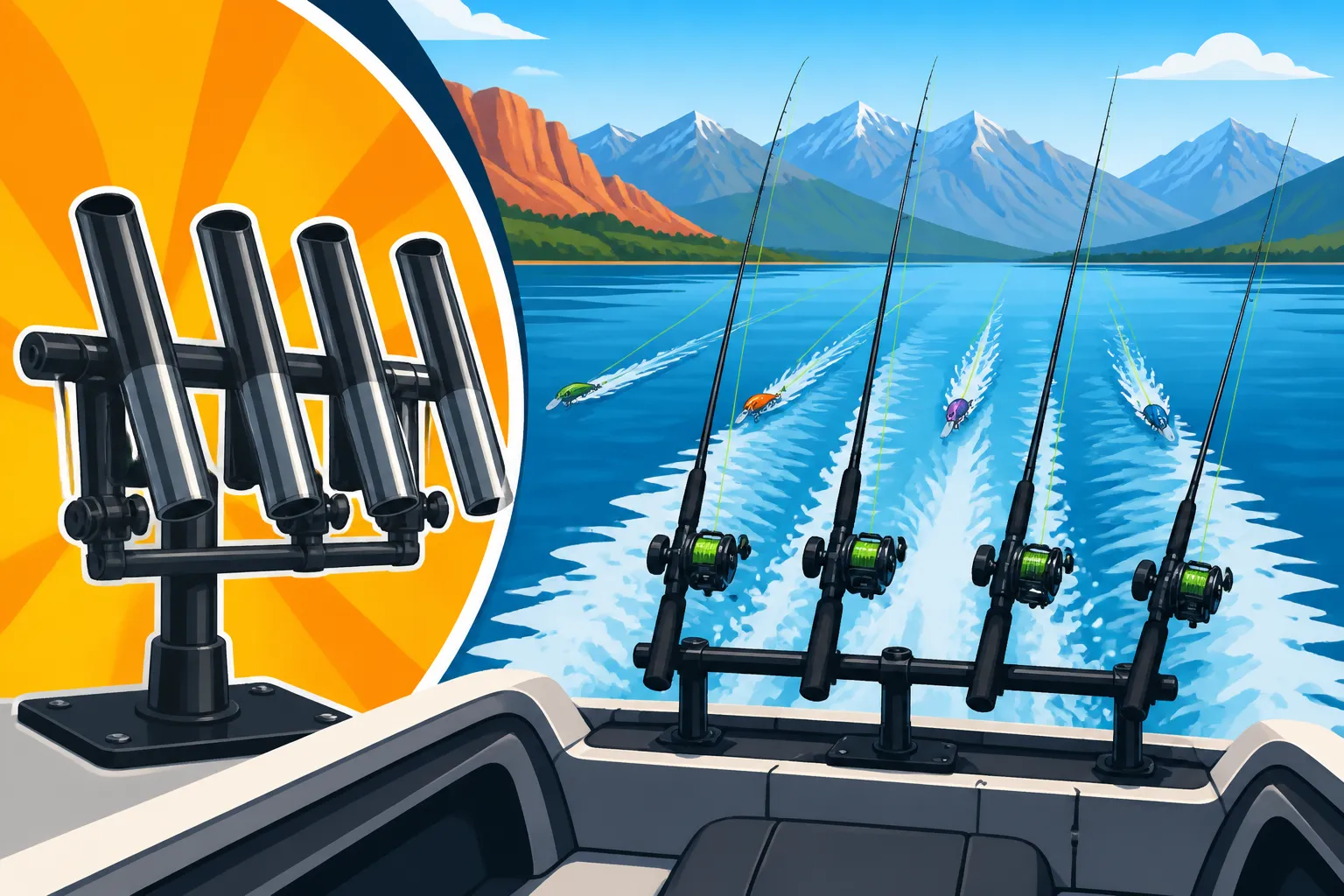
The goal of a multi-line trolling spread is to mimic a school of baitfish or to present a variety of lures at different depths and locations, without your lines crossing each other. This is primarily achieved through careful angling and spacing of your rods. Imagine your boat moving forward; you want your lures to fan out behind you.
- Creating a Fan Pattern: Start with a few rods angled straight out the back, perhaps with different lengths of line out to create distance. Then, use adjustable rod holders to angle other rods out to the sides at about a 45-degree angle. This creates a wider "fan" effect, ensuring your lures cover a broad swath of water. On a bigger boat, you might even have rods pointing almost directly out to the sides. This fanning action is critical in open water reservoirs like Flaming Gorge, where fish can be scattered.
- Varying Line Lengths: Even with angled rods, varying the distance of your lures behind the boat is crucial. If all your lines are the same length, even with different angles, they could still cross. Try staggering your line lengths – one short, one medium, one long – to create distinct zones for your lures. This also helps when making turns; the shorter lines will cut inside, and the longer lines will sweep wider, again reducing the chance of tangles. Experimentation is key here to find what works best for your boat speed and target species.
Integrating Downriggers and Planer Boards
For serious multi-line trolling, especially when targeting fish suspended at precise depths or when you need to cover extremely wide areas, downriggers and planer boards become indispensable tools. These devices work in conjunction with your rod holders to extend your spread's reach and depth capabilities.
- The Power of Downriggers: Downriggers allow you to send your lures down to very specific depths, sometimes hundreds of feet deep, and hold them there using a heavy ball and a release clip. Your fishing line is clipped to the downrigger cable, and when a fish strikes, the line releases from the clip, allowing you to fight the fish directly. Rod holders are essential for holding your fishing rods while the downrigger does the work of getting your lure to depth. Many anglers use heavy-duty rod holders positioned near their downriggers, angled slightly outwards. Best Downriggers for Flaming Gorge Lake Trout can provide more specific guidance on selecting and using these powerful tools.
- Widen Your Reach with Planer Boards: Planer boards are like mini-parachutes that pull your fishing lines away from the boat, either to the sides or even far behind. This allows you to present lures in undisturbed water, away from the boat's shadow and engine noise, which can be critical for wary fish. Rod holders are used to hold the rods that are running lines to the planer boards, often positioned at a more vertical angle. Combining downriggers and planer boards creates an incredibly effective and wide-ranging spread, letting you fish multiple depths and horizontal distances simultaneously. It's a complex but highly rewarding setup for serious anglers.
Avoiding Tangles and Maximizing Efficiency
The ultimate nightmare of multi-line trolling is a catastrophic tangle. It's not just a time-waster; it can be incredibly frustrating and even cost you fish. Smart setup and careful boat handling are your best defenses.
- Clearance and Spacing: Ensure there's adequate physical space between your rod tips and between the lines in the water. This goes back to using those adjustable rod holders to fan your rods out. When setting lines, always start with the longest line or the one furthest from the boat, and then work your way inward and shorter. This reduces the chance of the line closest to you crossing over a line that's already deployed.
- Boat Handling and Turns: The biggest cause of tangles is often sharp turns. When turning, the outside lines speed up and sweep wider, while the inside lines slow down and cut tighter. This differential can easily lead to crossed lines. Aim for wide, gradual turns when trolling, especially with a full spread. If you must make a sharper turn, consider reeling in your furthest-out lines temporarily. Pay attention to wind and current, as they can push your lines together even when trolling straight. Sometimes, a slight adjustment to your Trolling Motor Thrust Needed for a Utah Reservoir Boat can help maintain a more precise path and reduce tangles.
| Rod Holder Type | Mounting Method | Primary Use Case | Pros | Cons |
|---|---|---|---|---|
| Flush Mount | Permanent, drilled into gunwale | Heavy-duty trolling, large boats | Very strong, clean look, won't snag | Permanent installation, fixed angle, requires drilling |
| Rail Mount | Clamps onto existing boat rails | Versatile, boats with rails | Easy install/removal, no drilling, adjustable | May slip if not tight, not as strong as flush mount, can scratch rails |
| Clamp-On | Clamps to various surfaces | Small boats, temporary use, highly adjustable | Highly flexible, portable, great adjustability | Strength varies, can slip if not secured, quality differences |
| Track System | Track drilled to gunwale, holders slide in | Highly customizable, serious multi-line trolling | Ultimate flexibility, easy adjustment/addition, organized | Higher initial cost, requires drilling, more complex setup |
Advanced Considerations and Tips for Utah Anglers
Beyond the basic setup, there are several advanced considerations and practical tips that can elevate your multi-line trolling game on Utah's diverse waters, ensuring safety, longevity of your gear, and ultimately, more fish in the net.
Safety First: Secure Mounts and Clear Decks
When you're trolling with multiple lines, often with expensive rods and reels, safety becomes paramount. A rod holder that fails under the strain of a heavy fish or rough water can lead to lost gear, or worse, become a projectile. Ensure all your rod holders are properly installed and securely tightened. If using clamp-on or rail mount holders, regularly check their tightness throughout the day, as vibrations and wave action can sometimes loosen them.
- Weight Distribution: Consider how your rod holder setup affects your boat's weight distribution, especially on smaller vessels. Having all your heaviest rods and downriggers concentrated on one side could impact stability. Try to spread the weight evenly. Also, keep your deck clear of clutter. With multiple lines and rods, the last thing you want is a tripping hazard. Make sure there’s clear passage to all your rod holders for quick access when a fish strikes. This focus on a clear, safe environment is crucial for any fishing trip, but especially when dealing with a complex trolling spread.
- Night Fishing Considerations: If you're doing any night fishing, which can be incredibly productive for certain species like walleye at Utah Lake, ensure your rod holders and the area around them are well-lit. Headlamps are great, but dedicated deck lighting can prevent fumbling in the dark when you have a fish on. Having a clear, well-lit path to your rods minimizes accidental tangles or even falls, ensuring you can react quickly and safely to a strike.
Maintenance and Durability of Your Setup
Your rod holders, like all your fishing gear, are exposed to the harsh elements of sun, water, and sometimes extreme temperatures found in Utah. Regular maintenance will extend their lifespan and ensure they perform when you need them most.
- Rinse and Lubricate: After each trip, especially if fishing on saline waters like the Great Salt Lake or even just exposing them to reservoir water, rinse your rod holders thoroughly with fresh water. Saltwater environments are particularly corrosive, but even freshwater can leave mineral deposits. For any moving parts or clamping mechanisms, a light spray of marine-grade lubricant can prevent seizing and keep them operating smoothly. This is especially true for adjustable models with many pivots and joints.
- Inspect for Wear and Tear: Regularly inspect your rod holders for cracks, corrosion, loose screws, or worn parts. Plastic components can become brittle from UV exposure, and metal can corrode. Pay close attention to the points where the rod holder attaches to your boat and where your rod sits in the holder. Replacing worn components proactively is much better than having a rod holder fail with a trophy fish on the line. Quality rod holders, often found from brands like Scotty, Fish-On, or Cannon, are designed for durability, but even the best will benefit from care.
Portability and Adaptability for Different Adventures
One of the beauties of Utah fishing is the sheer variety of waters available. You might be trolling a vast reservoir one weekend and then exploring a smaller lake or river the next. Your rod holder setup doesn't have to be a one-size-fits-all, immovable fixture.
- Quick-Release and Modular Systems: Many modern rod holders and track systems are designed with quick-release mechanisms or modular components. This allows you to easily remove rod holders when not in use, store them safely, or even transfer them between different boats if you have compatible mounts. This adaptability is fantastic for anglers who might use a large boat for trolling on Flaming Gorge but a smaller craft for targeting trout in East Canyon Reservoir, where a full trolling spread isn't necessary.
- Thinking Beyond the Boat: Consider if your rod holders could serve dual purposes. Some clamp-on models can be adapted for shore fishing setups or even dock fishing. While primarily for trolling, thinking about the versatility of your gear ensures you get the most value and convenience out of your investment. Having a flexible setup means you're always ready for whatever Best Places to Fish in Utah you decide to explore next, whether it requires heavy-duty trolling or just a simple rod-and-reel setup.
Disclaimer
This article is for general informational purposes only and does not constitute professional advice. Laws, prices and regulations vary by location and change over time. Consult a qualified professional for guidance on your specific situation.