Strawberry Reservoir Trout and Kokanee Limit
It can be incredibly frustrating to head out to your favorite fishing spot, especially somewhere as iconic as Strawberry Reservoir, only to feel uncertain about the ever-changing rules and limits. Trying to keep track of species-specific regulations, slot limits, and seasonal closures can feel like deciphering a complex legal document rather than planning a relaxing day on the water. This guide is here to cut through that confusion, giving you a clear, comprehensive breakdown of the trout and kokanee salmon limits at Strawberry Reservoir so you can fish with confidence and respect for this incredible fishery.
Understanding Strawberry Reservoir's Unique Status
Strawberry Reservoir isn't just any lake in Utah; it holds a truly special place in the hearts of anglers and conservationists alike. Its crystal-clear waters, stunning mountain backdrop, and, most importantly, its exceptional fish populations, have earned it a reputation far beyond the state's borders. This isn't by accident; it's the result of decades of careful management and thoughtful regulations designed to maintain its pristine status.
Why Strawberry Reservoir is So Special
Often touted as one of Utah's "Blue Ribbon Fisheries," Strawberry Reservoir offers an unparalleled angling experience. This designation isn't just a fancy title; it signifies a body of water managed for its exceptional quality, accessibility, and the opportunity to catch trophy-sized fish. For Strawberry, that means robust populations of rainbow trout, the famously challenging and beautiful native Bonneville cutthroat trout, and hard-fighting kokanee salmon. Anglers flock here seeking the thrill of a big fish on the line, but also the tranquility of one of Utah's most breathtaking natural settings. Because of its unique ecological value and immense popularity, the Utah Division of Wildlife Resources (DWR) implements very specific rules here, which often differ significantly from other waters. These nuanced rules are what often trip up even seasoned anglers, making a clear understanding of them absolutely vital before you even think about wetting a line.
How Regulations Protect This Fishery
The specific daily limits and size restrictions you find at Strawberry Reservoir are not arbitrary; they are meticulously crafted by the DWR based on extensive scientific research, fish population surveys, and environmental monitoring. The primary goal of these regulations is to protect and enhance the fishery, especially the native Bonneville cutthroat trout, which play a crucial role in the reservoir's ecosystem. By regulating how many fish can be kept and, more importantly, which fish can be kept, the DWR ensures that enough adult fish survive to spawn, contributing to the next generation of healthy fish populations. This is particularly true for slot limits, which we'll dive into shortly. These rules are about sustainability – making sure that Strawberry remains a world-class fishing destination not just for us, but for future generations of anglers. Keeping abreast of these regulations is part of being a responsible angler and helps us all contribute to the long-term health of this cherished natural resource. You can always find more details about how these regulations fit into the broader picture in the comprehensive Utah Fishing Regulations Explained guide.
Navigating the Trout Limits at Strawberry Reservoir
Understanding the trout limits at Strawberry Reservoir requires a keen eye for detail and a solid understanding of fish identification. Unlike some waters with a simple "X number of fish" rule, Strawberry has a more intricate system designed to protect specific species and size classes, especially its native cutthroat population.
Daily Bag Limit for Trout Species
At Strawberry Reservoir, the general daily bag limit for all trout species combined is four (4) fish. This means that any combination of rainbow trout, cutthroat trout, or tiger trout that you decide to keep must not exceed this total number. It's a straightforward rule at first glance, but the devil, as they say, is in the details when you consider the specific cutthroat restrictions.
Let's break down what this means in practice:
- Rainbow Trout: These are often heavily stocked and contribute significantly to the catch. You can keep up to four rainbow trout, provided you haven't kept any other trout species that day.
- Tiger Trout: A sterile hybrid, tiger trout are also popular catches. Like rainbows, they count towards your four-fish total.
- Cutthroat Trout: This is where the specific nuances come in. While they count towards your four-fish total, there are additional rules about their size, which we'll discuss next.
The challenge here lies in accurately identifying your catch, especially when fishing in low light or with less experience. Rainbow trout and cutthroat trout can look very similar to the untrained eye, but cutthroat have a distinctive red or orange slash mark under their jawline, which is a key identifier. Misidentifying a fish could lead to unintentional violations, so it's always best to be sure before you decide to keep it. For a more detailed look at identifying different species, check out our How to Identify Utah Trout Species guide.
Specific Restrictions on Cutthroat Trout
This is perhaps the most critical part of Strawberry Reservoir's trout regulations, designed specifically to protect its self-sustaining population of Bonneville cutthroat trout. The rule states: no more than one (1) cutthroat trout over 15 inches may be kept as part of your four-fish daily limit. Additionally, and this is crucial, all cutthroat trout between 15 and 22 inches must be immediately released. This is what's commonly known as a "slot limit."
Let's unpack this:
- The "No More Than One Over 15 Inches" Rule: This means that if you choose to keep a cutthroat trout that is 15 inches or smaller, that counts towards your overall four-fish limit. However, if you catch a cutthroat that is larger than 15 inches, you are only allowed to keep one of them per day. If you've already kept one over 15 inches and catch another, you must release it. This helps ensure that a portion of the larger, more reproductively mature fish remain in the reservoir.
- The 15 to 22-inch Slot Limit: This is the most protective aspect. Any cutthroat trout you catch that measures between 15 and 22 inches in length (inclusive of both ends) must be immediately released. This protects the prime spawning-sized fish, allowing them to continue their reproductive cycle and maintain the health of the cutthroat population. It's truly a critical regulation for the long-term sustainability of the fishery.
- Above 22 Inches: If you are fortunate enough to catch a cutthroat trout that is over 22 inches, you are allowed to keep it, but it counts as your "one cutthroat over 15 inches" for the day. These are truly trophy-sized fish and a rare catch!
To illustrate, consider these scenarios:
- Scenario 1: You catch two 12-inch rainbow trout, one 14-inch tiger trout, and one 13-inch cutthroat trout. You can keep all four. Your cutthroat is under 15 inches, so it doesn't trigger the "one over 15 inches" rule.
- Scenario 2: You catch one 14-inch rainbow, one 16-inch cutthroat, and one 20-inch cutthroat. You must release the 16-inch cutthroat and the 20-inch cutthroat because they both fall within the 15-22 inch slot. You can keep the 14-inch rainbow. If you then caught a 14-inch cutthroat, you could keep it as part of your overall limit.
- Scenario 3: You catch one 14-inch rainbow, one 23-inch cutthroat. You can keep both. The 23-inch cutthroat is over 22 inches, so it's legal to keep, and counts as your "one cutthroat over 15 inches." You then have three spots left in your overall limit for trout under 15 inches, or other species like kokanee.
This system is a testament to the DWR's commitment to Strawberry's ecological health. It also means you need a reliable measuring device right there with you on the water. For more specific examples and details on these rules, check out How Many Cutthroat Trout Can You Keep at Strawberry Reservoir?.
Deciphering the Kokanee Salmon Limits
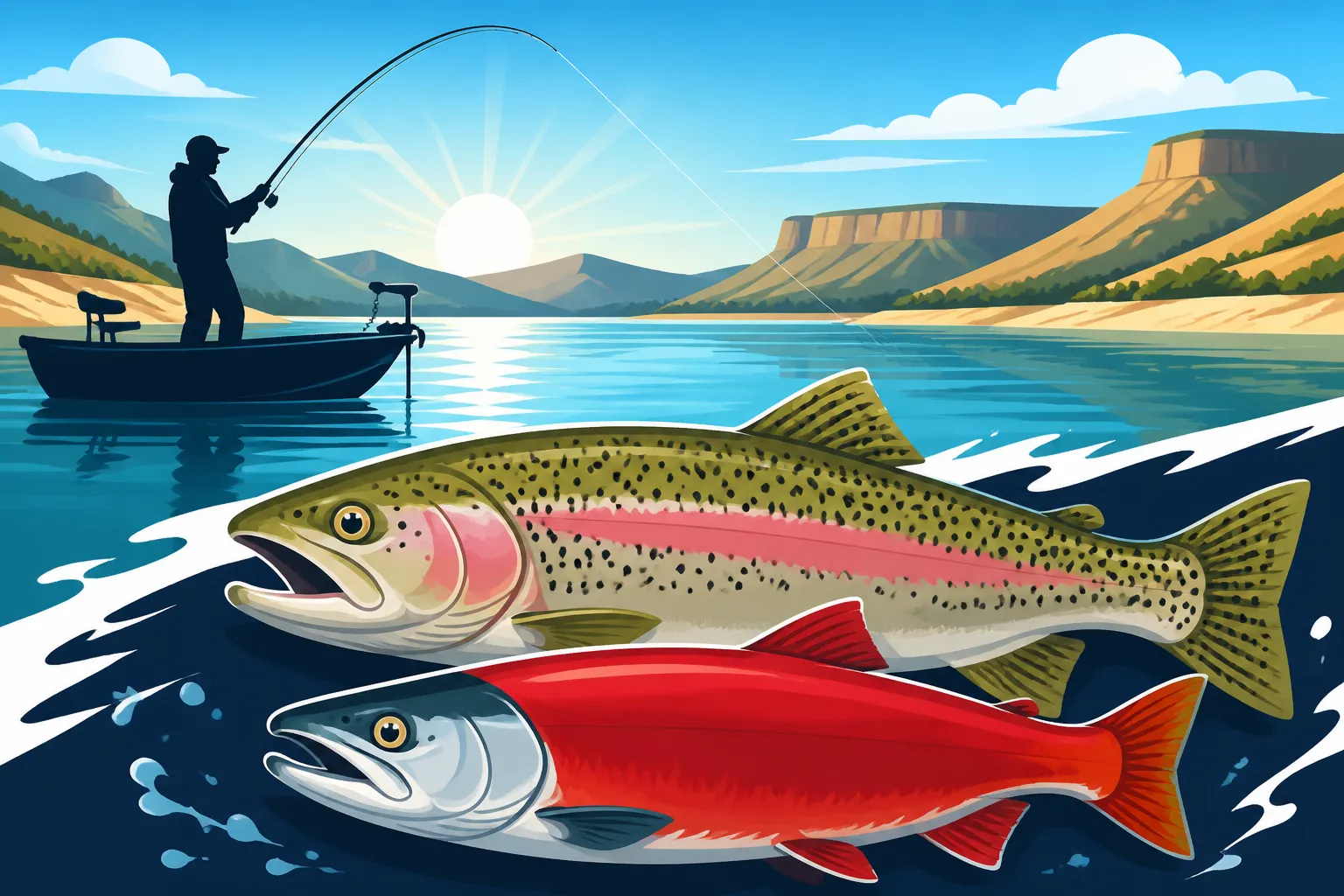
Beyond the various trout species, Strawberry Reservoir is also famous for its vibrant population of kokanee salmon. These landlocked sockeye salmon offer a completely different fishing experience, known for their powerful runs and delicious pink flesh. However, like trout, they come with their own set of regulations that anglers must adhere to.
Daily Bag Limit for Kokanee Salmon
The daily bag limit for kokanee salmon at Strawberry Reservoir is four (4) fish. This limit is separate from the trout limit, meaning you could potentially keep four trout and four kokanee in the same day, provided all other specific rules (like the cutthroat slot) are followed. This generous limit reflects a healthy and self-sustaining population that provides ample opportunity for anglers.
Kokanee are particularly exciting to target because they often school up, leading to periods of fast action. They are typically caught by trolling with specialized gear, but can also be caught jigging or even fly fishing at certain times. Their lifecycle is fascinating; they live for about four years, growing steadily before making a spectacular journey upstream to spawn and then die. This creates seasonal opportunities, particularly in late summer and fall when they begin to change colors from silver to brilliant red in preparation for spawning. While the daily limit remains constant, understanding their behavior throughout the year can significantly impact your success. Remember, these limits are in place to ensure that these populations remain strong year after year, guaranteeing that the thrill of catching a kokanee remains a cornerstone of the Strawberry fishing experience.
The Critical November to Mid-April Closure
One of the most significant regulations impacting kokanee (and all fishing) at Strawberry Reservoir is its seasonal closure. The reservoir is closed to all fishing from November 1 through 6 a.m. on the Saturday preceding the first Saturday in May. This means that for a considerable portion of the late fall, winter, and early spring, you simply cannot fish at Strawberry Reservoir.
This extended closure is absolutely critical for the health of both the trout and kokanee populations. Here’s why:
- Spawning Protection: November marks the peak of the kokanee salmon spawning season. By closing the reservoir during this time, the DWR ensures that these fish can complete their natural reproductive cycle undisturbed. Anglers often wonder Why Is Strawberry Reservoir Closed From November Through Mid-April?, and the answer largely revolves around protecting these vital spawning events. Disturbing spawning fish can significantly impact future generations.
- Trout Recruitment: While kokanee are a primary focus, many trout species also begin spawning or preparing to spawn in the fall and early spring. The closure provides a sanctuary for these fish as well, allowing them to reproduce without angling pressure.
- Ice Safety (Secondary Benefit): While not the primary reason for the closure, it also neatly sidesteps the safety concerns that come with early and late-season ice. By the time the reservoir reopens, the ice fishing season is typically well past, and open water fishing is just beginning.
This closure is non-negotiable, and fishing during this period can result in severe penalties, including fines and potential loss of fishing privileges. Always double-check the current year's proclamation or consult our Strawberry Reservoir Seasonal Closure Dates guide to confirm exact dates, as they can sometimes shift slightly based on the calendar. Planning your trips around this closure is essential for any angler looking to fish Strawberry Reservoir ethically and legally.
Practical Tips for Staying Compliant and Ethical
Adhering to fishing regulations isn't just about avoiding a fine; it's about being a responsible steward of our natural resources. Especially at a cherished fishery like Strawberry Reservoir, every angler plays a role in its preservation. Here are some practical tips to help you stay compliant and fish ethically.
Essential Gear for Measuring and Handling Fish
To ensure you're always within the legal limits, having the right gear is non-negotiable. It's surprisingly easy to misjudge a fish's length when it's flopping in your hands, which is why a reliable measuring device is your best friend.
Here's what you'll need:
- Tape Measure or Fish Ruler: This is paramount for accurately measuring fish, especially when dealing with the specific slot limits for cutthroat trout. Look for a waterproof, durable tape measure that's at least 24-30 inches long. Many anglers prefer self-adhesive rulers that can be attached to a cooler lid or boat gunwale for quick, consistent measurements. Brands like Rapala or Berkley offer good options that you can easily find on Amazon or at local tackle shops.
- Landing Net: A good quality, rubberized landing net is not just for securing your catch; it's crucial for minimizing harm to fish you intend to release. Rubber or knotless mesh nets prevent fish scales and slime from being removed, which protects them from disease. It also helps to keep the fish in the water while you're unhooking and measuring, reducing stress. Check out our recommendations in Best Landing Nets for Utah Trout.
- Forceps or Pliers: These are invaluable for quickly and safely removing hooks, especially if a fish has swallowed the bait or lure deeply. The faster you can unhook a fish, the less stress it endures. Long-nosed pliers or hemostats are ideal.
- Gloves (Optional, but Recommended): Some anglers prefer to wear wet gloves when handling fish, as this can reduce the transfer of human oils and bacteria to the fish's protective slime coat. Just make sure they are wet!
Remember, the goal is to get accurate measurements and release fish unharmed as quickly as possible. Having these tools readily accessible will make a huge difference in your ability to follow regulations and practice ethical angling.
Responsible Catch and Release Practices
Because of Strawberry's specific slot limit for cutthroat trout, mastering responsible catch and release techniques is more important here than almost anywhere else. Many of the fish you catch, particularly the prized native cutthroat, will need to go back into the water. Ensuring their survival is part of the angler's responsibility.
Follow these guidelines for effective catch and release:
- Minimize Fight Time: Bring the fish in as quickly as possible without over-stressing your tackle. A prolonged fight exhausts the fish, making it harder for them to recover.
- Keep the Fish Wet: This is arguably the most critical rule. Avoid pulling the fish out of the water unnecessarily. If you must handle it, do so with wet hands. The protective slime coat on a fish is its first line of defense against disease, and dry hands can strip it away.
- Handle Gently: Support the fish horizontally, especially larger ones, to avoid damaging internal organs. Avoid squeezing or touching the gills, as these are very delicate and essential for respiration.
- Quick Hook Removal: Use your forceps or pliers to remove the hook swiftly. If the fish is deeply hooked, especially in the gills or throat, it's often best to cut the line as close to the hook as possible rather than tearing tissue trying to extract it. Barbless hooks can make this process much easier and are highly recommended, especially when targeting fish in slot limits.
- Revive if Necessary: If a fish appears lethargic, hold it gently in the water, facing upstream (into the current if there is any), and allow water to flow over its gills. Don't move it back and forth; this doesn't help. When it starts to kick vigorously, it's ready to be released.
- Measure in the Water: Whenever possible, measure fish while they are still in the net or partially submerged to reduce air exposure.
By following these steps, you greatly increase the chances that your released fish will survive and continue to contribute to Strawberry Reservoir's incredible fishery. Dive deeper into these techniques with our guide on How to Release a Fish Without Hurting It in Utah.
What to Do If You Exceed the Limit or Misidentify a Fish
Mistakes happen, especially when you're excited or in unfamiliar territory. However, knowingly violating fishing regulations can lead to serious consequences. If you find yourself in a situation where you've accidentally exceeded the limit or misidentified a fish that should have been released, here’s how to handle it ethically and legally.
- Immediate Release: If you realize you've kept a fish that puts you over the legal limit, or a fish that falls within a protected slot limit (like a 15-22 inch cutthroat at Strawberry), your immediate action should be to release it. Do this as gently and quickly as possible, following the catch and release practices mentioned above. The DWR generally expects anglers to rectify such situations as soon as they become aware of them.
- Honesty is the Best Policy: While it might feel daunting, if a DWR officer approaches you and you've made an honest mistake, it's always best to be truthful and cooperative. They are often more understanding of genuine errors than willful disregard for the rules.
- Learn from It: Use any such incident as a learning opportunity. Perhaps you need to improve your fish identification skills, invest in a better measuring device, or simply pay more attention to the current regulations before you head out. Reviewing resources like Utah Fishing Regulations Explained or Utah Daily Bag and Possession Limits can prevent future errors.
- Consequences of Violations: Be aware that knowingly keeping over-limit fish or protected species can result in significant penalties. These can range from substantial fines to confiscation of gear, loss of fishing privileges, and even criminal charges in severe cases. It's simply not worth the risk. For a clearer understanding of potential repercussions, consult Utah Fishing License Penalties for Violations.
Ultimately, fishing at Strawberry Reservoir is a privilege, and respecting its regulations is key to ensuring its vibrant future. Stay informed, fish ethically, and enjoy one of Utah's truly exceptional angling experiences.
| Species | Daily Bag Limit | Specific Size/Species Restrictions |
|---|---|---|
| Trout | 4 fish combined | No more than 1 cutthroat trout over 15 inches |
| All cutthroat trout between 15 and 22 inches MUST be immediately released | ||
| (Rainbow, Cutthroat, Tiger trout count towards this limit) | ||
| Kokanee Salmon | 4 fish | No size restrictions for kokanee salmon |
| Crayfish | No limit | |
| Reservoir Closure | Closed to all fishing from November 1 through 6 a.m. on the Saturday preceding the first Saturday in May. | (Exact reopening date may vary slightly year to year) |
Disclaimer
Please note that fishing regulations can change. While every effort has been made to provide accurate and up-to-date information, it is the angler's responsibility to consult the most current Utah Fishing Guidebook or the Utah Division of Wildlife Resources (DWR) website before fishing. This guide is for informational purposes only and should not be considered legal advice.