What Trolling Speed Works Best for Kokanee Salmon?
Kokanee salmon are some of the most sought-after fish in Utah's incredible reservoirs, but they can also be notoriously finicky. If you've spent hours out on the water, trolling your favorite lures at what feels like the "right" speed, only to come back with an empty cooler, you're not alone. Many anglers struggle to dial in the perfect trolling speed for these elusive silver bullets. This guide will dive deep into the nuances of trolling speed, helping you understand how to adjust your pace to entice more kokanee bites and ultimately improve your success on the water.
The Delicate Dance of Trolling Speed for Kokanee
Trolling for kokanee salmon isn't just about putting a lure in the water and driving around. It's a strategic game, and perhaps no single factor is as crucial, or as often misunderstood, as your trolling speed. These landlocked sockeye salmon have a particular way of feeding and reacting to lures, which means your speed needs to be precise. Too fast, and your lures might dart erratically, scaring fish or causing them to miss; too slow, and they might lack the enticing action that triggers a strike.
It's a delicate dance between presenting your lure naturally and making it behave just enough like an escaping baitfish or an intriguing invertebrate to grab a kokanee's attention. Think of it like a dance partner: if you're out of sync, the whole performance falls apart. Getting your speed right is about finding that sweet spot where your gear comes alive, perfectly mimicking something a kokanee wants to eat. This often means paying close attention to the subtle vibrations and movements of your rod tip and the action of your dodgers and flashers below the surface.
Understanding Kokanee Behavior and Lure Presentation
Kokanee salmon are primarily planktivores, meaning their natural diet consists of tiny zooplankton and small invertebrates. While they don't actively chase down large prey like a predatory trout might, they are opportunistic feeders that can be drawn in by visual stimuli and vibrations. This is why the action of your lure is paramount. A small hootchie or wedding ring spinner needs to move in a way that suggests a struggling insect or a tasty morsel of plankton.
When you're trolling, the speed directly dictates how your lure swims. Flashers and dodgers, which are designed to attract fish by creating flash, vibration, and an erratic movement, rely heavily on specific speeds to perform optimally. Too slow, and they might just drag lifelessly; too fast, and they could spin out of control, tangling your line or appearing unnatural. The "sweet spot" is where these attractors create a consistent, wobbling, or flashing motion that really gets the kokanee curious. It's a delicate balance to achieve, and one that seasoned kokanee anglers constantly monitor.
The "Ideal" Speed Range and Factors That Change It
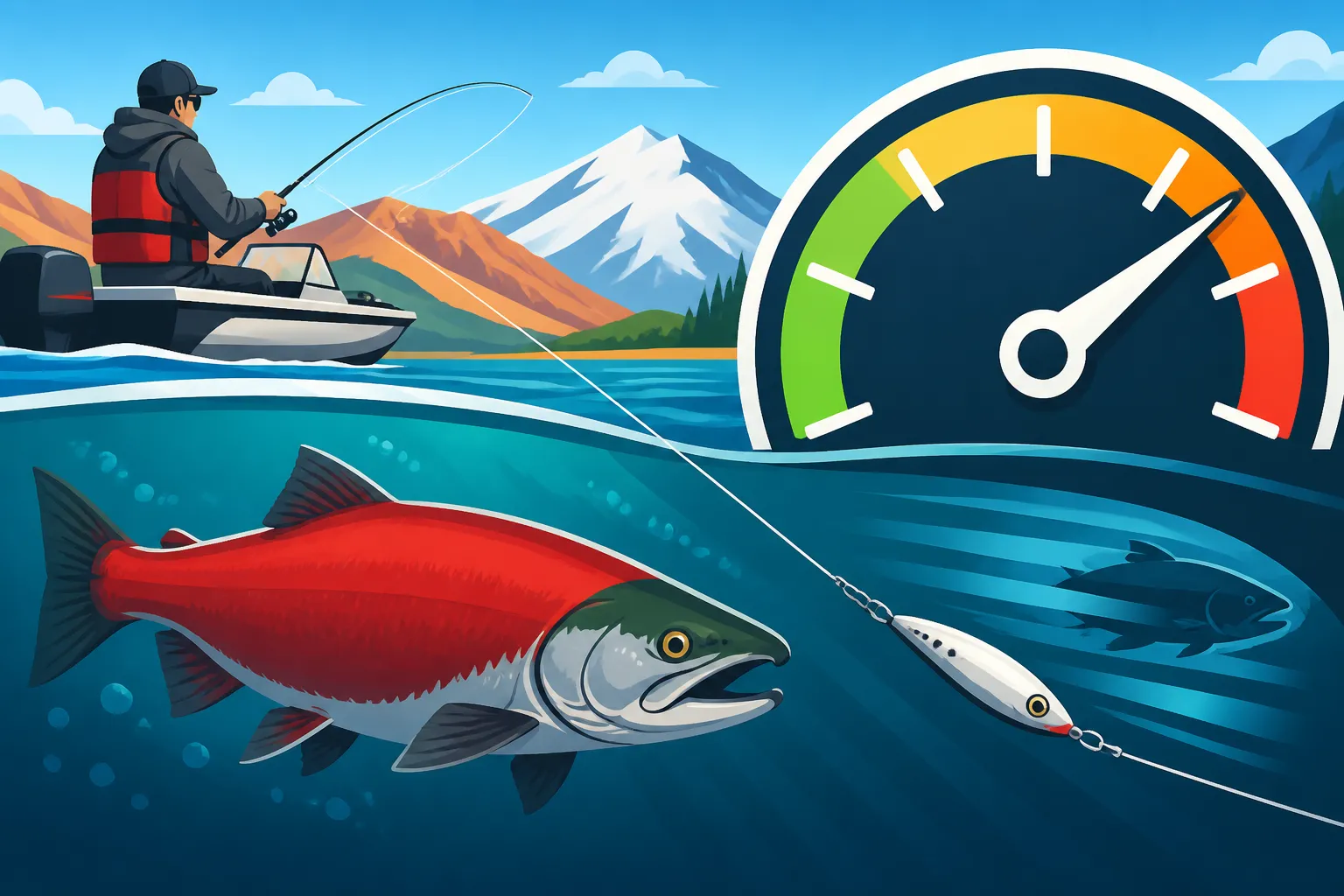
For kokanee salmon, a good starting point for your trolling speed typically falls between 0.8 mph and 1.8 mph. This range allows most kokanee lures, especially those paired with dodgers or flashers, to exhibit their intended action. However, labeling any speed as "ideal" is a bit misleading because so many factors influence what works best on any given day. Water temperature, time of day, depth, and even the type of lure you're using all play significant roles in determining the magic number.
For instance, in colder water, especially during early spring or late fall, kokanee tend to be less active, and a slower presentation, closer to the 0.8-1.2 mph range, might be more effective. Conversely, during the warmer summer months when kokanee are more energetic and feeding aggressively, you might find success nudging your speed up towards 1.5-1.8 mph. The particular lake you're fishing also matters; for example, kokanee at Strawberry Reservoir might react differently to speed than those at Flaming Gorge. Understanding these nuances is key to consistent success and why you should always be ready to adapt your strategy.
Dialing in Your Speed: Tools and Techniques
Achieving and maintaining the perfect trolling speed is an art form, but modern fishing technology makes it a lot more precise than it used to be. You can't just guess your speed by the feel of the boat or the prop wash; consistency is critical, and even a slight variance can mean the difference between a full cooler and a quiet ride home. This is especially true when kokanee are in a less aggressive mood.
Consider the precision required for other types of fishing, like fly fishing on the Provo River Fishing Guide; every cast and drift matters. Trolling for kokanee demands similar attention to detail. Just like a chef fine-tunes ingredients, you need to fine-tune your speed. Without the right tools and techniques, you're essentially just hoping for the best.
Essential Gear for Speed Control
One of the most crucial pieces of equipment for kokanee trolling is an accurate GPS speedometer. Many modern fish finders, like those from Garmin or Humminbird, have built-in GPS capabilities that display your precise speed over ground. This is far more reliable than your boat's standard pitot tube speed sensor, which can be affected by current or debris. For those without an integrated system, dedicated handheld GPS units or smartphone apps can also provide accurate speed readings. Having this real-time data allows you to make minute adjustments, sometimes as small as 0.1 mph, to find what the fish want.
Beyond speed measurement, trolling motors are indispensable for maintaining that consistent pace. Electric trolling motors, mounted on the bow or transom, offer precise control at low speeds, allowing you to creep along without spooking fish with a large outboard engine. Gas kicker motors also provide excellent low-speed thrust and fuel efficiency for long days on the water. Pairing these with a good fish finder that helps you visualize your lures and fish at different depths, as discussed in our How to Read a Fish Finder for Utah Reservoirs guide, creates a powerful combination for kokanee success. Many anglers source these items from retailers like Amazon for competitive pricing and selection.
Adjusting for Conditions and Lure Types
The type of lure you're running will significantly influence your optimal trolling speed. Large dodgers, like the popular Sling Blade or Vance's Triple Teazers, are designed to impart a wide, erratic kick to the trailing lure. These often perform best at slightly slower speeds, perhaps 1.0-1.5 mph, to maximize their action without over-rotating. Smaller dodgers or flashers, or those with less surface area, might require a bit more speed to get into their groove. Similarly, some lures, like the classic wedding ring spinners, need enough forward motion for the blade to rotate consistently and create flash.
Always consider the environmental conditions. Strong winds can drastically alter your actual speed through the water, even if your GPS says you're maintaining a steady pace over the ground. If you're trolling against a stiff breeze, your lure's water speed might be significantly slower than your boat's GPS reading. Conversely, with the wind at your back, your lure might be moving faster than intended. Learning to "read" your dodger or flasher action by watching your rod tip is an acquired skill that pays dividends. You want to see a steady pulse or wobble, indicating good lure performance. If you're struggling with consistent action, check out our Best Lures for a Utah Tackle Box article for some popular choices that perform well.
Troubleshooting and Advanced Tips
Even with the right gear and a good understanding of kokanee behavior, there will be days when the fish just aren't cooperating. This is when the true art of kokanee trolling comes into play – knowing when to deviate from the "norm" and experiment with subtle adjustments. Don't be afraid to try something different; sometimes, the smallest change can unlock a bite.
Just as a carpenter continually sharpens their tools, an angler must continuously sharpen their techniques. It's about constant observation and adaptation. If you're finding yourself in a rut, remember that flexibility is often rewarded on the water. Learning these subtle cues can turn a slow day into a memorable one, especially on prime kokanee waters like Flaming Gorge Fishing Guide or Strawberry Reservoir Fishing Guide.
When to Speed Up, When to Slow Down
One of the most common mistakes is sticking to a single "lucky" speed. Kokanee activity levels change throughout the day and year, so your speed should too. If you're not getting bites, don't be afraid to experiment in small increments. Try increasing your speed by 0.1 or 0.2 mph for 15-20 minutes. If that doesn't work, slow down by the same amount. Sometimes, a subtle increase in speed can make your dodger's flash more aggressive, mimicking a struggling baitfish, while a decrease can make a lure appear easier to catch for lethargic fish.
A widely used technique is the "S-turn." Instead of trolling in a straight line, make gentle S-turns with your boat. As you turn, the lures on the inside of the turn will slow down and drop slightly, while the lures on the outside will speed up and rise. This provides a natural variation in speed and depth that can often trigger strikes from following fish. Many experienced anglers use this trick, especially when fishing specific depths as discussed in How Deep Should You Set a Downrigger for Flaming Gorge Lake Trout?, to present their offerings in a dynamic way. This often shows you what the fish are preferring that day without having to constantly adjust your motor.
The Role of Scent and Color at Various Speeds
While speed dictates lure action, scent and color play supporting roles that can become even more critical when combined with the right speed. Kokanee have a keen sense of smell, and a scent trail can draw them in from a distance, especially if your speed is slow enough to allow the scent to dissipate effectively. Using kokanee-specific scents applied to your lures or soaked into a piece of corn or Gulp! bait can make a significant difference. You can find a wide array of scent additives and artificial baits on Amazon designed specifically for kokanee fishing.
Lure color also has a strong interaction with speed and light conditions. In bright sunlight or clear water, flashier, more reflective colors like chrome, silver, or highly iridescent patterns might perform well at higher speeds, creating a blinding, attention-grabbing display. In low light, overcast conditions, or deeper, murkier water, a slower presentation with brighter, more contrasting colors like chartreuse, pink, or orange can be more effective. The goal is to provide enough visual stimulus for the kokanee to notice your lure, without overwhelming them or making it look unnatural. For a deeper dive into kokanee behavior, check out our Utah Kokanee Salmon Guide and consider how these elements influence their feeding patterns throughout the Best Time of Year to Fish in Utah. Also, the Best Month to Catch Kokanee in Utah often sees shifts in preferred lure colors and speeds.
Here's a quick reference table for common kokanee lures and their typical effective trolling speeds:
| Lure Type (with Attractor) | Typical Speed Range (mph) | Ideal Action at Speed | Best For | Notes |
|---|---|---|---|---|
| Dodger & Hoochie/Squid | 0.8 – 1.5 mph | Wide, erratic kick of dodger; subtle tail wiggle of hoochie | Finicky fish, clearer water | Slower speeds emphasize dodger action. |
| Dodger & Wedding Ring | 1.0 – 1.8 mph | Consistent blade spin on wedding ring; dodger kick | More aggressive fish, stained water | Blade spin adds extra flash. |
| Finned Flasher & Hoochie | 1.2 – 2.0 mph | Tight, rhythmic rotation of flasher; darting hoochie | Covering water, active fish | Can handle slightly higher speeds. |
| Small Spoon/Crawler | 0.9 – 1.6 mph | Wobbling, darting action of spoon; natural movement of crawler | Varied conditions, natural presentation | Spoons are more active on their own. |
Remember, these are starting points. The real magic happens when you actively experiment and pay attention to what the fish are telling you. Consistent experimentation is key to mastering How to Troll for Kokanee in Utah and filling your cooler.
Disclaimer
Fishing regulations, conditions, and best practices can change frequently. Always consult the latest Utah Division of Wildlife Resources (UDWR) regulations before heading out on the water. This guide provides general advice and should not be taken as an authoritative source for legal fishing practices or safety protocols. Be aware of your surroundings, practice safe boating, and always put conservation first.