How to Find Shad Boils at Lake Powell
There's nothing quite like the immense challenge and exhilarating reward of fishing Lake Powell. It's a vast, intricate fishery, and sometimes it feels like finding a specific fish species, like the highly sought-after striped bass, is akin to searching for a needle in a colossal haystack. You know they're there, but where? This guide is all about cutting through that uncertainty by teaching you how to find shad boils, those incredible moments when the lake comes alive with feeding stripers, making your angling dreams a tangible reality.
Understanding Shad Boils and Their Significance
When you hear seasoned Lake Powell anglers talk about "shad boils," they're not just throwing around jargon; they're referring to one of the most exciting and productive phenomena you can witness on the water. These aren't just random splashes; they are precise, high-energy feeding frenzies that every striper angler dreams of encountering.
What Exactly is a Shad Boil?
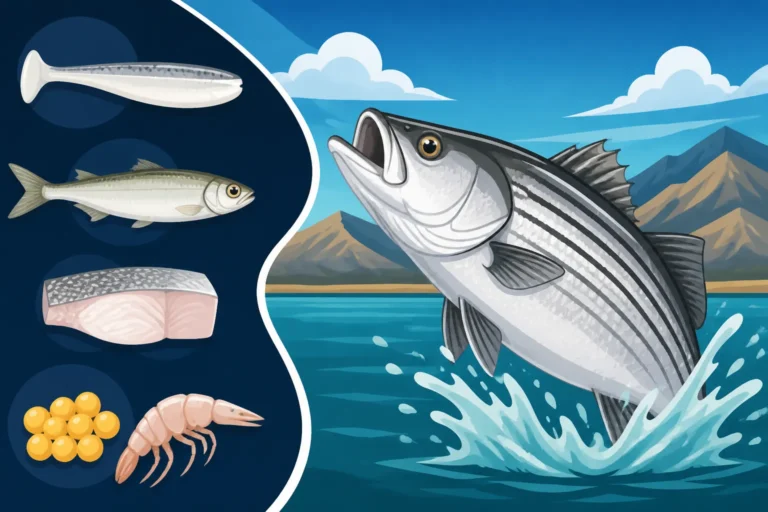
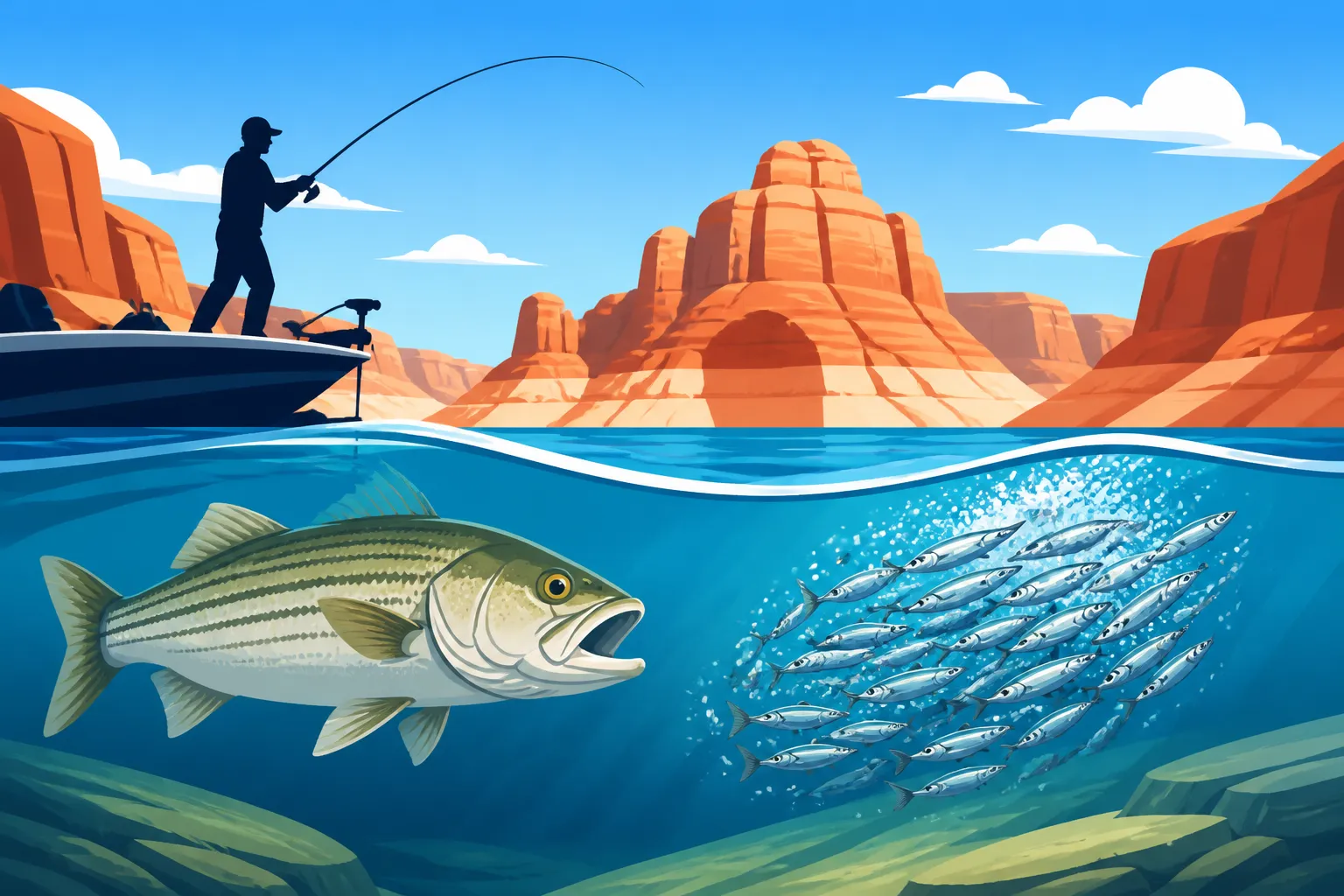
Imagine hundreds, sometimes thousands, of small baitfish, specifically threadfin shad, swimming together in a dense school. These shad are the primary food source for many predatory fish in Lake Powell, none more so than the striped bass. A shad boil occurs when a large school of striped bass corners these baitfish, pushing them to the surface. The stripers then violently attack from below, driving the shad into a panic. The result is a chaotic, splashing eruption on the water's surface as the shad try desperately to escape and the stripers gorge themselves.
These boils can last anywhere from a few minutes to well over an hour, moving across the water as the predators relentlessly pursue their prey. It's a spectacle of nature, a clear signal that the fish are actively feeding, and an angler's golden opportunity. Knowing this behavior is key to understanding how to find these highly active fish, which will put you in the best position to catch them. If you're wondering how to catch striped bass at Lake Powell, finding a boil is often the fastest track to success.
The Lifeblood of Lake Powell's Striped Bass Fishery
Threadfin shad are absolutely critical to the health and vitality of Lake Powell's striped bass population. They represent a high-calorie, easily digestible food source that allows stripers to grow quickly and sustain their large numbers. Without abundant shad, the striped bass fishery wouldn't be nearly as robust or offer the kind of consistent action that makes Lake Powell famous.
The existence of a strong shad population is what drives the stripers' behavior, including these spectacular surface feeding events. When the shad are schooling heavily, the stripers organize to hunt them down. This interaction is a dynamic dance of predator and prey, constantly shifting based on water temperature, light conditions, and the sheer density of the baitfish. Understanding this food chain connection helps us predict where and when these events might occur. This is why when you stumble upon a boil, it's not just a chance encounter; it's a window into the intricate ecosystem that thrives beneath the surface.
When and Where to Expect Boils
Shad boils are most common during the warmer months, typically from late spring through fall, when shad are more active near the surface. However, don't rule them out in cooler shoulder seasons, especially on sunny, calm days. Generally, you'll find boils more frequently in the morning and late afternoon, or during overcast conditions when the light is lower. But Lake Powell is vast, so expecting them in specific "spots" can be tricky.
- Main Channel and Open Water: Many boils happen in the wide-open main channels, especially around submerged points or humps where shad might congregate.
- Canyons and Coves: Stripers often herd shad into the backs of canyons or large coves, using the natural topography to their advantage.
- Confluence Areas: Where major arms or canyons meet the main lake, currents and deeper water can funnel shad, making these areas prime for striper ambush.
Pay close attention to these general areas, but remember that shad move with currents and light, and the stripers follow. Being mobile and observant is far more effective than sticking to a single "spot" in such an expansive body of water.
Reading the Signs: How to Spot an Impending Boil
Successfully finding shad boils isn't always about being in the right place at the right time; it's often about recognizing the subtle (and sometimes not-so-subtle) clues that Lake Powell offers. Learning to "read" the water and its surroundings will significantly increase your chances of witnessing one of these incredible feeding frenzies.
Visual Cues on the Water
Your eyes are your best tools when searching for boils. This isn't just about looking for splashing; it's about observing the broader environment.
- Birds: Pay close attention to seabirds, especially gulls and terns. When they are circling, diving, or congregating in a specific area, it's often because they're feeding on shad that have been driven to the surface by stripers. These birds are excellent spotters and act as natural indicators of subsurface activity. If you see a flock of gulls suddenly dive-bombing a spot, hit the throttle – it's likely a boil!
- Surface Commotion: Beyond the full-blown explosion of a boil, look for more subtle disturbances. Ripples in calm water, small splashes that seem out of place, or a shimmering "nervous" look to the water can all indicate schooling shad being pushed or harassed just below the surface. Sometimes, you'll see small, silvery flashes of shad as they try to escape.
- Color Changes: While less common, sometimes an extremely dense school of shad can create a slightly darker or different-colored patch on the water's surface, particularly in clear water conditions. This might not be a boil itself, but it can signal a large concentration of baitfish.
Keep your gaze wide, constantly scanning the horizon, not just directly in front of your boat. Many anglers miss boils because they're too focused on their immediate surroundings. A good pair of polarized sunglasses is an absolute must-have for cutting glare and seeing into the water better.
Listening for the Action
It's not just about what you see; it's also about what you hear. Lake Powell can be incredibly quiet on a calm day, and sound travels far across the water.
- Splashing and Popping Sounds: A full-on shad boil can be surprisingly loud. You'll hear distinct splashing, thrashing, and often a popping sound as stripers break the surface. If you're drifting or moving slowly, shut off your engine occasionally and just listen. The sound can carry for a considerable distance, especially down a canyon or across a quiet bay.
- Bird Calls: While not directly indicating a boil, excited and concentrated bird calls can sometimes lead you to an area where they are already feasting on the shad, which in turn leads you to the stripers.
Remember, every sense you engage increases your chances. Don't underestimate the power of quiet observation.
Using Technology to Your Advantage
While old-school observation is paramount, modern technology can give you a significant edge, especially when the fish aren't boiling on the surface.
- Fish Finders: A good fish finder is invaluable. Look for large, dense schools of baitfish, often appearing as huge "clouds" or masses of dots on your screen. When you see these, especially if they are moving quickly or are accompanied by larger arcs (stripers) just below or within the school, you're in a prime area. Many modern fish finders, like those from Garmin or Humminbird, have excellent side-imaging or down-imaging capabilities that can show you baitfish and predators off to the sides or directly below your boat. If you're in the market for a new one, consider checking reviews and prices on Best Fish Finders for Utah Reservoirs.
- GPS and Mapping Apps: Use your GPS to mark areas where you've seen boils in the past, or where you've found dense schools of shad. Patterns often emerge over time. Apps like Navionics or C-MAP provide detailed contour maps of Lake Powell, showing submerged canyons, humps, and old river channels where shad and stripers like to congregate. Marking waypoints where you see bait or fish activity is crucial for building a successful pattern. If you're just starting out, a basic handheld GPS unit can be found on Amazon.
- Water Temperature Gauges: While not directly indicating a boil, knowing the water temperature can help you narrow down where shad and stripers might be. Shad prefer certain temperature ranges, and stripers will follow them. Most modern fish finders include a temperature sensor.
| Sign Type | Description | Best Time to Observe | Action to Take |
|---|---|---|---|
| Visual | Diving birds (gulls, terns), surface splashes, "nervous" water, shimmering shad | Morning, late afternoon, overcast days, calm conditions | Slowly approach (if safe), observe direction of boil, prepare casting gear. Scan horizon constantly. |
| Auditory | Distinct splashing, popping sounds, excited bird calls | Calm conditions, especially early morning or evening | Cut engine, listen carefully, triangulate sound source. Head in that direction cautiously. |
| Electronic | Dense baitfish schools on fish finder, large arches below baitfish | Any time, but crucial when no surface activity | Mark waypoint, explore area thoroughly. Look for similar structure on map. Consider How to Read a Fish Finder for Utah Reservoirs for more depth. |
| Environmental | Favorable water temperature (60-75°F), calm winds | Throughout warmer months | Focus search efforts in areas historically productive under similar conditions. Adjust depth based on temperature. |
Strategic Approaches to Finding Active Boils
Lake Powell is huge, and simply idling around hoping to stumble upon a boil can be a frustrating exercise in futility. A more strategic approach, combining knowledge of fish behavior, water conditions, and efficient searching techniques, is far more likely to yield results.
Cruising the Right Depths and Structures
Striped bass are opportunistic predators, and while they can be found in open water, they often use underwater structure and changes in depth to ambush baitfish.
- Main Channels and Submerged Riverbeds: Lake Powell's main channels are essentially the old Colorado River and San Juan River beds. These areas often hold deeper, cooler water and serve as major highways for both shad and stripers. Trolling or cruising along the edges of these channels, especially where they meet shallower flats or points, can be highly effective. The deeper parts of the lake are often where you'll find the largest Striped Bass Size at Lake Powell.
- Canyons and Coves: As mentioned, stripers frequently herd shad into the narrower confines of canyons or the backs of large coves. These areas limit the escape routes for shad, making them ideal ambush points. Focus on areas with steep walls, underwater ledges, and prominent points within these canyons.
- Open Water Humps and Points: Any submerged island, hump, or point that rises from the depths can concentrate baitfish, making it a prime location for stripers to stage. Look for these on your mapping software and drift or troll over them.
Remember, boils are often transient. They might pop up in the middle of a wide-open bay one minute and then disappear, only to reappear a mile away. Your goal is to be in the general vicinity where shad are abundant and stripers are actively hunting.
Following the Forage: Shad Behavior and Location
To find the stripers, you have to find their food. Shad are schooling fish, and their behavior is heavily influenced by environmental factors.
- Water Temperature: Shad are sensitive to temperature. They tend to be in shallower, warmer water in the mornings and evenings, and then retreat to deeper, cooler water during the heat of the day. Boils are more likely when shad are active and closer to the surface.
- Plankton Blooms: Shad feed on plankton, so areas with dense plankton blooms will attract shad. These blooms can sometimes be spotted as slightly discolored patches of water, or you'll see them clearly on your fish finder.
- Wind and Current: Shad will often drift with currents or be pushed by the wind. Understanding the prevailing wind direction can help you predict where baitfish might be congregating, especially near points or into coves. On a windy day, one side of a canyon might have more concentrated shad than the other.
Staying attuned to these ecological factors will give you a "sixth sense" for where the food chain is most active. Regularly checking water temperatures on your fish finder and observing the lake's color variations will pay dividends.
Patience and Observation: The Angler's Virtues
While technology and strategic planning are vital, nothing replaces the fundamental virtues of patience and keen observation on Lake Powell.
- Quiet Approach: When you suspect a boil is forming or you see distant activity, approach slowly and quietly. Shut down your main engine well before you get within casting distance and use a trolling motor if you have one. Spooking a school of actively feeding stripers is easy to do and will quickly send them back into the depths. This is especially true in open water.
- Scan Constantly: Don't get tunnel vision. Keep your eyes constantly sweeping the horizon, looking for those tell-tale bird activities or surface disturbances. Spend more time looking at the lake than at your electronics once you're in a promising area. This helps you identify the Best Time of Day to Catch Striped Bass at Lake Powell.
- Persistence Pays Off: Some days, boils are everywhere. Other days, they're elusive. Don't get discouraged if you don't find them immediately. Keep moving, keep observing, and trust your instincts. The next cove or bend in the canyon might be where the magic happens. Many successful anglers say their best catches come after hours of searching.
Maximizing Your Success Once You Find Them
So, you've done it! You've spotted the birds, heard the splashes, and now you're heading straight for a full-blown shad boil. This is where the real fun begins, but also where quick, smart decisions make all the difference between a few casts and a boat full of fish.
Approaching a Boil Without Spooking Fish
The excitement of seeing a boil can make you want to gun it, but a slow, calculated approach is critical to prolonging the frenzy and maximizing your catch.
- Cut the Engine Early: As soon as you confirm a boil, cut your main engine well out of casting range, ideally 200-300 yards away. Stripers are sensitive to sudden, loud noises, and a roaring outboard will likely send them deep and scatter the shad.
- Use a Trolling Motor (or Drift): If you have a trolling motor, use it to quietly approach the boil. Try to get just close enough that you can make good, accurate casts into the action. If you don't have one, drift silently with the wind or current.
- Observe the Movement: Boils often move. Watch which way the activity is heading and try to position your boat ahead of its path, or along its side, allowing you to cast into it as it comes to you. Don't chase it directly from behind; this is often the fastest way to drive the fish away.
- Maintain Distance: Resist the urge to motor right into the middle of the boil. Casting from the edge will be less disruptive and often just as effective. You want to get your lure into the feeding zone without sending waves of disturbance through the school.
The Right Lures and Presentation
Once you're in position, lure selection and presentation are key. Stripers in a boil are aggressive and not terribly picky, but some lures are more effective at imitating wounded shad.
- Topwater Lures: When stripers are actively breaking the surface, nothing beats a topwater lure. Poppers, walk-the-dog baits, and prop baits create maximum disturbance, perfectly mimicking a struggling shad. Cast these directly into the boil and work them aggressively. Brands like Heddon Super Spook or Lucky Craft Sammy are very popular. You can find a wide variety of these and other effective lures on Amazon.
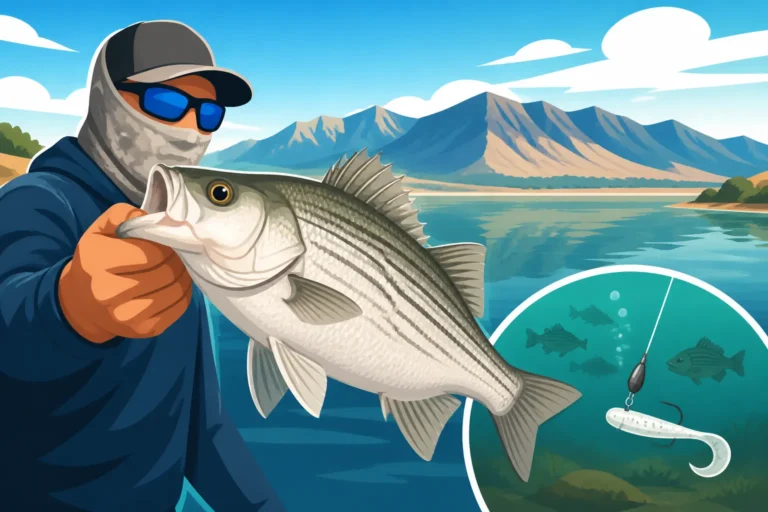
- Spoons and Jigs: If the boil is subsiding or the stripers are hitting just below the surface, metal spoons (like Kastmasters or Hopkins Shorty) or jigs (bucktails or soft plastic swimbaits on a jig head) are excellent choices. Let them sink briefly and retrieve with a fast, erratic action to imitate a fleeing shad. These are also great for casting into the edges of a boil or just after it moves on. If you're looking to stock your tackle box, you might want to check out Best Lures for a Utah Tackle Box.
- Line Choice: Because stripers are so aggressive, they're not usually line-shy during a boil. Use a braided main line for sensitivity and casting distance, connected to a fluorocarbon leader for a bit of invisibility and abrasion resistance. A 15-20lb test is usually sufficient. For more on line choices, see Best Fishing Line for Utah Bass.
- Casting Accuracy: Get your lure right into the thick of the boil. These fish are focused on feeding, and putting your lure directly in their path will get strikes. Be ready for an immediate hit!
What to Do When the Boil Subsides
It's an unfortunate truth that all good things, including shad boils, must come to an end. But just because the surface activity has stopped doesn't mean the fishing is over.
- Fish Adjacent Areas: When stripers stop boiling, they often retreat to slightly deeper water nearby, still looking for straggling shad. Cast your spoons or jigs to the edges of where the boil was, or along nearby drop-offs and points.
- Go Deeper: Sometimes the stripers will simply follow the shad down into the depths. Switch to vertical jigging with heavier spoons or lead head jigs, or try trolling with deep-diving crankbaits or umbrella rigs in the area. Your fish finder will be crucial here to locate the deeper schools.
- Follow the Birds: Even if the boil is gone, those birds might linger, picking off leftover shad. Keep an eye on them; they might lead you to another boil forming nearby.
- Move On: If the activity completely dies and your fish finder shows nothing, it's time to move to another promising area. Consult your GPS waypoints of previous boils or promising Lake Powell Striped Bass Spots and start the search again.
Finding shad boils on Lake Powell is a skill developed through patience, keen observation, and strategic application of both traditional angling wisdom and modern technology. It's an incredibly rewarding experience, offering some of the most exciting fishing Utah has to offer. So, get out there, keep your eyes on the water, and listen for the sounds of those stripers on the hunt!
Disclaimer
Fishing conditions and regulations in Utah can change. Always consult the latest Utah Division of Wildlife Resources (UDWR) official guidebooks and regulations before heading out. This article is for informational purposes only and does not supersede state laws or official guidance.