Do You Need a Drift Boat for the Green River?
Many anglers dream of fishing Utah's famed Green River below Flaming Gorge Dam, a true blue-ribbon trout fishery. But as you start planning, a common question pops up: "Do I absolutely need a drift boat to fish it effectively?" It's a valid concern because drift boats are synonymous with serious river fishing, and they represent a significant investment or rental cost. This guide will dive deep into navigating the Green River, exploring whether a drift boat is essential for your angling success or if other methods can also get you into plenty of fish.
Understanding the Green River's Unique Character and Fishing Needs
Before we even talk about boats, it's crucial to understand the Green River itself. It's not just any river; it's a tailwater fishery, meaning its flows are controlled by the Flaming Gorge Dam, creating a unique environment that impacts how fish behave and how anglers can best approach them.
The Layout of the Green River Below Flaming Gorge Dam
The Green River below Flaming Gorge Dam is typically broken down into three main sections: A, B, and C. Section A, from the dam to Little Hole, is arguably the most famous and heavily fished. It's characterized by its clear, cold, consistent water temperatures, rich insect life, and dense trout populations. The current here is often steady, with deep pools, riffles, and long, productive runs that seem to hold fish around every bend. This section is truly a fly fisher's paradise, but spin anglers also find great success.
Section B, from Little Hole to the Indian Crossing Campground, starts to broaden out a bit, with some sections offering more varied structure and slightly less angler pressure than the upper reaches. It still retains the "blue ribbon" qualities, with excellent trout fishing opportunities. Finally, Section C, from Indian Crossing down to the Utah/Colorado state line, is the longest and most remote stretch. It sees the least pressure and offers a wilder, more solitary experience. Understanding these sections is key, as some are more wade-friendly than others, while others practically demand a boat to cover effectively. The consistent current throughout these sections, maintained by dam releases, is a significant factor in how fish feed and hold.
Why Drift Fishing is So Popular Here
Drift fishing, where an angler or guide maneuvers a boat downstream, presenting flies or lures in a natural, uninhibited drift, is the reigning king of techniques on the Green River. The reason is simple: it works incredibly well. Trout in rivers like the Green are accustomed to food floating past them naturally with the current. By drifting your offering at the same speed as the current, you mimic this natural presentation, making it almost irresistible to feeding fish. This method allows you to cover vast amounts of water efficiently, systematically targeting riffles, seams, pools, and undercut banks where trout lie in wait.
Imagine casting your fly just upstream of a promising rock eddy, letting it tumble downstream as if it were a natural insect dislodged from the riverbed. A drift boat gives you the precise control to achieve this presentation time and again, maximizing your chances. It's about being able to adjust your position, hold the boat in a productive run while you work a particular seam, and then effortlessly move on to the next promising spot. Without this mobility, you're often limited to what you can reach from shore or by wading, which, while still effective in some spots, significantly restricts your overall fishing territory. How to Fly Fish the Provo River touches on similar principles for river fishing.
The Advantages of a Drift Boat on the Green River
It's no secret that a drift boat is the preferred vessel for many Green River regulars, especially guides. There are very good reasons for this, mostly stemming from the control, coverage, and comfort they offer.
Control, Coverage, and Comfort
A drift boat, typically a McKenzie-style or similar, is designed for rivers. Its flat bottom, flared bow, and rockered hull make it incredibly maneuverable and stable in moving water. A skilled rower can "hold" the boat in place against the current, allow it to glide silently through shallow riffles, or accelerate it quickly to avoid obstacles. This level of control is paramount for precise fly presentation. You can position the boat perfectly to hit a specific casting lane, then follow your drift downstream, keeping pace with your fly or lure. This means more time with your presentation in the strike zone and less time reeling in to recast because you've drifted past the fish.
Beyond control, the coverage a drift boat provides is unmatched. In a single day, you can float many miles of river, accessing areas that are impossible to reach by wading or even from a small, less maneuverable craft. This dramatically increases your chances of finding actively feeding fish, especially if certain spots are crowded or not producing. Furthermore, the comfort aspect can't be overstated. You're typically standing or sitting in a stable platform, out of the direct cold water, with ample room to cast, move around, and even stretch your legs. This allows you to fish longer and more effectively without fatigue. Imagine floating down the river on a crisp autumn day, casting to rising trout while sipping hot coffee; that's the kind of comfort a drift boat provides. How to Fish From a Drift Boat on the Green River offers more insights into this experience.
Safety and Gear Capacity
Safety is another significant advantage of a drift boat on the Green. While the Green River below the dam isn't known for major whitewater rapids, it does have sections with strong currents, submerged rocks, and occasional small riffles that can be tricky for less stable crafts. A drift boat's inherent stability and robust construction provide a much safer platform, especially if you encounter unexpected currents or need to navigate around snags or other boaters. They are built to take a bump or two, offering peace of mind. Moreover, they sit higher in the water, reducing your exposure to cold water splashes, which is a big deal on chilly Utah mornings or during spring runoff. Boat Safety Equipment Required in Utah covers general safety gear you should carry.
Then there's the gear capacity. If you're like most anglers, you don't just bring one rod. A drift boat typically has dedicated rod holders, keeping multiple setups (a dry fly rod, a nymphing rod, a streamer rod) ready to go. You can bring a large cooler with lunch and drinks, waterproof bags for extra layers, cameras, and all the tackle you could ever need. This storage is a game-changer. No more having to make tough choices about what gear to leave behind or constantly digging through a small backpack. Everything is accessible, organized, and out of the way, allowing you to focus on the fishing. This is especially useful if you're out for a full day, or even multiple days, where changing conditions might demand different tactics and equipment.
Alternatives to a Drift Boat for Green River Fishing
While drift boats are king, they aren't the only way to fish the Green River. Many anglers, myself included, have had incredible days on this river using other methods. It really comes down to your personal preferences, budget, and desired experience.
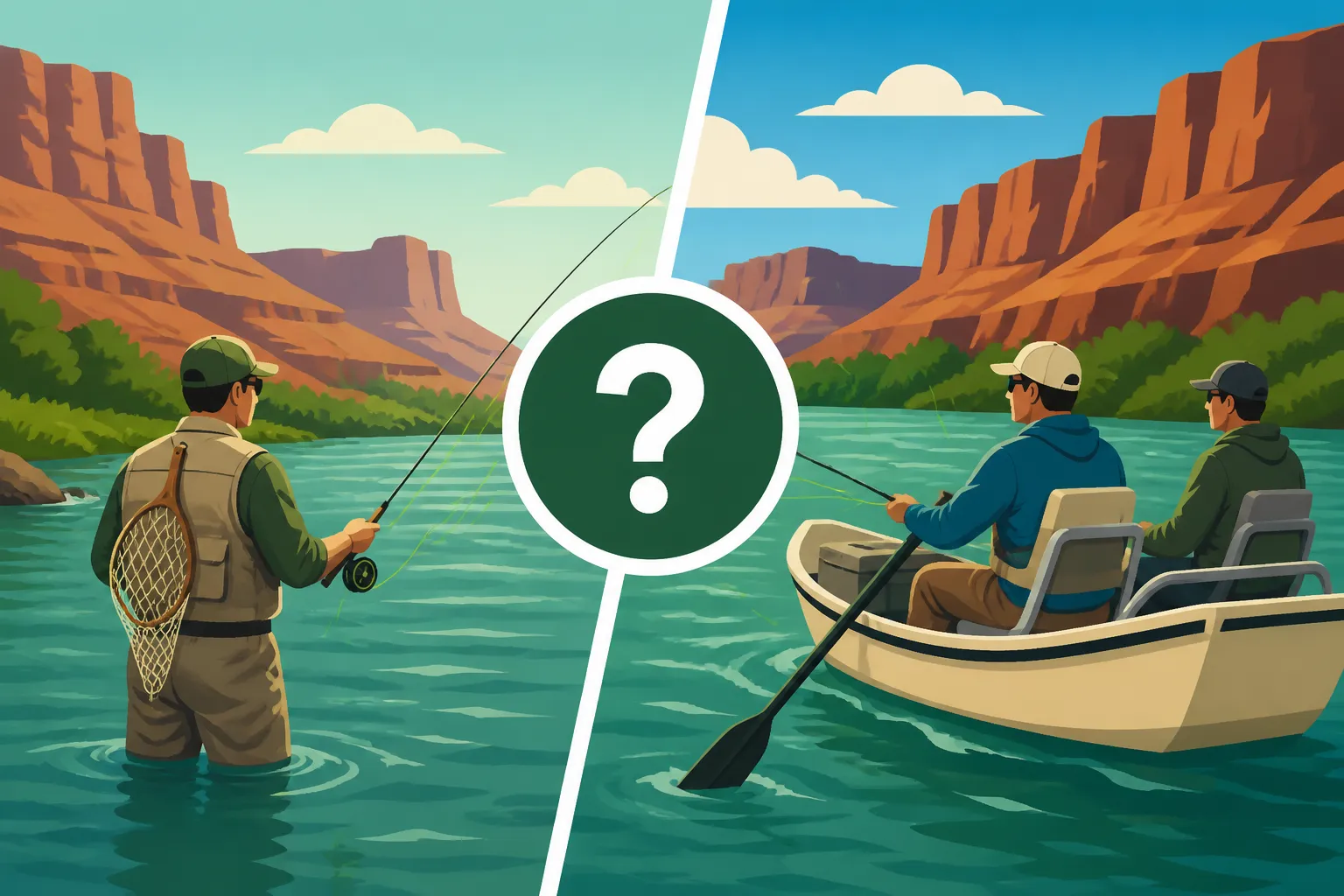
Wading the Green River
Wading offers a more intimate and direct connection with the river, and it's absolutely a viable option for fishing the Green, especially for those on a budget or seeking solitude. Certain sections, particularly in the upper A section near the dam (before the designated "boat only" launch point at Little Hole) and some areas further downstream, offer excellent wading opportunities. The key is knowing where to wade and when. During lower water flows, more of the river becomes accessible. However, the Green is still a powerful river, and wading requires caution. Deep channels, strong currents, and slick rocks can be treacherous. Good quality waders and studded wading boots are non-negotiable for safety and stability. Best Wading Boots for Utah River Rocks are essential.
The limitation of wading is, of course, coverage. You're confined to what you can safely reach from shore or by wading out. This means you won't cover nearly as much water as someone in a drift boat, and you might miss out on productive runs in the middle of the river. However, for those who enjoy meticulously working a single seam or pool, observing the river's micro-currents, and experiencing a slower, more deliberate pace, wading can be incredibly rewarding. It forces you to read the water more carefully and focus on precise presentations in limited areas. Just remember to always check current flow rates before heading out, as high water can make many wadeable sections unsafe or impossible to access.
Fishing from Kayaks, Rafts, and Other Small Craft
In recent years, the popularity of fishing from kayaks, inflatable rafts, and pontoon boats has skyrocketed, and for good reason. These smaller crafts offer a fantastic middle ground between full-sized drift boats and wading, especially on rivers like the Green. They provide mobility to cover more water than wading, often at a fraction of the cost and logistical complexity of a drift boat. Many can be easily transported on a car roof rack or in a truck bed, eliminating the need for a boat trailer.
Inflatable rafts and pontoon boats, with their high flotation and stability, are excellent for floating the Green River. They handle currents well and can navigate shallower water. Fishing kayaks, particularly pedal-drive models, offer hands-free propulsion, allowing anglers to cast and fight fish without constantly paddling. You can find a wide range of these options at retailers like Bass Pro Shops or online at Amazon. While they generally have less storage and are less stable than a drift boat, they are far more capable than wading alone. Their main drawbacks include being more susceptible to wind, which can make control difficult, and a more limited capacity for gear and passengers. However, for a solo angler or two companions looking for a more adventurous and cost-effective float trip, these smaller vessels are a fantastic choice. Best Kayaks for Utah Lake Fishing might give you some ideas for smaller craft, although the Green River is a different animal than a lake.
Making Your Decision: Drift Boat or Other Methods?
Deciding how to tackle the Green River depends on a few personal factors. There's no single "right" answer for everyone, as what works best for one angler might not suit another.
Factors to Consider for Your Trip
When weighing your options, think about these key elements:
- Budget: This is often the biggest deciding factor. Owning a drift boat is a significant investment, and even renting one or hiring a guide for a day can add up. If cost is a primary concern, wading or using your own kayak/raft will be far more economical. You can find quality inflatable rafts or fishing kayaks on sites like Amazon that are much friendlier to the wallet than a drift boat purchase.
- Experience Level: Are you an experienced rower comfortable with navigating currents and maneuvering a boat? Or are you a seasoned wader who knows how to read river flows? If you're new to river fishing, wading might offer a gentler introduction, or hiring a guide (who will be in a drift boat) could be the best way to learn the ropes safely.
- Group Size: Drift boats are ideal for carrying a guide and two anglers, offering a comfortable and social fishing experience. If you're fishing solo or with just one other person, a smaller raft or kayak could be perfectly adequate and more agile. If you have a larger group, you'd need multiple smaller crafts or perhaps a couple of drift boats.
- Desired Experience: Do you crave the solitude of carefully wading a quiet section, seeking out individual fish? Or do you prefer the thrill of covering miles of river, casting to hundreds of potential lies, and maximizing your chances of finding actively feeding pods of fish? A drift boat excels at the latter, while wading often provides the former.
- Time of Year/Water Levels: The Green River changes with the seasons. Spring runoff can make wading difficult and even dangerous in many sections, making a boat almost mandatory for safe access. Low-water periods, often in late summer or fall, open up more wading opportunities. Always check the river flow conditions before you go. How Runoff Affects Utah River Fishing is a useful read for this.
| Method | Coverage | Cost (Initial/Rental) | Difficulty (Operation) | Gear Capacity | Social Aspect |
|---|---|---|---|---|---|
| Drift Boat | Excellent | High | Moderate-High | High | 2-3 Anglers |
| Wading | Limited | Low | Low | Low | Solo/Small Grp |
| Kayak/Raft | Good | Moderate | Low-Moderate | Moderate | 1-2 Anglers |
When a Guide Might Be Your Best Bet
For many, especially first-timers to the Green River, the simplest and most effective solution is to hire a professional fishing guide. Most Green River guides operate out of drift boats, and for good reason. They provide not only the vessel but also invaluable local knowledge, years of experience navigating the river, and expertise in current fishing conditions and techniques. A guide will put you on fish, teach you the nuances of river fishing, and ensure your safety.
Hiring a guide means you don't have to worry about transportation of a boat, launching, rowing, or retrieving. All you need to do is show up ready to fish, and they'll handle the rest. This can be especially appealing if you're traveling from out of state or simply want to maximize your fishing time without the logistical headaches. Many reputable outfitters offer guided trips out of Dutch John, ensuring you have access to top-notch equipment and experienced professionals. It's often the most efficient way to experience the legendary fishing of the Green River below Flaming Gorge. Utah Fishing Guide License Requirements Explained ensures you pick a professional.
In conclusion, while a drift boat offers undeniable advantages for fishing the Green River, particularly in terms of coverage, control, and comfort, it's not the only ticket to success. Wading, kayaks, and rafts can all provide rewarding experiences, depending on your preferences and limitations. However, if your goal is to efficiently cover a lot of water, fish multiple techniques, and maximize your chances for trophy trout, a drift boat (whether your own or with a guide) remains the top choice for this iconic Utah fishery.
Disclaimer
This article is for general informational purposes only and does not constitute professional advice. Laws, prices and regulations vary by location and change over time. Consult a qualified professional for guidance on your specific situation.