Best Fishing Rod Size for Utah Trout
If you've ever walked into a sporting goods store and stared blankly at a wall of fishing rods, feeling completely overwhelmed by all the numbers and descriptions, you're not alone. Choosing the right fishing rod for Utah trout can feel like a puzzle, especially when you want to make sure you're getting the most out of your time on the water. This comprehensive guide will break down everything you need to know about selecting the ideal rod size, power, and action to enhance your trout fishing adventures across Utah's diverse waters.
Understanding Rod Size: More Than Just Length
When we talk about "fishing rod size," it's easy to assume we're just talking about how long the rod is. And while length is definitely a huge factor, it's only one piece of the puzzle. A fishing rod's "size" is really a combination of its length, its power (or weight rating), and its action (how and where it bends). Each of these elements plays a critical role in how the rod performs, how much fun you have reeling in a fish, and how effective you are at casting in different Utah fishing scenarios. Getting these aspects dialed in can make all the difference, whether you're chasing feisty wild browns on a small stream or pulling chunky rainbows from a reservoir. You'll find a wide array of options at places like Bass Pro Shops or online through retailers like Amazon, so knowing what to look for before you go makes the process much smoother.
Rod Length and Its Impact on Casting
The length of your fishing rod directly affects your casting distance and accuracy. Longer rods, generally speaking, can cast further because they generate more tip speed. Shorter rods offer greater accuracy and are easier to maneuver in tight spaces.
- Longer Rods (7 feet and up): These are fantastic for reaching those distant feeding lanes on larger waters like Strawberry Reservoir or Deer Creek, especially when shore fishing or casting from a boat. They give you leverage for fighting bigger fish and keeping your line clear of obstacles. However, they can be cumbersome in overgrown areas, snagging on bushes or trees. If you're planning on covering a lot of water and need maximum casting range, a longer rod is your friend.
- Medium Rods (6 to 7 feet): This is often considered the sweet spot for many trout fishing situations in Utah. A 6'6" or 7' rod offers a good balance of casting distance and accuracy. It's versatile enough for open reservoir fishing but still manageable in areas with some bankside vegetation. It’s a great choice for all-around use, from casting spinners to floating PowerBait.
- Shorter Rods (Under 6 feet): When you're tucked into a small, brushy stream like many of the tributaries in the Uinta Mountains, or navigating dense willows on the Middle Provo River, a shorter rod becomes invaluable. Its compact size allows for precise, short casts and easy maneuvering without constantly snagging trees behind you. You might sacrifice some casting distance, but the ability to present your lure accurately in tight quarters is paramount. These rods also make even smaller trout feel like giants, adding to the thrill.
Rod Power: Matching It to Fish and Lure Weight
Rod power refers to how much force it takes to bend the rod blank. It's about the rod's strength or backbone and is usually labeled as ultralight, light, medium-light, medium, and so on. This rating dictates the optimal line weight and lure weight the rod is designed to handle. Using a rod with the correct power for your target species and fishing technique is crucial for optimal performance and enjoyment.
- Ultralight Power Rods: These rods are incredibly sensitive and bend significantly with even a small fish. They're perfect for presenting very light lures, jigs, or bait setups (think tiny Panther Martin spinners or a single kernel of corn on a small hook). For small, stream-dwelling trout or panfish in community ponds, an ultralight rod makes the fight incredibly exciting, transforming even a 10-inch rainbow into a spirited battle. This power range excels when you’re fishing with light monofilament line, perhaps 2-4 pound test. What Gear Does a First-Time Utah Angler Need? often recommends something in this range for beginners due to the fun factor.
- Light Power Rods: A step up from ultralight, light power rods offer a bit more backbone while still maintaining excellent sensitivity. They handle slightly heavier lures and lines (4-6 pound test) and are a fantastic all-around choice for many Utah trout. This is often the preferred power for throwing small spoons, crankbaits, or bait rigs for stocked trout in reservoirs like Pineview or Jordanelle, where fish can range from pan-sized to a few pounds. They offer a good balance of fun and control.
- Medium-Light Power Rods: If you're targeting larger trout, perhaps aggressive brown trout in the Green River, or expecting a mix of trout and smallmouth bass in a reservoir, a medium-light rod gives you more stopping power. It can handle heavier lures and lines (6-10 pound test) and provides the muscle needed to turn a stronger fish away from snags or structure. While still sensitive enough for good feel, it's less "sporty" than an ultralight but more capable when you hook into something substantial. This can also be a good choice if you're exploring Best Lures for a Utah Tackle Box that might be slightly heavier.
Rod Action: Where the Bend Happens
Rod action describes where the rod bends when pressure is applied to the tip. It dictates how quickly the rod returns to its straightened position after a cast or during a fish fight. Common actions include fast, moderate-fast, moderate, and slow.
- Fast Action Rods: A fast action rod bends primarily in the top third of the blank. This provides maximum sensitivity, allowing you to feel even the most subtle bites. It also offers quick hook-sets, which is crucial when fish are biting lightly or you're using single hooks. These rods are excellent for techniques requiring precise lure control, like jigging or twitching small jerkbaits for trout. The quick recovery also aids in longer, more accurate casts.
- Moderate-Fast Action Rods: This is another highly versatile action for trout fishing. A moderate-fast rod bends through the top half of the blank, offering a good compromise between sensitivity and forgiveness. It's great for casting a variety of lures, including treble-hooked baits, as the slightly slower action can prevent hooks from tearing out of a fish's mouth during a strong fight. It’s also more forgiving for beginners learning How to Cast a Spinning Rod for the First Time.
- Moderate (or Medium) Action Rods: These rods bend through the middle section of the blank. They excel at casting crankbaits, spinnerbaits, and topwater lures, providing more "give" that allows fish to fully inhale the bait before you set the hook. While less sensitive for detecting subtle bites, they are very forgiving during a fight, absorbing head shakes and sudden runs, which can be beneficial for keeping finicky trout hooked.
- Slow Action Rods: A slow action rod bends almost all the way down to the butt section. These are not commonly used for modern trout fishing techniques in Utah, being more traditional for panfishing with live bait or fly fishing rods (which have their own action ratings). They offer maximum forgiveness and casting delicate presentations but lack the power and sensitivity needed for many trout applications.
Recommended Rod Sizes for Common Utah Trout Fishing Scenarios
Now that we've broken down rod length, power, and action, let's put it all together for some specific Utah trout fishing situations. Keep in mind, personal preference plays a huge role, but these are solid starting points that many successful Utah anglers use. Don't forget to check out Best Fishing Rods for Utah Anglers for more general advice.
Stocked Trout in Community Ponds and Smaller Reservoirs
For the countless community ponds and smaller reservoirs across the Wasatch Front and beyond, where the Utah Division of Wildlife Resources regularly stocks rainbow trout, the goal is often to maximize fun with easily accessible fish.
- Rod Length: A 6 to 7-foot rod is ideal here. It offers enough length for decent casts from shore, yet is short enough to handle comfortably around families, trees, and other anglers.
- Rod Power: An ultralight or light power rod is the absolute sweet spot. These fish aren't usually massive, and an ultralight rod makes a 12-inch rainbow feel like a trophy. It's perfect for throwing light baits like PowerBait (check out How to Fish PowerBait for Stocked Trout), worms, or small jigs and spinners.
- Rod Action: A moderate-fast or fast action will give you the sensitivity to feel light bites and the backbone for a quick, confident hook-set. The moderate-fast action can also be a little more forgiving if you're new to fishing.
Wild Trout in Rivers and Streams
Utah's rivers and streams, from the legendary Provo River to smaller mountain creeks, hold wild brown, rainbow, and cutthroat trout. These fish are often warier and require more finesse.
- Rod Length: Here, versatility depends heavily on the specific water. For smaller, brushy creeks, a 5'6" to 6'6" rod is perfect for accurate, short-range casting. On wider rivers like the Green River below Flaming Gorge Dam or the Weber River, a 6'6" to 7' rod can help with longer casts and mending line.
- Rod Power: A light or ultralight rod is generally preferred. Wild trout, especially smaller ones, are delicate, and lighter tackle protects your light line and enhances the fight. It also allows for superb presentation of small spinners, spoons, and jigs.
- Rod Action: A fast or moderate-fast action is key for feeling subtle takes, especially when drifting small baits or lures through current. The quicker tip allows for precise casts into tight pockets and rapid hook-sets when a trout quickly grabs and spits a lure. Utah Trout Fishing Tips often emphasize precise presentations that these rods provide.
Larger Trout in Big Reservoirs (Strawberry, Flaming Gorge, Bear Lake)
When you're chasing the bigger, often deeper-dwelling trout species in Utah's trophy reservoirs—think lake trout, larger rainbow, cutthroat, or tiger trout in places like Flaming Gorge or Bear Lake—your rod requirements shift significantly.
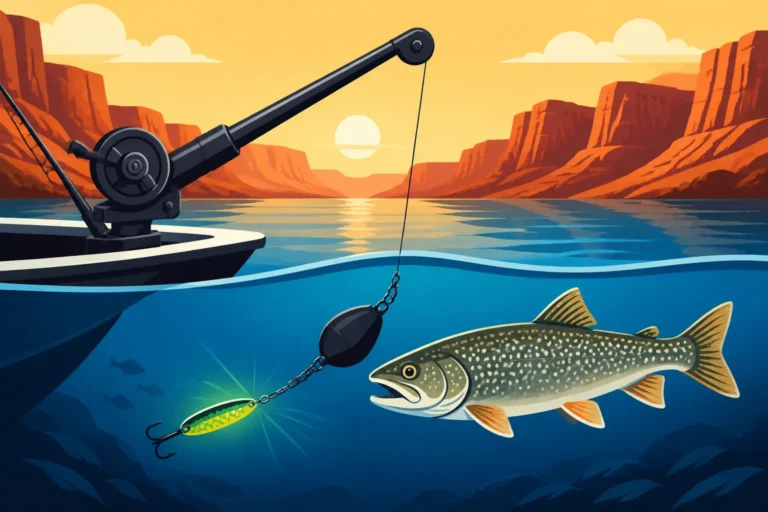
- Rod Length: A 7-foot to 8-foot medium-light to medium power rod is excellent for trolling or casting heavier lures. For really big lake trout at Flaming Gorge, some anglers even go for specialized trolling rods over 8 feet. The extra length helps manage longer casts and provides leverage against powerful fish.
- Rod Power: A medium-light to medium power rod is often necessary. You'll be using heavier spoons, larger jerkbaits, or even downriggers, and you need the backbone to handle these lures and control a substantial fish. For those targeting larger lake trout, some anglers might even bump up to a medium-heavy rod for specialized techniques.
- Rod Action: A moderate-fast to fast action provides a good balance. A moderate-fast action is great for trolling, as it absorbs the shock of a strike without immediately pulling the lure from the fish's mouth. A fast action is better for casting and jigging heavier spoons or tubes, giving you immediate feedback on what your lure is doing deep below the surface.
Table: Utah Trout Rod Size Recommendations
This table summarizes some common recommendations for Utah trout fishing scenarios. Remember, these are guidelines, and personal preference and specific conditions can always lead to variations.
| Scenario | Recommended Rod Length (Spinning) | Recommended Rod Power | Recommended Rod Action | Ideal Line Weight (Mono/Fluoro) | Common Lures/Baits |
|---|---|---|---|---|---|
| Community Ponds/Stocked | 6' – 7' | Ultralight to Light | Moderate-Fast to Fast | 2-6 lb | PowerBait, worms, small jigs, spinners |
| Small Rivers/Brushy Streams | 5'6" – 6'6" | Ultralight to Light | Fast | 2-6 lb | Small spinners, spoons, nymphs, worms |
| Medium/Large Rivers (Wading) | 6'6" – 7'6" | Light | Fast to Moderate-Fast | 4-8 lb | Spinners, spoons, small crankbaits |
| Reservoirs (Casting/Shore) | 6'6" – 7'6" | Light to Medium-Light | Moderate-Fast to Fast | 4-10 lb | Spinners, spoons, jerkbaits, bait rigs |
| Reservoirs (Trolling/Lakers) | 7' – 8'+ | Medium-Light to Medium | Moderate-Fast | 8-15 lb | Large spoons, crankbaits, tubes |
Considerations Beyond Rod Size
While rod size is paramount, a few other factors will round out your perfect trout setup. Thinking about these can help you pick the best rod and ensure a seamless fishing experience.
Matching Rod to Reel and Line
A rod is only as good as the reel and line you pair it with. An ultralight rod with a heavy, unbalanced reel will feel awkward and negate the rod's sensitivity. Similarly, putting heavy 15-pound test line on a light action rod designed for 4-pound test will hinder casting distance and proper lure presentation.
- Reel Size: For most Utah trout fishing with ultralight or light power rods, a spinning reel in the 1000 to 2500 size range is appropriate. A 1000 or 1500 series reel pairs beautifully with an ultralight rod, keeping the entire setup light and balanced. For medium-light rods or targeting bigger reservoir fish, a 2500 or even 3000 size reel might be better. Best Spinning Reels for Utah Trout Fishing delves deeper into these choices.
- Line Type and Weight: Monofilament line is forgiving and popular for trout, especially for beginners. Fluorocarbon offers lower stretch and better abrasion resistance, making it great for clear water. Braided line offers incredible strength and sensitivity, but its visibility can sometimes be an issue for wary trout, so it's often paired with a fluorocarbon leader. Always match your line weight to the rod's recommended ratings. For trout, this typically means 2-8 pound test. Best Fishing Line for Utah Trout offers more detail.
Materials and Durability
Modern fishing rods are typically made from graphite, fiberglass, or a composite blend. Each material has its advantages.
- Graphite Rods: These are lightweight, sensitive, and generally have a faster action. They transmit vibrations exceptionally well, allowing you to feel even the most delicate bites. Most high-performance trout rods are made of graphite. The downside is they can be more brittle than fiberglass and more prone to breaking if mishandled.
- Fiberglass Rods: More durable and flexible, fiberglass rods often have a slower action. They are less sensitive than graphite but can be more forgiving for fighting strong fish, as they absorb shock better. Fiberglass is a good choice for those on a tighter budget or for situations where durability is a primary concern, like fishing with kids.
- Composite Rods: These blend graphite and fiberglass to combine the strengths of both materials. They offer a good balance of sensitivity, durability, and a moderate action, often making them versatile options for various trout fishing methods.
Your Personal Fishing Style
Ultimately, the best fishing rod size for you depends on your personal fishing style and preferences. Do you prefer feeling every twitch and head shake of a fish, or do you want more power to muscle them in quickly? Are you a finesse angler who prefers delicate presentations, or do you like to cast heavier lures and cover a lot of water?
- Beginner Anglers: For those just starting out, a 6'6" or 7' light to medium-light power, moderate-fast action spinning rod is incredibly versatile and forgiving. It will allow you to learn various techniques without feeling overwhelmed. This type of rod is frequently recommended in guides like Utah Fishing Gear for Beginners.
- Experienced Anglers: You might find yourself owning several rods—an ultralight for small streams, a slightly longer light power rod for reservoir casting, and perhaps even a dedicated trolling rod for lake trout. Tailoring your gear to each specific situation truly elevates the experience.
Remember, the goal is to make your fishing experience as enjoyable and effective as possible. While there's no single "perfect" rod for every trout fishing scenario in Utah, understanding rod length, power, and action will empower you to choose the best tool for the job. Don't be afraid to try different setups to see what feels best in your hands and on your favorite waters.
Disclaimer
This article is for general informational purposes only and does not constitute professional advice. Laws, prices and regulations vary by location and change over time. Consult a qualified professional for guidance on your specific situation.