Best Headlamp for Early Morning Utah Fishing
Oh, the crisp, cool air of a Utah morning, the promise of a rising sun over a glassy reservoir, and the absolute struggle of trying to rig your line or find your favorite lure in the pitch black before first light. We've all been there, fumbling with a flashlight in one hand and a tiny hook in the other, wishing we had an extra limb just for illumination. This guide is all about cutting through that pre-dawn frustration and finding the perfect headlamp to make your early morning fishing trips smooth, safe, and ultimately, more successful.
Why a Quality Headlamp is Non-Negotiable for Early Morning Anglers
When you're passionate about fishing, sometimes the best bite is just before the sun makes its grand entrance. Whether you're targeting those elusive big browns that feed in the low light or trying to beat the crowds to your favorite spot, being prepared for the dark is paramount. A good headlamp isn't just a convenience; it's an essential piece of your Utah Fishing Gear Guide.
Safety First: Navigating Dark Shorelines and Boat Ramps
One of the biggest anxieties of pre-dawn fishing is simply getting to your spot without incident. Imagine trekking down a rocky shoreline at Strawberry Reservoir or launching your boat at Flaming Gorge when you can barely see your feet. Uneven terrain, slick boat ramps, hidden obstacles like submerged rocks or debris, and even unexpected wildlife can turn an exciting morning into a dangerous one. A reliable headlamp keeps both your hands free to carry gear, stabilize yourself, or handle your boat lines, letting you focus on where you're stepping.
Think about those moments where you're balancing a tackle box, a rod, and a cooler. Trying to hold a phone or a handheld flashlight simultaneously is a recipe for a tumble, a dropped rod, or worse. A headlamp illuminates your path directly where your eyes are looking, giving you a clear, hands-free view of every potential hazard. This proactive visibility is key, especially if you're venturing off the beaten path to find those less-pressured areas. It provides peace of mind, allowing you to concentrate on the fishing ahead, not on avoiding a sprained ankle.
Efficiency and Organization in Low Light
Let's be honest, tying a tiny knot on a leader, threading a nightcrawler onto a hook, or trying to find that specific Rapala in a dark tackle box is practically an Olympic sport in the dark. Squinting, fumbling, dropping small hooks into the gravel, or accidentally snagging your finger on a treble hook – these are common frustrations that steal valuable fishing time and test your patience before you've even made your first cast. This is where a quality headlamp truly shines, pun intended!
With a headlamp, you have direct, focused light on whatever task is right in front of you. Tying a perfect improved clinch knot becomes a breeze, not a battle against the shadows. Changing out a lure or a fly, especially those tiny nymphs for the Provo River, is infinitely easier when you can actually see what you're doing. It also means you can organize your tackle box, find that forgotten bait container, or even re-spool a reel in the dim light without the stress and wasted time. This efficiency ensures you're ready when the fish start biting, making the most of those golden low-light hours.
Stealth and Respect for Wildlife (and Other Anglers)
While illumination is crucial, how you use that light matters, especially when fishing. Blasting a bright white beam across the water can spook fish, especially in shallow areas or when targeting wary species like trout in clear streams. Fish are incredibly sensitive to sudden changes in light, and a bright beam cutting through the darkness can send them scattering. Moreover, a powerful white light can be incredibly disruptive and even rude to other anglers who are also trying to enjoy the quiet solitude of a pre-dawn morning.
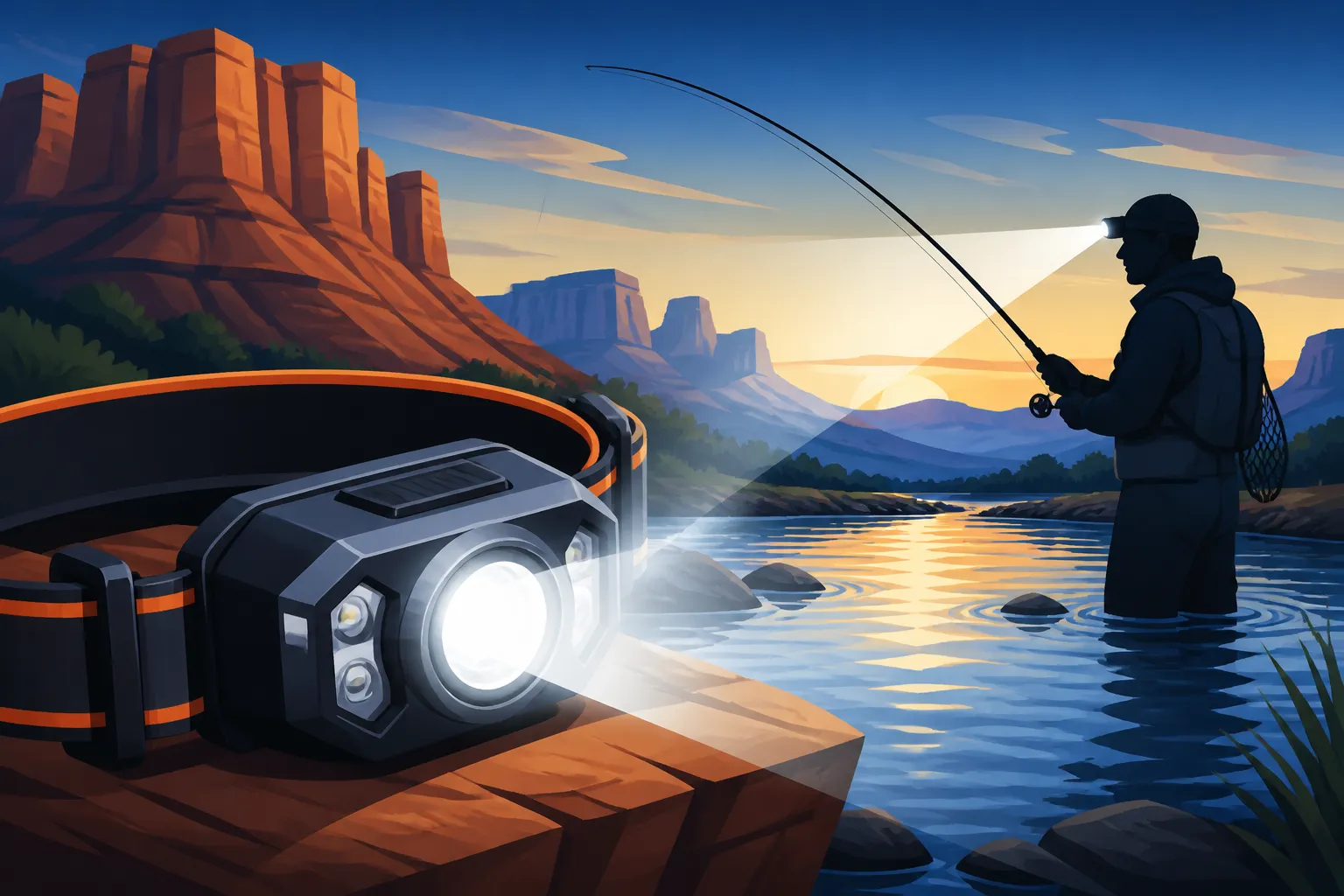
This is where understanding different light modes becomes important. Many quality headlamps offer a red light mode, which is a game-changer for stealth. Red light preserves your natural night vision, meaning your eyes don't have to constantly readjust between bright light and darkness, which is a huge advantage. It also travels less conspicuously through the air and water, making you less likely to alert fish or annoy fellow anglers. Using red light for tying knots, baiting hooks, or checking your gear allows you to maintain a low profile and show consideration for the environment and others around you.
Key Features to Look for in a Utah Fishing Headlamp
Not all headlamps are created equal, and what works for a hiker might not be ideal for an angler. When you're choosing a headlamp for Utah fishing, you need to consider the specific demands of being by the water, often in changing conditions. Thinking through these features will help you pick one that truly enhances your experience.
Brightness and Beam Patterns: Seeing Clearly Without Overdoing It
When we talk about brightness, we're usually talking about lumens. More lumens mean a brighter light, but "brighter" isn't always "better" for fishing. For example, a super bright beam might be great for scanning the distant shoreline for a path, but it's overkill and even detrimental for tying a small fishing knot right in front of your face. You'll want a headlamp with adjustable brightness settings, allowing you to dial it down for close-up tasks and ramp it up when you need to see further.
Beyond sheer brightness, consider the beam pattern. A spot beam is a concentrated, narrow light that projects a long distance, ideal for spotting hazards far ahead or looking for activity on the water's surface. A flood beam (or wide beam) disperses light over a broader area, which is perfect for general tasks like setting up your camp, organizing your tackle, or walking a wide path. The best fishing headlamps often offer both, or at least a good balance, allowing you to switch between them or adjust the focus. Some even have a hybrid beam that provides a wide area of light with a brighter spot in the center. Look for models that let you easily toggle between these settings, even with cold hands.
Battery Life and Power Source: Endurance for Long Sessions
There's nothing worse than your headlamp dying on you when you're still in the dark, miles from your vehicle. Battery life is critical, especially if you plan on fishing through the night or starting your day extremely early. Consider how long your average low-light session lasts and choose a headlamp with a runtime that comfortably exceeds that. This is particularly important for activities like Utah Ice Fishing Guide, where cold temperatures can significantly reduce battery performance.
Headlamps typically come with either disposable alkaline batteries (like AAAs) or rechargeable lithium-ion batteries. Rechargeable options are often more economical in the long run and produce less waste, but you need a way to recharge them (USB charging is common). If you go with disposables, always carry spare batteries – and make sure they're stored in a way that prevents them from getting wet or corroding. If using rechargeables, consider carrying a small power bank to top it up, especially for longer trips or multi-day excursions to spots like those found in Best Places to Fish in Utah. Many serious anglers keep a spare set of fully charged batteries, regardless of the type, just in case.
Water Resistance and Durability: Built for the Elements
Utah's weather can be unpredictable, from sudden rain showers to unexpected snow flurries, not to mention the ever-present splash factor when you're near water. Your headlamp needs to withstand these elements. Look for an IPX rating, which indicates its resistance to dust and water.
- IPX4 (Splash resistant): Can handle splashes from any direction. Good for light rain.
- IPX5/IPX6 (Water-jet resistant): Can handle jets of water. Better for heavier rain or more direct splashing.
- IPX7/IPX8 (Submersible): Can withstand being submerged in water for a certain period. This is the gold standard for hardcore anglers who might accidentally drop their headlamp in the lake.
Beyond water resistance, consider the overall build quality. A headlamp designed for outdoor use will often feature robust casing, durable hinges, and quality straps that can endure being knocked around in a tackle box or on a rocky shoreline. Brands like Petzl, Black Diamond, and even some reliable options you can find on Amazon or at Bass Pro Shops often have these features. A durable headlamp means you won't have to replace it after a single accidental drop onto a boat deck or a dunk in a puddle.
Red Light Mode: Your Secret Weapon for Stealth
As mentioned earlier, the red light mode is absolutely essential for any serious angler venturing out in the dark. It’s not just about being polite; it’s about maintaining your night vision and not spooking the fish. When your eyes are exposed to bright white light, your pupils constrict, and the rhodopsin (a light-sensitive pigment) in your rods bleeds out, effectively "resetting" your night vision. It can take 20-30 minutes for your eyes to fully adapt back to the darkness. Red light, on the other hand, affects your rod cells far less, allowing you to see what you need to without sacrificing your ability to perceive details in the overall low light.
Imagine needing to tie a new leader on a Best Flies for Utah Trout Streams setup. With white light, you might finish tying, look up, and realize you can no longer see the subtle ripples on the water indicating feeding fish. With red light, you tie your knot, look up, and your eyes are already adjusted, giving you an immediate advantage. Always switch to red light when you arrive at your spot, when you're moving around camp, or when you're interacting with your gear, saving the white light for tasks that absolutely require maximum illumination, like walking a tricky path. This simple habit can dramatically improve your early morning success.
Comfort, Fit, and Practical Considerations
Even the brightest, most durable headlamp won't do you much good if it's uncomfortable or difficult to operate when your fingers are numb. These often-overlooked practical aspects play a huge role in your overall satisfaction and willingness to use the headlamp consistently.
Ergonomics and Weight: Wearing It All Morning
You're going to be wearing this thing for potentially hours, possibly under a hat or beanie (especially if you're layering clothing for a How to Stay Warm Ice Fishing in Utah adventure). Comfort is key. Look for a headlamp that's lightweight and well-balanced. Some models have the battery pack at the back of the head, distributing the weight more evenly and preventing that front-heavy, "tipping" sensation.
The head strap should be adjustable, soft, and breathable. Elastic straps are common, but look for ones that are wide enough not to dig into your skin and that can be easily tightened or loosened. If you plan to wear it over thicker headwear, ensure there's enough adjustability. A comfortable headlamp means you'll hardly notice it's there, allowing you to focus on the fishing, not on constant readjustments or an aching forehead.
Ease of Use with Cold or Wet Hands
Picture this: It's 30 degrees at Deer Creek Reservoir, your hands are cold and a little numb, and you need to switch from flood to spot beam. If your headlamp has tiny, recessed buttons that require delicate manipulation, you're going to get frustrated quickly. The best headlamps for anglers feature large, easily identifiable buttons that you can operate even with gloves on or when your hands are cold and wet.
Simplicity of operation is often a virtue. While multiple modes are great, an intuitive interface that allows you to cycle through brightness levels and switch to red light without a complicated sequence of presses is a major plus. Some headlamps even have motion sensors or gesture control, though these can sometimes be a bit too sensitive for practical fishing use, accidentally turning on or off when you don't intend them to. Test out the button functionality if you can, or read reviews that speak to the ease of use in challenging conditions.
Pricing and Value: Investing in Your Morning Peace of Mind
Headlamps come in a huge range of price points, from budget-friendly options that might cost you the same as a couple of lures, to high-end, feature-packed models. When considering the cost, think about how often you'll use it and how critical its performance is to your safety and enjoyment. A cheaper headlamp might get the job done for occasional, casual use, but it might lack the durability, battery life, or advanced features (like a dedicated red light mode or high IPX rating) that a serious angler needs.
An investment in a slightly more expensive, reputable brand often means better build quality, longer-lasting batteries, and more reliable performance when you need it most. You can find excellent options at various outdoor retailers, from local tackle shops to big box stores like Bass Pro Shops, or online through sites like Amazon. Don't just look at the upfront cost; consider the value it brings in terms of safety, frustration reduction, and enhancing your overall fishing experience. Sometimes, spending a little more upfront saves you money (and headaches) in the long run by avoiding frequent replacements or unexpected failures.
Setting Up and Maintaining Your Fishing Headlamp
Once you've chosen your trusty headlamp, a little preparation and ongoing care will ensure it serves you well for many seasons of early morning adventures. Just like you'd maintain your fishing reels or How to Clean a Reel After a Day at Utah Lake, your headlamp deserves a little attention.
Pre-Trip Checks: Don't Get Caught in the Dark
Before every early morning trip, especially if you haven't used your headlamp in a while, perform a quick check-up. This simple routine can prevent a lot of headaches out on the water. First and foremost, check the battery level. If it's a rechargeable model, ensure it's fully charged. If it uses disposable batteries, consider putting in fresh ones, especially if you're heading out for a long day or multiple days. Nothing zaps the fun out of a Best Camping Spots Near Utah Fishing Lakes trip like a dead headlamp.
Beyond power, test all the modes. Make sure the white light, red light, and any other special settings (like strobe or dimming) are working correctly. Check the beam pattern to ensure it adjusts as expected. Briefly inspect the lens for any dirt, smudges, or scratches that might impede light output – a quick wipe with a soft cloth can make a big difference. Also, give the head strap a once-over to ensure it's still securely attached and hasn't lost its elasticity. These few minutes of preparation can save you from fumbling in the dark when you should be casting.
Proper Storage and Care
How you store your headlamp between trips can significantly extend its lifespan. After use, especially if it's been exposed to water or dirt, give it a quick clean. Wipe down the body to remove any mud, dust, or water spots. If it's been splashed with saltwater (though less common in landlocked Utah, it can happen if you fish brackish waters or travel), rinse it lightly with fresh water and dry thoroughly. For battery-powered models, it's a good practice to remove the batteries if you're storing the headlamp for an extended period. This prevents potential corrosion from battery leaks, which can ruin the electronics.
Store your headlamp in a cool, dry place. Many anglers keep theirs in a dedicated spot in their tackle box, a gear bag, or even a small mesh pouch to protect the lens from scratches. Avoid leaving it in direct sunlight for long periods, as this can degrade the elastic strap and potentially damage the internal components. By treating your headlamp with a little care, it will be ready to go whenever that pre-dawn fishing urge strikes.
Combining with Other Lighting Solutions
While a headlamp is undeniably fantastic for hands-free, focused light, it's often best used as part of a broader lighting strategy, especially for boaters or those setting up a longer camp. Think of your headlamp as your personal spotlight, but don't forget the supporting cast.
For boaters, a small, portable LED lantern or a permanent boat light can provide ambient light for the deck, making it easier to move around, find gear, or even clean fish when the sun is still below the horizon. These broader light sources can reduce the need to constantly use your headlamp at its brightest setting, saving battery life for when you truly need it. Similarly, for shore anglers who set up a base camp, a small area lantern can illuminate your immediate workspace, allowing you to prep your gear without blinding your buddies or straining your eyes with a constant, direct beam. Having supplemental light means you can often keep your headlamp on its dimmer, red light, or off completely, preserving your night vision and creating a more comfortable, less disruptive environment for everyone.
| Headlamp Feature | Why It Matters for Utah Fishing | Key Considerations |
|---|---|---|
| Brightness (Lumens) | See clearly for tasks and navigation without overdoing it. | Look for adjustable settings (low for knots, high for scanning). |
| Beam Patterns | Different tasks need different light spread. | Spot beam for distance, flood beam for wide area work, often a combo is best. |
| Battery Life | Ensures you have light for the entire session. | Rechargeable vs. disposable; cold weather impact; carry spares. |
| Water Resistance (IPX Rating) | Protects against splashes, rain, and accidental drops. | IPX4 for splashes, IPX7/IPX8 for submersion; essential for wet environments. |
| Red Light Mode | Preserves night vision and prevents spooking fish/others. | Absolutely critical for stealth; easy access to this mode. |
| Comfort/Fit | You'll wear it for hours; avoid neck strain. | Lightweight, balanced design, adjustable and breathable strap. |
| Ease of Use | Operate it smoothly, even with cold or wet hands. | Large, intuitive buttons; simple mode cycling. |
| Durability | Withstands drops and rough outdoor use. | Robust casing, quality hinges, built to last. |
| Cost | Investment in safety and enjoyment. | Ranges from budget to premium; consider value over just price. |
Disclaimer
This article is for general informational purposes only and does not constitute professional advice. Laws, prices and regulations vary by location and change over time. Consult a qualified professional for guidance on your specific situation.