Kokanee Salmon Life Cycle in Utah
For many Utah anglers, there's a deep fascination with kokanee salmon, those vibrant, hard-fighting fish that seem to appear almost magically in our reservoirs, transforming into brilliant reds and greens before disappearing upstream. It's a truly unique experience to witness their life cycle unfolding, and if you've ever wondered about their journey from a tiny egg to a majestic spawner, you're not alone. This guide will walk you through the incredible, often bittersweet, life cycle of the kokanee salmon in Utah's diverse waters, helping you understand these remarkable fish better.
The Basics of Kokanee Salmon in Utah
Kokanee salmon are a bit of a marvel in the angling world, especially in landlocked states like Utah. They bring a touch of the ocean's wild salmon runs to our freshwater reservoirs, albeit in a slightly different form. Understanding their fundamental nature is the first step to appreciating their incredible journey.
What Exactly is a Kokanee Salmon?
At its heart, a kokanee salmon is simply a landlocked sockeye salmon. Imagine a sockeye, one of those iconic red salmon from the Pacific Northwest, but instead of migrating to the ocean and back, it spends its entire life in freshwater lakes and reservoirs. That's a kokanee. They belong to the species Oncorhynchus nerka, just like their ocean-going cousins, but they've adapted to a freshwater existence. This means they don't develop the deep silver sheen of an ocean-run sockeye, but they still retain many of the same behaviors, especially their powerful spawning drive and dramatic color changes.
These fish are planktivores, meaning they primarily feed on zooplankton, tiny microscopic animals found suspended in the water column. This specialized diet influences where they live in a reservoir – typically in the deeper, cooler waters where these food sources are abundant. It's also why you often find them schooling together, moving like synchronized swimmers as they filter feed. When you're out on the water, seeing a dense school of kokanee on your fish finder in the deeper parts of a reservoir is a pretty common sight.
Where Did Kokanee Come From in Utah?
Kokanee salmon aren't native to Utah. They were introduced here, like many of our popular game fish, to create new angling opportunities and utilize the abundant zooplankton resources in our larger reservoirs. The idea was to bring a different kind of sport fish to Utah, one that could thrive in our deep, cold waters where trout already did well. They've found a good home in several of our premier fisheries, like Strawberry Reservoir, Flaming Gorge, Jordanelle, and Pineview. These reservoirs provide the deep, cold, oxygen-rich water that kokanee need, along with a healthy supply of zooplankton.
The success of kokanee in these waters is a testament to careful fisheries management, but it also highlights the delicate balance of introducing non-native species. While generally well-received by anglers, their presence requires ongoing monitoring to ensure they don't negatively impact native fish populations or the overall ecosystem. This careful balancing act is something the Utah Division of Wildlife Resources (DWR) constantly manages to ensure sustainable fishing for everyone.
Key Characteristics and Identification
Identifying kokanee salmon is usually pretty straightforward, especially when they're mature or approaching their spawning phase. During their time in the reservoir, before spawning, they generally have a sleek, silvery body with a bluish-green back, quite similar to a rainbow trout at first glance, but with distinct differences. They typically lack the spots that rainbow trout often have, and their mouth is usually smaller. Their scales are also quite small, giving them a smooth, almost iridescent appearance.
The most dramatic transformation occurs as they near spawning. Males, in particular, develop a prominent hooked jaw (kype) and an intensely red body, sometimes with a greenish head. Females also take on a reddish hue, though often less vibrant, and their bodies become noticeably thicker as they fill with eggs. Their meat, which is highly prized, maintains a distinctive orange-red color due to their plankton diet, rich in carotenoids. If you're out on the water, observing their size, color, and jaw structure can help you differentiate them from other salmonids you might encounter, like a How to Tell a Cutthroat Trout From a Rainbow Trout.
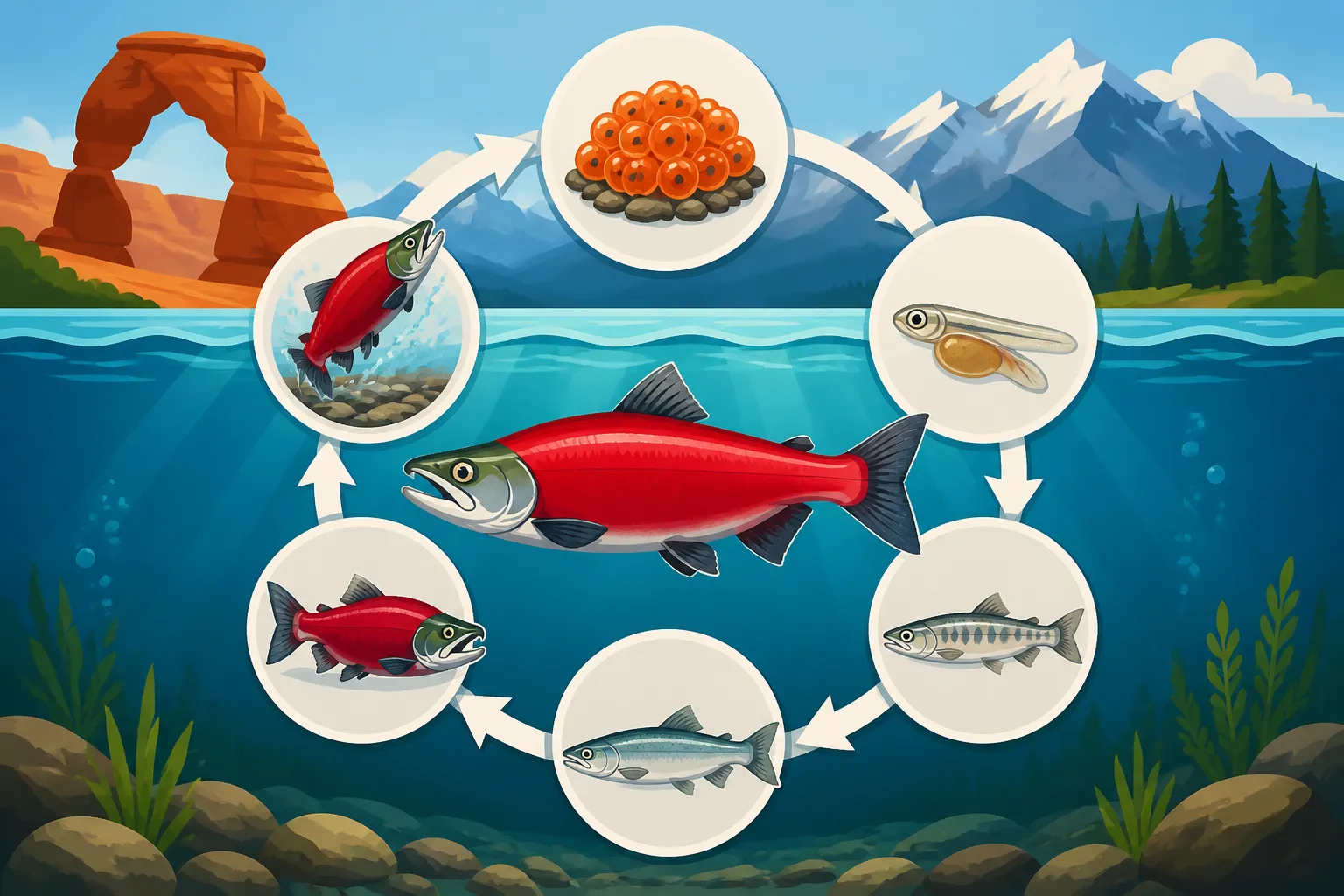
| Life Stage | Appearance (Non-Spawning) | Appearance (Spawning) | Location (Typical) | Diet |
|---|---|---|---|---|
| Egg | Tiny, orange/red spheres, often buried in gravel | Buried in gravel beds in streams/river tributaries | Gravel stream beds | Yolk sac |
| Alevin | Sac-fry, still with yolk sac, translucent | Under gravel | Under gravel in stream beds | Yolk sac |
| Fry | Small fish, silvery with parr marks (vertical bars) | Silvery with parr marks | Slowly migrate from gravel to main reservoir/lake | Small insects, zooplankton |
| Juvenile/Adult | Silvery body, bluish-green back, no spots, small mouth | Males: bright red body, green head, hooked jaw (kype); Females: reddish, plump | Deep, cool, open water of reservoirs | Zooplankton |
| Spawning Adult | Intense red, green, or orange bodies, pronounced kype (males) | Same as above | Spawning streams/tributaries, shallow lake shores | None (fasting) |
The Spawning Journey: A Race Against Time
The spawning journey of kokanee salmon is perhaps the most incredible aspect of their entire life cycle. It's a dramatic, visually stunning, and ultimately fatal event that showcases the raw power of nature. Observing this phenomenon, even from a distance, is a humbling experience.
The Call to Spawn: Seasonal Triggers
As summer begins to wane and the crisp air of autumn hints at cooler temperatures, a profound shift occurs within mature kokanee salmon. This isn't just a simple urge; it's a hardwired biological imperative. Typically, in late summer or early fall, often around August or September in Utah, the reduction in daylight hours and the gradual cooling of the water trigger their minds and bodies to prepare for their final, most important act: reproduction. Think of it like an internal clock telling them, "It's time." This period is also often the Best Month to Catch Kokanee in Utah for anglers, as the fish start to school up and move closer to their spawning grounds, becoming more active.
During this pre-spawn phase, kokanee begin to transition from their open-water, plankton-feeding existence to a migratory, fasting one. Their bodies start to undergo physiological changes, directing energy reserves towards developing their eggs and milt (sperm) rather than growth. They might gather in large schools near the mouths of rivers or streams that feed into the reservoir, waiting for the right moment—often triggered by increased flows from rain or snowmelt, or simply falling water temperatures—to begin their upstream migration. This staging behavior is a common sight and offers fantastic opportunities for anglers targeting these powerful fish.
The Transformation: Colors and Changes
This is where the kokanee really put on a show. Once the internal clock fully kicks in and the migration begins, their bodies undergo an astounding metamorphosis. The sleek, silvery-blue fish that were once almost indistinguishable from a small trout suddenly explode with color. Males, especially, become a vivid, fiery red over most of their body, often with a striking green head. Their backs might darken, and their bellies can range from dark grey to black. Simultaneously, their jaws begin to lengthen and curve into a pronounced hook, or kype, a clear adaptation for fighting rival males and defending their spawning territory. Their teeth also grow sharper and more prominent.
Females, while also undergoing a dramatic color change to varying shades of red and orange, typically don't develop as pronounced a kype. Their focus is on the development of their eggs, and their bodies become noticeably swollen and robust. Imagine seeing these fish, once blending into the deep blue of the lake, now flashing like crimson arrows against the lighter gravel beds of a stream. It's truly one of nature's most spectacular displays, and it all happens over a relatively short period, often just a few weeks. If you've ever seen Why Kokanee Salmon Turn Red Before They Die, you've witnessed this breathtaking transformation firsthand.
Finding the Spawning Grounds
The drive to find suitable spawning grounds is incredibly powerful and precise. Kokanee salmon, much like their ocean-going sockeye relatives, are often "natal stream homing," meaning they attempt to return to the very stream or river where they were hatched years earlier. Even in reservoirs where they are stocked, they will seek out suitable flowing water. They use an acute sense of smell to detect the unique chemical signature of their natal waters, along with celestial cues and magnetic fields. It’s an instinctual compass that guides them on their final, arduous journey.
This journey often means navigating upstream against currents, sometimes leaping over small obstacles. They'll search for areas with clean, oxygenated water and gravel bottoms, which are essential for the survival of their eggs. Tributary streams and rivers feeding into reservoirs like Strawberry, Flaming Gorge, or Jordanelle become bustling highways for these determined fish. It’s a perilous trek, as they face exhaustion, potential predators, and often, declining water levels in smaller streams. However, the urge to reproduce is so strong that they will push themselves to their absolute limit to reach these vital breeding grounds.
The Act of Spawning and Fertilization
Once the kokanee reach their chosen spawning grounds, the real work begins. This is the culmination of their entire life cycle, a furious and instinctive effort to ensure the next generation. It’s a busy, sometimes aggressive, time on the redds.
Building the Redd: A Vital Nest
Upon arriving at the gravel-bottomed spawning areas, the female kokanee gets right to work. She uses her tail fin to meticulously excavate a shallow depression in the gravel, known as a "redd." This isn't just a haphazard digging; it's a careful process of dislodging larger stones and fanning away silt and debris to create a clean, oxygenated environment for her eggs. Imagine her tirelessly sweeping her tail back and forth, moving gravel that can be surprisingly heavy. These redds are typically oval-shaped, often a foot or two in length and several inches deep, perfectly sized to protect her precious cargo.
While the female is busy preparing the redd, the male kokanee is engaged in his own critical duty: defending the spawning territory. He becomes fiercely territorial, chasing away rival males and sometimes even other species of fish that might try to disturb the nesting site. These territorial disputes can be intense, with males flaring their gills, nipping at each other, and using their hooked jaws to assert dominance. It's a display of raw instinct and determination, ensuring that the female can complete her task with minimal disturbance.
The Mating Dance and Egg Laying
With the redd prepared and the male standing guard, the intricate mating ritual begins. The female positions herself over the redd, and the male, or sometimes multiple males vying for position, will swim alongside her. As she releases her bright orange-red eggs into the carefully prepared depression, the male simultaneously releases his milt, fertilizing the eggs in the water column. This synchronization is crucial, as the eggs must be fertilized immediately after being laid. She might lay anywhere from 300 to 1,500 eggs, depending on her size and health.
Once the eggs are laid and fertilized, the female quickly moves upstream of the redd, again using her tail to fan gravel over the newly laid eggs. This covers and protects them from predators and helps ensure a steady flow of oxygenated water. She might repeat this process several times, creating multiple small pockets of eggs within the same general redd area. It's an exhausting process, and by this point, both the male and female are visibly drained, their bodies showing the wear and tear of their monumental effort.
The End of a Life Cycle: Post-Spawn Mortality
The life cycle of the kokanee salmon is semelparous, meaning they spawn only once and then die shortly after. This is a crucial, if somber, part of their story. After the exhausting process of migration, redd building, egg laying, and fertilization, their bodies are completely spent. Their immune systems collapse, their internal organs begin to shut down, and they have no energy left to feed. The vibrant colors that adorned them during spawning quickly fade, and their bodies deteriorate.
You might see these spent fish, sometimes still alive but barely moving, or already deceased, along the riverbanks or in the shallow waters near the spawning grounds. While it seems tragic, this post-spawn mortality is a vital part of the natural cycle. Their decaying bodies return nutrients to the ecosystem, becoming a food source for scavengers, insects, and other aquatic life, thus supporting the very environment that will nurture their offspring. It's a powerful reminder of nature's relentless cycle of life and death, and how each stage contributes to the whole. This is a key part of the Kokanee Salmon Lifespan in Utah.
From Egg to Fry: The Start of a New Generation
While the adult kokanee's journey ends, the future of the species is just beginning, buried safely beneath the gravel. This delicate stage is fraught with its own challenges, as the next generation slowly develops, hidden from sight.
Incubation Period and Environmental Factors
Once buried in the gravel redd, the tiny, pearl-like kokanee eggs begin their slow incubation. This period is highly dependent on water temperature. Colder water means a longer incubation, while warmer water speeds up development. Generally, it can take anywhere from 30 to over 100 days for the eggs to hatch. Throughout this time, they require a constant flow of clean, cold, and well-oxygenated water. If the water becomes stagnant, too warm, or laden with silt from erosion, the eggs can suffocate or be susceptible to fungal infections.
Environmental factors like flash floods, severe droughts, or prolonged periods of freezing can severely impact egg survival. A sudden surge of water can scour the redds, washing away eggs, while persistent low water levels can expose them to predators or freezing air. Conversely, stable water conditions and moderate temperatures provide the best chances for a successful hatch. This vulnerability highlights why pristine stream habitats are so critical for the long-term health of kokanee populations in Utah.
Hatching as Alevins
When the time is right, a tiny, translucent creature emerges from the egg: an alevin. At this stage, the alevin still has a prominent yolk sac attached to its underside, which serves as its primary food source. Imagine a tiny fish with a built-in lunchbox! They are extremely vulnerable and remain hidden within the protective confines of the gravel, absorbing the rich nutrients from their yolk sac. This period is crucial for their initial growth and development, giving them the energy they need before they have to fend for themselves.
During their time as alevins, they are mostly immobile, moving only enough to find small pockets of oxygenated water within the gravel. They're basically miniature, fragile versions of fish, focused solely on using up that precious yolk. They are also incredibly sensitive to light and will instinctively stay buried in the dark, protecting themselves from predators that might lurk above. Their survival at this stage hinges entirely on the quality of the gravel and the stability of the stream environment.
Emerging as Fry
Once the yolk sac is almost completely absorbed, the alevins transform into free-swimming fry. This is their moment of emergence, a perilous transition from the safety of the gravel to the open water of the stream. They are still tiny, only an inch or two long, but they now have fully formed fins and the ability to actively hunt for food. They often exhibit "parr marks" – vertical dark bars along their sides – which help them camouflage in the dappled light of the shallow stream.
The fry will gradually migrate downstream, making their way from the spawning tributaries back into the larger, deeper waters of the reservoir where they will spend the rest of their lives. This downstream journey is another high-risk period, as they are tempting prey for larger fish, birds, and other aquatic predators. Only a small fraction of the hundreds or thousands of eggs laid will survive to this stage, and even fewer will make it to adulthood. It's a tough world out there for a little kokanee fry!
The Young Kokanee's Life in the Lake
Once the fry successfully make it to the main reservoir, their lives become a different kind of challenge. Here, they'll grow, mature, and navigate the vast open waters, avoiding predators and constantly searching for food.
Diet and Growth in Utah Reservoirs
Upon reaching the reservoir, young kokanee fry quickly adapt to a planktivorous diet. They shift from consuming the last remnants of their yolk sac to actively feeding on zooplankton, those tiny crustaceans like Daphnia and copepods that drift in the water column. Their small, fine teeth are perfectly suited for filtering these microscopic organisms from the water. Kokanee are highly efficient feeders, and their growth rate is directly tied to the abundance of this food source. In reservoirs with rich plankton blooms, kokanee can grow quite rapidly.
They tend to inhabit the limnetic zone—the open, well-lit surface waters away from shore—where zooplankton are most abundant, especially during warmer months. As they grow larger, they'll often move to deeper, cooler sections of the reservoir, particularly during the heat of summer, in search of cold, oxygenated water (a process known as thermal stratification) and to follow their food. A healthy, growing kokanee can reach lengths that make them a prime target for anglers, often growing to 15-20 inches, though some larger individuals are certainly caught.
Predation and Survival Challenges
Life in the reservoir is far from easy for a young kokanee. They are a crucial link in the food web, serving as prey for a wide array of larger fish and birds. Lake trout, for example, are notorious predators of kokanee, and their populations are often managed in tandem. If you've ever trolled for lake trout in Flaming Gorge, you know how often they're found with kokanee in their stomachs. Other fish like brown trout, rainbow trout, and even larger smallmouth bass will opportunistically feed on kokanee, especially the smaller, younger fish. Osprey, eagles, and even pelicans also take their toll from above.
Beyond predation, kokanee face environmental challenges. Fluctuations in water levels, changes in water temperature, disease, and competition for food can all impact their survival. A strong year class of kokanee might face fierce competition for food if zooplankton populations aren't robust, potentially leading to slower growth or higher mortality. This delicate balance of food, predators, and environmental conditions ultimately dictates how many kokanee survive to maturity and contribute to the next spawning run.
The Cycle Continues: Maturation to Adulthood
Over the course of their lives in the reservoir, typically two to four years, the kokanee grow and mature, moving towards the culmination of their own life cycle. Their development is a steady progression, often culminating in them reaching a catchable size for anglers around two to three years of age. They spend their days schooling, feeding, and growing, silently preparing for their destined journey.
As they near full maturity, usually in their third or fourth year, the same biological triggers that called their parents to spawn will begin to activate within them. The subtle changes in daylight and water temperature signal that it's almost time to leave the open waters of the reservoir and begin their own, final migration. This period of maturation and preparation is when they are at their prime—strong, well-fed, and full of life, before the arduous spawning journey takes its toll. Understanding this cycle helps anglers appreciate the fish they catch and the incredible journey each one undertakes.
Angler's Perspective on the Kokanee Cycle
As anglers, understanding the kokanee salmon life cycle isn't just fascinating; it's incredibly practical. It helps us know when and where to find these fish, how to ethically interact with them, and why certain regulations are in place.
Best Times to Target Kokanee Pre-Spawn
If you're looking to catch kokanee salmon, the period leading up to their spawn is usually your best bet. This "pre-spawn" phase, typically late summer through early fall (August to September/October in Utah), is when kokanee are actively feeding and beginning to stage for their upstream migration. They are at their largest, strongest, and most colorful during this time, and they start to congregate in larger schools, often moving closer to the mouths of their spawning tributaries. This makes them easier to locate for anglers who are trolling or casting from shore.
Common techniques involve How to Troll for Kokanee in Utah with downriggers or lead core line, presenting small lures like wedding rings, hoochies, or small spoons behind a dodger or flasher. Colors like pink, orange, and chartreuse are often very effective. You'll want to check current conditions and stocking reports for specific reservoirs, but generally, look for them holding in deeper water (20-60 feet) during the day, moving shallower in low light. Finding the "thermocline," the layer where the water temperature changes rapidly, is often key, as kokanee prefer cooler water and their food congregates there. Many anglers swear by specialized kokanee gear, and you can often find a good selection of dodgers, lures, and kokanee-specific tackle on platforms like Amazon.
Ethical Considerations During Spawning Season
While kokanee are undeniably beautiful and exciting to catch, it's important to consider ethical angling practices, especially as they enter their spawning phase. Once kokanee start to turn red and move into rivers and streams for spawning, their flesh quality rapidly deteriorates. They stop feeding entirely, and their energy is solely focused on reproduction. Catching them at this stage, while sometimes legal depending on specific regulations for a given water, often results in poor eating quality and can disturb the crucial act of reproduction.
Many anglers choose to focus on kokanee in the reservoir before they turn red and begin their migration. If you do encounter brightly colored, actively spawning kokanee in a river, it's generally best practice to leave them undisturbed. These fish have fulfilled their life's purpose, and disturbing them only adds unnecessary stress to an already taxing process. Being mindful of these practices ensures we respect the fish and help conserve the resource for future generations. Pay close attention to specific waterbody regulations, as some areas may have special closures or restrictions during the spawn, like Strawberry Reservoir Seasonal Closure Dates.
How Regulations Protect the Cycle
Fisheries management agencies, like the Utah DWR, implement specific regulations to help protect the kokanee salmon life cycle and ensure sustainable populations. These regulations often include daily bag and possession limits, size restrictions, and sometimes even seasonal closures on certain streams or reservoir sections during the spawning period. For instance, you might find that while fishing is open in the main body of a reservoir, the inflowing rivers where kokanee spawn are closed during the peak spawning months.
These rules are not arbitrary; they are based on scientific data about kokanee biology and population dynamics. They aim to allow enough fish to successfully reproduce each year, ensuring that the cycle continues and there are plenty of kokanee for anglers to enjoy in the future. For example, specific regulations might dictate Utah Daily Bag and Possession Limits or even special rules for certain species in particular waters. Always consult the most current Utah Fishing Regulations Explained booklet before heading out, as regulations can vary significantly from one body of water to another and from year to year. Understanding and adhering to these rules is an essential part of responsible angling and helps preserve the incredible kokanee fishery we enjoy in Utah.
Disclaimer
This article is for general informational purposes only and does not constitute professional advice. Laws, prices and regulations vary by location and change over time. Consult a qualified professional for guidance on your specific situation.