How to Cast a Spinning Rod for the First Time
Stepping onto the shore or into a boat for your very first fishing trip can be exhilarating, but let's be honest, that spinning rod in your hand can feel a little bit like a foreign object. The thought of flinging your line gracefully into the water often clashes with the reality of tangled messes, short plops, or worse, sending your lure into a nearby tree. Don't worry, every seasoned angler started exactly where you are, wrestling with the basics. This guide is here to walk you through the simple, step-by-step process of casting a spinning rod for the first time, helping you build the confidence to hit those beautiful Utah waters.
Understanding Your Spinning Rod and Reel Setup
Before you can send a lure sailing, it's really helpful to get acquainted with the tools in your hands. A spinning rod and reel combo is arguably the most popular setup for beginners, and for good reason—it’s forgiving, versatile, and relatively simple to operate once you get the hang of it. Think of it as your first bicycle; a few wobbly moments, and then you're off!
The Anatomy of a Spinning Rod and Reel
Let's break down the key parts you'll be interacting with. Your fishing rod is the long, flexible pole, tapering down to a handle. Along the rod, you'll see a series of small rings called guides, which are there to help the line run smoothly and evenly. The handle often has a reel seat where your spinning reel is attached. The reel is the heart of your casting mechanism.
On the spinning reel itself, you'll find a few crucial components. The spool is where your fishing line is stored. You'll notice a metal arm that swings around the spool; that's the bail arm or simply the bail. When you open the bail, it allows the line to unspool freely for casting. Closing it locks the line in place for retrieving. You also have a drag knob, usually on the front of the spool, which controls how much tension the line can withstand before it starts to slip off the spool. This is vital for fighting fish without breaking your line. Finally, there's the handle you crank to reel in your line. Knowing these parts makes it much easier to understand the mechanics of casting.
Why Spinning Gear is Great for Beginners
Spinning gear shines for new anglers because of its inherent simplicity. Unlike baitcasting reels, which can be notoriously difficult for beginners to learn without creating a tangled "bird's nest" of line, spinning reels are much more forgiving. You don't have to worry about thumbing the spool to prevent overrun. This makes them ideal for casting lighter baits and lures, which is often what you'll be using when targeting common species in Utah like rainbow trout in community ponds or small panfish.
The versatility of a spinning rod and reel means you can easily switch between different types of lures or baits—from a simple worm and bobber setup, which is often a fantastic way to How to Teach a Kid to Fish in Utah, to small spinners or jigs. This adaptability is key for exploring different fishing techniques and discovering what works best for you and the fish you're targeting.
Proper Line Spooling and Tying a Basic Knot
Before you even think about casting, two things are absolutely essential: your line needs to be spooled correctly, and you need a reliable knot. While most new rod and reel combos come pre-spooled, if you're putting on fresh line, make sure it's coming off the filler spool in the same direction it's going onto your reel. Incorrect spooling can lead to line twist and annoying tangles, even before your first cast.
Once your line is on the reel, you'll need to tie on your chosen lure or hook. For beginners, mastering How to Tie a Basic Fishing Knot for Trout Fishing like the improved clinch knot is a game-changer. It's strong, relatively easy to learn, and will prevent your precious tackle from flying off into the water (or that unfortunate tree!). Practice this knot at home a few times until you can do it without looking, because nothing is more frustrating than fumbling with knots when the fish are biting. You'll find many resources online to walk you through it, or even videos on platforms like YouTube if you prefer a visual guide.
The Basic Overhead Casting Technique: Step-by-Step
Alright, it's time to get down to business! The overhead cast is the bread and butter of spinning rod fishing. It's the most common and versatile cast you'll use, whether you're aiming for a quiet eddy on the Provo River or trying to reach deeper water at a local reservoir. Don't feel pressured to get it perfect on your first try; consistency comes with practice.
Getting Your Grip and Stance Right
First things first: your grip. You want to hold the rod with your dominant hand, just above the reel stem, with your index finger extended and resting on the rod blank, ahead of the reel. This position gives you control and allows your index finger to manipulate the line.
Next, your stance. Face roughly towards your target, with your non-dominant foot slightly forward. This athletic stance provides balance and allows your body to engage in the cast, not just your arm. Make sure you have plenty of clearance behind you – no low-hanging branches or curious onlookers! If you're on a boat, ensure your surroundings are clear.
Here’s a quick checklist for your initial setup:
| Step | Action | Why It Matters |
|---|---|---|
| 1. Reel Orientation | Ensure your spinning reel is below the rod. | This is the standard and most efficient way for spinning reels to operate. |
| 2. Engage Line | Reel in your lure/bait until it's hanging 6-12 inches from the rod tip. | Too long or too short makes casting awkward and reduces control. |
| 3. Open Bail | Use your non-dominant hand to flip open the bail. | This releases the line, allowing it to fly off the spool during the cast. |
| 4. Finger on Line | Trap the fishing line against the rod handle with your dominant index finger. | This is your "trigger" to control when the line releases for the cast. |
| 5. Check Surroundings | Look behind and around you for obstacles. | Avoid snags, injuries, or losing your lure prematurely. |
The Loading and Forward Cast Motion
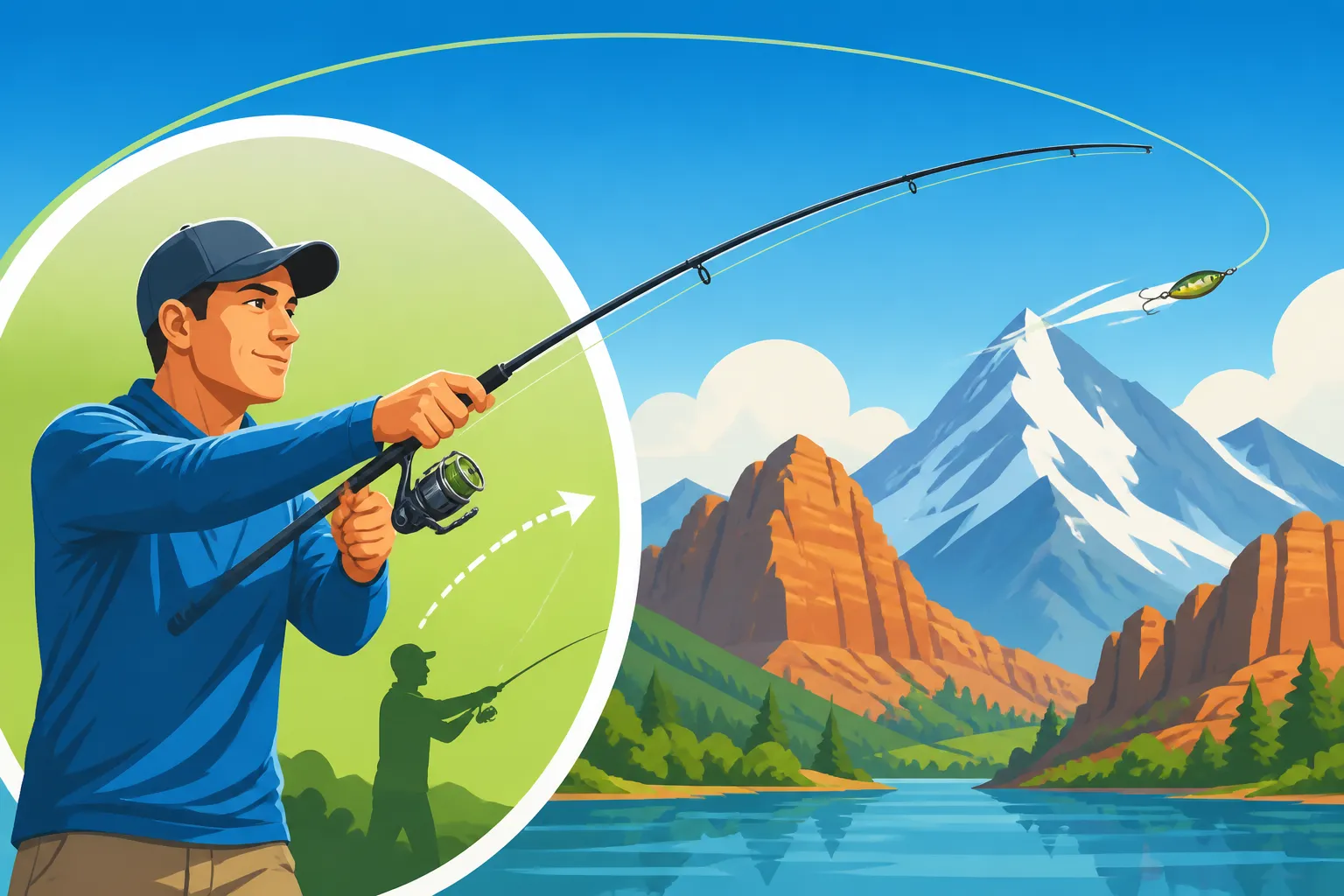
Now for the action! With your bail open and your index finger holding the line against the rod, bring the rod up and slightly back over your shoulder. Think of it like throwing a dart or hammering a nail – it's a fluid motion. As you bring the rod back, the weight of your lure or bait will "load" the rod tip, bending it backward. This bend is crucial; it’s storing the energy that will propel your lure forward.
From this loaded position, smoothly sweep the rod forward in an arc, aiming for your target. The key is timing: as the rod comes forward and straightens out, release your index finger from the line. This is typically when the rod is pointing towards your target, or slightly before. If you release too early, the lure will go high and short. Too late, and it will hit the water right in front of you. It’s a delicate balance that comes with a bit of muscle memory. Don't try to muscle it; let the rod do the work!
Following Through and Retrieving Your Line
Once you've released the line, continue your forward motion with the rod, pointing it directly at where you want your lure to land. This "follow-through" helps guide the line and ensure a straight cast. Keep your eye on where your lure is going.
As your lure hits the water, close the bail with your non-dominant hand or by slowly turning the reel handle forward until it clicks shut. Immediately begin a slow, steady retrieve by cranking the reel handle. This takes up any slack line and gets your lure moving. If you're using a bobber and bait setup, like for How to Fish With Bobber and Bait for Beginners, a slow retrieve might just mean keeping tension on the line while your bait sits. If you're using a lure, the retrieve brings it to life and attracts fish. Pay attention to how the line feels; sometimes, a fish will strike on the fall or immediately after the retrieve starts.
Common Beginner Hurdles and How to Overcome Them
Learning to cast is like learning any new skill—you're going to hit some bumps in the road. It's completely normal to feel frustrated when your line isn't going where you want it, or worse, ends up in a messy tangle. Let's tackle some of these common issues head-on.
Tackling Backlashes and Wind Knots
Ah, the dreaded "bird's nest" on a spinning reel is often called a wind knot, even though wind isn't always the culprit. This happens when loops of line come off the spool prematurely or unevenly, creating a tangled mess that looks like it was tied by a mischievous squirrel. One common cause is releasing the line too early during the cast, causing the lure to slow down while the line keeps flying off the spool. Another is using line that's too heavy or stiff for your reel, or having too much line on the spool.
To prevent wind knots:
- Don't overfill your spool: Leave a small gap between the line and the edge of the spool.
- Use appropriate line: For most Utah trout fishing, a lighter monofilament or braided line (around 4-8 pound test) works wonderfully with spinning gear. Check out Best Fishing Line for Utah Trout for more details.
- Feather the line: As your lure approaches its target, gently touch the spool with your index finger to slow the line down and prevent excess line from flying off.
- Check for loose loops: Before each cast, quickly check the spool for any loose loops that might have formed. Smooth them out before you cast.
If you do get a wind knot, don't panic. Gently pull at the loops. Sometimes it unravels easily. Other times, it might be stubborn. Patience is your best friend here. If it's truly unsalvageable, it's often better to cut out the knot and re-tie, rather than fighting it for hours.
Accuracy and Distance
Initially, your casts might feel a bit wild, landing far from your intended target or falling short. This is entirely normal! Accuracy and distance are skills that improve dramatically with practice.
- Focus on a target: Don't just cast into the general vicinity. Pick a specific leaf, a ripple in the water, or a rock to aim for.
- Adjust your release point: If your casts are consistently high and short, try releasing your finger a little later in the forward sweep. If they're plunging into the water right in front of you, try releasing a bit earlier. Even slight adjustments make a big difference.
- Engage your body: Don't just use your arm. A good cast uses your wrist, forearm, shoulder, and even a slight twist of your torso. This adds power and smoothness to your cast, increasing distance. Think of it as a smooth pendulum swing rather than a jerky throw.
- Vary your power: You don't need a maximum power cast every time. Sometimes a gentle flip is all that's needed for a short, accurate presentation in tight quarters, like a small stream.
Choosing the Right Weight for Learning
One mistake beginners sometimes make is trying to cast a tiny, weightless lure right away. It's much harder! The weight of your lure or bait is what loads the rod and gives it momentum. If you're just starting, use something with a bit of heft – a small spoon, a weighted bobber, or even a practice plug (a lead-free, barb-less casting weight you can find at most tackle shops or on sites like Amazon).
A good starting point for learning is a lure or weight in the ¼ to ⅜ ounce range. This provides enough weight to easily feel the rod load. As you gain confidence and control, you can then experiment with lighter tackle, which is often crucial for stealthier presentations for wary fish. For general tips on what a new angler needs, check out What Gear Does a First-Time Utah Angler Need?.
Practice Makes Perfect: Drills for Mastering Your Cast
Like riding a bike or learning to tie your shoes, casting becomes second nature with repetition. The more you practice, the more comfortable and intuitive it will become. Don't be afraid to dedicate some time specifically to practice, without the pressure of catching fish.
Backyard Practice Without Water
You don't need to be on the water to hone your casting skills. Your backyard or a local park is an excellent "training ground."
- Use a practice plug: As mentioned, these are perfect for practicing without the risk of snagging a hook.
- Set up targets: Place hula hoops, buckets, or even just brightly colored towels at varying distances (15, 25, 40 feet) and try to land your plug inside them. This helps develop accuracy.
- Focus on mechanics: Without the distraction of water or fish, you can really concentrate on your grip, your back-cast, your forward sweep, and that critical release point. Pay attention to how the rod feels when it "loads" correctly.
- Practice different angles: Try casting from a kneeling position, or a sidearm cast (where the rod is swept more horizontally) to prepare for situations where an overhead cast isn't feasible, perhaps due to low-hanging branches near a stream.
A little bit of consistent practice in your backyard will translate into much more effective and enjoyable time on the water.
First Trips to Beginner-Friendly Waters
Once you feel a bit more confident, it’s time to hit the water! For your very first real fishing attempts, choose locations that are known for being beginner-friendly and offer relatively open casting areas. In Utah, this often means:
- Community ponds: Many towns and cities have urban fishing ponds that are regularly stocked with trout, especially in spring and fall. These ponds usually have open banks, easy access, and plenty of room to cast without fear of hitting obstacles. You can often find recent stocking reports to time your visit for optimal success, sometimes even after a How to Fish a Utah Community Pond After a Stocking Truck Visit.
- Smaller reservoirs with clear shorelines: Places like Tibble Fork Reservoir, or sections of larger reservoirs with designated fishing areas, can offer more casting space.
- Wide, open stretches of slower rivers: Avoid fast-moving, brush-lined rivers for your first few trips. Look for areas with slower currents and clear banks, which make casting and retrieving much simpler.
These locations provide a low-pressure environment where you can focus on enjoying the process and putting your newly acquired casting skills to use, rather than battling tricky conditions.
Consistency and Patience
Remember that learning to cast a spinning rod, or indeed any fishing technique, is a journey, not a sprint. Some days, your casts will feel perfect and effortless. Other days, you might feel like you've forgotten everything. That's okay! Fishing is all about patience, both in waiting for a bite and in refining your skills.
Don't get discouraged by snags, missed targets, or tangles. Every single cast, good or bad, is a learning opportunity. Pay attention to what you did differently when a cast goes well versus when it doesn't. Soon, the smooth, effortless flick of the wrist that sends your lure exactly where you want it will become second nature. Before you know it, you'll be confidently targeting those tricky spots in any of Utah's beautiful fishing destinations, equipped with the fundamental skill of casting your spinning rod.
Disclaimer
This article is for general informational purposes only and does not constitute professional advice. Laws, prices and regulations vary by location and change over time. Consult a qualified professional for guidance on your specific situation.