Multi-Tool Every Angler Should Carry
We've all been there: out on the water, fish biting, and suddenly you need to cut a snarl, remove a hook, or tighten a loose screw on your reel, but your tools are scattered or back in the truck. Fumbling through a messy tackle box for multiple single-purpose items can ruin the flow of a good fishing day. This guide will walk you through why a quality multi-tool isn't just a convenience, but an essential piece of gear for every Utah angler, saving you time, frustration, and maybe even a fish or two.
Why a Multi-Tool is Essential for Utah Anglers
Fishing in Utah, whether you're chasing trophy lake trout at Flaming Gorge or casting for panfish in a community pond, often means dealing with a variety of situations that require quick, precise adjustments. A multi-tool bundles many of these necessities into one compact unit, making it an invaluable companion. It's about preparedness and efficiency, ensuring you spend more time fishing and less time wrestling with gear.
Streamlining Your Tackle Box
Think about the sheer number of small tools an angler typically carries: pliers, line cutters, scissors, screwdrivers, a small knife. Individually, these can take up a surprising amount of space, rattle around, and often get lost at the bottom of a crowded tackle box or float tube pocket. A good multi-tool consolidates these functions, freeing up space for more lures, bait, or snacks. It means less weight to carry if you're hiking into one of Utah's remote Uinta Mountains high lakes, and less clutter when you're trying to quickly re-tie a leader while bobbing on the open water of Bear Lake Fishing Guide. Instead of needing a whole pouch of separate items, you've got one well-organized unit. It's a game-changer for keeping your essential gear accessible and manageable, especially when you're dealing with limited space in a kayak or float tube.
Handling Unexpected Situations on the Water
Fishing in the wild, beautiful landscapes of Utah, from the high desert reservoirs to the pristine mountain rivers, means being ready for anything. Picture this: you're out on Strawberry Reservoir, a fierce bite happens, and suddenly a treble hook is deeply embedded in your net, or worse, in your hand. Fumbling for dedicated pliers while a fish is thrashing can be stressful and dangerous. A multi-tool with strong pliers and cutters allows for immediate, decisive action. Beyond fishing-specific mishaps, you might need to adjust a loose screw on your rod's reel seat, cut some stubborn tangles out of your anchor rope, or even perform a quick fix on a piece of camping gear if you're on a multi-day trip. These are the moments when having a versatile tool quickly at hand makes all the difference, preventing minor annoyances from becoming major headaches. It’s about being self-sufficient and capable when you're away from the comforts of home.
Meeting Basic Fish Care Needs
For many of us, fishing isn't just about the catch; it's also about ethical angling and responsible handling, especially with Utah's precious fish populations. A multi-tool plays a crucial role here. The pliers are perfect for gently but firmly removing hooks, especially when a fish has swallowed the bait deep. This minimizes stress and injury to the fish, increasing its chances of survival if you're practicing catch-and-release in a delicate fishery like the Provo River Fly Fishing Sections. The built-in knife or scissors can quickly trim excess line after tying a knot, or even dispatch a fish humanely if you plan to keep your limit. Having these tools immediately available helps ensure you can handle your catch efficiently and responsibly, adhering to principles of good stewardship that all Utah anglers should embrace. Proper fish care is paramount, and your multi-tool can be a key part of that process.
Key Features to Look for in an Angler's Multi-Tool
Not all multi-tools are created equal, especially when it comes to the specific demands of fishing. When you're selecting one for your Utah adventures, prioritize certain features that will truly serve you well on the water.
Pliers and Cutters The Core Function
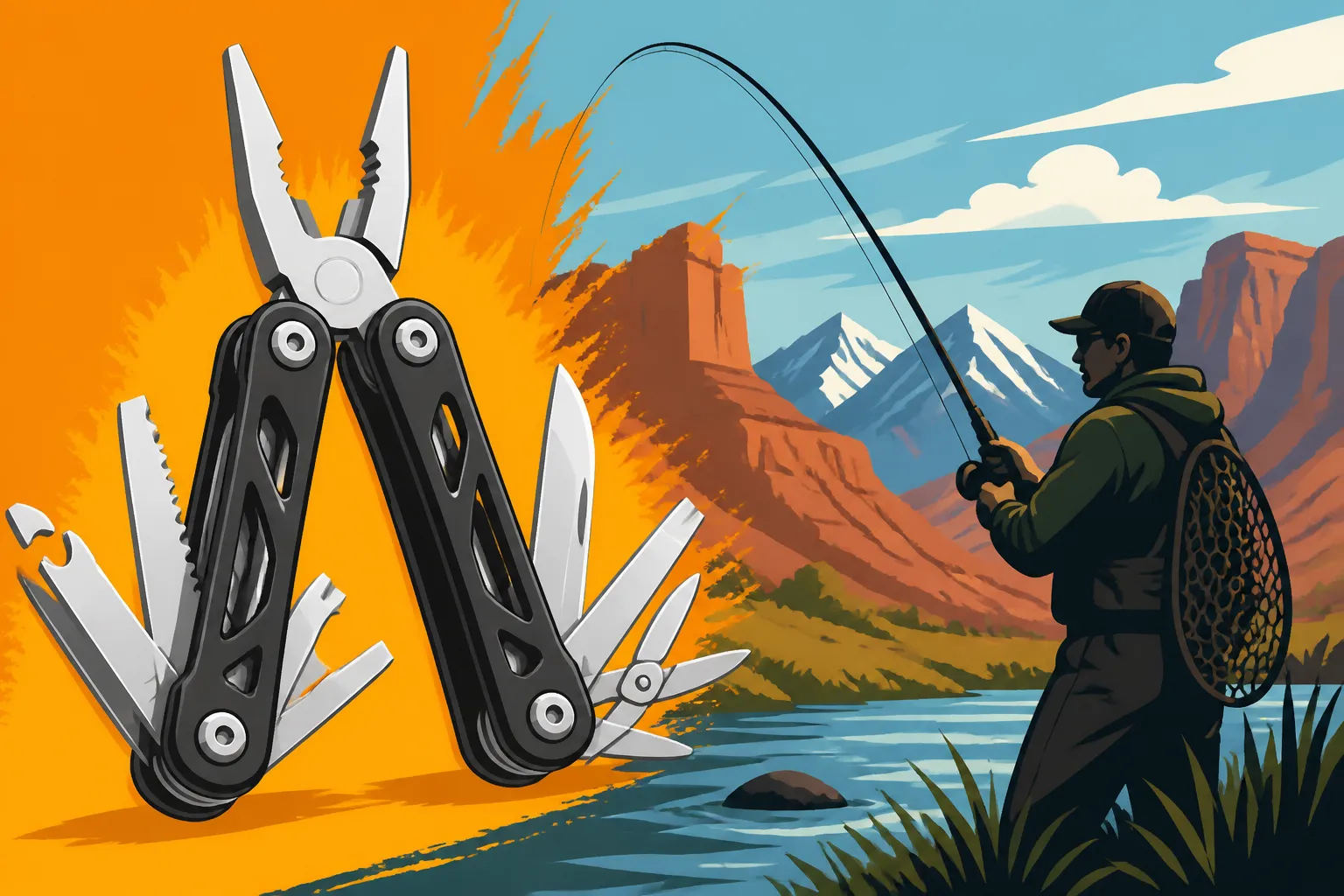
This is arguably the most critical component of any angler's multi-tool. You need pliers that are strong enough to grip a hook firmly, even a deeply set one, without slipping. Look for needle-nose pliers, which offer precision for getting into tight spaces or for manipulating small knots. The cutters are just as important; they should be sharp and robust enough to cleanly snip various types of fishing line—monofilament, fluorocarbon, and even braided line—without fraying. Many cheaper multi-tools skimp on the cutters, leading to frustrating battles with tough braid. High-quality multi-tools, often found at reputable stores like Bass Pro Shops, will feature carbide inserts or hardened steel cutters that can handle the job repeatedly. Test them out if you can, or read reviews specifically mentioning their line-cutting prowess. A reliable pair of pliers and cutters will be your most used tools, whether you're cutting a snagged line or helping a buddy with a tangled mess.
Knife Blades and Scissors
A sharp knife blade is indispensable for countless tasks beyond just fishing. You might need it to cut bait, open packaging, or even prepare a quick snack. Look for a blade made of corrosion-resistant stainless steel, as it will inevitably come into contact with water. Some multi-tools offer multiple blade types, like a plain edge for general cutting and a serrated edge for tougher materials. Scissors are another often-overlooked but incredibly useful tool for anglers. They're perfect for precise trimming of fishing line, cutting leader material, or even modifying soft plastics at the water's edge. Trying to use a knife for these delicate tasks can be cumbersome and less accurate. When browsing options on Amazon, pay attention to the quality of the scissors—they should feel springy and sharp, not flimsy. These cutting tools complement the pliers, providing a complete solution for almost any cutting need you'll encounter.
Specialized Fishing Tools Hook Removers, File
While the core tools are universal, some multi-tools go a step further with angler-specific additions. A dedicated hook remover, integrated into the pliers or as a separate attachment, can be a godsend for quickly and safely unhooking fish. This is especially true when dealing with toothy species or when aiming for a quick release to protect the fish. Some multi-tools also include a small file, which can be surprisingly useful for sharpening dull hook points in a pinch or smoothing out rough edges on lures after they've bounced off rocks. Other handy extras might include a small screwdriver for reel maintenance or a lanyard loop to keep your tool secure on your person or attached to your gear. While not strictly necessary, these specialized tools can elevate a good multi-tool to a great one, enhancing your overall fishing experience.
Durability and Corrosion Resistance
Utah's diverse fishing environments, from the salty waters of the Great Salt Lake to the high-mountain streams, all present challenges to gear durability. Exposure to water, mud, sand, and even fish slime can quickly degrade a poorly made tool. This is why investing in a multi-tool constructed from high-quality, corrosion-resistant materials is paramount. Stainless steel is standard, but look for models with enhanced coatings or specific marine-grade alloys if you plan to spend a lot of time near saltwater or in very wet conditions. The joints and pivots should be sturdy, with minimal wobble, indicating good craftsmanship. After all, a multi-tool is meant to be abused a little; it's a working tool. A robust construction ensures it won't rust out or fall apart after a few seasons on the water, saving you the hassle and expense of frequent replacements. Think of it as a long-term investment in your fishing success.
Choosing the Right Multi-Tool for Your Utah Fishing Style
The "best" multi-tool isn't a one-size-fits-all answer; it really depends on the type of fishing you do most often in Utah. Different environments and target species place unique demands on your gear.
For General Reservoir and Pond Fishing
If your typical outing involves casting from shore or a small boat on Utah's numerous reservoirs and community ponds, your multi-tool needs to be versatile and sturdy. You'll primarily be dealing with standard hooks, various lines, and perhaps some light rigging. A tool with robust needle-nose pliers, sharp line cutters, and a general-purpose knife blade will cover most of your needs. Consider models that also include a small screwdriver for tightening down reel seats or making minor adjustments. You might not need specialized fly-fishing tools, but general utility is key. Look for models that are easy to open and close with one hand, as you'll often be holding a rod or a fish with the other. Brands readily available at Bass Pro Shops or through online retailers like Amazon offer a wide range of options that fit this broad category, often at a very reasonable price point. This type of fishing is often a great way to introduce someone to the sport, and having the right tools makes the experience much smoother for a beginner.
For River and Stream Fly Fishing
Fly fishing on Utah's pristine rivers, like the Green River below Flaming Gorge Dam or the Weber River Fly Fishing Spots, demands a multi-tool with a different emphasis. Precision is paramount here. You'll be tying delicate knots, trimming fine leader material, and often need a quick way to snip a tag end without disturbing a tiny dry fly. Look for multi-tools that prioritize fine-tipped pliers or a dedicated pair of nippers. Scissors that can handle thin tippet material without crushing it are also crucial. A small, sharp blade for cutting leaders or opening snack wrappers is useful, but heavy-duty pliers might be overkill. Corrosion resistance is still important, as you'll often be wading in water. Compactness and light weight are also highly valued, as fly anglers often carry minimal gear. You don't want a bulky tool weighing down your vest or pack as you navigate slippery riverbanks. Some dedicated fly-fishing tools exist that integrate many of these functions, often with a focus on quick access and portability.
For Ice Fishing in Utah's Cold Winters
Ice fishing presents its own unique set of challenges, primarily the extreme cold and the need for tools that can function effectively with gloved hands. For this, your multi-tool needs to be extra rugged. Pliers should be strong enough to handle frozen lines or even retrieve items dropped down an ice hole. The cutters need to be exceptionally sharp to slice through stiff, cold line. A solid knife blade is essential for various tasks, including opening bait containers or even cutting small pieces of bait. Consider models with larger handles or those that can be operated more easily when your fingers are numb. While specific ice fishing gear like specialized rods and augers are important, a reliable multi-tool ensures you're prepared for unexpected gear issues or needing to make quick adjustments in freezing temperatures. Look for tools that have a good grip texture and robust construction that can withstand being dropped on ice or enduring sub-zero conditions. Keeping your multi-tool accessible, perhaps on a lanyard or in an outer pocket, will be key to staying efficient and warm during a long day on the ice. How to Stay Warm Ice Fishing in Utah is another excellent resource for preparing for cold conditions.
Maintenance and Care for Your Fishing Multi-Tool
Just like your reels, rods, and other essential fishing gear, your multi-tool needs a little love and attention to ensure it performs reliably for years to come. Neglecting it, especially after exposure to water and fish remnants, is a sure way to shorten its lifespan.
Post-Trip Cleaning Rituals
After every fishing trip, especially if your multi-tool has been exposed to water, bait, or fish slime, it's vital to give it a proper cleaning. This might seem like an extra chore when you're tired from a day on the water, but it pays dividends in the long run. Start by rinsing the tool thoroughly under warm, fresh water. Use a small brush, like an old toothbrush, to get into all the nooks and crannies, especially around the pivots and inside the pliers' jaws. Mild soap can help remove stubborn grime and fish odors. Once clean, dry the tool completely. This is crucial for preventing rust. You can use a towel, but air-drying or even using a hairdryer on a low setting can help ensure no moisture remains in tight spots. For tools used frequently in saltwater environments, a deeper rinse and dry is even more important to combat corrosive salt residue. This simple ritual prevents the build-up of gunk and extends the life of your tool, ensuring it's ready for your next adventure to places like Flaming Gorge Fishing Guide.
Sharpening and Lubrication
Over time, the knife blades and cutters on your multi-tool will inevitably become dull with use. A dull blade is not only less effective but can also be more dangerous to use. Invest in a small, portable sharpener, or use a sharpening stone at home to keep your blade razor-sharp. For the cutters, if they're removable, you might be able to replace the inserts, or a professional sharpening service could help. After cleaning and drying, lubricating the pivot points is essential for smooth operation. A light, corrosion-inhibiting oil, such as a mineral oil or a specialized gun oil, works wonders. Apply just a drop or two to each pivot and work the tool open and closed a few times to distribute the lubricant. This will keep your multi-tool opening and closing effortlessly, even after countless trips to the lake or river. Regular lubrication also helps prevent rust from forming in the moving parts, a common culprit for seizing up tools.
Safe Storage Practices
How you store your multi-tool between trips also impacts its longevity. Avoid simply tossing it loose into a damp tackle box where it can bang against other metal items or sit in residual moisture. Many multi-tools come with a sheath or pouch, which is an excellent way to protect it. If not, consider a dedicated pocket in your tackle bag or a small, dry case. Store it in a dry environment, away from extreme temperature fluctuations if possible. For instance, leaving it in a hot, humid garage or a freezing, damp shed isn't ideal. If you're putting your boat away for the winter and storing your fishing gear, ensure your multi-tool is clean, dry, and lightly oiled before it goes into storage. Proper storage not only protects the tool itself but also prevents it from damaging other gear or accidentally cutting something it shouldn't. By treating your multi-tool with a little care, it will remain a trusted companion on all your Utah fishing excursions.
| Multi-Tool Feature | Ideal for General Reservoir/Pond | Ideal for River/Stream Fly Fishing | Ideal for Ice Fishing |
|---|---|---|---|
| Pliers | Robust Needle-Nose | Fine-Tipped, Precision | Strong, Ergonomic for Gloves |
| Line Cutters | Sharp, Handles Mono/Braid | Very Sharp, Handles Fine Tippet | Heavy-Duty, Handles Stiff/Cold Line |
| Knife Blade | General Purpose, Stainless | Small, Sharp Utility | Robust, Good for Cutting Bait |
| Scissors | Useful for Line/Bait | Essential for Tippet/Small Tasks | Good for Line/Packaging |
| Hook Remover | Beneficial | High Priority | Beneficial |
| Corrosion Resistance | Important | Very Important | Essential |
| Ergonomics | Easy One-Hand Use | Lightweight, Compact | Large Handles, Good Grip in Cold |
| Screwdriver | Small Flat/Phillips | Less Critical | Useful for Rod/Reel Adjustments |
Disclaimer
This article is for general informational purposes only and does not constitute professional advice. Laws, prices and regulations vary by location and change over time. Consult a qualified professional for guidance on your specific situation.