Best Camera Setup for Photographing a Catch Before Release
It’s a universal angler experience: you’ve just landed a stunning fish, maybe a beautiful Utah cutthroat or a feisty smallmouth bass from Flaming Gorge, and your heart is pounding. You want to capture that moment, immortalize your triumph, but there’s a crucial catch (pun intended): you’re practicing catch-and-release, and every second that fish is out of the water is precious. How do you get that perfect shot without stressing out your finned friend? That struggle is real, and it’s why having the right camera setup and a quick strategy is so vital for ethical, memorable fishing photography.
This guide is all about helping you find the best camera setup to photograph your catch before release, focusing on gear that is durable, efficient, and helps you prioritize the fish's well-being while still getting a fantastic shot. We'll explore various camera types, essential accessories, and practical tips to ensure you're ready when that trophy moment strikes.
The Art of Ethical Catch-and-Release Photography
When you're out on the water, the moment you reel in a beautiful fish can be exhilarating. But for those of us dedicated to catch-and-release, that excitement is quickly tempered by the responsibility of getting the fish back into its element as fast and safely as possible. This balance between capturing the memory and ensuring the fish's survival is at the heart of ethical fishing photography.
Why Your Camera Setup Matters for the Fish
Let's be honest, we all want that hero shot, the one that makes our buddies jealous. But a truly responsible angler understands that the fish's health comes first. Every second a fish spends out of the water increases its stress levels. Air exposure can damage gills, handling can remove protective slime coats, and prolonged struggle or exposure to different temperatures can be detrimental, especially for sensitive species like trout in warmer conditions. This is where your camera setup truly makes a difference.
A clumsy, complicated camera setup means more fumbling, more adjustments, and ultimately, more time the fish is out of the water. Imagine trying to power on a camera, switch modes, clean a lens, and then figure out the right angle, all while holding a thrashing fish. It's a recipe for disaster for both your photo and the fish. A streamlined, easy-to-use, and pre-set camera system allows for a swift transition from catch to photo to release. This efficiency significantly minimizes handling time and stress, giving your catch the best possible chance of survival. The real trophy, after all, is a healthy fish swimming away strong, ready to be caught another day. This commitment to the fish's welfare is paramount when considering How to Release a Fish Without Hurting It in Utah.
Balancing Quality and Speed: The Photographer's Dilemma
Here's the rub: you want a high-quality photo that truly shows off the fish's vibrant colors and impressive size, but you also need to be lightning-fast. This creates a classic photographer's dilemma. Do you opt for a high-end DSLR or mirrorless camera with incredible image quality but the bulk, complexity, and fragility that comes with it? Or do you lean into the rugged, quick-draw nature of a smaller, simpler camera that might sacrifice some image fidelity?
Modern technology has thankfully blurred these lines somewhat. Today's action cameras and even waterproof point-and-shoots can deliver surprisingly good images, especially in good lighting, without the need for intricate settings adjustments. Smartphones, in particular, have made huge strides in camera quality, making them a viable option for many anglers when paired with the right protection. The key is finding a setup that you can operate almost instinctively, allowing you to focus on safe fish handling rather than fiddling with f-stops and shutter speeds. Your goal is to get several usable shots in a matter of seconds, not to stage a full photoshoot. Understanding this balance is key to selecting the right gear.
Essential Camera Gear for On-the-Water Photography
Alright, let's talk about the tools that will help you snap those unforgettable moments. When fishing, especially on dynamic waters like the Provo River or a windswept reservoir, your gear needs to be as tough as you are and ready for anything.
Waterproof and Durable Camera Options
Choosing a camera that can handle the inevitable splashes, drops, and general dampness of fishing is non-negotiable. Forget about bringing your fancy, unprotected camera unless you're absolutely sure it's staying dry, which, let's face it, is a rare occurrence for many of us.
Action Cameras
Action cameras, like those from GoPro or DJI Osmo Action, have revolutionized on-the-water photography. Their compact size, inherent waterproof capabilities (often without needing an extra housing for shallow depths), and wide-angle lenses make them incredibly versatile.
- Pros: They're practically indestructible, designed to be dunked, dropped, and covered in mud. The wide-angle lens is fantastic for creating that "fish eye" effect, making your catch look even more impressive when held close to the camera. Many models offer excellent video capabilities and a "burst photo" mode, allowing you to capture dozens of frames in seconds—perfect for getting that one clear shot of a lively fish. They can also be easily mounted on your chest, head, or boat, allowing for hands-free operation right when you need it most.
- Cons: While modern action cameras have improved, their image quality, especially in low light, often can't compete with larger-sensor cameras. The ultra-wide lens can sometimes distort the fish or make it appear smaller if not positioned correctly. Manual control over settings is usually minimal.
- Best Use: These are fantastic for anglers who want hands-free operation, are filming a lot, or fish in very rugged conditions. They're also great for quickly capturing a moment without much fuss. You can find a variety of mounts and accessories for these cameras at stores like Bass Pro Shops.
Waterproof Point-and-Shoot Cameras
If you're looking for a camera that feels more like a traditional digital camera but can still survive a swim, dedicated waterproof point-and-shoots are a superb option. Brands like Olympus (with their Tough series) and Fujifilm (XP series) have long dominated this niche.
- Pros: These cameras are built like tanks, often waterproof, shockproof, and freezeproof. They usually offer optical zoom, which can be handy for capturing wider scenes or getting a slightly closer shot without disturbing the water. They are generally very easy to use, with intelligent auto modes that do most of the work for you, making them ideal for folks who just want to point and shoot without a steep learning curve. The image quality tends to be a step up from action cameras for still photos, especially when considering detail and color reproduction.
- Cons: While more rugged than a standard point-and-shoot, they generally won't survive the same extreme abuse as an action camera. Their manual controls are still somewhat limited compared to mirrorless or DSLR cameras. They can be a bit bulkier than action cameras.
- Best Use: Excellent for casual anglers who want a reliable, good-quality camera that they don't have to worry about getting wet. They strike a nice balance between durability, ease of use, and photo quality. They’re a solid choice for someone looking to document their Utah Fishing Techniques for Beginners without breaking the bank.
Smartphones with Waterproof Cases
In an age where everyone carries a powerful computer in their pocket, your smartphone is often the most convenient camera you own. With the right protection, it can also be a surprisingly effective fishing camera.
- Pros: Modern smartphones boast incredible camera technology, often with multiple lenses and sophisticated computational photography that can produce stunning images. You almost always have it with you, making it the most accessible option. Post-processing and sharing your photos on social media are instantaneous. There's a huge ecosystem of apps for editing.
- Cons: The phone itself is usually not waterproof, so a high-quality, truly waterproof case is essential. These cases can be bulky and sometimes make operating the phone a bit clunky. Screen visibility in bright sunlight can be challenging, and battery life can be a concern if you're also using it for GPS or other apps. Dropping a phone in a bulky case can still lead to damage or loss if not properly secured.
- Best Use: For the everyday angler who prioritizes convenience and immediate sharing. It's a fantastic backup camera or primary camera for shorter trips on calm waters. Just ensure you invest in a seriously good waterproof case—not just a splash-resistant one. Check out highly-rated options on Amazon, and read reviews carefully to ensure it's truly sealed.
Lens Considerations for Catch-and-Release Shots
While many dedicated fishing cameras have fixed lenses, understanding how different lens types affect your photos can still influence your camera choice.
Wide-Angle Lenses
Many action cameras and even some smartphone cameras naturally feature wide-angle lenses. This is often an advantage for fishing photography, especially for catch-and-release.
- Impact: A wide-angle lens, when held relatively close to the subject (the fish and angler), creates a sense of depth and can make the fish appear larger and more commanding in the frame. This is how many of those iconic "hero shots" are achieved. They also allow you to capture more of the background, whether it's the stunning backdrop of Strawberry Reservoir Fishing Guide or the rugged canyons of Lake Powell Fishing Guide, adding context and beauty to your shot.
- Consideration: Be mindful of distortion. If held too close or at extreme angles, a wide-angle lens can distort the fish's features unnaturally. Practice holding the fish parallel to the camera for the most natural (and impressive) look.
Fixed Lenses vs. Zooms
Most waterproof point-and-shoots and action cameras come with fixed, non-interchangeable lenses. This simplifies things immensely, as you don't have to worry about changing lenses on a boat or near water.
- Fixed Lenses (Primes): These lenses have a set focal length. They often have wider apertures (smaller f-numbers), which means better low-light performance and the ability to create a shallower depth of field (blurry background) if that's a look you're going for. Their simplicity means fewer moving parts and often greater durability.
- Zoom Lenses: Some rugged point-and-shoots offer optical zoom. This gives you flexibility in framing your shot, allowing you to get tighter on the fish or zoom out for a wider scenic view. However, zoom lenses have more moving parts, which can introduce potential points of failure, though robust outdoor models are designed to mitigate this. For quick catch-and-release shots, you'll rarely have time to zoom, so a fixed, wider lens is often preferable for speed and simplicity.
Must-Have Accessories for Better Fish Photos
Even the best camera is only as good as its accessories when you're on the water. These add-ons enhance functionality, protect your gear, and ultimately help you get better, safer photos.
Mounts and Grips for Stability and Safety
Holding a camera, a fish, and possibly a net, all while trying to maintain balance in a boat or on slippery rocks, is a juggling act. These accessories simplify that.
Chest Mounts and Head Mounts
If you're using an action camera, a chest or head mount is a game-changer.
- Benefit: These mounts allow you to capture POV (point-of-view) footage and photos completely hands-free. Imagine reeling in a fish, netting it, and then bringing it up for a quick photo, all while your camera is automatically capturing the action. This is invaluable for maintaining control of the fish with both hands, drastically reducing the time it's out of the water. You can then quickly snap a still frame from your video or use a burst photo mode triggered by voice or remote.
Floating Hand Grips
This is a non-negotiable accessory for any camera you plan to use near water, especially for cameras that aren't inherently buoyant.
- Benefit: A brightly colored floating hand grip attaches to your camera and ensures that if you accidentally drop it in the lake or river, it won't sink to the bottom. Losing your camera (and potentially priceless memories) in the deep waters of Bear Lake Fishing Guide or the fast current of the Green River is a real risk. These grips also provide a more substantial and stable hold than just the camera itself, leading to steadier photos. Many are designed to be easily held even with wet hands.
Small Tripods or GorillaPods
While less critical for the immediate catch-and-release shot, small, flexible tripods like a GorillaPod can be incredibly useful for other aspects of your fishing photography.
- Benefit: You can wrap them around a railing on your boat, perch them on a rock, or set them up on a flat surface for stable shots. They're great for self-timer group photos (if you have time and the fish isn't involved), time-lapses of the sunrise, or hands-free video recording while you're actively fishing. Just remember, when the fish is out of the water, the priority is getting it back quickly, so setting up a tripod for that specific shot might be too slow. However, for a planned shot with minimal fish handling, they offer excellent stability.
Lighting and Filters to Enhance Your Shots
Good light makes all the difference, and sometimes you need a little help to control it.
Polarizing Filters
A polarizing filter can dramatically improve your fishing photos, especially when shooting on sunny days or over water.
- Benefit: This filter reduces glare and reflections on the water's surface, allowing you to see through the water more clearly (both in person and in your photo). It also enhances color saturation, making blue skies bluer, green trees greener, and the vibrant colors of your fish really pop. You can often find polarizing filter attachments for action cameras or even clip-on versions for smartphones. It's especially useful on clear-water fisheries.
Lens Wipes and Blowers
Nothing ruins a great photo faster than a water droplet or smudge on your lens.
- Benefit: Always keep a few high-quality microfiber lens wipes and a small air blower (like those used for camera sensors) handy in your gear bag. Before you even cast your line, give your lens a quick clean. And before you bring that fish up for a photo, do another quick check. It takes seconds and can save an otherwise perfect shot from being blurry or spotted.
Natural Light
While you can't carry a studio light setup on your fishing trip, understanding natural light is your best tool.
- Benefit: Early morning and late evening (the "golden hours") offer soft, warm, and flattering light that is ideal for photography. Avoid shooting directly into the sun, which will silhouette your subject. Instead, try to position the sun behind you or to your side. If it's bright mid-day, seek out open shade to diffuse harsh shadows. If the sun is directly overhead, try holding the fish slightly angled to avoid harsh shadows over its eyes or gills.
Storage and Power Solutions
You don't want to run out of juice or space right when you hook into that monster.
Extra Batteries and Power Banks
Modern digital cameras and smartphones can chew through batteries, especially when recording video or used in cold weather (like when you're ice fishing on Strawberry Reservoir Ice Fishing Spots).
- Benefit: Always carry at least one, if not two, spare fully charged batteries for your camera. For smartphones, a high-capacity portable power bank is essential for topping up your device. Keep spare batteries and power banks in a dry, insulated pocket or dry bag to maintain their charge in extreme temperatures.
SD Cards
Running out of storage is another common frustration.
- Benefit: Invest in high-capacity, high-speed SD cards (or microSD cards for action cameras/smartphones). Fast write speeds are crucial for burst mode photography, ensuring your camera can keep up with rapid-fire shots without missing frames. Having a backup card in a waterproof holder is also a good idea. You can pick up reliable, fast SD cards from Amazon.
Waterproof Dry Bags and Cases
For any gear that isn't inherently waterproof, or for extra protection for your primary camera, dry bags and hard cases are indispensable.
- Benefit: Use a dry bag for your spare batteries, extra SD cards, car keys, wallet, and any larger camera gear (like a DSLR or mirrorless camera you plan to use on shore, not in the water). Hard cases offer even more protection against crushing and impact. This ensures that even if your boat takes on water or you get caught in a sudden downpour, your essential electronics remain safe and dry. You can find excellent dry bags and cases at Bass Pro Shops and other outdoor retailers.
Setting Up for Success: Practical Tips for Anglers
Having the right gear is only half the battle. Knowing how to use it effectively and safely in the moment is what truly sets you up for success.
Pre-Shot Planning and Settings
The key to getting a good catch-and-release photo is speed and preparation. You simply don't have time to fiddle with settings once the fish is landed.
- Camera On and Ready: Before you even make your first cast, make sure your camera is powered on and set to your preferred mode. Many anglers set their action cameras to video mode (from which you can pull still frames) or a rapid burst photo mode. For point-and-shoots, an intelligent auto mode or a custom preset for action is ideal.
- Clean Lens: As mentioned, a quick wipe of the lens before the action starts is crucial. Water spots, finger smudges, or dust can ruin an otherwise great photo.
- Optimal Settings: If your camera allows, set a fast shutter speed (e.g., 1/500th of a second or faster) to freeze any movement from the fish. Use a moderate ISO if light conditions aren't perfect, but avoid pushing it too high to prevent graininess. For smartphones, ensure your camera app is open and ready to launch immediately. You don't want to be fumbling with app icons when a fish is on the line.
Safe Fish Handling for the Photo Op
This is paramount. No photo is worth jeopardizing the life of the fish. Always adhere to ethical handling practices.
- Keep it Wet: Whenever possible, keep the fish in the net or partially submerged in the water until you are absolutely ready for the photo. A quick lift, snap, and return is the goal.
- Wet Hands: Always wet your hands before touching a fish. Dry hands can remove the fish's protective slime coat, leaving it vulnerable to disease.
- Proper Support: When lifting the fish, support its weight horizontally with two hands. One hand supporting the belly, the other lightly gripping the base of the tail. Never hang a fish vertically by its jaw or gills, as this can cause severe internal damage, especially to larger, heavier fish like trophy trout or walleye. This is particularly important for species that are not accustomed to such stress, as described in Utah Trout Species Guide.
- Minimize Air Exposure: Keep the fish out of the water for the shortest time possible—think seconds, not minutes. Get your camera ready, lift the fish, snap a few rapid-fire photos, and gently return it to the water. If the fish is struggling, skip the photo and release it immediately. Your goal is for the fish to swim away vigorously.
Composing Your Shot Ethically
Once you're ready, a few quick composition tips can elevate your photo while still respecting the fish.
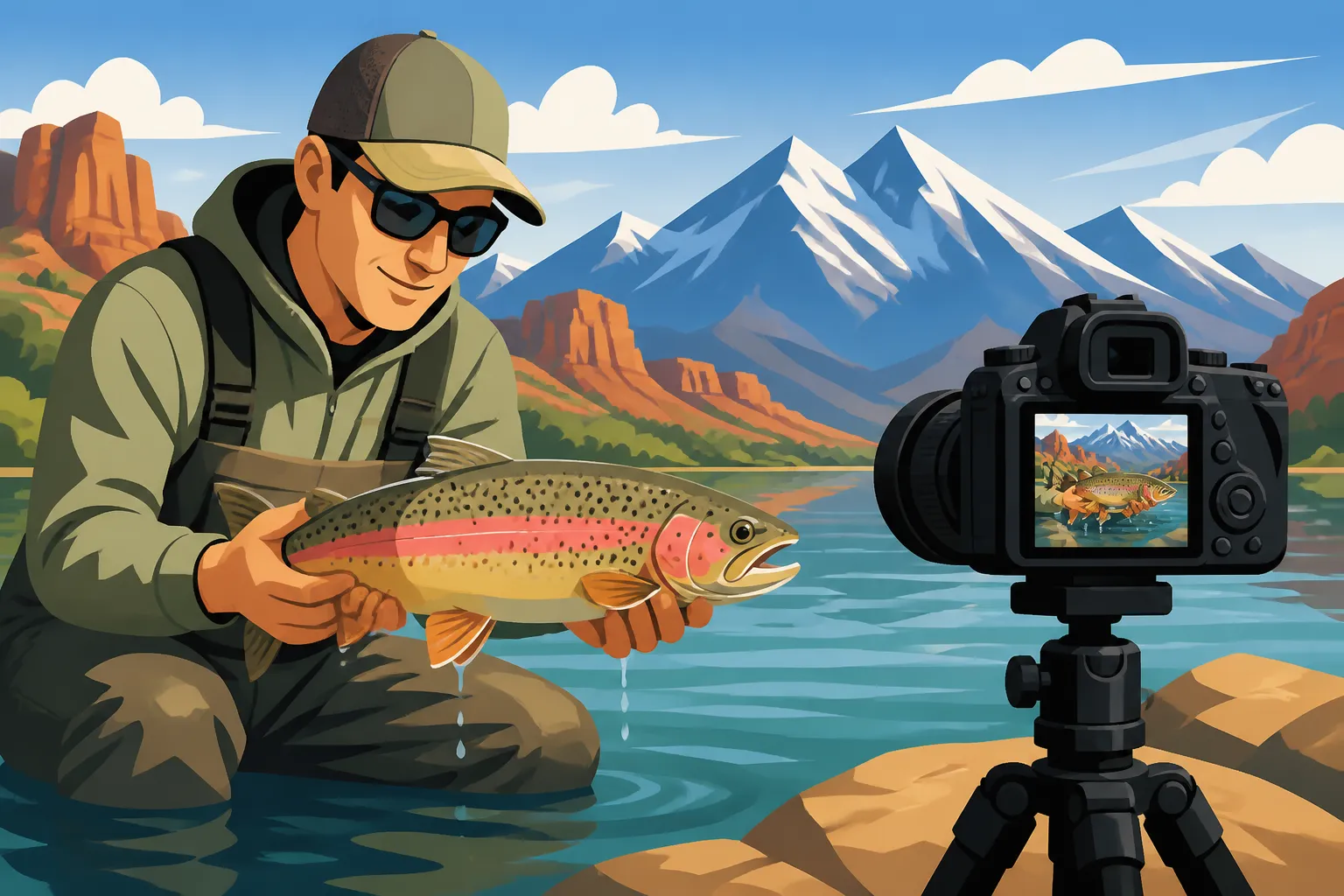
- Get Low: Instead of holding the fish high, crouch down to the water's level. This makes the fish appear larger and more impressive in the frame, creating a more dynamic and engaging photo. It also minimizes the distance the fish is out of the water.
- Include the Environment: A good fishing photo tells a story. Try to include some of the surrounding landscape—the river, the lake, the mountains—to give context and showcase the beauty of your fishing spot. This is especially true when fishing in iconic locations like the Green River Below Flaming Gorge Dam or high-altitude Uinta Lakes, as explored in Uinta Mountains High Lakes Fishing.
- Focus on the Fish: While it's your catch, the fish should be the star. Ensure it's in sharp focus. If you're wearing sunglasses, consider tilting your head slightly to avoid reflections.
- Avoid Exaggeration: Resist the urge to "long-arm" the fish excessively towards the camera. While a slight angle can make it look good, extreme angles that distort reality detract from the authenticity of your catch. The true beauty is in an honest representation.
Camera Setup Comparison for Anglers
To help you decide, here's a quick comparison of the camera types we've discussed, highlighting their strengths and weaknesses for fishing photography.
| Camera Type | Pros for Fishing | Cons for Fishing | Best Use Case |
|---|---|---|---|
| Action Camera (e.g., GoPro) | Very durable, waterproof, compact, wide-angle lens, can be mounted hands-free, excellent for video. | Less control over settings, lower image quality in low light, can distort fish size with extreme wide angle. | Fast-paced action, hands-free operation, video-focused trips, rugged conditions, minimal handling time. |
| Waterproof Point-and-Shoot | Easy to use, truly waterproof, good auto modes, often has optical zoom, better ergonomics for stills. | Limited manual control, image quality typically not DSLR level, fixed lens. | General recreational fishing, quick grab-and-shoot photos, family trips, reliable performance in varied weather. |
| Smartphone (with Case) | Always with you, good modern camera tech, easy to share, wide range of editing apps, convenient. | Requires a robust waterproof case, screen glare can be an issue, battery drain, less durable than purpose-built cameras. | Everyday angler, social media sharing, casual photos, minimal extra gear, quick and spontaneous moments. |
Ultimately, the best camera setup is the one you'll actually use and one that you can operate quickly and safely. Prioritize durability and ease of use over complex features for catch-and-release scenarios. With the right gear and a mindful approach, you can capture those incredible fishing memories while ensuring the health and vitality of your prized catch. Happy angling!
Disclaimer
This article is for general informational purposes only and does not constitute professional advice. Laws, prices and regulations vary by location and change over time. Consult a qualified professional for guidance on your specific situation.