Utah Bass Daily Limit and Minimum Length
Fishing for bass in Utah can be incredibly rewarding, but it's also a common source of confusion when it comes to understanding the specific rules. Many anglers feel frustrated trying to keep up with the daily limits and minimum length requirements, which can vary not just by species but even by the particular water you're fishing. It's a real headache trying to ensure you're compliant while also enjoying your time on the water, and nobody wants to accidentally run afoul of the law or harm vital fish populations. This guide is designed to cut through that complexity, providing clear, detailed information on Utah's bass daily limits and minimum length regulations, so you can fish with confidence and peace of mind.
Navigating Utah's Bass Daily Limits and Minimum Lengths
Understanding the nuances of fishing regulations is paramount for any responsible angler. When it comes to bass in Utah, the rules aren't always a one-size-fits-all situation. You might assume a bass is a bass, but the Utah Division of Wildlife Resources (DWR) has carefully crafted regulations that distinguish between species and even specific water bodies, all with the goal of maintaining healthy fish populations and providing diverse angling opportunities. Ignoring these rules, even accidentally, can lead to fines and a diminished reputation for all anglers, which is the last thing anyone wants.
General Statewide Bass Regulations for Smallmouth and Largemouth
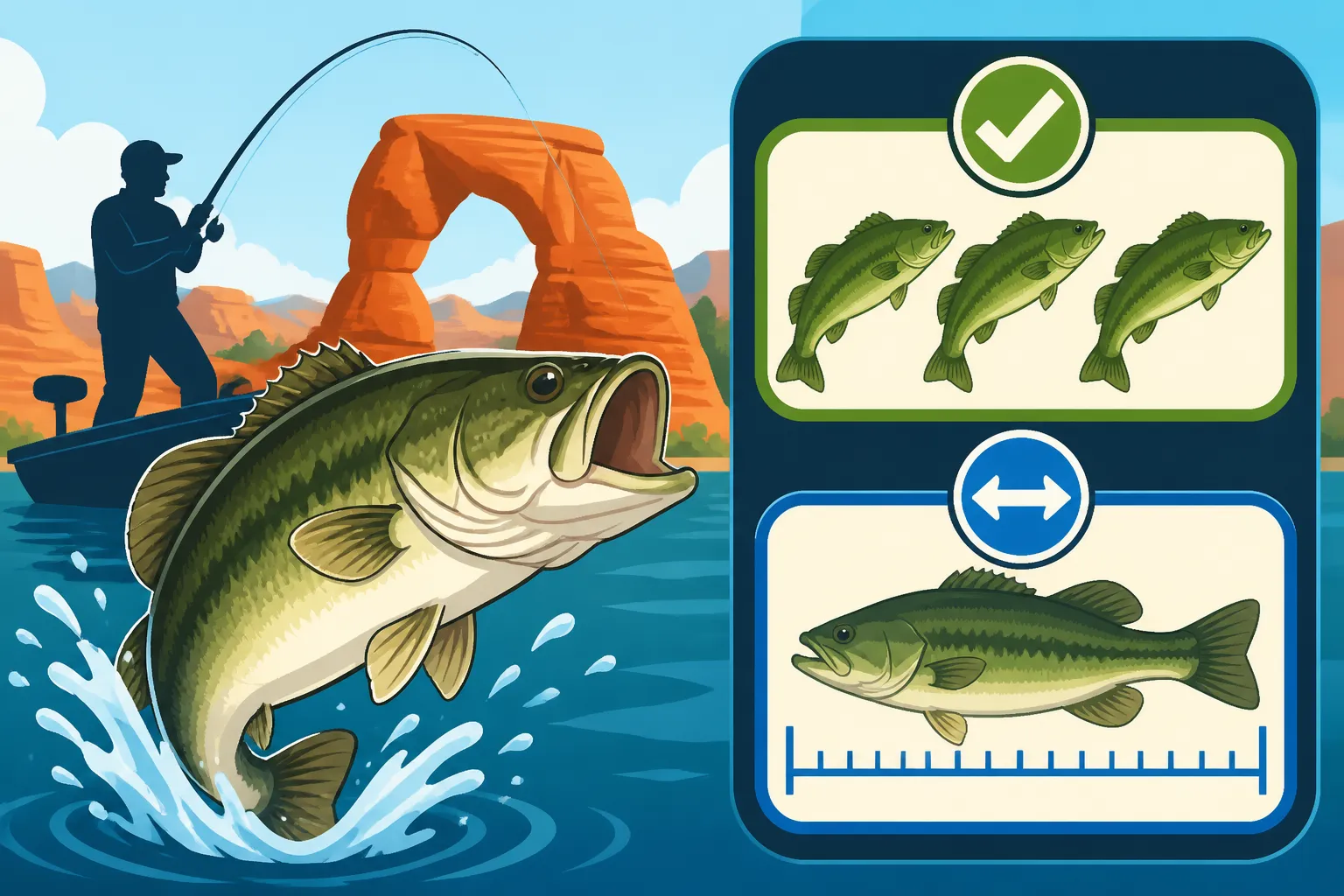
For the most part, Utah has a fairly straightforward approach to its two primary "black bass" species: smallmouth bass and largemouth bass. These are the fish that get your heart pumping with their aggressive strikes and strong fights, and they're found in many of Utah's reservoirs and warmer ponds. The statewide daily limit for both smallmouth and largemouth bass combined is six fish. This means you could keep six smallmouth, six largemouth, or any combination thereof, as long as the total doesn't exceed six.
What often surprises anglers is that for most waters in Utah, there's no minimum length limit for these black bass. This general rule is quite permissive compared to other states where strict slot limits or minimum lengths are common. The idea here is often to allow anglers to harvest smaller bass, which can help reduce competition for food among the fish and potentially allow remaining bass to grow larger. However, this general rule is just that – general. It's crucial to always double-check the specific regulations for the water you intend to fish, as there are significant exceptions. You can find comprehensive details in the Utah Fishing Regulations Explained document published by the DWR.
Specific Waterbody Exceptions for Bass
While the statewide rule of six bass with no length limit might seem simple, several key water bodies in Utah have entirely different regulations for smallmouth and largemouth bass. These exceptions are put in place for very specific ecological and management reasons, often to protect growing populations, encourage trophy fish, or manage invasive species. It’s these specific rules that often trip up anglers and cause frustration, but knowing them ahead of time is key to a successful and legal trip.
For instance, at popular spots like Deer Creek Reservoir or Pineview Reservoir, you might find regulations that include minimum length requirements or even modified daily limits. These could be 15-inch minimums for smallmouth, or even slot limits that require you to release fish within a certain size range while allowing harvest outside of it. The DWR regularly adjusts these regulations based on population surveys and scientific data, so a regulation that was in place last year might have changed this year. Always consult the current year’s fishing guide. For detailed insights into species found in different waters, check out the Largemouth Bass in Utah Waters guide or the Utah Smallmouth Bass Guide. These guides often highlight which waters have unique regulations.
Striped Bass Regulations at Lake Powell
Now, let's talk about striped bass, which are a whole different ballgame and a major draw for anglers heading to Lake Powell. These aren't your typical "black bass" species; they're an anadromous fish (though landlocked in Powell) known for their incredible size and schooling behavior. When fishing for striped bass at Lake Powell, the regulations are dramatically different: there is no daily limit and no minimum length. In fact, anglers are often encouraged, and sometimes even required, to keep all the striped bass they catch.
This seemingly counterintuitive regulation is due to the unique ecosystem of Lake Powell. Striped bass are not native to Lake Powell and have, over the years, become incredibly abundant. Their populations can explode, leading to intense competition for food, primarily shad, which are also a vital food source for other species like smallmouth bass and walleye. An overabundance of striped bass can throw the entire lake's ecosystem out of balance, impacting the health and size of all fish. Therefore, by encouraging anglers to harvest as many striped bass as possible, the DWR hopes to maintain a healthier balance in the reservoir. So, if you're heading to one of the Best Places to Fish in Utah like Lake Powell, be prepared to fill your cooler with stripers! More specific information can be found in our Striped Bass at Lake Powell and Lake Powell Fishing Guide.
| Bass Species | General Statewide Daily Limit | General Statewide Minimum Length | Key Exception Waters (Examples) | Exception Rules |
|---|---|---|---|---|
| Smallmouth Bass | 6 (combined with Largemouth) | None | Flaming Gorge, Deer Creek | Specific minimum lengths, or slot limits might apply |
| Largemouth Bass | 6 (combined with Smallmouth) | None | Utah Lake, Pineview Reservoir | Specific minimum lengths, or slot limits might apply |
| Striped Bass | No Limit (at Lake Powell) | None (at Lake Powell) | Lake Powell | No limit, mandatory harvest often encouraged/required |
| Northern Pike | No Limit (at specific waters) | None (at specific waters) | Utah Lake, Yuba Reservoir | MANDATORY KILL for all caught (invasive species) |
Note: This table provides general information and examples. Always consult the current Utah Fishing Guidebook for the most accurate and up-to-date regulations for the specific water you are fishing.
The 'Why' Behind Bass Regulations: Conservation and Management
It's easy to look at a regulation and just see a hurdle, another rule to remember. But behind every daily limit, minimum length, or mandatory kill rule, there's a well-thought-out strategy by wildlife biologists and conservationists. These regulations aren't arbitrary; they are the tools used to manage complex aquatic ecosystems, protect native species, control invasive ones, and ensure that future generations of anglers can also enjoy the thrill of a bending rod. It’s about balance, and sometimes that balance requires tough decisions and strict guidelines that anglers must adhere to.
Protecting Native Ecosystems and Fish Health
One of the primary reasons for regulating bass populations, particularly in certain areas, is to protect native fish species and the overall health of the ecosystem. While smallmouth and largemouth bass are popular sport fish, they are not native to Utah. When introduced into a new environment, they can sometimes outcompete native fish for food and habitat, or even prey directly on them. Regulations like daily limits help to control their numbers, ensuring they don't grow so abundant that they decimate other fish populations, including protected or endangered species.
Additionally, length limits can be used to promote a healthy size structure within a bass population. For example, a minimum length limit might be put in place to ensure that bass have a chance to spawn at least once or twice before they are harvested, contributing to the next generation of fish. Conversely, in waters where bass are overpopulated and stunted, allowing the harvest of smaller fish with no length limit can thin out the population, enabling the remaining fish to grow larger and healthier due to reduced competition. It's a delicate dance, constantly evaluated by the DWR to foster robust fisheries.
Managing Invasive or Overpopulated Bass Species
The management of striped bass in Lake Powell is a prime example of how regulations are used to manage an overpopulated, non-native species. As mentioned, striped bass thrive in Lake Powell, perhaps too well. Their sheer numbers can deplete the forage fish base, which isn't just bad for other species but ultimately leads to a decline in the average size and health of the striped bass themselves. By having no limit and encouraging anglers to keep everything they catch, the DWR is essentially enlisting the angling public as a crucial part of the management strategy to keep striped bass populations in check. This directly helps to manage the overall ecosystem health and maintain better fishing opportunities for other species in the lake.
It's also important to differentiate between bass species and other truly invasive, detrimental fish like Northern Pike, which are present in waters like Utah Lake and often carry a mandatory kill regulation. These species pose a direct and severe threat to native fish populations (like the endangered June Sucker in Utah Lake) and are managed with a zero-tolerance approach. While black bass are non-native, they aren't generally considered as universally destructive as Northern Pike, hence the difference in their harvest regulations. When you encounter a Utah Fish Species You Must Keep, it's almost always for the health of the entire ecosystem, reflecting a critical conservation effort.
Practical Tips for Anglers: Measuring and Handling Bass
Understanding the regulations is one thing; putting them into practice on the water is another. Accurately measuring your catch and handling fish properly, whether you intend to keep them or release them, are fundamental skills for any ethical and responsible angler. You want to make sure you're compliant, but you also want to do right by the fish, ensuring their survival if you're releasing them, or maintaining their quality if they're destined for the dinner table.
Accurate Measurement Techniques for Compliance
When a minimum length limit is in place for bass, measuring your fish correctly is non-negotiable. The DWR specifies that fish length is measured from the tip of the snout to the tip of the tail, with the tail squeezed together. This means the fish should be laid flat on a measuring board or tape, with its mouth closed and touching the start of the measuring device, and its tail pinched to achieve its maximum length. Don't measure along the curve of the body; it needs to be a straight-line measurement.
Many anglers carry a dedicated fish measuring board or a soft tape measure, which are readily available online through retailers like Amazon. Having one of these on hand not only ensures accuracy but also makes the process quick and less stressful for the fish. Imagine the frustration of catching a beautiful bass, only to realize you don't have a reliable way to measure it, forcing you to make a best-guess and risk a violation. Invest in a good measuring tool and practice using it so it becomes second nature on the water. Proper measurement is especially vital if you're chasing a potential entry for the Utah State Record Fish List.
Best Practices for Catch-and-Release
Even if there's no minimum length limit, many anglers choose to release bass, either because they're practicing catch-and-release, or they've already filled their limit, or they're targeting larger fish. When you release a bass, your goal should be to maximize its chances of survival. This involves several key steps that minimize stress and injury. First, use appropriate tackle and land the fish quickly to avoid over-exhaustion. Long fights can be fatal for fish, especially in warmer water.
Second, handle the fish as little as possible, and always with wet hands. Dry hands can remove the fish's protective slime coat, making it vulnerable to disease. Avoid laying the fish on rough, dry surfaces. If you need to remove the hook, use needle-nose pliers or a de-hooking tool. If the fish is deeply hooked, especially in the gills or throat, it's often best to cut the line as close to the hook as possible rather than trying to rip it out, which can cause internal damage. Many anglers purchase specialized de-hooking tools from Amazon to make this process easier and safer for the fish. For more in-depth guidance, refer to our guide on How to Release a Fish Without Hurting It in Utah. Finally, hold the fish gently upright in the water, allowing it to recover and swim away under its own power. Don't just toss it back; give it time to regain its strength.
The Importance of Gear
Having the right gear isn't just about catching fish; it's about fishing responsibly. A good quality fishing net with a rubberized or knotless mesh is much gentler on fish than traditional knotted nets, reducing scale and fin damage. If you're targeting bass, consider the type of lures you're using. Barbless hooks, or simply crimping down the barbs on your hooks with pliers, can make hook removal much easier and quicker, causing less trauma to the fish. When looking for Best Lures for Utah Smallmouth Bass, consider those with single, barbless hooks or be prepared to modify them.
Furthermore, a sturdy pair of fishing pliers is an invaluable tool for safely and quickly removing hooks. You can find excellent, rust-resistant options on Amazon. Carrying a small, portable scale can also be helpful if you want to know the weight of your catch before release, without causing undue stress. The cumulative effect of these small choices in gear and technique makes a huge difference in the survival rate of released fish and your compliance with regulations, allowing you to enjoy Utah's incredible Flaming Gorge Fishing Guide or Utah Lake Fishing Guide with a clear conscience.
Disclaimer
Please be aware that fishing regulations are subject to change. While we strive to provide the most accurate and up-to-date information, it is the angler's responsibility to consult the current Utah Division of Wildlife Resources (DWR) Fishing Guidebook before heading out on the water. This article is intended for informational purposes only and should not be considered a substitute for the official DWR regulations.