Utah Panfish Guide
Oh, the humble panfish! If you've spent any time on Utah's waters, whether it's a bustling reservoir or a quiet community pond, you've likely crossed paths with these feisty, accessible, and utterly delightful fish. They might not be the giants that get all the glory, but panfish offer some of the most consistent, fun, and delicious fishing experiences you can have, especially if you're introducing someone new to the joys of angling or just looking for a relaxing day on the water. This guide is all about celebrating these underrated gems, helping you identify them, find them, and bring home a fantastic meal.
What Exactly Are Panfish? An Introduction to Utah's Friendliest Catches
When we talk about panfish, we're really talking about a group of smaller freshwater fish that share a few key characteristics: they're typically abundant, relatively easy to catch, and, as their name suggests, they fit perfectly into a frying pan. They're the backbone of many local fisheries, providing endless entertainment for anglers of all skill levels, from the absolute beginner to the seasoned pro looking for a consistent bite.
Defining "Panfish" and Why They're So Popular
The term "panfish" isn't a scientific classification; it's more of a cultural one. It generally refers to species like bluegill, sunfish, crappie, and perch that rarely grow to trophy size but are plentiful and offer a consistent tug on the line. Their popularity stems from several factors. For one, they're often found in easily accessible waters, including many urban community ponds, making them perfect for spontaneous trips or quick outings after work. They're also quite aggressive biters, meaning you don't always need super refined techniques or expensive gear to entice them. This makes them absolute champions for teaching kids to fish, building confidence, and just enjoying the simple pleasure of catching fish. Furthermore, panfish are incredibly prolific, often reproducing rapidly, which means they can sustain heavy fishing pressure and contribute significantly to the food chain for larger predatory fish.
Common Panfish Species You'll Find in Utah Waters
Utah is blessed with a diverse array of panfish species, each offering its own unique challenge and charm. You'll most commonly encounter Bluegill and Green Sunfish, which are often lumped together due to their similar appearance and habitat preferences. Then there are the Yellow Perch, distinguished by their striking stripes and often found in cooler, deeper waters. Finally, we have the Crappie, both Black and White, which are highly sought after for their delicate white meat and tendency to congregate in large schools around submerged structure. While some waters might favor one species over another, understanding the common traits of each will greatly improve your chances of success across the state. In many of the Utah Community Pond Fishing Spots, you'll find a healthy population of these species just waiting for your bait.
Bluegill and Green Sunfish: The Backyard Brawlers
These two species are perhaps the most iconic panfish in Utah. They're widespread, cooperative, and provide endless fun. Often mistaken for each other, they each have their own subtle distinctions and preferred habits.
Identifying Bluegill in Utah
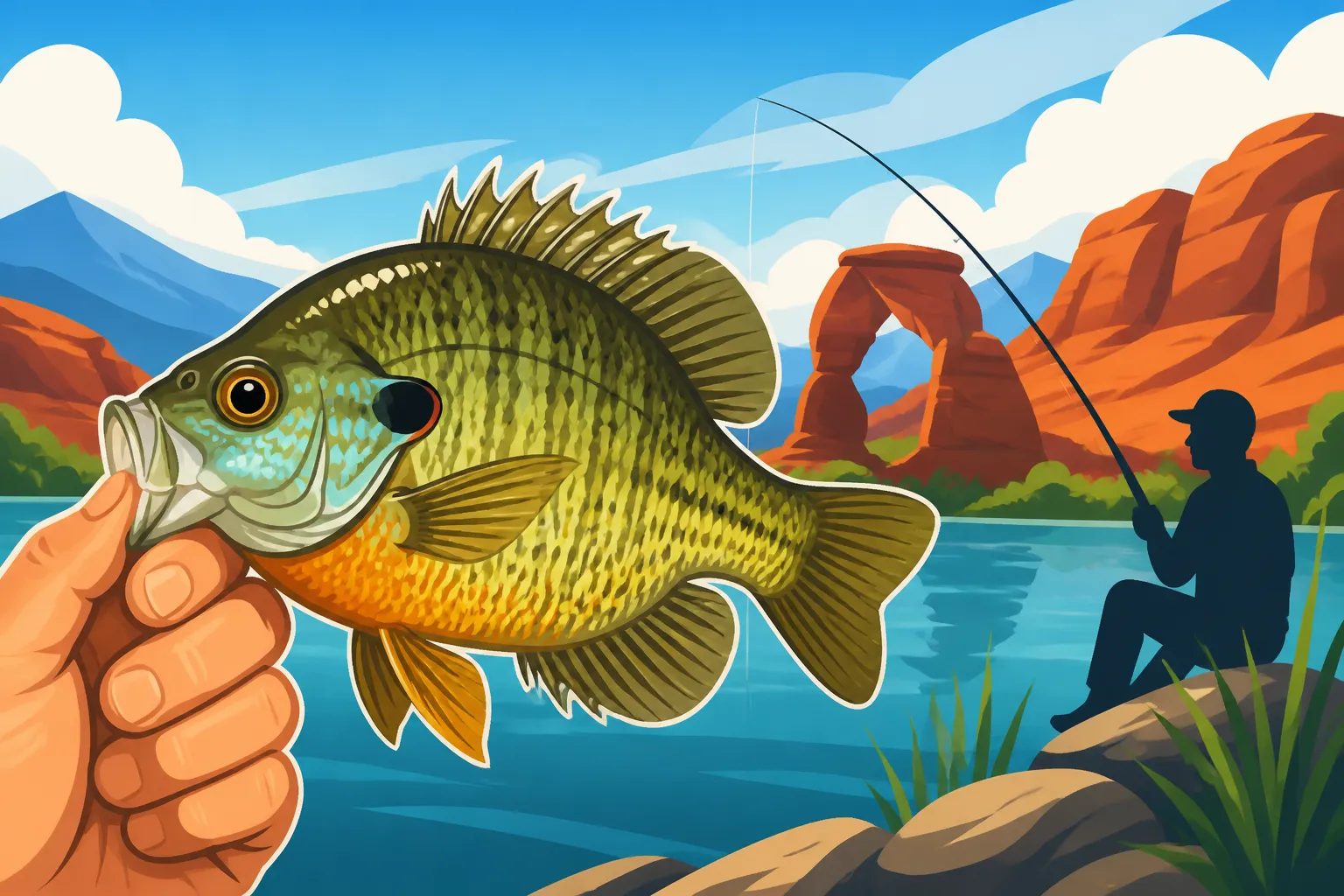
Bluegill are true classics of the panfish world. They typically have a deep, laterally compressed body, giving them that classic "panfish" shape. Their most distinctive feature is a small, dark blue or black "ear flap" on the operculum (gill cover), often with a slight iridescent blue sheen around it. You might also notice faint vertical bars on their sides, especially on smaller fish. Bluegill usually have a relatively small mouth, and their coloration can vary quite a bit depending on the water clarity and vegetation of their environment, ranging from olive green to yellowish-brown with a reddish-orange belly, particularly in spawning males.
You'll find bluegill thriving in waters with abundant aquatic vegetation, submerged logs, and docks. They love shallow, warmer water, often congregating around cover where they can ambush insects, small crustaceans, and other invertebrates. They're not particularly picky eaters, which is one reason they're so easy to catch. While they don't grow huge, a good-sized bluegill of 7-8 inches can put up a surprisingly spirited fight on light tackle, making them incredibly fun targets. They're a staple in many reservoirs and community ponds throughout the state, often stocked alongside other species.
Finding and Catching Green Sunfish
Green Sunfish, while similar to bluegill, have a few key differences that help identify them. The most obvious is their mouth: it's noticeably larger than a bluegill's, often extending back to or beyond the pupil of the eye. They also tend to have a chunkier, more robust body shape. Their coloration is typically a dark olive-green on the back, fading to lighter green or yellowish on the sides, often with iridescent blue or green spots and streaks on their cheeks and gill covers. The "ear flap" on a green sunfish is usually black with a distinct orange or red margin.
Green sunfish are notoriously hardy and adaptable, often tolerating muddier, warmer water conditions that other panfish might shun. This resilience means you'll find them in almost any pond, ditch, or slow-moving stream, making them incredibly accessible targets. They're often more aggressive than bluegill, eager to strike at a variety of baits and lures. Because they thrive in so many different environments, they're often the first fish beginners encounter. If you're wondering about the subtle cues, our guide on Bluegill vs Green Sunfish Differences offers a detailed look at how to tell them apart on the water. They're not quite as prized for eating as some other panfish due to their smaller fillets, but they provide constant action and are a fantastic gateway fish.
Best Baits and Lures for Bluegill and Green Sunfish
When it comes to tempting bluegill and green sunfish, simplicity often reigns supreme. These fish aren't usually picky, especially when they're actively feeding. Live bait is almost always a winner. Small worms, like red wigglers or pieces of nightcrawlers, are irresistible. Crickets, grasshoppers, and even mealworms are also fantastic choices. You can easily find these at bait shops, or even sometimes on Amazon if you're planning a trip and want to stock up. The key is to use small hooks, generally size 8 to 12, to match their relatively small mouths.
For those who prefer artificials, tiny jigs are incredibly effective. Think 1/32 or 1/64 ounce jigs, often tipped with a small piece of live bait or a micro-plastic grub tail. Bright colors like chartreuse, white, or pink can be very productive. Small spinners, like those from popular brands, with blades no larger than a thumbnail, also work wonders, especially when retrieved slowly near cover. The trick is to present these offerings naturally. A small bobber, whether fixed or slip, positioned a foot or two above your bait, helps suspend it in the strike zone and gives you a visual cue when a fish bites. Don't be afraid to experiment with retrieve speeds and depths until you find what these eager eaters are looking for on any given day.
Yellow Perch: The Striped Delicacy
Moving beyond the sunfish, the yellow perch offers a distinct and highly rewarding panfishing experience. Known for their striking appearance and excellent table fare, they're a favorite among Utah anglers.
Recognizing Utah's Yellow Perch
Yellow perch are easily identifiable thanks to their distinctive appearance. They have a slender, somewhat elongated body, typically golden yellow to brassy green on the sides, with six to eight prominent dark vertical bars extending from their back down to their belly. Their dorsal fin is divided into two parts, with the front section being spiny. Their fins are often tinged with orange or red, particularly the pectoral and pelvic fins, making them quite striking. They also have a relatively pointed snout and a medium-sized mouth.
Unlike bluegill and green sunfish, which often inhabit the very shallowest, warmest waters, yellow perch tend to prefer cooler, deeper areas of lakes and reservoirs. You'll often find them schooling near submerged structure, drop-offs, weed edges, or around rocky points. They are ambush predators, feeding on insects, crustaceans, and even small fish. Their schooling nature means that if you catch one perch, there are usually many more nearby, making for fast and furious action once you locate them. Knowing yellow perch identification in Utah can help you distinguish them from other species that might share their habitat.
Top Locations for Perch Fishing in Utah
Yellow perch are widely distributed across Utah, offering fantastic opportunities in various waters. Some of the most renowned perch fisheries include Willard Bay Reservoir, where they can be quite abundant, and Pineview Reservoir, which also holds a good population. Scofield Reservoir is another consistent producer, especially for those venturing out during the ice fishing season. Don't overlook some of the larger community ponds either, as many of these are regularly stocked and can hold surprisingly good numbers of perch.
Locating perch often involves searching for structure. Look for underwater humps, old creek channels, rock piles, or submerged timber. These features provide cover and ambush points for schooling perch. During warmer months, they might be found in 10-20 feet of water, while in colder seasons or during ice fishing, they might move to slightly shallower or even deeper flats, depending on the specific water body and forage availability. Local fishing reports and online forums are invaluable resources for pinpointing current hotspots.
Effective Techniques for Catching Yellow Perch
Catching yellow perch often involves a slightly different approach than targeting sunfish, primarily because they tend to be in deeper water and are often more predatory. Small jigs are still incredibly effective, but you might want to size up slightly to 1/16 or 1/8 ounce, especially in deeper water. Tipping these jigs with a small piece of worm, a mealworm, or a dead minnow can significantly increase your catch rate. Vertical jigging is a fantastic technique for perch, especially when fishing from a boat or through the ice. Drop your jig to the bottom, reel up a foot or two, and then impart a subtle jigging motion, lifting and dropping the rod tip gently.
Live minnows, where legal, are another top choice for perch. Suspend a small minnow under a bobber or fish it on a simple split-shot rig near the bottom. Perch are known for their light bites, so paying close attention to your line or having a very sensitive bobber is crucial. During ice fishing season, perch become a primary target. Small spoons, horizontal jigs (like Swedish Pimples), and even tiny soft plastics fished aggressively can be deadly. Many anglers report impressive Yellow Perch Size in Utah from these winter expeditions, often pulling out chunky fish. Remember, perch are schooling fish, so once you find them, stick around—you're likely in for a productive session!
Crappie (Black and White): The Slab-Sided Eaters
Crappie are perhaps the most highly prized panfish for their exquisite white, flaky meat. While not as universally abundant as sunfish or perch in every Utah water body, where they do thrive, they offer some of the most exciting and rewarding fishing experiences.
Distinguishing Between Black and White Crappie in Utah
Utah anglers might encounter two species of crappie: Black Crappie and White Crappie. While very similar in appearance and habits, there are a few key differences. Black Crappie typically have seven or eight dorsal spines (the hard, pointy rays in their top fin), while White Crappie usually have six or fewer. This is the most reliable way to tell them apart. Black Crappie also tend to have a more speckled, almost mottled pattern of dark spots all over their body, giving them a "peppered" look. Their bodies are generally rounder and deeper, almost like a dinner plate.
White Crappie, on the other hand, often have more distinct vertical bars or rows of spots on their sides rather than a random speckled pattern. Their bodies are typically more elongated than Black Crappie. Environmentally, Black Crappie tend to prefer clearer water with abundant vegetation and cover, while White Crappie are a bit more tolerant of murkier or more turbid conditions. Both species are highly sought after for their delicious flavor and their tendency to school up, leading to "hot" fishing spots once located.
Where to Find Crappie in Utah Waters
Crappie fishing in Utah can be exceptionally good in specific reservoirs that provide the right habitat. Willard Bay Reservoir is well-known for its healthy crappie population, offering opportunities for both boat and shore anglers. Pelican Lake, particularly in the Uinta Basin, has also been a productive crappie fishery over the years, though populations can fluctuate. Other waters like Lake Powell occasionally produce crappie, especially in certain coves with submerged structure.
Crappie are masters of relating to cover. They absolutely love submerged brush piles, fallen trees, old dock pilings, rock reefs, and artificial fish habitats. These structures provide them with protection from predators and ambush points for their prey. During the spring spawn, crappie will move into shallower areas, often around flooded brush or emergent vegetation, making them more accessible. In summer and winter, they typically retreat to deeper water, still holding tight to significant underwater structure. Using a fish finder to locate these submerged features can be incredibly beneficial for crappie anglers, allowing you to pinpoint where they are hiding.
Crappie Fishing Strategies: Jigs, Minnows, and Patience
Crappie fishing is often an exercise in finesse and patience, though when you hit a school, the action can be non-stop! The go-to bait for crappie, especially larger "slab" crappie, is a live minnow. A small minnow (1-2 inches) hooked lightly through the lip or back and suspended under a bobber at the depth where crappie are holding is often irresistible. Another incredibly effective method is vertical jigging with small jigs. Think 1/32 to 1/8 ounce jigs, often tipped with a soft plastic grub, tube, or a small hair jig. Colors like chartreuse, white, pink, and black/chartreuse are popular.
The key to jigging for crappie is to work your lure slowly and subtly around structure. Crappie often respond to a gentle lift-and-drop motion, or simply holding the jig perfectly still in front of their faces. Many anglers employ a technique called "spider rigging" from a boat, using multiple long rods with jigs or minnows at varying depths to cover a wider area and find the crappie's preferred depth. During the spring spawn, casting small jigs or minnows into shallow cover can yield excellent results. Always remember that crappie have very delicate mouths, so a gentle hookset is essential to avoid tearing the hook out.
Essential Gear for Panfish Anglers
One of the great things about panfishing is that you don't need to break the bank to get started. Simple, light tackle is often the most effective, making it an accessible entry point for anyone interested in fishing.
Rods, Reels, and Line for Panfishing
For panfish, an ultra-light or light action spinning rod is your best friend. Look for rods in the 4.5 to 6.5-foot range. A shorter rod is great for tight spots, while a slightly longer one can help with casting distance from shore. The ultra-light action is crucial because it allows you to cast those tiny baits and lures, feel the subtle bites of panfish, and still enjoy the fight from even a small fish.
Pair your rod with a small spinning reel, typically a 500 or 1000 series. These reels are lightweight and perfectly balanced for delicate presentations. Spool your reel with light monofilament or fluorocarbon line, generally 2-6 pound test. Monofilament is a popular choice due to its stretch (which helps cushion the fight) and affordability. Fluorocarbon offers lower visibility and good abrasion resistance, which can be an advantage in clear water or around sharp structure. For those just getting started, a Best Rod and Reel Combo for Beginners is often a great way to acquire a balanced setup without too much fuss. These combos are designed to be user-friendly and effective for panfish.
Terminal Tackle and Baits for Success
When it comes to terminal tackle for panfish, think small and simple. You'll want an assortment of small hooks, typically Aberdeen or fine-wire hooks in sizes 8 to 12. Aberdeen hooks are popular because their long shank makes them easy to remove, and their fine wire allows them to straighten out if snagged, often saving your line.
Bobbers are essential for panfishing, especially for beginners. Both fixed bobbers (which clip onto your line at a set depth) and slip bobbers (which slide freely on your line, stopped by a small knot, allowing you to fish deeper) have their uses. Keep a selection of small split shot weights to help get your bait down. Small swivels can prevent line twist if you're using spinners.
For baits, live offerings are kings. Earthworms (red wigglers or pieces of nightcrawlers), mealworms, waxworms, and crickets are all highly effective. For crappie and larger perch, live minnows are hard to beat. Artificial lures include tiny tube jigs, grubs, and curly-tail plastics (1-2 inches long) on jig heads (1/32 to 1/16 ounce), as well as small inline spinners. You can find a huge variety of these small jigs and plastics, perfect for panfish, readily available online. Just search for "panfish jigs" on Amazon, and you'll be amazed at the options!
Accessory Gear for a Comfortable Panfish Trip
Beyond the rod, reel, and basic tackle, a few accessories can make your panfishing trip much more enjoyable and productive. A small tackle box or a compact Best Tackle Box Organizer for a Trout Angler is perfect for keeping your hooks, weights, and jigs organized and easily accessible. A pair of needle-nose pliers or hemostats is invaluable for safely removing hooks from fish.
Don't forget the essentials for personal comfort and safety: a good hat, sunscreen, and polarized sunglasses are a must for protecting yourself from the Utah sun. Polarized lenses cut through the glare on the water, allowing you to see submerged structure or even fish, giving you a huge advantage. You can find some fantastic, affordable polarized sunglasses on Amazon that will significantly enhance your fishing experience. A small cooler with ice, or a fish stringer, is great for keeping your catch fresh if you plan to take some home for dinner. A small folding chair can also be a game-changer for a relaxing day on the bank. Consider a general Utah Fishing Gear for Beginners guide for other useful items.
Panfishing Techniques: Making the Most of Your Outing
Panfish might be eager biters, but understanding a few key techniques can dramatically increase your success and enjoyment, whether you're a seasoned angler or just starting out.
Basic Bobber Fishing for Beginners and Kids
There's a reason bobber fishing is often the first technique taught to new anglers: it's incredibly simple, effective, and visually exciting! To set up a basic bobber rig, simply tie your hook onto your line, crimp a small split shot weight a few inches above the hook, and attach a bobber to your line above the weight. The depth at which you set your bobber determines how deep your bait will suspend. For panfish in shallower areas, 1-3 feet is a good starting point.
Cast your rig near likely cover—weed beds, submerged branches, docks, or rocky points. Then, the waiting game begins. The bobber acts as a visual indicator: any twitch, dip, or sudden disappearance means a fish is biting! Wait until the bobber goes completely under or moves steadily sideways, then gently lift your rod tip to set the hook. This method is incredibly intuitive and provides instant feedback, which is fantastic for keeping kids engaged. Our article on How to Teach a Kid to Fish in Utah goes into more detail about making that first fishing trip a success, and bobber fishing is always at the top of the list!
Jigging and Finesse Tactics for More Experienced Anglers
For anglers looking to refine their skills and target panfish with more precision, jigging and finesse tactics are the way to go. This involves actively working a small lure or bait to entice a strike, rather than passively waiting. Vertical jigging is particularly effective when fishing from a boat or through the ice. Drop a small jig (1/32 to 1/8 ounce) to the desired depth, typically just above or directly in the cover where you suspect fish are hiding. Then, impart subtle movements with your rod tip – tiny lifts, drops, and twitches. The goal is to make the jig look like an injured baitfish or insect.
Slow retrieves with small spinners or soft plastics can also be incredibly productive. Cast your lure out and reel it in just fast enough to get the blade spinning or the plastic tail wiggling. Vary your retrieve speed and add pauses to see what the fish prefer. Sometimes, a "dead stick" approach, where you hold a jig perfectly still for a few seconds, can trigger a bite from hesitant fish. Our guide on How to Rig a Jig for Utah Trout offers excellent foundational knowledge that is easily transferable to panfish, especially when it comes to understanding jig weights and presentations. These finesse tactics allow you to explore different depths and presentations, often leading to bigger, more aggressive panfish.
Reading the Water: Where to Find Panfish at Different Times
Successfully finding panfish often comes down to understanding their habitat preferences and how they move throughout the day and the seasons. Panfish are highly structure-oriented. This means they'll gravitate towards anything that offers cover, shade, or ambush points. Look for:
- Weed Beds: Both submerged and emergent vegetation provides food and shelter.
- Submerged Wood: Fallen trees, brush piles, old stumps, and dock pilings are prime hiding spots.
- Rock Piles and Riprap: These areas offer cracks and crevices for small prey and can hold warmer water.
- Drop-offs: The transition zone from shallow to deep water is a highway for fish, offering both food and escape routes.
Seasonally, panfish will generally be in shallower water during the spring (for spawning) and fall (feeding actively before winter). In the heat of summer, they'll often retreat to deeper, cooler waters, still relating to structure. During winter, especially during ice fishing, they might hold in deep basins or cruise along subtle underwater contours. On a daily basis, they might move from deeper water into shallower feeding areas during dawn and dusk, then back to deeper cover during the brightest parts of the day. Paying attention to these patterns will dramatically improve your chances of locating those eager biters.
Conservation and Regulations for Utah Panfish
While panfish are often abundant, responsible angling practices and adherence to regulations are crucial to ensure these fisheries remain healthy and productive for generations to come.
Understanding Utah's Panfish Regulations
Utah, like any state with a vibrant fishing culture, has specific rules and regulations designed to manage its fisheries. For panfish species like bluegill, sunfish, perch, and crappie, the regulations are often quite generous, with high daily bag limits or even no limits on certain waters. This is due to their prolific breeding nature; in many cases, managing their populations by encouraging harvest can actually lead to healthier, larger fish in the long run by reducing competition for food.
However, it's incredibly important to remember that regulations can vary significantly from one water body to another. A statewide general rule might be in place, but individual lakes or reservoirs often have special rules regarding specific species, size limits, or daily possession limits. Before heading out, always consult the current Utah Fishing Guidebook published by the Division of Wildlife Resources (DWR). This guidebook is your definitive source for all regulations. Picking up a Utah Fishing License Guide will also explain the process of acquiring your license, which is the first step to legally enjoying Utah's waters. Never assume; always check the specific rules for the water you intend to fish.
Practicing Responsible Catch and Release (or Harvest)
Panfish are unique in that they are excellent candidates for both responsible catch and release and ethical harvest. If you're looking for a meal, panfish are some of the Best Fish Species for Eating From Utah Waters. Their mild, flaky white meat is truly delicious. When you decide to harvest fish, only keep what you will realistically eat and adhere strictly to the legal limits for that specific water. If you plan to release fish, proper handling is key to their survival. Minimize their time out of the water, handle them gently with wet hands, and try to remove the hook quickly. If a fish is deeply hooked, it's often better to cut the line as close to the hook as possible rather than tearing sensitive internal organs.
For species that have no bag limit, such as green sunfish in many ponds, it can actually be beneficial to harvest a good number of them. This can help prevent overpopulation and stunting, leading to larger, healthier fish overall in the system. However, for species like crappie or yellow perch, which are highly prized and can experience more pressure, adhering to limits and practicing selective harvest (keeping medium-sized fish and releasing the largest breeders or the smallest juveniles) can be a great way to contribute to a sustainable fishery.
The Importance of Panfish in Utah's Ecosystem
While they might be small, panfish play a massive and often underappreciated role in Utah's aquatic ecosystems. They are a critical link in the food chain. Their sheer numbers mean they provide a constant and abundant food source for larger predatory fish, such as trout, bass, walleye, and pike. Without a healthy population of panfish, these larger game fish would struggle to find enough to eat and grow to impressive sizes.
Panfish also contribute significantly to the overall biodiversity and health of a water body. By consuming insects, small crustaceans, and other invertebrates, they help control populations of these organisms. Their presence often indicates a healthy ecosystem capable of supporting a variety of life. Their resilience and ability to reproduce quickly make them excellent indicator species for environmental health in many areas. So, while you're enjoying the fast-paced action of panfishing, remember that you're interacting with a vital component of Utah's beautiful natural aquatic world.
Cooking Your Catch: Panfish on the Plate
One of the greatest rewards of a successful panfishing trip is undoubtedly the delicious meal that follows. Panfish are celebrated for their mild flavor and tender flesh, making them a fantastic choice for any angler looking to enjoy their harvest.
Cleaning and Preparing Panfish for Cooking
Getting your panfish ready for the pan is a straightforward process. For smaller panfish like most bluegill and green sunfish, many anglers opt to simply gut them (remove the entrails) and cook them whole with the skin on. The skin protects the delicate meat during cooking and crisps up beautifully.
For larger panfish, especially crappie, yellow perch, or bigger sunfish, filleting them is often preferred. To fillet:
- Start behind the head: Make a cut down to the backbone, but don't cut through.
- Turn the knife: Rotate your knife 90 degrees and slide it along the backbone towards the tail, separating the fillet.
- Remove the rib cage: Lay the fillet skin-side down and carefully cut away the rib bones.
- Skin the fillet: With the fillet skin-side down, hold the tail end firmly and slide your knife between the skin and the meat, keeping the blade angled slightly down towards the skin.
Always use a very sharp fillet knife for safety and efficiency. Best Fillet Knife Length for Trout offers great advice that's also applicable to panfish. Having a portable fish cleaning table or a dedicated spot near the water can make this process much cleaner and more enjoyable. Once filleted, rinse the meat in cold water and pat dry.
Simple and Delicious Panfish Recipes
Panfish fillets are incredibly versatile, but sometimes the simplest recipes are the best. Here are a few classic, easy ways to enjoy your catch:
- Classic Pan-Fried: This is arguably the most popular method. Dip your fillets in a whisked egg wash, then dredge them in a seasoned flour or cornmeal mixture (salt, pepper, garlic powder, paprika). Fry them in a hot skillet with a mix of butter and oil until golden brown and flaky, usually just 2-4 minutes per side.
- Baked Panfish: For a lighter option, arrange fillets on a baking sheet, drizzle with olive oil, sprinkle with your favorite herbs (dill, parsley, lemon pepper), and bake at 375°F (190°C) for 10-15 minutes, or until cooked through. A squeeze of fresh lemon juice before serving is always a winner.
- Grilled in Foil: If you're camping, this is perfect. Lay fillets on a piece of heavy-duty aluminum foil, add butter, sliced lemons, and herbs, then seal the foil packet. Place it on a hot grill for 10-12 minutes.
Pair your panfish with simple sides like coleslaw, roasted vegetables, or wild rice for a truly satisfying meal.
Why Panfish Make Great Table Fare
Panfish are truly exceptional table fare for several compelling reasons. First and foremost, their meat is typically white, mild, and flaky, with a delicate texture. This makes them incredibly appealing, even to people who might be hesitant about eating fish because of a "fishy" taste. Panfish rarely have that strong, oily flavor that some larger or saltier fish can possess, making them a crowd-pleaser for almost any palate.
Secondly, their size often means you get perfect, individual portions, which are easy to cook and serve. While filleting small fish can be a bit tedious, the resulting boneless pieces are well worth the effort. Finally, the act of catching your own dinner, even if it's "just" panfish, adds an incredible layer of satisfaction and freshness that store-bought fish simply can't match. From the excitement of the bite to the sizzle in the pan, panfish offer a complete and rewarding angling experience from start to finish.
| Species | Identification Notes | Typical Habitat | Best Baits/Lures | Average Size (inches) |
|---|---|---|---|---|
| Bluegill | Small mouth, dark spot on gill, vertical bars | Weedy shallows, docks, structure | Worms, crickets, tiny jigs | 4-8 |
| Green Sunfish | Larger mouth, iridescent spots, often aggressive | Any cover, rocky areas, urban | Worms, small spinners, crickets | 4-7 |
| Yellow Perch | Vertical stripes, spiny dorsal fin, golden | Cooler, deeper water, structure | Worms, minnows, small jigs, spoons | 6-10 |
| Black Crappie | Seven or eight dorsal spines, scattered spots | Clearer water, brush piles, timber | Minnows, small jigs, tube baits | 8-12 |
| White Crappie | Five or six dorsal spines, vertical bars of spots | Turbid water, brush piles, timber | Minnows, small jigs, tube baits | 8-12 |
Disclaimer
This article is for general informational purposes only and does not constitute professional advice. Laws, prices and regulations vary by location and change over time. Consult a qualified professional for guidance on your specific situation.