Where to Rent a Boat for Fishing at Lake Powell
The dream of fishing the legendary Lake Powell is one that calls to many anglers, but the reality for most is a stark one: you need a boat. Its sheer size and countless hidden coves make shore fishing an exercise in futility for all but the most casual bank-sitter. This guide will walk you through exactly where and how to rent a boat to unlock Lake Powell's incredible fishing potential, ensuring your trip is filled with bent rods, not frustration.
Why Lake Powell Demands a Boat for the Best Fishing
Let's be real, Lake Powell isn't your average neighborhood pond. It's a vast, sprawling reservoir, a true inland sea that stretches for hundreds of miles with a serpentine shoreline more extensive than the entire Pacific coastline of California. Trying to tackle its fishing opportunities from shore is like trying to empty it with a teacup – utterly hopeless. The best experiences, the most productive spots, and the truly memorable catches are almost exclusively found from a boat.
The Sheer Scale of Lake Powell's Waters
When you look at a map of Lake Powell, it's easy to underestimate its immense scale. This isn't just one big body of water; it's an intricate network of deep canyons, expansive main channels, and thousands of hidden coves and side canyons. Imagine trying to find a needle in a haystack, but the haystack is also constantly shifting and hundreds of miles long. Fish aren't evenly distributed here; they follow baitfish, water temperature, and structure, often holding in areas completely inaccessible from land.
Without a boat, you're relegated to a few public access points near marinas, which, while sometimes producing fish, rarely offer the consistent action or variety that the rest of the lake holds. If you're serious about getting into the striped bass boils, chasing trophy smallmouth, or finding the deep-water largemouth, a boat is less of a luxury and more of an absolute necessity. It allows you to cover vast distances quickly, explore new territory, and react to changing conditions, making it an indispensable tool for any angler truly hoping to experience the lake's legendary fishing. For more details on the big picture, our Lake Powell Fishing Guide can give you a solid foundation.
Accessing Prime Fishing Spots
The magic of Lake Powell fishing often happens far from the main channel, deep within winding canyons or tucked away in rocky coves. These are the places where schools of striped bass chase shad to the surface, where smallmouth bass lurk around submerged timber, and where largemouth bass ambush prey in brushy pockets. These prime spots are almost universally unreachable without the mobility a boat provides.
Think about chasing those exhilarating striper boils: one minute they're in Padre Bay, the next they've moved halfway up the Escalante Arm. Without a boat, you'd never be able to keep up. Or consider the intricate rock structures and submerged canyons that hold big smallmouth; these often require precise positioning and quiet approaches that only a boat can offer. Whether you're after smallmouth or largemouth, these rental boats give you the freedom to explore the Best Coves for Bass at Lake Powell. A rental boat not only gets you to these spots but also serves as your mobile fishing platform, equipped to handle your gear, store your catch, and keep you comfortable on the water for a full day of angling adventure.
Top Marinas for Boat Rentals at Lake Powell
Lake Powell is managed by the National Park Service, and most of the major boat rental operations are run by their concessionaire, Aramark (operating under the name Lake Powell Resorts & Marinas). These marinas are well-equipped and offer a wide variety of vessels, making them your primary go-to for boat rentals.
Wahweap Marina and Antelope Point Marina (Page, AZ)
When most people think of Lake Powell, they think of Page, Arizona, and for good reason. This is where the largest and most developed marinas are located, offering the widest range of rental options.
- Wahweap Marina: Located just a few miles from Page, Wahweap is the largest marina on Lake Powell and often the busiest. It's a full-service marina with extensive facilities, including multiple boat ramps, lodging, restaurants, and, most importantly, a massive rental fleet. Here, you can find everything from small fishing boats perfect for a couple anglers, to pontoon boats ideal for a family outing with fishing as a secondary activity, all the way up to luxurious houseboats for multi-day expeditions. They also offer wake boats and jet skis if you're looking for more than just fishing. Wahweap's central location makes it an excellent base for exploring the lower lake, including famous fishing grounds like Antelope Canyon and Navajo Canyon, and provides excellent access to Lake Powell Striped Bass Spots. Booking well in advance, especially for popular boat types during peak season (spring break, summer holidays), is absolutely critical here.
- Antelope Point Marina: A newer and more upscale marina, also located very close to Page, Antelope Point offers a slightly different vibe. It's the only Native American-owned marina in the country and boasts state-of-the-art facilities. Their rental fleet is comparable to Wahweap's, with fishing boats, pontoons, and houseboats available. Many anglers prefer Antelope Point for its modern amenities and often slightly less hectic atmosphere compared to the bustling Wahweap. Its proximity to Antelope Canyon also makes it a fantastic starting point for both sightseeing and fishing. Both Wahweap and Antelope Point are excellent choices, but consider which one aligns best with your budget and desired experience.
Bullfrog Marina and Halls Crossing Marina (Utah Side)
For those approaching Lake Powell from the Utah side, particularly if you're coming from destinations like Hanksville or Salt Lake City, the northern marinas offer a more convenient starting point. These marinas provide access to different, but equally productive, sections of the lake.
- Bullfrog Marina: Located further north in Utah, Bullfrog is the second-largest marina on Lake Powell. It's a popular choice for anglers who want to explore the northern arms of the lake, such as the Dirty Devil and Escalante rivers, which can be fantastic for both bass and stripers. Bullfrog offers a similar range of rentals to Wahweap, including fishing boats, pontoons, and houseboats. The drive to Bullfrog from Page is significant (several hours), so if you're planning to stay and fish primarily the upper lake, it's a logical choice. Its remote location can also mean slightly less crowded conditions on the water, especially during shoulder seasons. The flexibility is crucial, especially when trying to pinpoint the often-elusive Best Fishing Spots Near Bullfrog Marina at Lake Powell.
- Halls Crossing Marina: Situated directly across the lake from Bullfrog (about a 10-minute ferry ride or a long drive around), Halls Crossing is a smaller, quieter marina. It still offers boat rentals, though the fleet might be a bit more limited than Bullfrog or Wahweap. It's a great option if you're staying in the Halls Crossing area or prefer a more low-key base. The ferry that connects Halls Crossing and Bullfrog is a convenient way for people to travel between the two sides of the lake, but always check its operating schedule, as it can be seasonal. Like Bullfrog, Halls Crossing provides excellent access to the northern stretches of Lake Powell, which can be incredibly scenic and fruitful for fishing.
Other Potential Options and Considerations
While the major marinas are your primary source, sometimes there are other avenues to explore, especially if you're looking for something specific or if the marina fleets are fully booked.
Sometimes, smaller, independent outfitters or private individuals might offer boat rentals. These are less common but can be found through local classifieds or dedicated rental platforms. Always ensure any private rental is legitimate, insured, and adheres to all Utah boating and fishing regulations. Also, consider that some fishing guides on Lake Powell, which you can often find listed on platforms like FishingBooker, operate with their own boats and expertise. This might be a great option if you're new to the lake or prefer to focus purely on fishing without the logistics of renting and operating a vessel yourself. Booking a guided trip can sometimes be more cost-effective than a multi-day boat rental, especially for shorter trips, and provides invaluable local knowledge. Remember that learning How to Fish for Striped Bass at Lake Powell also heavily relies on having the mobility a rental boat provides.
Another key consideration is booking far in advance. Lake Powell is incredibly popular, and its remote nature means the number of boats available is finite. During peak seasons (Memorial Day to Labor Day, and spring break), rental boats, especially houseboats and popular powerboat models, can be booked solid months ahead of time. Don't wait until the last minute if you want to secure the boat that best fits your needs and budget.
Choosing the Right Rental Boat for Your Fishing Trip
Once you've decided which marina works best for your travel plans, the next big decision is what kind of boat to rent. Lake Powell offers a diverse fleet, and the "best" choice really depends on your fishing goals, group size, and budget.
Powerboats Versus Pontoons Versus Houseboats
Each type of boat offers distinct advantages and disadvantages for fishing on Lake Powell. Understanding these differences will help you make an informed choice.
-
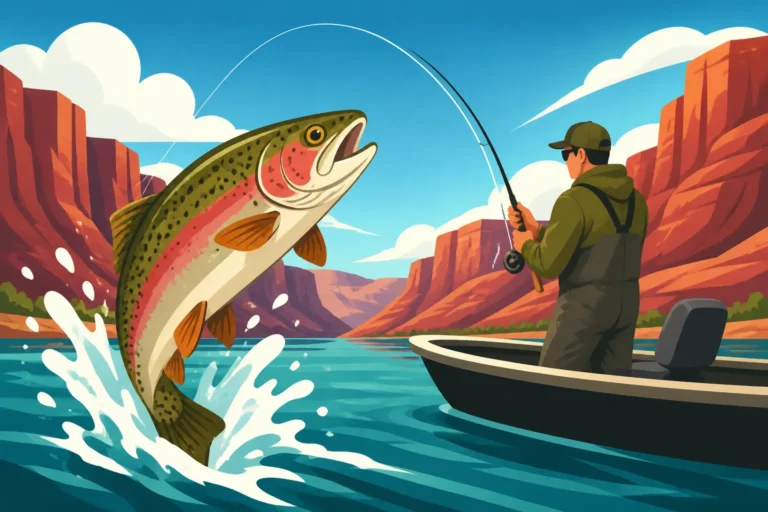
Powerboats (Runabouts/Deck Boats): These are your sportier options, ranging from 18 to 24 feet, usually equipped with powerful outboard or stern-drive engines.
- Pros for Fishing: Speed and agility are their biggest assets. If you're planning to chase striper boils across long distances or explore many different coves in a single day, a powerboat will get you there quickly. They're easier to maneuver into tight spots and typically have better fuel efficiency at speed than pontoons. They often have more open deck space for casting.
- Cons for Fishing: They can be less stable than pontoons, especially in rough water or when multiple anglers are moving around. Storage space might be limited, and they generally offer less shade or creature comforts for a long day on the water.
- Ideal for: Anglers focused on covering a lot of water, chasing active fish, or those who prioritize speed and maneuverability. Great for 2-4 serious anglers.
-
Pontoon Boats: These flat-decked boats are built on two (or sometimes three, called tritoons) pontoons, providing an incredibly stable and spacious platform.
- Pros for Fishing: Unmatched stability and generous deck space make them excellent for families or larger groups. They're comfortable, often come with Bimini tops for ample shade, and have plenty of room for coolers, gear, and kids to move around safely. Their shallow draft allows access to some shallower coves.
- Cons for Fishing: They are generally slower than powerboats, meaning longer travel times between fishing spots. While stable, they can be cumbersome to maneuver in very tight canyons or strong winds.
- Ideal for: Family fishing trips where comfort and space are priorities, or for groups who plan to fish more casually while also enjoying swimming, picnicking, and sightseeing. Good for 4-8 anglers, depending on size.
-
Houseboats: The ultimate Lake Powell experience, houseboats are essentially floating cabins. Ranging from basic models to luxurious multi-story vessels.
- Pros for Fishing: They act as your mobile base camp. You can moor them in a secluded cove, wake up, and start fishing right from the deck, or launch a smaller boat (often towed behind or rented separately) to explore. They offer full amenities – kitchens, bathrooms, bedrooms – making multi-day fishing trips incredibly comfortable. If you're considering an extended stay, a houseboat might be perfect, as detailed in our Lake Powell Houseboat Fishing Access guide.
- Cons for Fishing: They are expensive to rent and operate (fuel costs are significant). They are very slow and not designed for actively chasing fish. You'll almost always want to pair a houseboat with a smaller rental or personal fishing boat for actual angling.
- Ideal for: Extended family vacations where fishing is part of a broader agenda of relaxation and exploring, or for groups of serious anglers who want a luxurious on-the-water living experience and plan to bring or rent a dedicated fishing tender.
Here's a quick comparison to help you visualize:
| Boat Type | Primary Use Case | Fishing Suitability | Max Speed | Stability | Deck Space | Amenities | Avg. Daily Cost Range |
|---|---|---|---|---|---|---|---|
| Powerboat | Watersports, Fast Exploration | High (active fishing) | High | Medium | Medium | Basic shade | $350 – $600+ |
| Pontoon Boat | Family outings, Leisurely cruising | Medium (casual to moderate fishing) | Medium | High | High | Good shade, seating | $400 – $700+ |
| Houseboat | Multi-day lodging, Base camp | Low (needs companion boat) | Low | Very High | Very High | Full home comfort | $1000 – $3000+ |
*Prices are estimates and vary wildly by season, boat size, and duration.
Essential Features for a Fishing Rental
Regardless of the boat type, if fishing is your priority, there are certain features you'll want to look for in your rental:
- Rod Holders: While not always standard on every rental, having a few flush-mount or rail-mounted rod holders can make a huge difference for trolling or simply keeping rods secure when moving. Ask the rental agency what options they have or if you can bring portable ones.
- Deck Space: Ensure there's enough clear, unobstructed deck space for casting, moving around, and landing fish, especially if you have multiple anglers. Pontoon boats usually excel here.
- Reliable Motor: Lake Powell is vast. You need a boat with a well-maintained engine that will get you to your spots and, crucially, get you back safely. Inquire about the age and maintenance history of the fleet if possible.
- Fuel Capacity: Understand the fuel tank size and estimated consumption. Lake Powell's distances can eat up a lot of gas, and fuel is expensive, especially on the lake itself. Plan your route to ensure you don't run out.
- Fish Finder/Electronics (Bonus): Some higher-end fishing-specific rentals might come with a basic fish finder. Don't expect a cutting-edge unit, but even a simple depth sounder is better than nothing. Many serious anglers bring their own portable units to attach temporarily.
- Shade: The Lake Powell sun is intense. A Bimini top or covered area is a non-negotiable for comfort and safety during long summer days.
Booking Tips and What to Ask
Renting a boat on Lake Powell can be a significant investment, so it pays to be prepared and ask the right questions.
- Book Early, Especially for Peak Season: We can't stress this enough. Houseboats can be booked a year in advance, and powerboats/pontoons fill up months ahead for prime dates. If you have specific dates in mind, lock it in.
- Understand the Costs: Beyond the rental fee, inquire about mandatory cleaning fees, fuel surcharges, damage deposits, and taxes. Fuel is often not included and will be extra, sometimes substantial. Ask about their fuel policy – do you refill it, or do they?
- Cancellation Policy: Life happens. Know the cancellation deadlines and any associated fees. This is critical for larger bookings like houseboats.
- Safety Gear Included: By law, all rental boats must come with essential safety gear like life jackets for all passengers, a fire extinguisher, horn/whistle, and a throwable flotation device. Double-check that these are present and in good condition when you pick up the boat. Our Utah Boating and Fishing Rules article provides a comprehensive overview of safety requirements.
- Operation Briefing: Even if you're an experienced boater, every boat handles differently. Make sure you get a thorough briefing on the boat's controls, features, and any specific quirks of operating on Lake Powell (e.g., navigating low water, understanding buoy markers).
- Navigation and Maps: Ask if the rental includes a GPS unit or a detailed lake map. Lake Powell can be confusing, and having a way to navigate and mark your fishing spots is crucial. Better yet, download a good marine navigation app on your phone beforehand.
- Fishing Regulations: While the rental agency won't typically provide a fishing license, they might have brochures on local regulations or point you to where to find them. Remember, you'll need a valid Utah or Arizona fishing license, depending on where you plan to fish, and possibly an AIS (Aquatic Invasive Species) decal.
By carefully considering these factors and planning ahead, you can secure the perfect boat rental to make your Lake Powell fishing adventure a reality, turning those dreams of epic catches into lasting memories.
Disclaimer
The information provided in this guide is for general informational purposes only. While we strive to offer accurate and up-to-date advice, fishing regulations, rental prices, and marina services can change frequently. Always consult the official Utah Division of Wildlife Resources (DWR) and Arizona Game and Fish Department (AZGFD) for the latest regulations, and contact marinas directly for current rental availability, pricing, and policies before making any plans. Fishing and boating inherently involve risks; exercise caution and prioritize safety on the water.