Rainbow Trout in Utah Reservoirs
It can feel overwhelming to navigate the vast fishing opportunities Utah offers, especially when you're specifically hoping to hook into some vibrant rainbow trout, wondering which reservoirs hold the best populations and what techniques actually work. This guide is designed to cut through the confusion, helping you understand where these beautiful fish thrive in Utah's reservoirs, how to identify them, and the most effective ways to catch them, ensuring your next outing is a success.
Understanding Rainbow Trout in Utah's Waters
Rainbow trout are undoubtedly one of Utah's most popular sport fish, gracing countless lakes, reservoirs, and streams across the state. Their vibrant colors, feisty fight, and relative ease of catch make them a favorite for anglers of all skill levels. But what makes them such a prevalent species in our reservoirs, and how can you tell them apart from their trout cousins?
Distinguishing Features from Other Trout
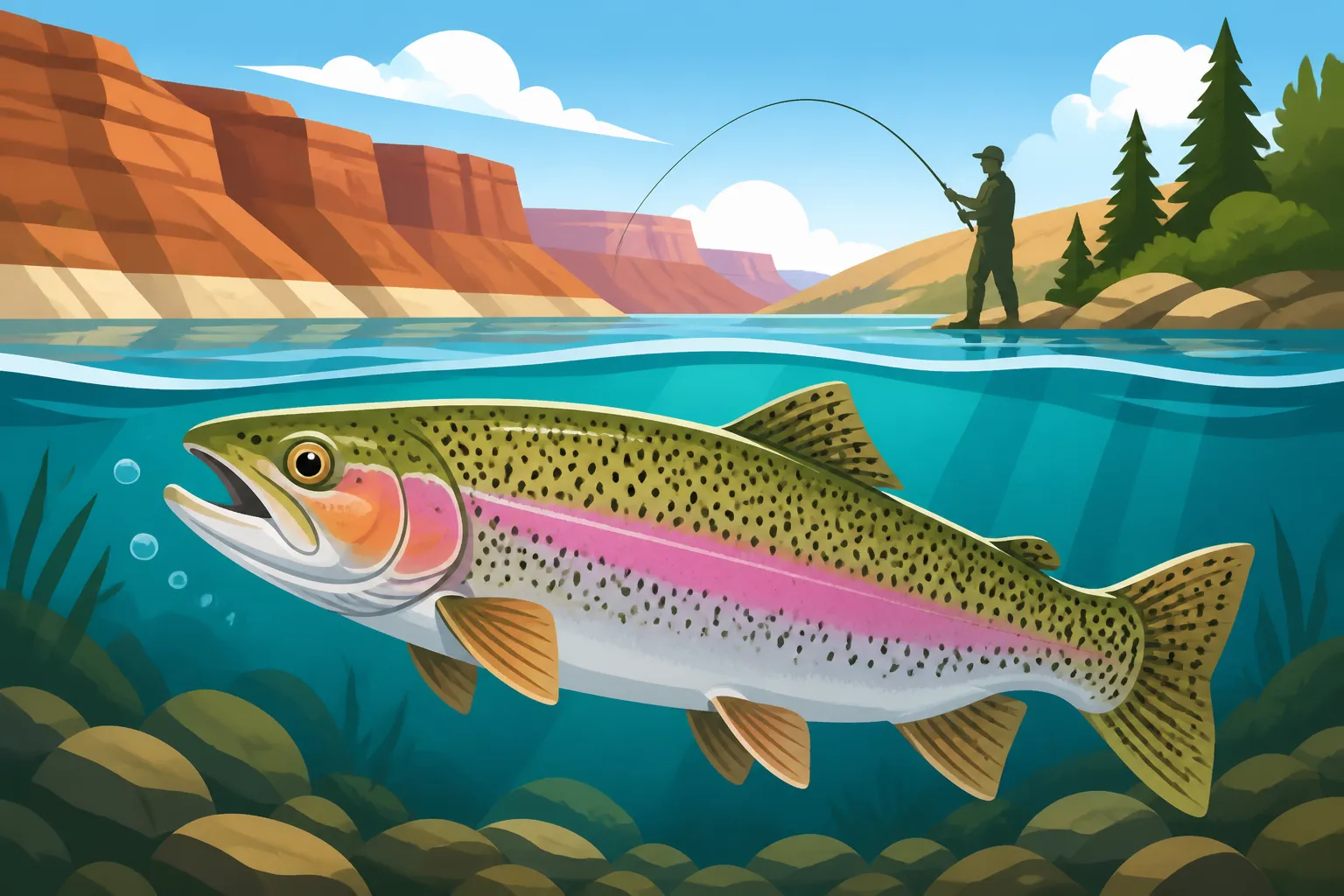
One of the first things you'll notice about a rainbow trout is its namesake: that gorgeous, iridescent pink or red band running horizontally along its flanks. This stripe can be incredibly vibrant, especially during spawning season or in pristine waters, and it often fades into a silvery-white belly and a darker olive-green back. Their bodies are typically speckled with small, dark spots all over, including on their dorsal fin, adipose fin, and tail fin. Unlike brown trout, which have larger spots often with halos and frequently reddish spots, rainbow trout spots are uniformly dark. Cutthroat trout, another native Utah species, are best identified by the distinctive red or orange slash marks under their jaw, which rainbows lack. How to Identify Utah Trout Species offers a deeper dive into these distinctions.
They generally have a more streamlined, torpedo-shaped body compared to the more stout build of a lake trout, making them excellent swimmers in stillwater environments. Their mouths are relatively small, and their scales are also smaller than some other freshwater species, contributing to their sleek appearance. Knowing these visual cues can help you quickly identify your catch and ensure you're adhering to specific regulations for each trout species.
Life Cycle and Growth in Stillwater
While rainbow trout can spawn in rivers and streams, many of the rainbows you encounter in Utah's reservoirs are products of extensive stocking programs by the Utah Division of Wildlife Resources (DWR). These fish are typically hatched in state-run facilities and then introduced into various waters to enhance fishing opportunities. This means that a significant portion of their life cycle, from juvenile to adult, unfolds entirely within the reservoir environment.
In these stillwater habitats, rainbow trout grow by feeding on a varied diet of aquatic insects, zooplankton, small crustaceans, and even smaller baitfish when available. The growth rate can vary dramatically depending on the specific reservoir's food availability, water temperature, and overall fish density. In fertile, well-managed reservoirs, stocked rainbows can grow surprisingly quickly, sometimes reaching catchable sizes of 12-16 inches within a year or two of stocking. Larger, older rainbows can exceed 20 inches, offering a truly memorable fight. Understanding Average Size of a Stocked Utah Trout can help you set expectations for your trip.
Why Rainbow Trout Thrive in Utah Reservoirs
Utah's reservoirs are truly a playground for rainbow trout, and there's a good reason why these fish are so plentiful. A combination of strategic stocking efforts and ideal habitat conditions makes these waters prime locations for rainbow trout populations to flourish, much to the delight of local anglers.
The Role of Utah DWR Stocking Programs
The Utah Division of Wildlife Resources (DWR) plays an absolutely critical role in maintaining healthy and abundant rainbow trout populations in reservoirs across the state. Without their consistent stocking efforts, many of our popular fishing waters simply wouldn't offer the opportunities we've come to enjoy. The DWR strategically raises millions of rainbow trout in hatcheries each year, releasing them into various lakes and reservoirs where conditions are suitable, but natural reproduction might be limited or nonexistent.
These stocking programs serve several purposes. First, they provide excellent "put-and-take" fisheries, meaning anglers can catch fish shortly after they're stocked, guaranteeing a more frequent and accessible fishing experience, especially for families and beginners. Second, in larger reservoirs, stocked rainbows can grow to impressive sizes, offering trophy potential. The DWR carefully monitors water quality, forage base, and angling pressure to determine the optimal number and size of fish to stock, ensuring a sustainable and enjoyable resource. You can often find information about recent stocking reports for specific waters on the DWR website, which can be invaluable for planning your trip. For more details on these efforts, check out Trout Species Stocked Most Often in Utah.
Ideal Reservoir Conditions for Rainbows
Rainbow trout are incredibly adaptable, but they truly thrive in reservoirs that offer specific conditions. They prefer cool, well-oxygenated water, which is why deeper reservoirs with good water circulation are often excellent rainbow trout habitats. Many of Utah's mountain reservoirs, fed by snowmelt and rivers, naturally provide these cooler temperatures.
Beyond temperature, a healthy food web is essential. Reservoirs with ample aquatic insect life, zooplankton, and even small baitfish provide the necessary forage for rainbows to grow. Structure in the reservoir, such as submerged timber, rock piles, drop-offs, and weed beds, offers both ambush points for feeding and cover from predators. The inlets and outlets of reservoirs, where streams and rivers flow in and out, are also prime locations, bringing in fresh oxygen and food. These dynamic environments provide a rich tapestry of habitats that allow rainbow trout to not only survive but truly flourish, creating fantastic fishing opportunities year-round.
Top Utah Reservoirs for Rainbow Trout
When it comes to rainbow trout fishing in Utah, certain reservoirs consistently stand out as angler favorites, offering both quantity and quality catches. Knowing which ones to target and what makes them special can significantly improve your chances of a successful outing.
Specific Reservoir Spotlights
Utah boasts a fantastic array of reservoirs, each with its unique charm and fishing characteristics. Let's spotlight a few that are particularly renowned for their rainbow trout populations.
Strawberry Reservoir: Often hailed as a gem in Utah's fishing crown, Strawberry Reservoir is famous for its abundant and robust rainbow trout, as well as cutthroat and kokanee salmon. The DWR manages this fishery intensely to produce large, healthy fish. Anglers here use everything from trolling lures like Needlefish or Pop Geer with worms, to still fishing with PowerBait or traditional bait from shore or boat. The size of the rainbows caught here can be truly impressive, with many fish regularly hitting the 18-20 inch mark, and even larger ones making an appearance. Fishing around the Soldier Creek and Strawberry Bay areas, especially near the boat ramps and deeper channels, often yields great results. For more on the species here, consider reading Fish Species in Strawberry Reservoir.
Deer Creek Reservoir: Located conveniently near the Wasatch Front, Deer Creek is another excellent choice for rainbow trout. This reservoir offers beautiful mountain views and consistent action. While not known for the sheer size of Strawberry's rainbows, Deer Creek provides plenty of active fish, making it a great spot for a casual outing or for beginners. Trolling with spoons or small crankbaits is popular, as is shore fishing with bait. The Provo River inlet area can be particularly productive, especially during cooler months when fish congregate there. Fish Species in Deer Creek Reservoir provides a complete overview of the aquatic life in this popular spot.
Jordanelle Reservoir: Just a short drive from Park City, Jordanelle offers a sprawling body of water with healthy populations of rainbow trout, as well as smallmouth bass and kokanee salmon. Its deep, clear waters are ideal for rainbows, and the reservoir sees regular stocking. Anglers often find success by trolling deep with various lures, or by still fishing with bait near submerged structures and drop-offs. The Rock Cliff and Hailstone areas provide good access, both for boaters and shore anglers. The extensive shoreline also means there are plenty of spots to explore and find your own honey hole.
Community Ponds and Urban Fishing Opportunities
You don't always need to venture deep into the mountains for a great rainbow trout experience. Utah's DWR has done an incredible job establishing and maintaining a network of urban and community fishing ponds specifically designed to provide accessible, family-friendly fishing opportunities, often stocked heavily with rainbow trout. These ponds are a fantastic resource for introducing kids to fishing, or for a quick after-work escape.
Ponds like Decker Lake in West Valley City, Layton Commons Pond, or Highland Glen Park Pond are prime examples. They are regularly stocked, sometimes weekly, with catchable-sized rainbow trout, ensuring consistent action. The techniques here are straightforward: a simple spinning rod, a bobber, some PowerBait or a worm, and you're in business. These ponds are often equipped with paved walking paths, fishing piers, and amenities, making them incredibly convenient. While you might not land a trophy here, the sheer joy of consistent bites and the ease of access make them invaluable. Do You Need a License to Fish Community Ponds in Utah? can clarify regulations for these convenient spots. You can easily pick up a simple beginner's combo rod and reel for these ponds from retailers like Amazon, making it super easy to get started.
Best Techniques and Gear for Catching Reservoir Rainbows
Catching rainbow trout in Utah's reservoirs can be a truly rewarding experience, but success often hinges on employing the right techniques and having the appropriate gear. Whether you prefer bait, lures, or flies, there's a method that will work for you.
Bait Fishing Strategies
Bait fishing remains one of the most popular and effective ways to catch rainbow trout in reservoirs, especially for beginners or when the fish are less active. The key is often presentation and choosing the right bait for the conditions.
PowerBait and Worms: These are arguably the most iconic baits for stocked rainbow trout. PowerBait, in its various colors and forms (dough, nuggets, floating), is a staple because it's designed to float off the bottom, putting it right in the trout's strike zone. A popular setup involves a small treble hook (size 10 or 12), a 1/8 to 1/4 ounce sliding sinker above a swivel, and a leader of about 12-24 inches. Mold the PowerBait around the hook to ensure it floats. Worms, whether nightcrawlers or smaller garden worms, are natural and always enticing. You can fish them similarly, or even under a bobber closer to the surface if fish are suspended. For detailed instructions, check out How to Fish PowerBait for Stocked Trout.
Other Natural Baits: Corn is surprisingly effective in some waters, especially when multiple kernels are threaded onto a small hook. Marshmallows, often tipped with a piece of worm, can also float nicely and attract attention. Minnows, if legal in the specific reservoir, can be deadly for larger trout, either fished still or under a slip bobber. The choice of bait often depends on what the fish are accustomed to or what seems to be triggering bites on any given day. Don't be afraid to experiment with different presentations, such as fishing the bait on the bottom, suspended mid-water, or near an inlet.
Lure Fishing Tactics
For anglers who prefer a more active approach, casting and retrieving lures can be incredibly productive for reservoir rainbow trout. The flash, vibration, and erratic movement of lures often trigger aggressive strikes.
Spinners and Spoons: Small inline spinners like Mepps, Rooster Tails, or Panther Martins are classic trout getters. Their spinning blade creates flash and vibration that imitate baitfish or insects, irresistible to hungry rainbows. Cast them out and retrieve steadily, varying your speed until you find what the fish prefer. Spoons, such as Kastmasters, Daredevils, or Thomas Buoyants, are also highly effective. Their wobbling action on the retrieve or flutter on the fall mimics injured baitfish. These are great for covering water and can be cast a long distance. Look for colors like silver, gold, brass, or those with bright accents like orange or chartreuse. You can find a huge variety of these effective lures on Amazon.
Jigging and Trolling: For deeper water or when fishing from a boat, jigging can be very productive. Small jigs, often tipped with a piece of worm or Gulp! bait, can be vertically jigged near structure or schools of fish. In larger reservoirs like Strawberry or Flaming Gorge, trolling is a prime method. Using a boat to slowly pull lures behind it, often with the aid of downriggers to reach specific depths, allows you to cover vast areas. Popular trolling lures include small crankbaits, spoons, or wedding ring spinners tipped with a worm. How to Troll for Kokanee in Utah offers transferable principles that apply to trout trolling as well.
Fly Fishing for Stillwater Rainbows
While many associate fly fishing with rivers, stillwater fly fishing for rainbow trout in reservoirs is a sophisticated and rewarding technique. It requires understanding the trout's diet and behavior in a lake environment.
Imitating Aquatic Insects: Reservoir rainbows feed heavily on aquatic insects like midges, chironomids, damselflies, dragonflies, and callibaetis mayflies. Effective fly patterns include various midge patterns (zebra midges, larva, pupa), damselfly nymphs, dragonfly nymphs, and callibaetis nymphs. These can be fished under an indicator, slowly stripped along the bottom, or suspended at various depths using sinking lines. Matching the hatch, or at least presenting a fly that mimics the prevalent insect life, is crucial.
Streamers and Leeches: When trout are feeding on smaller baitfish or leeches, streamer patterns can be incredibly effective. Woolly Buggers in black, olive, or brown, various sculpin imitations, or small baitfish patterns can be stripped in with erratic movements to entice aggressive strikes. Fishing these on sinking lines allows you to get them down to where larger trout might be lurking. Float tubes or pontoon boats are fantastic for stillwater fly fishing, allowing you to access areas away from shore and cover water effectively. Consider a quality fly rod and line; you can find excellent options on Amazon.
Rainbow Trout Regulations and Conservation in Utah
Fishing responsibly means understanding and adhering to the regulations put in place to protect our precious fisheries. For rainbow trout in Utah, this means being aware of general statewide rules and specific regulations for certain waters.
Statewide and Water-Specific Bag Limits
Utah has general statewide fishing regulations that apply to most waters, but it's absolutely vital to always check the current Utah Fishing Guidebook for the specific water you plan to fish. This guide details special regulations that can supersede the general rules, especially for prized or sensitive fisheries.
Generally, for rainbow trout, the statewide daily bag and possession limit is often a combined total for all trout species. However, some reservoirs have increased limits to encourage harvest of stocked fish or to manage populations, while others might have reduced limits, catch-and-release-only sections, or even slot limits (where fish between certain sizes must be released). For instance, a reservoir might have a higher limit for "any trout" to encourage anglers to keep stocked rainbows, while simultaneously having a strict limit or even a catch-and-release rule for native cutthroat trout. Always, always check the specific rules for your chosen destination. You can find comprehensive details in Utah Daily Bag and Possession Limits and Utah Fishing Regulations Explained.
| Water Body | Common Rainbow Trout Size | Typical Technique(s) | Notes |
|---|---|---|---|
| Strawberry Reservoir | 16-22 inches | Trolling, Bait | Known for large fish; special regulations often apply for cutthroat |
| Deer Creek Reservoir | 12-16 inches | Trolling, Bait | Convenient access, consistent action |
| Jordanelle Reservoir | 12-18 inches | Trolling, Bait, Lures | Deep water, good for boaters |
| Flaming Gorge Reservoir | 14-20 inches | Trolling, Lures | Shares border with Wyoming; diverse trout species |
| Scofield Reservoir | 12-18 inches | Bait, Ice Fishing | Popular for ice fishing, tiger trout also present |
| Community Ponds (e.g., Decker Lake) | 8-12 inches | Bait, Small Lures | Regularly stocked, great for kids and beginners |
Catch and Release Practices
While many stocked rainbow trout are intended for harvest, practicing proper catch-and-release, especially for larger fish or in waters with special regulations, is a crucial aspect of conservation. When you intend to release a fish, take steps to minimize stress and injury.
Use barbless hooks or pinch down the barbs on your hooks; this makes removal much easier and quicker. Handle the fish as little as possible, and always with wet hands to protect its slime coat, which is vital for preventing disease. Try to keep the fish in the water as much as possible, especially during hook removal and before release. If you need a photo, get it quickly and gently. Use a rubberized landing net if possible, as it's gentler on fish scales and fins. Release the fish in calm water, allowing it to swim away under its own power. If it needs a moment to revive, hold it gently upright, facing into a mild current or moving it slowly back and forth to push water over its gills, until it kicks strongly and swims off. This ensures that the fish you release has the best chance of survival, contributing to a healthy fishery for everyone.
Seasonal Considerations for Reservoir Rainbow Trout Fishing
The behavior and location of rainbow trout in Utah's reservoirs can shift dramatically with the seasons. Understanding these changes is key to consistently finding and catching them throughout the year.
Spring and Fall Feeding Frenzies
Spring and fall are often considered prime times for rainbow trout fishing in Utah's reservoirs, and for good reason. As the ice recedes in spring and before it forms in late fall, water temperatures are typically in that "just right" zone – cool enough for trout to be comfortable, but warm enough to stimulate their metabolism and appetite.
Spring Thaw: In spring, as ice-off occurs and water begins to warm, trout become incredibly active and often move into shallower areas, especially near inlets where fresh, oxygenated water and new food sources are entering the reservoir. They're recovering from the lean winter months and actively seeking food. This is a fantastic time for shore anglers using traditional baits like PowerBait, worms, or small spoons and spinners. Fly anglers can find success with midge and nymph patterns as aquatic insect activity increases. The fish are often more spread out and willing to chase a variety of offerings. Look for areas where runoff streams enter the lake, as these can be hotspots.
Autumn Chill: Similarly, in the fall, as summer's heat gives way to cooler temperatures, the entire water column begins to cool and "turn over," refreshing oxygen levels throughout the reservoir. Trout, sensing the approaching winter, go on a serious feeding binge to pack on calories. They'll often move back into shallower coves and flats, especially during early morning and late afternoon, making them accessible to both boat and shore anglers. Streamers, aggressive lures, and even larger bait presentations can be very effective as trout feed heavily before the ice sets in. This period offers some of the most exciting and productive fishing of the year.
Summer Deep-Water Tactics
Once the summer heat sets in and water temperatures rise, rainbow trout in many Utah reservoirs will retreat to deeper, cooler, and more oxygenated waters. This doesn't mean the fishing stops; it just means you need to adjust your approach to reach them.
During the hottest months, trout will often congregate around main lake points, submerged structures, deep weed lines, or near the thermocline (the layer where warm surface water meets cooler deep water). Anglers fishing from boats will find downriggers invaluable for getting lures and baits down to these specific depths. Trolling spoons, dodgers with a worm, or deep-diving crankbaits are popular strategies. For still fishing, using a slip bobber rig set deep, or a bottom rig with a long leader and a floating bait, can present your offering effectively at depth. How to Fish Deep Water for Summer Lake Trout can provide insight into targeting deep-dwelling species, including rainbows. Early mornings and late evenings can still offer opportunities in shallower areas as the surface water cools slightly.
Winter Ice Fishing for Rainbows
Utah's winters transform many reservoirs into fantastic ice fishing destinations, with rainbow trout being a primary target. Ice fishing is a unique experience, offering a chance to catch fish through a small hole in the ice. Utah Ice Fishing Guide is a great resource to learn more.
When ice fishing for rainbows, common techniques include jigging small spoons, Rapalas, or specialized ice fishing jigs tipped with a wax worm, mealworm, or a piece of PowerBait. These presentations are worked up and down through the water column, often near the bottom or suspended if fish are showing on your fish finder. Many anglers use a second rod with a tip-up, rigging it with a small hook and PowerBait or a worm, setting it at a specific depth and waiting for the flag to signal a bite. Early ice and late ice often provide the best action, as fish are more active closer to shore. Always prioritize safety on the ice by checking ice thickness and never fishing alone. A portable ice auger, easily found on Amazon, is essential for getting started.
Disclaimer
This article is for general informational purposes only and does not constitute professional advice. Laws, prices and regulations vary by location and change over time. Consult a qualified professional for guidance on your specific situation.