Smallmouth Bass Identification in Utah
There's nothing quite like the thrill of a hard strike and the fight of a feisty bass on the end of your line. But then you get it to the boat or shore, and a little doubt creeps in: is this a smallmouth or a largemouth? Or maybe something else entirely? Many Utah anglers face this exact dilemma, especially with how diverse our waters can be. This comprehensive guide will help you confidently identify smallmouth bass in Utah, covering their unique features, common look-alikes, and how to tell them apart from their famous cousins.
Why Smallmouth Bass Identification Matters for Utah Anglers
It might seem like a minor detail, but knowing exactly which fish species you've caught goes beyond simply satisfying your curiosity. For anglers in Utah, accurate identification of smallmouth bass is crucial for several practical and ethical reasons. Without this knowledge, you could inadvertently run afoul of regulations or miss out on specific fishing opportunities.
Understanding Regulations and Limits
Utah's fishing regulations are designed to manage fish populations sustainably, and these rules often vary significantly from one species to another, and even from one body of water to another. For example, while smallmouth bass might have a generous daily limit in one reservoir, another species, or even the same species in a different location, could have a much stricter catch limit or even be catch-and-release only. Imagine the frustration of reeling in a beautiful fish, only to realize later that you've kept a protected species, or exceeded a limit for a specific waterbody, simply because you misidentified it. It happens more often than you'd think, and it's a completely avoidable headache.
This is particularly true for bass. Utah's general statewide bass regulations can be found in the official guide, but specific waters often have unique rules. You absolutely need to know the difference between a largemouth and a smallmouth to ensure you're compliant. Ignorance of the law is never an excuse, and a simple mistake can lead to fines or even the loss of your fishing privileges. This is why understanding Utah Fishing Regulations Explained and specifically diving into Utah Bass Fishing Regulations is so important for every responsible angler. Knowing what you have on your line ensures you're a good steward of our precious fisheries.
Conservation and Ecosystem Health
Beyond regulations, proper identification plays a vital role in conservation efforts and maintaining the ecological balance of Utah's waterways. Smallmouth bass, while popular, can be managed differently depending on their population status and whether they are native or introduced to a particular ecosystem. For instance, in some waters, they might be thriving and considered a desirable sport fish, while in others, they could be viewed as an introduced species that impacts native fish populations.
When you correctly identify a smallmouth, you're better equipped to practice responsible angling. This means understanding how to properly handle and release the fish if it's not a keeper or if you're practicing catch-and-release. Knowing the species helps biologists track populations and make informed management decisions. Every angler contributes to this data, whether they realize it or not. If a species is struggling, like some native cutthroat trout, but you confuse it with a more abundant smallmouth, you might not take the necessary care to release it unharmed, or you might keep it when it should have been put back. It's all part of being a knowledgeable and ethical angler in Utah. For a deeper dive into the specific characteristics of this species, check out our Utah Smallmouth Bass Guide.
The Distinctive Features of a Utah Smallmouth Bass
Smallmouth bass are truly magnificent fish, revered for their aggressive fights and stunning beauty. While they share some general characteristics with other bass species, there are several key features that, once you know them, make identifying a true smallmouth quite straightforward. Pay close attention to these details the next time you reel one in.
Coloration and Body Shape
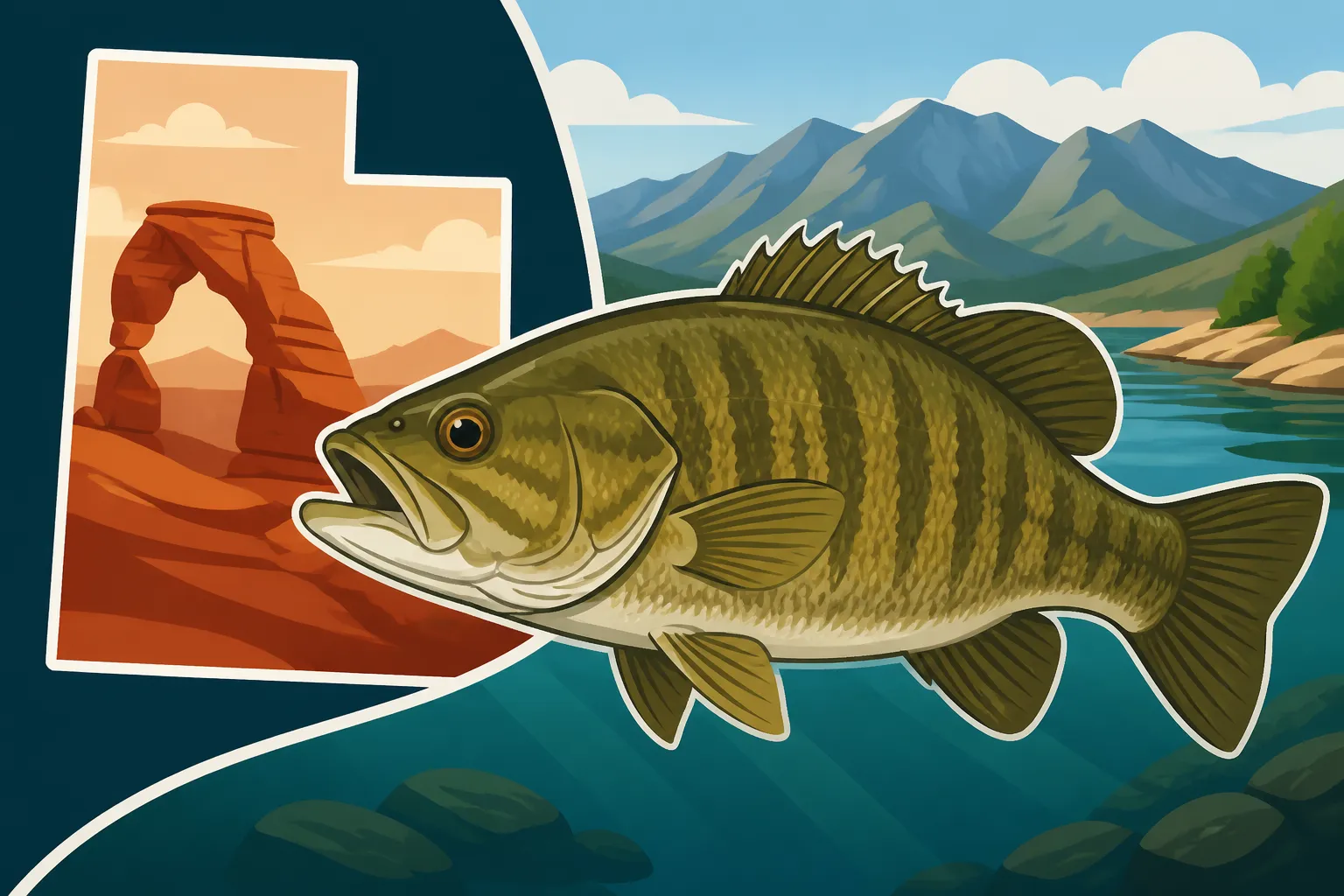
One of the first things you'll notice about a smallmouth bass is its striking appearance. They typically boast a beautiful bronze-green to golden-brown coloration along their back and sides, often fading to a creamy white or yellow belly. This rich, mottled color allows them to blend in perfectly with their preferred rocky and gravelly habitats. What truly sets them apart, though, are the distinct vertical bars or blotches that usually run down their sides. These can range from subtle, broken bands to more pronounced, tiger-like stripes, especially on younger fish. The intensity of these markings can vary depending on water clarity, light conditions, and the fish's mood, but they are almost always present to some degree.
In terms of body shape, the smallmouth bass is often described as more "torpedo-shaped" or streamlined compared to its largemouth cousin. They tend to be deep-bodied but less compressed side-to-side, giving them a powerful, compact build perfectly suited for fighting strong currents and navigating rocky terrain. Their eyes are also notably larger in proportion to their head than a largemouth's, giving them an almost "bug-eyed" appearance. This robust yet elegant form is a tell-tale sign of a smallmouth, reflecting its active lifestyle in cooler, clearer waters.
Mouth and Jaw Structure: The Primary Identifier
If you can only remember one thing about identifying a smallmouth bass, make it this: the jawline. This is, without a doubt, the most reliable and widely used characteristic to distinguish a smallmouth from a largemouth. When you close the fish's mouth, or simply observe its jaw, the upper jaw (or maxillary) of a smallmouth bass does not extend beyond the back of its eye. It typically ends directly under the middle or front of the eye. This is where the "smallmouth" name comes from – relatively speaking, their mouths are smaller than those of largemouth bass.
This seemingly minor detail is incredibly consistent and provides an instant way to tell the two apart, even in dim light or when the fish is still in the water. Just gently hold the fish's mouth closed and look at that jawline. If it doesn't go past the eye, you've got a smallmouth. This is a game-changer for quick identification and something you'll want to commit to memory for future fishing trips.
Dorsal Fin Characteristics
Another important, though slightly more subtle, characteristic is the dorsal fin. Smallmouth bass have two dorsal fins, but they are typically connected and appear as one long fin with a noticeable, shallow dip in the middle. The spiny front portion flows into the softer-rayed rear portion without a full separation. This connected appearance is distinct.
In contrast, a largemouth bass often has two completely or nearly completely separated dorsal fins, with a much deeper, more defined notch between them. Think of it as a clear division rather than a gentle curve. Observing this feature takes a little more practice, especially if the fish is thrashing, but it's another valuable piece of the identification puzzle. Combined with the jawline and coloration, the dorsal fin can confirm your suspicion that you've landed a feisty smallmouth.
Smallmouth Bass vs. Largemouth Bass: A Common Confusion
For many anglers, especially those new to bass fishing in Utah, the biggest hurdle to identifying a smallmouth is differentiating it from its more widely known cousin, the largemouth bass. These two species are both popular sport fish and can sometimes even be found in the same waters, leading to understandable confusion. However, there are very clear, consistent differences that make telling them apart quite simple once you know what to look for.
The Jawline Rule
We touched on this before, but it bears repeating because it truly is the golden rule of bass identification. The most surefire way to distinguish a smallmouth from a largemouth is by examining their jawline relative to the eye.
For a smallmouth bass, when its mouth is closed, the upper jaw (maxillary bone) will not extend past the back edge of its eye. It typically aligns with the middle or front part of the eye. This gives the smallmouth its characteristic "small" mouth appearance, even if the mouth itself is still quite capable of engulfing prey. For a largemouth bass, on the other hand, the upper jaw extends well past the back edge of its eye, sometimes by a significant margin. This gives them a truly "large" mouth, perfect for ambushing prey with a wide gulp. This single feature is your best friend when you're quickly trying to identify a bass.
Body Pattern Differences
While the jawline is the definitive characteristic, the body patterns offer additional, clear visual cues. Smallmouth bass typically exhibit those vertical bars or blotches we discussed, often resembling tiger stripes along their sides. These patterns can sometimes appear as rows of small dark spots that coalesce into bars, particularly on lighter-colored fish.
Largemouth bass, by contrast, are usually characterized by a prominent, dark, horizontal lateral line that runs from their gills all the way to their tail. This line can sometimes be broken or mottled, but it's almost always a distinct horizontal stripe rather than vertical bars. Their overall coloration also tends to be a more uniform green on the back, fading to white on the belly, often lacking the bronze or golden hues common in smallmouth. While some largemouth might have faint blotches, they rarely form the distinct vertical bars seen on smallmouth. For a comprehensive breakdown, including visual aids, you might find our article Largemouth vs Smallmouth Bass Differences incredibly helpful.
Habitat and Behavior Clues
Beyond physical appearance, where you catch a bass can often give you a strong hint as to its identity. Smallmouth bass are lovers of clear, cool water with rocky bottoms, gravel, and submerged boulders. They thrive in lakes with good current, such as those near dam outflows, or in larger rivers and reservoirs with plenty of rocky structure and drop-offs. Think about places like Flaming Gorge Reservoir, where smallmouth are abundant, often found patrolling rocky points and ledges. They are generally more active and aggressive, often chasing down baitfish. We've compiled some great information on these specific spots, like Flaming Gorge Smallmouth Bass Coves, which clearly illustrates their preferred habitat.
Largemouth bass, on the other hand, prefer warmer, often murkier water with abundant aquatic vegetation, submerged timber, and soft bottoms. They are ambush predators, often hiding in dense cover like lily pads, cattails, or brush piles, waiting for prey to swim by. While they can coexist with smallmouth in some larger reservoirs, if you're pulling a bass out of a thick weed bed in a warmer, shallower bay, chances are it's a largemouth. Recognizing these habitat preferences can sometimes help you identify the species before you even get a close look at its jaw!
To help you visualize these key differences, here's a quick comparison table:
| Feature | Smallmouth Bass | Largemouth Bass |
|---|---|---|
| Jawline | Does NOT extend past the back of the eye | Extends WELL past the back of the eye |
| Body Pattern | Vertical bars or mottled blotches on sides | Distinct horizontal dark lateral line |
| Coloration | Bronze-green to golden-brown with darker bars | Generally darker green back, white belly |
| Dorsal Fins | Connected, with a shallow dip | Deeply notched or nearly separated |
| Body Shape | More streamlined, "torpedo-shaped" | Stockier, more "football-shaped" |
| Habitat | Cool, clear water; rocky, gravelly bottoms; current | Warm, often murkier water; dense vegetation, timber |
Other Fish That Might Look Like a Smallmouth in Utah Waters
While the smallmouth/largemouth distinction is the most common point of confusion, there are a few other fish species found in Utah that, under certain circumstances or to an untrained eye, might be mistaken for a smallmouth bass. Knowing these potential look-alikes can prevent further misidentification and ensure you're always confident in your catch.
Rock Bass
The rock bass (Ambloplites rupestris) is a lesser-known but occasionally encountered species that can, at first glance, bear a superficial resemblance to a smallmouth, especially a juvenile one. They are also members of the sunfish family, like bass, and share some of the same general body shapes. However, there are distinct differences. Rock bass are typically much smaller, rarely exceeding a pound or so, and have a noticeably chunkier, more panfish-like body. Their most striking feature is often their large, bright red eye, which is very distinct from the eye of a smallmouth.
Furthermore, rock bass usually have more distinct rows of dark spots along their sides, rather than the vertical bars of a smallmouth. Their dorsal and anal fins are also much more prominent and spiny. While they do prefer rocky habitats, similar to smallmouth, their overall size, eye color, and more robust fin structure usually make identification clear once you've had a good look. They aren't as widespread or abundant as smallmouth in many of Utah's prime bass waters, but it's good to be aware of them.
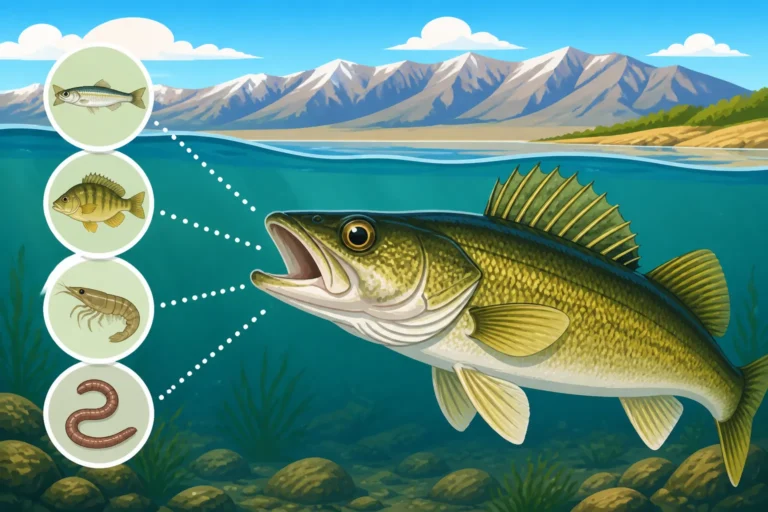
Juvenile Walleye
Now this might seem like a stretch to experienced anglers, but hear me out. Young walleye, particularly those in the 6-12 inch range, can sometimes exhibit faint vertical barring or mottled patterns on their sides, which in poor light or during a quick catch-and-release, could potentially cause momentary confusion for someone expecting a smallmouth. Both fish have relatively streamlined bodies and can inhabit similar rocky areas in larger reservoirs.
However, the differences are pronounced upon closer inspection. Walleye have distinctively large, opaque eyes that often appear glazed over, almost milky. Their mouth is full of sharp, canine-like teeth, unlike the smaller, conical teeth of a smallmouth. The dorsal fins of a walleye are completely separated, with the first dorsal being very spiny. Most notably, walleye have a white tip on the lower lobe of their caudal (tail) fin, a feature entirely absent on a smallmouth bass. If you're ever in doubt, just look at the teeth and the tail fin. This is also a good opportunity to understand the range of fish species in Utah, including the Utah Trout Species Guide, as anglers often target multiple species.
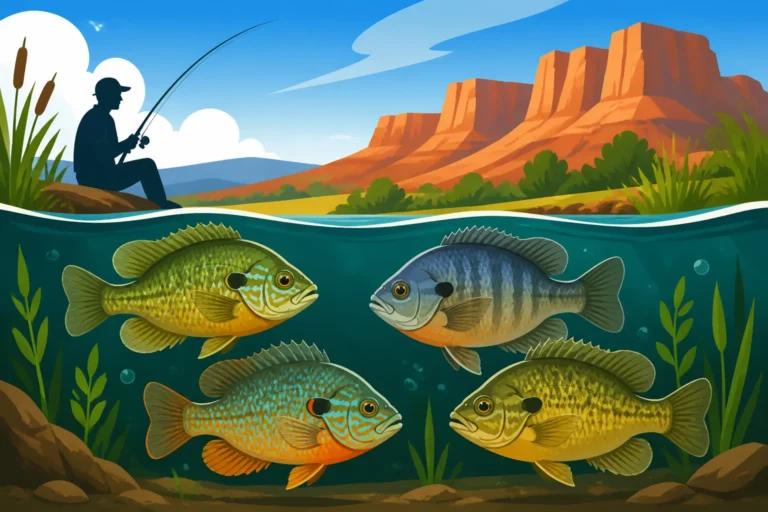
Green Sunfish
While usually easy to distinguish, juvenile green sunfish can sometimes present a fleeting moment of confusion for anglers targeting small bass, particularly in smaller ponds or community fishing spots. Green sunfish have a somewhat elongated, robust body, and can display dark blotches or even faint bars on their sides. They also have a relatively large mouth for a sunfish.
However, the differences quickly become apparent. Green sunfish are much more compressed side-to-side, giving them a flatter, more disc-like profile typical of panfish. Their mouths, while large for a sunfish, don't extend anywhere near the back of the eye, and they possess a prominent black spot on the rear of their dorsal and anal fins, often with a colorful, iridescent margin, which smallmouth bass lack. Their overall green and blue iridescent sheen is also quite distinctive. While an adult smallmouth would never be confused with a green sunfish, it's worth noting for those moments when you're reeling in a feisty, smaller fish and doing a quick assessment.
Prime Utah Smallmouth Bass Habitats and Identification in the Field
Knowing the physical characteristics of a smallmouth bass is half the battle; the other half is understanding where these incredible fish live in Utah. Their preferred habitats often give you a strong clue about what species you've hooked before you even see it. Combining visual identification with an understanding of their environment is a powerful tool for any angler.
Rocky Shores and Drop-offs
Smallmouth bass are intrinsically tied to rocky structures. They are often called "bronzebacks" or "brown bass" not just for their color, but for their affinity for rocky environments. In Utah's larger reservoirs and lakes, you'll find smallmouth congregating around rocky points, submerged rock piles, ledges, steep drop-offs, and areas with rip-rap (man-made rock banks). These structures provide them with everything they need: ambush points for prey, protection from predators, and access to deeper, cooler water when surface temperatures rise.
Think about a clear, sunny day. Smallmouth will often be found slightly deeper, near the base of a drop-off or nestled amongst boulders. As light fades, they might move shallower to cruise the rocky banks for crayfish and baitfish. If you're fishing a spot known for its abundant rocky habitat, especially if it's got some current or wind-driven waves crashing into it, there's a very high probability that the hard-fighting fish you just hooked is a smallmouth. Many of Utah's fantastic smallmouth fisheries, such as Flaming Gorge, Deer Creek Reservoir, and Jordanelle Reservoir, are characterized by these very features. These fish are aggressive feeders in these areas, and knowing Best Lures for Utah Smallmouth Bass can help you capitalize on their preference for rocky environments.
Clear Water and Current
Unlike their largemouth cousins who often prefer murkier, weedy environments, smallmouth bass thrive in clearer, cooler water with good oxygen content. They are also highly adapted to living in areas with current, which helps bring food to them and keeps the water well-oxygenated. This is why you'll often find them in the main lake basins of large reservoirs, or in rivers and tailwaters below dams, like parts of the Green River Below Flaming Gorge Dam.
The clear water also plays a role in identification. In clear conditions, the distinctive vertical bars and bronze coloration of a smallmouth are much more pronounced and easier to see, even when the fish is still in the water. If you're fishing in a crystal-clear mountain lake or a clean, flowing river section and you hook a bass, the odds lean heavily towards it being a smallmouth. Their preference for these environments also makes them excellent sight-fishing targets in some situations. Understanding their seasonal movements and preferred temperatures, particularly during peak activity, can be greatly enhanced by learning about the Best Time of Year for Smallmouth Bass Fishing in Utah.
Visual Cues for Instant ID
When you finally land that fish, sometimes you need a quick mental checklist for confirmation. Here's a rapid-fire guide to identify your smallmouth bass on the fly:
- Jaw Check: Close the mouth. Does the jaw extend past the eye? If no, it's likely a smallmouth. This is your number one.
- Stripes or Line? Look at the sides. Do you see vertical bars or blotches? If yes, smallmouth. If a solid horizontal line, largemouth.
- Color: Is it bronze or golden-brown? More smallmouth. Solid green? More largemouth.
- Habitat Context: Where did you catch it? Rocky, clear water? Smallmouth. Weedy, warm water? Largemouth.
Practice these quick checks, and you'll soon be identifying smallmouth bass with confidence, allowing you to correctly follow regulations and appreciate the specific fight each species offers. And don't forget to take a quick photo of your catch if you're unsure, just make sure you're ready to safely release it if necessary.
Essential Tools and Practices for Positive Identification
Even with all the knowledge in the world, sometimes a little extra help or a good routine can make all the difference in confidently identifying your catch. Being prepared with the right tools and adopting smart practices will not only help with fish identification but also enhance your overall fishing experience in Utah.
Using a Reliable Fish Identification Guide
One of the simplest yet most effective tools for positive fish identification is a good old-fashioned field guide. These guides, often waterproof and compact, can be invaluable companions on any fishing trip. They usually feature detailed illustrations or photographs of common species, highlighting key identification markers, coloration, and average sizes. Some even include information on habitat and typical behaviors. Having a guide specific to Utah or the Western U.S. can narrow down the possibilities and quickly help you confirm whether that fish with the bronzed sides and vertical bars is indeed a smallmouth.
You can often find excellent field guides at local tackle shops, outdoor retailers, or through online platforms like Amazon. Look for guides that are laminated or made of waterproof paper, as fishing environments are rarely dry. There are also many excellent fishing apps available for smartphones that offer digital identification guides, often with interactive features. Just remember to have a charged phone if you're relying on an app, especially when fishing in more remote areas.
Photographing Your Catch for Later Review
In moments of doubt, or when you're just learning, a clear photograph can be your best friend. If you're unsure about the identification of a fish, especially if you plan to release it, quickly snap a few good photos from different angles before letting it go. Make sure the photos clearly show the entire fish, paying particular attention to the jawline, body patterns, and dorsal fins. Try to get a shot of the fish's head and mouth directly if possible.
Once you're home, you can refer back to these photos, compare them with your field guide, or even consult online resources or local fishing forums for expert opinions. This practice is also great for documenting your catches and sharing your adventures. Remember to handle the fish as little as possible and always prioritize its health. Learn the proper techniques for handling fish when you intend to release them, as outlined in guides like How to Release a Fish Without Hurting It in Utah, to ensure minimal stress and maximum survival rates.
When in Doubt, Release Safely
This is perhaps the most important practice for any ethical angler, especially when faced with an uncertain identification. If you are genuinely unsure about the species of fish you've caught, or if you cannot confidently verify that it meets legal size or bag limits, the safest and most responsible course of action is to release it unharmed. It's far better to err on the side of caution than to inadvertently violate regulations or harm a vulnerable fish population. This is particularly relevant if you're in an area where Are Smallmouth Bass Considered Invasive in Utah? is a concern, as regulations might mandate specific actions for invasive species.
Always have the tools ready for a quick and safe release, such as needle-nose pliers or a de-hooking tool. Minimize the time the fish is out of the water, support its body properly, and ensure it's revived before letting it swim away. By doing so, you contribute to the health of Utah's fisheries and ensure that future generations can enjoy the thrill of reeling in a beautiful smallmouth, or even a The Utah State Record Smallmouth Bass someday.
Disclaimer
This article is for general informational purposes only and does not constitute professional advice. Laws, prices and regulations vary by location and change over time. Consult a qualified professional for guidance on your specific situation.