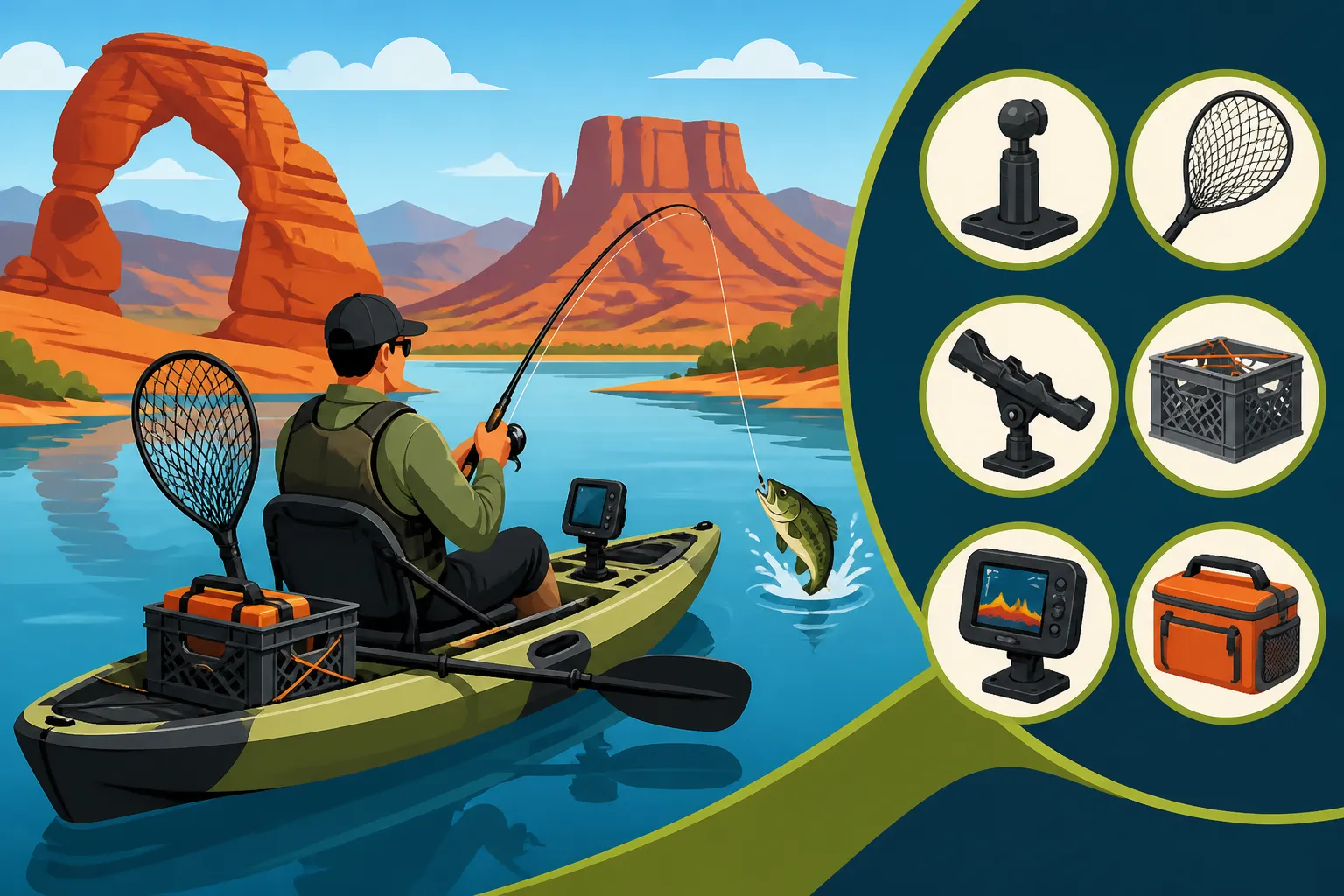
Kayak Accessories Worth Adding for Utah Fishing
If you've dipped even a toe into the world of kayak fishing in Utah, you quickly realize it's an incredible way to explore our state's diverse waters, from high-alpine lakes to vast reservoirs. But a basic kayak, straight off the shelf, often leaves much to be desired when it comes to truly optimizing your angling adventure. This guide is all about transforming your humble paddlecraft into a lean, mean, fish-catching machine by exploring the most valuable kayak accessories worth adding for Utah fishing.
Why Kayak Fishing is a Game-Changer in Utah Waters (and Why Accessories Matter)
There's something uniquely satisfying about gliding across a calm Utah reservoir in a kayak, the only sound being your paddle dipping into the water or the gentle hum of a fish finder. It’s an intimate experience that a big powerboat just can't replicate, offering unparalleled access to tucked-away coves and shallow flats that often hold the biggest fish. But to truly unlock the potential of kayak fishing in our beautiful state, you need to think beyond just the hull.
The Unique Advantages of Kayak Fishing in Utah
Utah boasts an incredible variety of fishing environments, from the sprawling, often windy expanses of places like Flaming Gorge Fishing Guide to the serene, clear waters of alpine lakes in the Uinta Mountains. Kayaks, with their low profile and stealthy approach, excel in these conditions. They allow you to sneak up on wary fish in crystal-clear waters without spooking them, navigate tight channels, and reach remote shorelines that larger boats can't. Imagine silently paddling into a secluded bay on Strawberry Reservoir, casting precisely to rising trout that haven't seen a human in days. That's the kayak fishing dream!
However, this access comes with its own set of challenges. Kayaks, by their nature, have limited space, and you're far more exposed to the elements. This is where smart accessory choices become not just nice-to-haves, but absolute necessities. The right gear can significantly extend your comfort, safety, and ultimately, your success on the water, turning a minimalist craft into a highly functional fishing platform. Without these additions, you might find yourself frustrated by lost gear, uncomfortable seating, or missing out on prime fishing spots.
The Role of Accessories in Enhancing Your Experience
Think of your kayak as a blank canvas, and accessories as the specialized tools that bring your fishing masterpiece to life. A basic kayak gets you on the water, but a well-accessorized kayak revolutionizes your time there. From ensuring you stay safe in unexpected squalls to helping you locate that trophy walleye at Utah Lake, accessories directly impact every aspect of your trip. They convert a simple hull into a stable platform for casting, a comfortable seat for hours of patient angling, and a secure storage unit for all your tackle and catches.
The difference between a frustrating trip struggling with gear and a smooth, productive outing often boils down to a few key additions. For example, a quality seat upgrade can mean the difference between lasting an hour and spending an entire day comfortably on the water. A well-placed rod holder keeps your valuable gear secure while allowing you to paddle or re-tie a lure. And a reliable anchor system prevents you from drifting away from that honey hole you just found. Investing in the right accessories isn't just about convenience; it's about maximizing your enjoyment and success when exploring Utah's fantastic fishing opportunities. If you're looking for more general kayak fishing advice, check out our Utah Kayak Fishing Gear Guide.
Essential Safety and Comfort Accessories You Can't Skip
When you're out on the water, especially on Utah's larger, wind-prone reservoirs, safety and comfort aren't luxuries; they're non-negotiable. The open expanse of Lake Powell or the unpredictable afternoon breezes on Willard Bay can turn a pleasant morning into a challenging afternoon very quickly. Having the right accessories for these situations ensures you're prepared for anything.
Personal Flotation Devices (PFDs) and Safety Gear
First and foremost, a properly fitted Personal Flotation Device (PFD) is absolutely essential. While Utah law mandates you have one on board, choosing a PFD specifically designed for fishing makes a huge difference. These PFDs often feature ample pockets for small tackle boxes, pliers, and even a radio or whistle, keeping essential items close at hand. They're designed for comfort while seated, with higher backs that don't bunch up against your kayak seat. Don't skimp on this! A comfortable PFD that you actually wear is your best friend on the water. You can find excellent fishing-specific PFDs at places like Bass Pro Shops or through online retailers like Amazon, offering features like mesh ventilation for hot summer days.
Beyond your PFD, consider other crucial safety gear:
- Whistle or Air Horn: Required by law on many Utah waters, essential for signaling distress.
- Visibility Flag: Especially important on larger lakes where powerboats might not see your low-profile kayak. A bright orange or fluorescent flag on a tall pole makes you much more noticeable.
- First-Aid Kit: Compact and waterproof, for minor cuts, scrapes, or stings.
- Headlamp/Navigational Lights: If there's any chance you'll be on the water at dawn, dusk, or after dark, you need lights. Even a small headlamp can be a lifesaver. Keep abreast of Utah Boating and Fishing Rules for specific lighting requirements.
- Bailer or Sponge: Kayaks can take on water, whether from paddle drip, waves, or rain. A simple sponge can keep your cockpit dry and prevent water from accumulating.
Staying Comfortable on Long Utah Fishing Days
Sitting in a kayak for hours on end, especially if you're targeting those elusive trophy fish, requires a certain level of comfort. The stock seats on many kayaks are rudimentary at best.
- Upgraded Seat: This is often the single most impactful comfort accessory. A good aftermarket seat provides better back support, more cushioning, and can be adjusted for optimal paddling and fishing posture. Many feature elevated designs, keeping you drier and allowing for a better vantage point for casting. The difference is night and day, allowing you to extend your fishing trips without aching after just an hour.
- Paddle Leash: This might seem minor, but dropping your paddle in windy conditions on a big lake means you're quickly at the mercy of the current. A simple leash attaches your paddle to your kayak, keeping it secure even if you let go to battle a fish or re-tie a lure.
- Anchor System: To hold your position in current, wind, or over a specific structure, an anchor is indispensable. A small, collapsible grappling anchor (often 1.5 to 3 lbs) with a suitable length of line and a quick-release system works wonders. You don't want to be constantly paddling back to your spot when you're trying to concentrate on your retrieve. An anchor trolley system, which allows you to deploy your anchor from either the bow or stern of your kayak, is a fantastic upgrade for precise positioning.
- Sun Protection: Utah's sun can be relentless, especially reflecting off the water. A wide-brimmed hat, polarized sunglasses (essential for spotting fish and structure), long-sleeved UPF clothing, and plenty of sunscreen are critical for comfort and health. Some anglers even add a small bimini top for shade on especially exposed waters, turning their kayak into a miniature mobile fishing shack.
Maximizing Your Catch: Fishing-Specific Kayak Add-ons
Now that you're safe and comfortable, let's talk about the gear that directly impacts your ability to catch fish. These accessories streamline your fishing process, keep your gear organized, and help you find fish more efficiently.
Rod Holders: The Backbone of Kayak Angling
You're a multi-tasker on a kayak. You need hands free to paddle, bait a hook, or land a fish, but you also need your rods accessible. This is where a variety of rod holders come into play.
- Flush Mount Holders: Many kayaks come with these integrated into the hull, typically behind the seat. They're great for storing rods while paddling or trolling, keeping them out of the way. However, they're not ideal for actively holding a rod while fishing, as the angle isn't adjustable, and it's hard to quickly grab the rod.
- Adjustable/Ram-Style Holders: These are the workhorses for active fishing. They mount to tracks, rails, or directly to the kayak and allow you to adjust the angle and direction of your rod. This is crucial for trolling, setting up multiple lines, or simply keeping your rod in an optimal position for a quick grab when a fish bites. You can set them up pointing out to the side for trolling or forward for ease of access while casting. Brands like Scotty and Ram Mounts offer a wide range of reliable, durable options. For more specific recommendations, see Best Rod Holders for a Fishing Kayak.
- Rod Leashes: Just like a paddle leash, a rod leash can save you from losing an expensive rod and reel combo to an unexpected capsize or a trophy fish pulling it overboard.
Strategic placement is key. Think about where you need rods when actively fishing, when paddling, and when storing them. Most anglers will have at least two adjustable holders – one for a primary rod and another for a secondary or trolling rod – in addition to any flush mounts.
Fish Finders and Navigation for Utah's Vast Reservoirs
Exploring vast waters like Lake Powell or Strawberry Reservoir Fishing Guide without a fish finder is like driving blindfolded. A good fish finder is a game-changer for locating fish, identifying structure, and understanding depth.
- Portable vs. Mounted Units: Many kayak anglers start with portable fish finders, which are great for ease of use and transferring between kayaks. However, dedicated mounted units offer larger screens, more features (like GPS mapping), and more stable power. Modern units from brands like Humminbird or Lowrance come in compact sizes perfect for kayaks.
- Transducer Mounting: The transducer is the "eye" of your fish finder. Common mounting options include shooting through the hull (less precise but easy), scupper hole mounts (clean and effective), or external mounts on a arm (best performance but more exposed).
- Battery Power: Most kayak fish finders run on small 12V batteries. Having a waterproof battery box and a reliable charging system is crucial. Consider a second, smaller battery for longer trips or if you're also powering other electronics.
- GPS and Mapping: For navigating large reservoirs and marking "hot spots," a fish finder with integrated GPS and mapping capabilities is invaluable. You can mark brush piles, drop-offs, or areas where you caught fish, allowing you to return to them easily. For more details on making the most of your electronics, check out How to Read a Fish Finder for Utah Reservoirs.
Tackle Management and Storage Solutions
Space is at a premium in a kayak, so efficient organization is vital. A cluttered cockpit is a recipe for frustration and lost gear.
- Kayak Fishing Crate: This is arguably the most popular and versatile storage solution. A simple milk crate, often customized with PVC rod holders, forms the base. Inside, you can fit multiple tackle trays, a small cooler, or other gear. Many manufacturers now make purpose-built kayak crates with features like bungee attachments, tool holders, and even built-in cutting boards. Brands like Old Town and YakAttack offer excellent crate systems.
- Dry Bags: Keeping essentials like your phone, car keys, wallet, and extra clothing dry is paramount. Waterproof dry bags come in various sizes and are designed to float if accidentally dropped. These are a must-have, especially on waters where you might encounter unexpected waves or rain. Find a good selection on Amazon or at your local Bass Pro Shops. For specific recommendations, see Best Dry Bag to Keep Gear Safe on a Utah Lake Boat.
- Gear Tracks: Many modern kayaks come with integrated gear tracks, allowing you to easily mount and adjust various accessories like rod holders, fish finders, camera mounts, and tackle trays without drilling holes. If your kayak doesn't have them, adding aftermarket gear tracks is a fantastic upgrade.
- Bungee Systems and Deck Bags: Utilize the existing bungee cords on your kayak's bow and stern for securing larger items like soft coolers or extra clothing. Deck bags can offer quick-access storage for frequently used items.
Convenient Transport and Storage Solutions for Your Kayak Fishing Setup
Getting your kayak to and from the water, and then storing it safely, can sometimes feel like a bigger challenge than the fishing itself. The right accessories can turn this chore into a simple routine.
Car Toppers and Trailers: Getting Your Kayak to the Water
Unless you live lakeside, you'll need a way to transport your kayak.
- Roof Racks: A sturdy roof rack system is the most common solution.
- J-Cradles: These hold your kayak on its side, freeing up roof space for a second kayak or other gear. They're excellent for stability and securing your boat.
- Stackers: Allow you to stack multiple kayaks on their sides, perfect for group trips or if you own several kayaks.
- Saddles/Rollers: These support the hull flat on the roof and often include rollers to help slide the kayak on and off, reducing strain.
- Loading Assists: Some roof rack systems include pull-out bars or other mechanisms that make it much easier for a single person to load a heavy fishing kayak onto a tall vehicle.
- Small Kayak Trailers: For heavier kayaks, multiple kayaks, or if you don't want to lift onto a roof, a dedicated kayak trailer is a fantastic investment. These can be single or double axle and are designed to carry kayaks low to the ground, making loading and unloading incredibly easy. Some even have space for gear boxes. This is a great option if you frequently visit distant fishing spots.
Regardless of your transport method, always use quality tie-down straps (not bungee cords!) to secure your kayak firmly to your vehicle. Give it a good shake test before driving off to ensure it's rock solid.
Securing Your Gear: Keeping Everything Safe and Sound
Once your kayak is on the car or at home, you need to ensure it, and your valuable accessories, are protected.
- Locking Straps/Cables: When transporting your kayak or leaving it unattended at a trailhead or campsite, a set of locking straps or a cable lock can deter opportunistic thieves. These thread through scupper holes or around the frame of the kayak and lock to your roof rack or trailer.
- Hatch Organizers: Many fishing kayaks come with internal hatches. Adding small organizers or dry bags within these hatches helps keep gear from shifting around, rattling, or getting lost in the hull.
- Wall Mounts/Storage Racks: At home, don't just lean your kayak against a wall. Dedicated wall mounts or ceiling hoists keep your kayak off the ground, prevent hull warping, and free up valuable garage space. This also helps keep it safe from accidental damage.
- Cover: A good UV-resistant cover protects your kayak from sun damage, dirt, and critters if stored outdoors. This extends the life of your kayak and keeps it cleaner for your next trip.
Elevating Your Experience: Advanced and Niche Kayak Accessories
Once you've got the essentials dialed in, there's a whole world of advanced accessories that can truly elevate your kayak fishing experience, especially on Utah's more challenging or extensive waters.
Pedal Drives vs. Paddles: A Power Upgrade
For many, the biggest "upgrade" you can make to a fishing kayak is adding a pedal drive system.
- Pedal Power: Systems like Hobie's MirageDrive or Native Watercraft's Propel Drive allow you to propel your kayak using your legs, freeing up your hands for fishing. This is a massive advantage in windy conditions on large reservoirs, allowing you to maintain speed, cover more water, and fight fish while keeping your position. Imagine trolling for kokanee salmon at Rockport Reservoir without needing to constantly paddle. These systems are incredibly efficient.
- Electric Trolling Motors: Some kayaks are designed to accept small electric trolling motors, or you can add aftermarket mounts. This provides hands-free propulsion with minimal effort, perfect for quietly approaching fishing spots or navigating against currents. While it adds weight and requires battery management, the convenience can be worth it for covering serious distances. However, be aware that many waters have speed or motor restrictions, so always check Utah Fishing Regulations Explained. If you're wondering if you need one, you might find our article Do You Need a Trolling Motor for Kayak Fishing on Utah Lake? insightful.
While pedal drives and electric motors represent a significant investment, they dramatically change the fishing experience, especially for serious anglers who spend long hours on the water.
Camera Mounts and Gadget Integration
Capturing your adventures and analyzing your technique is a growing trend among kayak anglers.
- Action Camera Mounts: Whether you use a GoPro or another action camera, dedicated kayak mounts allow you to capture wide-angle shots of your catches, battles, and the stunning Utah scenery. Look for mounts that are adjustable and can be placed in various positions, from your bow to your stern, or even on your PFD.
- Phone Mounts: While you should always have your phone in a dry bag, a waterproof, shock-proof phone mount can be handy for quick checks of maps, weather, or taking photos without fumbling. Just be mindful of sun glare and heat.
- Portable Power Banks: With all these gadgets – fish finders, phones, cameras – you'll need power. A robust, waterproof power bank or a larger 12V battery dedicated to accessories ensures you don't run out of juice mid-trip. Solar chargers can also be a neat addition for multi-day excursions.
Specialty Lighting for Low-Light and Night Fishing
While primarily for safety, specialized lighting can also open up new fishing opportunities.
- Deck Lights: Small, waterproof LED lights can illuminate your cockpit, making it easier to tie knots, find tackle, or manage a fish after dark.
- Underwater Lights: Some anglers use submersible LED lights to attract baitfish or simply to observe what's beneath their kayak. This can be particularly effective for species like catfish or crappie, and provides a unique perspective.
- Navigation Lights: If you're out before dawn or after dusk, proper navigation lights are crucial, often a 360-degree white light and a red/green bow light. Make sure to adhere to all local regulations regarding lighting. For information on when you can fish, see Is Night Fishing Legal in Utah?.
| Accessory Category | Essential | Highly Recommended | Advanced/Niche |
|---|---|---|---|
| Safety & Comfort | PFD, Whistle, Bailer/Sponge, Sun Protection (Hat, Sunglasses, Sunscreen) | Upgraded Seat, Paddle Leash, Anchor System w/ Trolley, Visibility Flag, First-Aid Kit | Bimini Top |
| Fishing Specific | Rod Holders (Flush & Adjustable), Tackle Crate, Dry Bags | Fish Finder (Portable), Rod Leashes, Gear Tracks | Fish Finder (Mounted w/ GPS), Specialty Tackle Organizers |
| Transport & Storage | Quality Tie-Down Straps, Roof Rack System (J-Cradles/Saddles) | Locking Straps/Cables, Wall Mounts/Storage Racks, Kayak Cover | Small Kayak Trailer, Loading Assists |
| Enhancements | Portable Power Bank | Pedal Drive/Electric Motor, Action Camera Mounts, Specialty Lights |
Disclaimer
This article is for general informational purposes only and does not constitute professional advice. Laws, prices and regulations vary by location and change over time. Consult a qualified professional for guidance on your specific situation.