What Time of Year Do Kokanee Spawn in Utah?
For anglers hoping to connect with kokanee salmon in Utah, understanding their annual spawning cycle is absolutely critical. It’s a moment of both intense beauty and a shift in fishing strategy, and it can feel a bit confusing trying to pinpoint exactly when these elusive fish will begin their vibrant transformation and move into their spawning grounds. This guide aims to demystify the kokanee spawning season in Utah, breaking down when and where to expect this spectacular natural event, and what it means for your fishing plans.
Understanding the Kokanee Life Cycle in Utah
Kokanee salmon, often called "silver bullets" or "landlocked sockeye," are a unique and highly sought-after species in many of Utah's premier reservoirs. Unlike their anadromous sockeye cousins that migrate to the ocean, kokanee live their entire lives in freshwater, making their annual spawning run an inland spectacle. Their life cycle is relatively short, typically lasting three to four years, culminating in a dramatic and terminal spawning event.
The Annual Kokanee Transformation
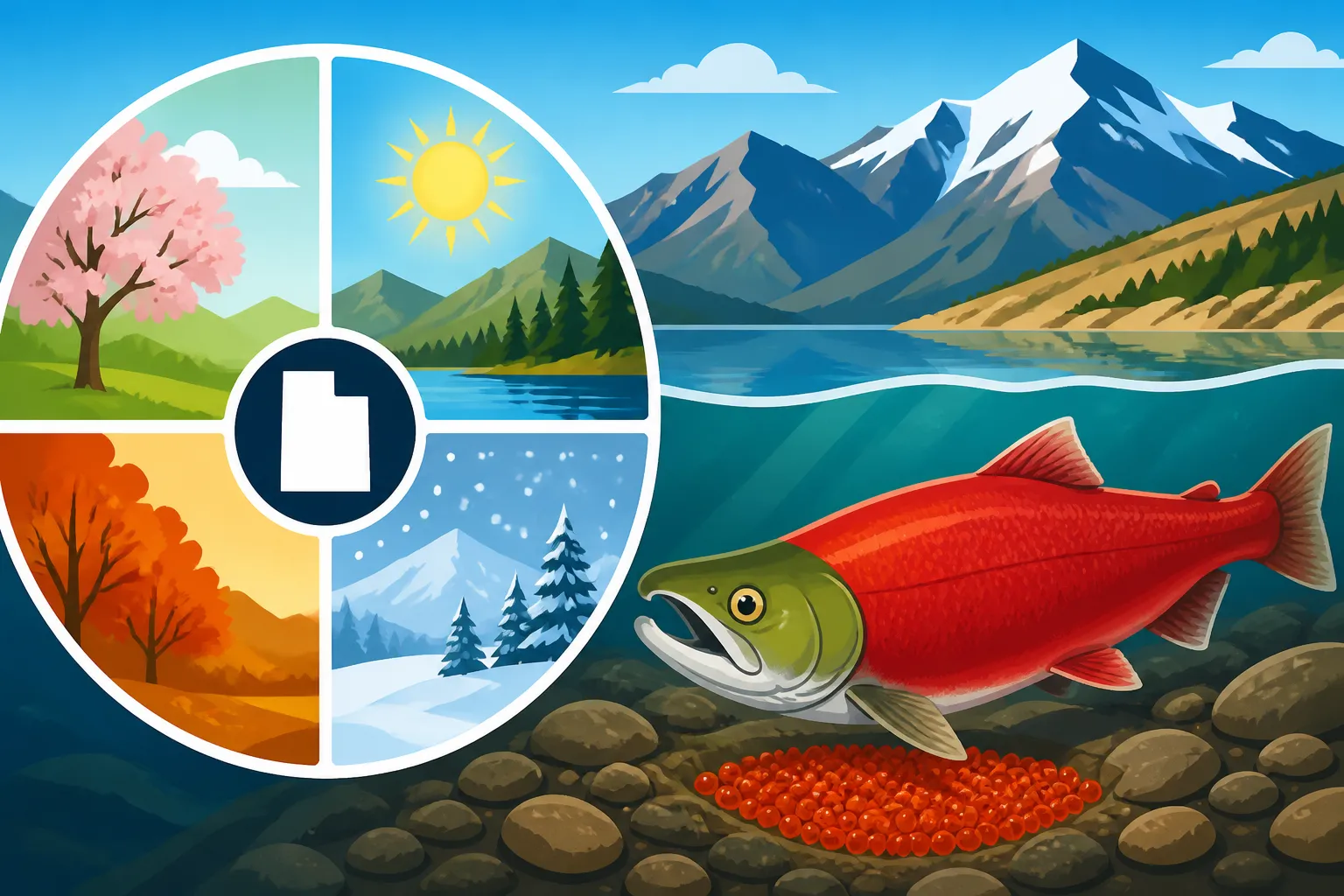
As summer transitions into fall, usually starting in late August or early September, you'll begin to notice a remarkable change in kokanee salmon. Their sleek, silver bodies transform into brilliant shades of crimson and olive green, and the males develop a distinct hooked jaw (kype) and a humped back. This vibrant coloration is a signal that they are mature and ready to spawn. They stop feeding aggressively at this point, driven solely by instinct to reproduce. They'll leave the deeper, cooler waters where they spent most of their lives and begin migrating upstream into the feeder rivers and streams of reservoirs, or gather in the shallower areas of the reservoir itself if no suitable rivers are present. This intense transformation is truly a sight to behold, and it signifies the beginning of their final journey. If you're keen to learn more about these fascinating fish, our comprehensive Utah Kokanee Salmon Guide delves even deeper into their biology and habits.
The kokanee's transition is more than just skin deep; their entire physiology shifts. Their digestive systems begin to shut down, and all their energy is redirected towards the arduous task of spawning. This is why you'll often hear anglers say that spawning kokanee are difficult, if not impossible, to catch on traditional baits or lures. Their focus is completely on reproduction, not feeding. This natural phenomenon is a crucial part of the Kokanee Salmon Life Cycle in Utah and defines the fishing opportunities available during this period.
Factors Influencing Spawning Timing
Pinpointing the exact start and end dates for kokanee spawning can be tricky because it's not a rigid calendar event. Several environmental factors play a significant role in when kokanee decide it's time to begin their run.
Firstly, water temperature is perhaps the most critical trigger. As summer lake temperatures begin to cool, typically dropping into the mid-50s Fahrenheit, it signals to the kokanee that conditions are right. Early cold snaps can sometimes kickstart the spawn a little earlier, while prolonged warm autumns can delay it. Anglers often keep a close eye on reservoir temperatures, knowing it's a key indicator of when the action will begin.
Secondly, photoperiod, or the length of daylight hours, also plays a role. As the days shorten after the summer solstice, it's another biological cue for these fish to prepare for their reproductive journey. This consistent natural rhythm works in conjunction with water temperature to guide their timing.
Lastly, the specific genetics of each kokanee population in different reservoirs can lead to slight variations. For instance, the kokanee in Strawberry Reservoir might have a slightly different average spawning window than those in Flaming Gorge, even under similar environmental conditions. This localized adaptation means that while there's a general window, it's always best to check specific reports for the reservoir you plan to fish. Understanding these nuances helps you plan your trips more effectively, much like knowing When Does a Utah Annual Fishing License Expire? helps you stay legal.
Peak Spawning Season by Utah Reservoir
While the general window for kokanee spawning in Utah runs from late August through early November, the precise peak varies significantly by reservoir. Each major kokanee fishery has its own rhythm, influenced by its size, depth, elevation, and the specific kokanee strain it hosts.
Bear Lake Kokanee Spawning Calendar
Bear Lake, famously known for its unique turquoise waters and endemic species, also hosts a smaller, but notable, kokanee population. The kokanee here typically begin their run a little later than in other reservoirs, largely due to the lake's cooler, higher-elevation waters.
You'll generally see the first signs of kokanee staging in the late fall, often late September into October. The peak spawning activity usually occurs throughout October, and sometimes stretches into early November. Bear Lake kokanee often utilize the deeper, rocky shoals within the lake itself, or make short runs up small feeder streams if water levels allow. Fishing during this period can be challenging, as the fish are very focused on reproduction. While not as heavily targeted for kokanee as some other waters, the phenomenon is still a part of the rich ecosystem detailed in our Bear Lake Fishing Guide.
Access points around the lake, such as those near the marinas or certain stream inlets, are where you might observe this activity. However, it's crucial to respect the fish and their fragile spawning grounds. This is a time for observation and appreciation rather than aggressive angling.
Strawberry Reservoir Kokanee Spawning Details
Strawberry Reservoir is arguably Utah's most famous kokanee fishery, renowned for its strong population and the sheer number of fish that return to spawn. The spawning run here is a major event that draws a lot of attention.
Kokanee at Strawberry typically begin their color change and staging behavior in late August and early September. The peak spawning activity usually hits from mid-September through mid-October. The primary spawning grounds are the Strawberry River and the Daniels Creek inlet, where thousands of kokanee will migrate upstream to lay their eggs. Large schools can also be found congregating in the shallower areas of the reservoir near these inlets.
During the peak, these feeder streams become packed with brightly colored fish. This is a critical time for the future of the kokanee population, and specific regulations are often in place to protect these spawning fish. Anglers frequently check the Strawberry Reservoir Fishing Guide for current conditions and any special rules during this season. It's a truly spectacular natural event, but remember, the focus should be on conservation.
Flaming Gorge Kokanee Spawning Insights
Flaming Gorge Reservoir, straddling the Utah-Wyoming border, is another powerhouse kokanee fishery. The kokanee here are known for their impressive size, and their spawning run is equally significant.
The onset of the spawn at Flaming Gorge generally aligns with Strawberry, with fish starting their color changes in late August and early September. The peak spawning activity typically occurs from mid-September through October, sometimes extending into early November depending on the specific area and weather patterns. The primary spawning tributaries for Flaming Gorge kokanee include the Green River above the reservoir, Sheep Creek, and Henrys Fork.
Observing the kokanee stack up in these rivers, particularly the lower sections of the Green River that feed into the reservoir, is an incredible experience. Like Strawberry, specific regulations apply during the spawn to protect the fish. For those planning a trip, consulting the Flaming Gorge Fishing Guide is essential for up-to-date information on limits and specific areas. Seeing these fish, sometimes weighing several pounds, fighting their way upstream is a powerful reminder of nature's cycles.
Here’s a summary of approximate peak spawning times for major Utah kokanee fisheries:
| Reservoir | General Spawning Window | Peak Spawning Period | Primary Spawning Locations |
|---|---|---|---|
| Strawberry Reservoir | Late Aug – Mid-Oct | Mid-Sep – Mid-Oct | Strawberry River, Daniels Creek, reservoir inlets |
| Flaming Gorge | Late Aug – Early Nov | Mid-Sep – Oct | Green River (above res.), Sheep Creek, Henrys Fork |
| Bear Lake | Late Sep – Early Nov | Oct – Early Nov | Rocky shoals within lake, small feeder streams |
Note: These are general guidelines; actual timing can vary year to year based on environmental factors.
What Spawning Means for Anglers
The kokanee spawning season is a fascinating time, but it fundamentally changes how and if you should fish for them. Their behavior shifts dramatically, and ethical considerations become paramount.
Fishing During and After the Spawn
During the peak of the spawn, kokanee salmon are almost entirely preoccupied with reproduction. Their mouths may even begin to seal up, and they are not interested in feeding. This means traditional trolling and jigging methods, which are highly effective for kokanee during other times of the year, become largely ineffective. Trying to catch actively spawning kokanee is often frustrating and can even be detrimental to the fish. Most anglers find it best to shift their focus to other species or other areas of the reservoir where pre-spawn or post-spawn fish might still be found.
Sometimes, in the weeks leading up to the full spawn (late August to early September), kokanee might still be relatively aggressive as they stage and build up energy for their journey. This can be a fantastic time to target them, often using tactics like those discussed in How to Troll for Kokanee in Utah, using small, bright spoons or dodger-and-squid combinations. They are still actively feeding and filling out before their transformation.
After the spawn, which can run into late fall, the kokanee that successfully reproduced will die. This is a natural part of their life cycle. Their decaying bodies provide nutrients back into the ecosystem, supporting other aquatic life. Angling for kokanee after they've spawned and are in a deteriorated state is generally not recommended, both for ethical reasons and because the flesh is no longer suitable for consumption. Many anglers prefer to focus on the healthy, vibrant kokanee available earlier in the season, or wait for other prime fishing opportunities in Utah, especially since this period often overlaps with some of the Best Time of Year to Fish in Utah for other species.
Ethical Considerations and Regulations
This brings us to the most crucial aspect of kokanee spawning: ethical angling and adhering to regulations. Actively targeting actively spawning kokanee can disrupt their reproductive efforts and cause unnecessary stress. It’s a common frustration for anglers who just want to catch fish, but understanding the biological imperative of the spawn is key to sustainable fishing.
The Utah Division of Wildlife Resources (UDWR) often implements specific regulations during the spawning season to protect kokanee. These can include:
- Stream Closures: Many of the feeder streams where kokanee spawn are temporarily closed to fishing during the peak spawning period. This gives the fish a safe haven to reproduce without disturbance.
- Specific Bag Limits or Harvest Rules: While less common for kokanee during the spawn (as they are hard to catch and not good to eat), some species have special harvest rules during spawning. Always check the latest Utah Fishing Regulations Explained for the specific body of water you intend to fish.
- Prohibition on Snagging: Snagging (foul-hooking fish) is illegal in Utah and is a particularly serious issue during spawning runs when fish are concentrated and not actively biting.
It's important to remember that respecting these rules isn't just about avoiding a fine; it's about ensuring healthy fish populations for future generations of anglers. If you do happen to accidentally hook a bright red, spawning kokanee in an open area, it's best practice to release it immediately and unharmed. Knowing How to Handle a Fish You Must Release Immediately is a valuable skill for any responsible angler. Consider shifting your focus to other areas of the reservoir, or to other species that are not currently spawning.
Anglers looking for new lures or gear for other times of the year can always find a wide selection of quality fishing equipment on sites like Amazon, which often carries specialized trolling gear or a diverse selection of flies to fill out a Best Lures for a Utah Tackle Box. However, during the kokanee spawn, the best "gear" is often patience and respect for nature's course. Embracing the opportunity to simply observe the salmon run can be just as rewarding as catching a fish, offering a unique connection to the wild heart of Utah's fisheries.
Understanding when kokanee salmon spawn in Utah is about more than just dates on a calendar; it's about appreciating their incredible life cycle and adapting your angling practices to ensure these vibrant fish continue to thrive. By respecting their critical spawning period, we help ensure that the kokanee fisheries in Strawberry, Flaming Gorge, and Bear Lake remain robust and continue to provide breathtaking experiences for years to come.
Disclaimer
The information provided in this guide is for general informational purposes only and is subject to change. Always consult the official Utah Division of Wildlife Resources (UDWR) website and their most current fishing proclamations for the most accurate and up-to-date regulations, season dates, and limits before planning any fishing trip. Fishing regulations can change frequently, and it is the angler's responsibility to know and follow all applicable laws.