Best Sinker Weight for Bottom Fishing at Utah Lake
Oh, the age-old question for anyone who's spent a frustrating afternoon trying to bottom fish at Utah Lake! It's incredibly disheartening to cast your line, thinking your bait is sitting perfectly on the lakebed, only to reel in later wondering if it ever even stayed put. The unique challenges of Utah Lake's soft bottom and ever-present wind can make choosing the right sinker feel like a guessing game. But don't worry, this guide is here to unravel the mystery and help you find the best sinker weights to keep your bait exactly where the fish are.
Understanding Utah Lake's Unique Bottom Fishing Challenges
Before we dive into specific weights, let's really get into why Utah Lake poses such a challenge for bottom anglers. It's not like every other lake, and understanding its quirks is the first step to conquering it. We've all been there, casting out with hope, only to feel our line dragging or come back clean, leaving us scratching our heads.
The Mucky, Soft Bottom of Utah Lake
One of the biggest frustrations for anglers at Utah Lake is its famously soft, silty bottom. Unlike some lakes with rocky or firm substrates, much of Utah Lake is characterized by fine sediment and muck. This isn't just a minor detail; it fundamentally impacts how your fishing rig behaves. Imagine your perfectly presented bait, meant to entice a hungry catfish or walleye, slowly sinking and disappearing into a pillow of soft mud. It's like trying to find a needle in a haystack for the fish, and it certainly won't draw any attention if it's buried out of sight.
This soft composition means that lighter sinkers often perform poorly. They can get completely swallowed by the lakebed, taking your bait with them. This not only hides your offering from curious fish but also makes it incredibly difficult for you to feel subtle bites. You're effectively fishing blind, and that's no fun for anyone. For species like Utah Lake Catfish Species or Utah Lake Walleye Population, getting your bait noticed is half the battle, and a buried presentation just isn't going to cut it. We need to find a way to make sure that bait stays accessible, ideally sitting right on top of or slightly above that soft stuff.
Dealing with Currents and Wind on a Large, Shallow Lake
You might think that because Utah Lake is relatively shallow, currents wouldn't be much of an issue. However, anyone who has spent time fishing its expansive waters knows that's simply not true. Strong winds frequently whip across the lake, creating significant chop and surprisingly powerful subsurface currents that can easily displace lighter tackle. Imagine you're targeting a prime feeding lane, carefully placing your bait, only to have a sudden gust of wind push your boat or your line, dragging your sinker across the bottom and completely out of the strike zone. It's incredibly frustrating, and it leads to a lot of wasted time and missed opportunities.
These wind-driven currents can wreak havoc on your bait presentation. A sinker that's too light will simply get dragged along, bunching up your rig, tangling your lines, or pulling your bait into less desirable areas. This is especially problematic if you're fishing near structure or a specific depth contour. You need your rig to stay anchored. Without adequate weight, you're constantly fighting the elements, recasting more often than fishing, and never quite sure if your bait is actually where you want it to be. This challenge, combined with the soft bottom, demands a thoughtful approach to sinker selection to ensure stability and effective bait delivery. For more on navigating the waters, you might find Best Boat Ramps on Utah Lake helpful.
Recommended Sinker Weights for Effective Bottom Fishing at Utah Lake
Given the challenges we've discussed – the mucky bottom and the wind-driven currents – selecting the right sinker weight isn't just about getting your bait down; it's about keeping it there and presenting it properly. Let's talk about the sweet spot and when to size up.
The Sweet Spot for General Bottom Fishing
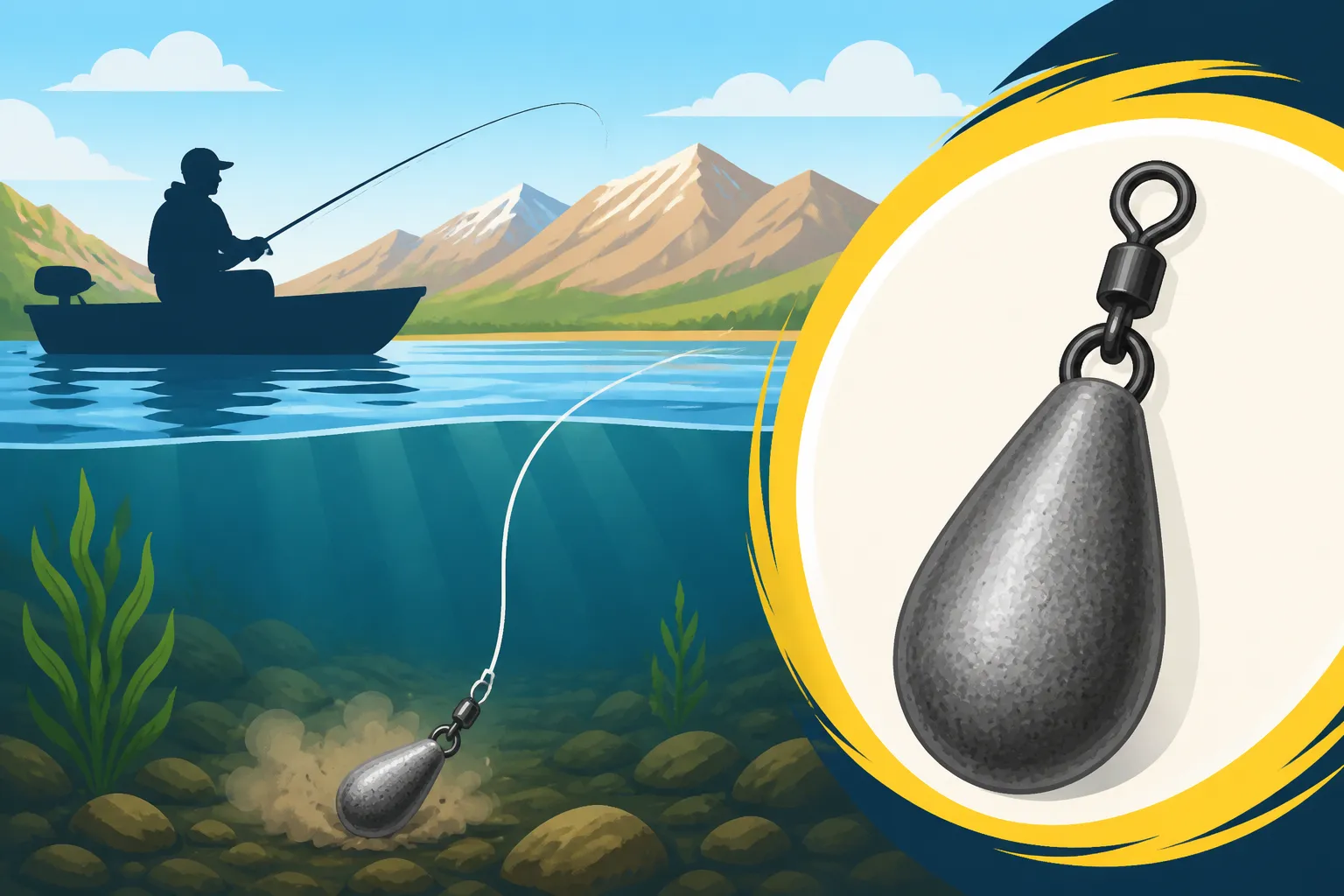
For most general bottom fishing scenarios at Utah Lake, a good starting point for your sinker weight is typically 1 to 3 ounces. This range often hits the sweet spot, providing enough heft to cut through the water column, settle firmly on the soft bottom, and resist moderate wind and current without being overly cumbersome to cast or retrieve. For example, if you're chasing after common carp or catfish in relatively calm conditions, a 1-ounce or 1.5-ounce pyramid sinker might do the trick. It provides enough resistance against the muck to keep your bait from disappearing too deeply.
As conditions get a little breezier or if you're feeling your rig drift, bumping up to a 2-ounce or even a 3-ounce sinker can make all the difference. The key here is to have enough weight to feel your sinker hit and settle on the bottom. If you cast out and feel your line drifting or if you're constantly picking up mud on your hook, it's a clear sign you need to go heavier. A well-placed 2-ounce egg sinker on a Carolina rig can be fantastic for targeting Utah Lake Walleye Fishing Spots, allowing the fish to pick up the bait without immediately feeling the full weight. You can find a fantastic selection of these common weights at your local Bass Pro Shops, or with a quick search on Amazon, ensuring you're ready for varying conditions.
Adjusting for Extreme Conditions: When to Go Heavier
There will absolutely be days on Utah Lake when the "sweet spot" simply isn't enough. We're talking about those notoriously windy afternoons when whitecaps are forming, or perhaps you've found a spot with a surprisingly strong current. These are the times when you need to be prepared to scale up your sinker weight. In such scenarios, consider reaching for sinkers in the 4 to 6-ounce range.
Going heavier isn't about brute force; it's about maintaining control and effective bait presentation. A 4-ounce or 5-ounce pyramid sinker, for instance, will dig into that soft bottom far more effectively, anchoring your bait in place even when the wind is trying its best to drag it across the lake. This is particularly crucial when you're targeting larger fish that might be holding in specific areas, and you absolutely need your bait to stay put. While a heavier weight might reduce your ability to "feel" the very subtle taps of smaller fish, the trade-off is superior stability and confidence that your bait is precisely where you want it, rather than being swept away. Always remember, the goal is to get your bait to the fish and keep it there, and sometimes that means sacrificing a bit of sensitivity for steadfastness. For more general advice on getting started, check out Utah Fishing Techniques for Beginners.
Types of Sinkers Best Suited for Utah Lake's Bottom
Beyond just the weight, the shape of your sinker plays a huge role in how it interacts with Utah Lake's unique bottom conditions. Not all sinkers are created equal when it comes to holding ground in muck or resisting current.
Pyramid and Flat-Sided Sinkers: The Anchors
When you're battling the soft, silty bottom and potential currents of Utah Lake, pyramid sinkers are often your best friend. Their distinct pyramid shape, with flat sides tapering to a point, is designed to dig into soft substrate. This "digging in" action helps them anchor firmly, preventing your bait from drifting with the current or getting buried too deeply in the muck. If you've ever used a round sinker in soft mud, you know how easily it can disappear; a pyramid sinker resists this far better, ensuring your bait stays accessible to fish like Utah Lake Catfish Fishing Spots.
Similarly, flat-sided or "no-roll" sinkers, such as coin or disc sinkers, also offer excellent stability. While they might not "dig in" as aggressively as a pyramid, their broad, flat profile creates more surface area to grip the bottom, making them less prone to rolling in current. This can be particularly advantageous if you're fishing a slightly firmer patch of bottom where you want to prevent any unwanted movement. The key benefit of these shapes is their resistance to being displaced, which is paramount for successful bottom fishing on Utah Lake where consistency in bait presentation is king. You'll find these easily at any well-stocked fishing department, whether you're browsing at Bass Pro Shops or looking through options on Amazon.
Egg and Disc Sinkers: When to Consider
While pyramid and flat-sided sinkers are often the go-to for their anchoring capabilities, egg sinkers and certain disc sinkers still have their place in your Utah Lake tackle box, especially when employed in specific rigs. Egg sinkers, with their rounded, often center-drilled shape, are fantastic for slip-sinker rigs like a Carolina rig. The main advantage here is that the line passes freely through the sinker, allowing a fish to pick up the bait and swim a short distance without immediately feeling the resistance of the heavy weight. This can be crucial for shy biters, letting them mouth the bait and swim off before they detect something amiss.
However, be mindful of Utah Lake's muck. A standard egg sinker can easily bury itself, taking your bait with it. To combat this, combine an egg sinker with a longer leader (as we'll discuss) or even a small buoyant bead or foam float near the hook to lift your bait just above the muck. Disc sinkers, though sometimes prone to rolling in strong currents, offer a low profile that can be beneficial in certain situations. Their broad, flat shape might not dig in like a pyramid, but they can sit nicely on top of slightly firmer silty bottoms, especially when paired with rigs designed to suspend bait, such as a Santee Cooper rig for catfish. Knowing when and how to adapt these sinker types to the specific conditions will elevate your bottom fishing game. You can learn more about specific rig setups in What Gear Does a First-Time Utah Angler Need?.
Practical Tips for Rigging and Experimenting
Having the right sinker weight and type is only half the battle; knowing how to rig effectively and adapt to changing conditions is what truly separates successful anglers from those who are constantly frustrated.
The Importance of Rigging for Mucky Conditions
Since Utah Lake's bottom is notorious for its soft, mucky consistency, simply dropping a sinker and hook often means your bait gets buried and becomes invisible. To counteract this, strategic rigging is absolutely essential. One of the most effective techniques is to use longer leaders. Instead of a standard 6-12 inch leader, consider extending it to 18-36 inches, especially when using a slip sinker rig (like a Carolina rig with an egg sinker). This longer leader allows your bait to float or sit slightly above the sinker, which, even if the sinker itself buries a bit, ensures your bait remains visible and accessible to fish. Think of it like a flag waving just above the mud, instead of a flag buried in it.
Another fantastic trick is to incorporate flotation devices onto your leader. Small pop-up floats, foam balls, or even a buoyant bead can be threaded onto your leader, positioned a few inches above your hook. This acts like a mini-buoy, actively lifting your bait (whether it's cut bait, worms, or dough bait) off the bottom and suspending it directly in the fish's feeding zone. Even if your heavy sinker is firmly planted in the muck, your bait will be dancing above it. This significantly increases your bait's visibility and scent dispersion, making it much more appealing. This strategy is particularly effective when targeting species that primarily feed by scent on the bottom, such as What Catfish Eat at Utah Lake or the various carp species.
Experimentation is Key: No One-Size-Fits-All
Let's be real: no single sinker weight or type will work perfectly every single time you hit Utah Lake. Conditions change constantly – wind speed and direction shift, currents vary, and even the "muckiness" of the bottom can differ from one cove to another. This is why experimentation is absolutely crucial. Don't be afraid to try different setups until you find what works for that specific day and location.
Start with your go-to setup, perhaps a 2-ounce pyramid sinker. Cast it out and pay close attention to how it feels. Can you feel it hit the bottom? Does it feel like it's dragging excessively? If you're constantly finding your line drifting or your bait coming back mucky, it's time to adjust. Go up to a 3-ounce, then a 4-ounce if needed. Conversely, if conditions are exceptionally calm and you're struggling to feel bites, you might even drop down to a 1-ounce to increase sensitivity, especially if you're fishing a relatively firm patch of bottom. Carry a diverse selection of sinker weights and shapes in your tackle box – from 1 ounce all the way up to 6 ounces, and various shapes like pyramids, eggs, and discs. Having a well-stocked and organized tackle box from a place like Bass Pro Shops or even an online order from Amazon makes this process much easier and less frustrating. The angler who observes, adapts, and experiments is the angler who consistently catches more fish. For more on the species you might encounter, see Fish Species in Utah Lake.
Here's a quick reference table to help you choose the right sinker for your Utah Lake adventures:
| Sinker Type | Recommended Weight (Utah Lake) | Best Use Case | Pros | Cons |
|---|---|---|---|---|
| Pyramid Sinker | 1-5 oz (often 2-3 oz) | General bottom fishing, moderate to strong current | Digs into soft bottom, excellent anchoring | Can get snagged on rocks (less common at Utah Lake) |
| Egg Sinker | 1-4 oz (often 1.5-2 oz) | Slip-sinker rigs (Carolina rig), shy biters | Allows fish to take bait without feeling weight | Prone to burying in muck if not rigged properly |
| Flat-Sided/No-Roll | 1-4 oz (often 2-3 oz) | Preventing drift on slightly firmer bottom, moderate wind | Resists rolling in current, sits flat | Less aggressive "digging" than pyramid |
| Disc Sinker | 1-4 oz (often 1.5-2.5 oz) | Situations needing a low profile, light current | Resists sinking into soft muck, good for suspending rigs | Can roll in strong currents, less anchoring power |
Disclaimer
This article is for general informational purposes only and does not constitute professional advice. Laws, prices and regulations vary by location and change over time. Consult a qualified professional for guidance on your specific situation.