Best Paddleboards for Utah Flatwater Fishing
Oh, the sheer joy of being out on the water, fishing to your heart's content, right? But let's be honest, traditional boats can be a hassle—the trailer, the launch ramps, the fuel, the noise. Sometimes, you just want a more direct, intimate connection with the water and the fish, without all the fuss. That's where fishing from a paddleboard really shines, especially on Utah's stunning flatwater lakes and reservoirs. This guide is all about helping you discover the best paddleboards to turn those dreams into quiet, highly effective fishing adventures.
Why Paddleboards Are Perfect for Utah Flatwater Fishing
Fishing in Utah is an absolute dream, but sometimes getting to those prime spots, especially on our flatter lakes and reservoirs, can be a challenge. You've got big boats, busy ramps, and then those quiet coves that seem just out of reach. Paddleboards offer a fantastic solution, blending accessibility, stealth, and a wonderful connection to nature that you just don't get with a motor.
Accessing Unreachable Spots
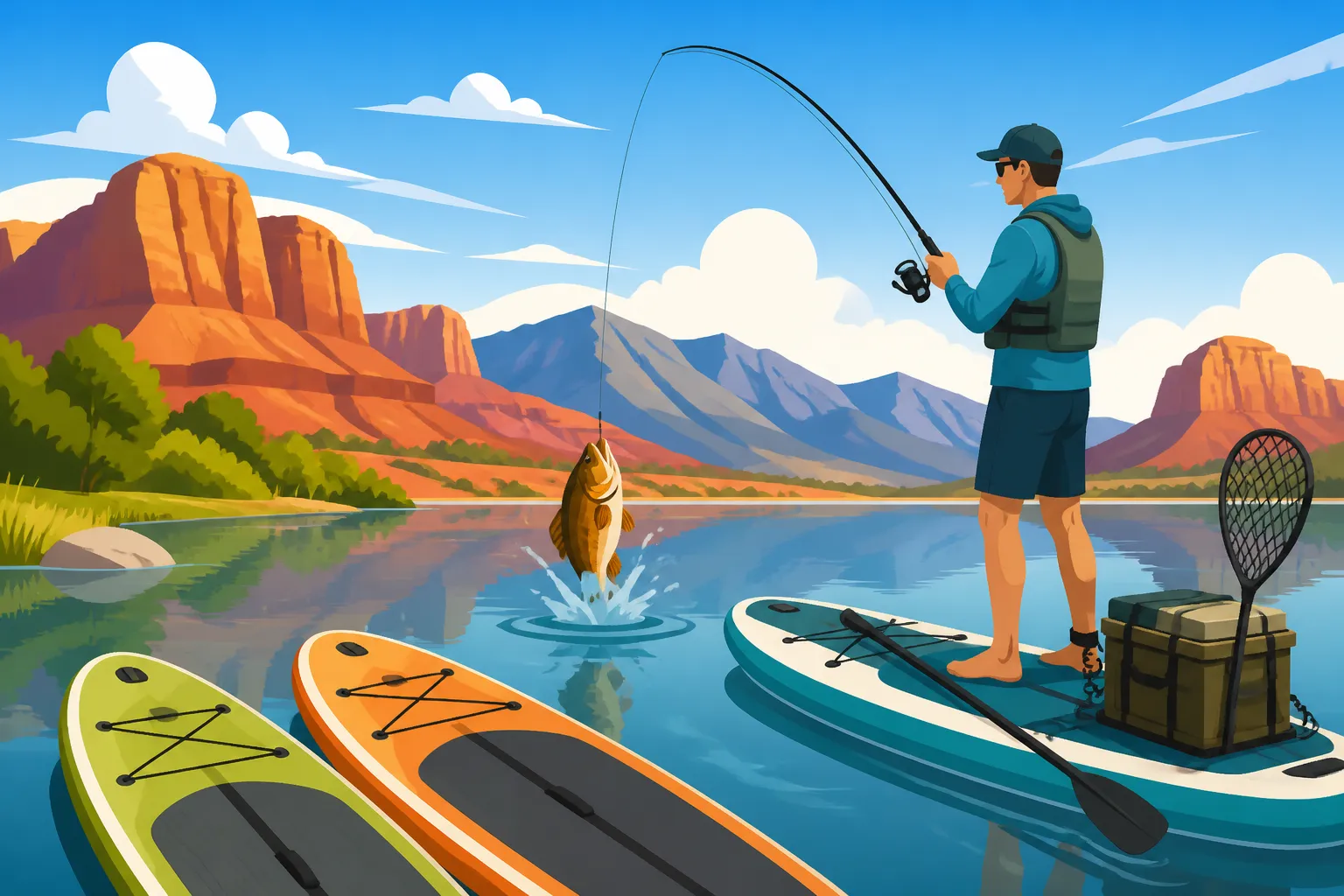
One of the biggest frustrations for any angler is seeing prime water that's just inaccessible. Think about those shallow coves on Utah Lake Fishing Guide, the tucked-away inlets on Deer Creek, or the peaceful backwaters of Willard Bay. These are often too shallow for traditional boats and sometimes even too marshy or rocky for wading comfortably. A fishing paddleboard, with its minimal draft, allows you to glide effortlessly over these shallows, reaching fish that rarely see a lure.
Imagine paddling silently into a quiet bay at first light, where bass are already cruising the submerged weed lines, or trout are dimpling the surface in a tucked-away corner of Scofield Reservoir. You can get right into the thick of it, exploring every nook and cranny without the disruption of a prop or a noisy engine. This access to less pressured water often means more bites and, let's be honest, a much more satisfying fishing experience.
Stealth and Low Impact Fishing
Fish are smart, and they're easily spooked. The thrum of a boat motor, the splash of an anchor chain, even the shadow of a large vessel can send them scattering. Paddleboards, on the other hand, are the epitome of stealth. You glide across the surface with barely a ripple, your paddle strokes silent. This allows you to approach fish undetected, often getting much closer than you ever could in a boat or even a kayak.
This quiet approach is a game-changer for sight fishing, especially in clear Utah waters. You can spot cruising trout, bass holding near structure, or even carp rooting around in the shallows, then position yourself perfectly for a cast without sending them fleeing. It's a truly low-impact way to fish, minimizing disturbance to the environment and maximizing your chances of a successful hook-up. Plus, there's something incredibly Zen about being so quietly integrated with your surroundings.
The Health and Recreational Benefits
Beyond the pure joy of catching fish, paddleboard fishing offers some incredible perks for your body and mind. Let's face it, we spend a lot of time sitting down in our daily lives. Standing on a paddleboard provides a fantastic core workout, improves your balance, and gets you outside breathing that fresh Utah air. It's an active way to enjoy your hobby, turning a fishing trip into a full-body experience.
It's also a wonderfully peaceful way to recreate. The silence, broken only by your paddle and the sounds of nature, is incredibly therapeutic. You're not just fishing; you're exploring, adventuring, and de-stressing. Many anglers find the added element of paddling to their fishing spot just as rewarding as the fishing itself, offering a unique perspective on Utah's beautiful landscapes and waterways. It truly connects you to the environment in a way that few other activities can.
Key Features to Look For in a Fishing Paddleboard
Choosing the right paddleboard for fishing isn't quite the same as picking one for leisurely paddling. You've got specific needs – stability for casting, space for gear, and durability to handle the rugged realities of fishing. Let's dive into what really matters.
Stability and Deck Space
When you're trying to cast, fight a fish, or simply stand up and navigate, stability is paramount. A wobbly board will quickly become frustrating, if not dangerous. Look for boards that are generally wider (32 inches or more) and have a stable hull design, often with a flatter bottom or even a catamaran-style hull for maximum steadiness. Some boards even feature a slight concavity on the deck to lower your center of gravity.
Deck space is equally crucial. You're not just bringing yourself; you're bringing rods, tackle, a cooler, maybe a fish finder. A good fishing paddleboard will have a large, uncluttered deck area, often covered with a grippy, comfortable foam pad. Look for ample bungee tie-downs at both the nose and tail, and ideally, integrated or add-on accessory mounts (like YakAttack tracks or similar systems). These allow you to customize your setup with rod holders, cameras, and other vital gear. You'll want enough room to move around a bit, pivot for a cast, and even secure a landing net.
Durability and Construction Materials
Paddleboards come in two main types: inflatable (iSUPs) and rigid (hard-shell). Each has its own advantages in terms of durability and the materials used.
Inflatable paddleboards are typically made from military-grade PVC material, often with drop-stitch construction that creates an incredibly rigid platform when fully inflated. They are surprisingly tough and can withstand bumps, scrapes, and even drops onto rocky shores much better than you might think. Many anglers prefer iSUPs for their resilience against hooks, rocks, and general fishing abuse. They're not indestructible, of course, but a quality iSUP is far more durable than its name might suggest.
Hard-shell boards are generally made from EPS foam cores wrapped in fiberglass, carbon fiber, or tough plastic composites. These offer superior glide and performance on the water but are more susceptible to dings and dents from impacts with rocks, docks, or even dropping heavy gear. For fishing, you'll want to prioritize boards with robust outer shells, possibly even reinforced zones, to stand up to the rigors of angling. Ultimately, the best material depends on your primary fishing environment and how careful you are with your gear.
Portability and Ease of Transport
Getting your paddleboard to and from the water in Utah can sometimes be as challenging as the fishing itself, especially if you're hitting those high mountain lakes or lesser-known spots. Portability is a major factor, and this is where the inflatable versus rigid debate really comes into play.
Inflatable paddleboards fold down into a compact backpack or rolling bag when deflated, making them incredibly easy to transport in the trunk of a car, an RV, or even as checked luggage for a flight. For anglers venturing into the Uinta Mountains High Lakes Fishing areas, an iSUP that can be packed in a Best Backpacks for Hiking to Uinta Lakes is practically essential. The setup involves inflating it with a hand pump (or an electric pump, if you're near a power source), which usually takes 5-10 minutes. While it's an extra step, the convenience of transport often outweighs the minor effort.
Rigid paddleboards, while offering instant readiness, require roof racks on your vehicle or a truck bed for transport. They are heavier and bulkier, which can be a hurdle if you're fishing solo or don't have suitable vehicle accommodations. However, once you're at the launch, there's no setup time – just slide it off and go. Consider how far you'll be traveling, whether you have assistance, and your storage space at home when deciding between these two options. If you're frequently changing locations or dealing with difficult access points, an iSUP often simplifies the entire process. You can find excellent options for both types of boards and all the necessary gear at retailers like Bass Pro Shops or even online through Amazon.
Types of Paddleboards Best Suited for Fishing
Just like there are different types of fishing, there are different types of paddleboards designed to enhance your angling experience. Understanding the distinctions can help you pick the perfect platform for your Utah adventures.
Inflatable SUPs (iSUPs) for Anglers
Inflatable stand-up paddleboards, or iSUPs, have revolutionized the paddle sports world, and fishing is no exception. They are incredibly versatile and have become a favorite for many Utah anglers, especially those who prioritize portability and durability. As mentioned, they're typically constructed with a robust drop-stitch core wrapped in multiple layers of military-grade PVC, making them surprisingly rigid when inflated to the recommended PSI.
The advantages for anglers are numerous. Firstly, transport and storage are a breeze. No need for a roof rack or a dedicated trailer; your entire fishing vessel packs down into a backpack, easily fitting into a car trunk or even a small closet. This makes them ideal for exploring remote waters, urban community ponds, or even just keeping one handy for an impromptu evening trip after work. Secondly, their resilience is a huge plus. Bumps against rocks, scrapes on sandy bottoms, or accidental hook jabs are far less likely to cause significant damage to an iSUP compared to a hard board. Many iSUPs designed for fishing come with extra D-rings, bungee systems, and even specific mounting points for accessories, transforming a simple paddleboard into a full-fledged fishing machine.
Hard-Shell (Rigid) Fishing SUPs
For those who crave maximum stability, ultimate performance on the water, and don't mind the logistics of transport, hard-shell fishing paddleboards are an excellent choice. These are essentially larger, wider versions of traditional paddleboards, often purpose-built with anglers in mind. They typically feature a solid EPS foam core laminated with fiberglass, carbon fiber, or a durable plastic shell, offering a rigid platform that feels incredibly stable underfoot.
The primary benefits of a hard-shell fishing SUP include superior glide and tracking, making it easier to cover longer distances with less effort on larger reservoirs like Flaming Gorge or Lake Powell. Their inherent rigidity also means less flex, providing a more direct feel for the water and often a slightly more stable casting platform. Many dedicated fishing models come with integrated features like molded-in storage wells, multiple accessory tracks, and even cooler tie-downs directly built into the deck. If you're a serious angler who frequently visits the same local waters and has easy transport (like a truck or roof rack setup), a hard-shell board can offer an unparalleled fishing experience with its rock-solid feel and optimized performance.
Hybrid Kayak/SUP Designs
Sometimes, you want the best of both worlds: the elevated vantage point of a paddleboard and the comfortable seating option of a kayak. That's where hybrid kayak/SUP designs come into play. These innovative boards bridge the gap, often featuring a wider, more stable hull that can be paddled standing up like a traditional SUP, but also offering a dedicated seat or a higher seating position for pedaling or kayaking.
These hybrids often include features like elevated frames seats, which are fantastic for all-day comfort and offer a better view into the water. They frequently incorporate pedal drives, allowing for hands-free propulsion, which is a huge advantage when you're casting or fighting a fish. Think of fishing on Utah Lake Walleye Fishing Spots where covering ground can be beneficial, but you also want to stand when you spot a fish. Some models even allow for a small electric motor to be mounted, truly blurring the lines between a paddleboard, a kayak, and a small fishing skiff. These boards are typically heavier and often more expensive, but for anglers who value versatility, comfort, and enhanced propulsion options, a hybrid design can be the ultimate fishing platform for Utah's diverse waters.
Essential Accessories for Utah Paddleboard Fishing
Getting the right paddleboard is just the first step. To truly optimize your experience on Utah's flatwaters, you'll want to deck out your board with some crucial accessories. These items don't just add convenience; they enhance your safety, efficiency, and overall enjoyment on the water.
Rod Holders and Gear Mounts
Imagine trying to paddle, cast, and manage a hooked fish all while holding onto multiple rods – it's a recipe for disaster (or at least a lost rod!). That's why rod holders are non-negotiable for a fishing paddleboard. You'll want sturdy, adjustable rod holders that can securely hold your rods while you're paddling, re-tying, or actively fighting a fish. Many boards come with integrated track systems, like those from YakAttack or Scotty, which allow you to easily attach and adjust various accessories.
Beyond rod holders, these track systems are perfect for mounting other essential gear. You can add a dedicated mount for your fish finder (more on that later), a camera mount to capture those epic catches, or even a small cutting board for quick bait prep. Having your gear organized and easily accessible but out of the way of your casting motion is key to a smooth and enjoyable fishing trip. Check out options like the ones you'd find for kayaks, as many are interchangeable; Best Rod Holders for a Fishing Kayak will give you a good starting point. You can find a huge selection of these clever mounting solutions at outdoor retailers or online, including Amazon.
Anchoring and Positioning Systems
Utah's flatwater reservoirs, like Willard Bay or Bear Lake, can get surprisingly windy, and even a gentle current can make it tough to stay on your spot. An effective anchoring system is vital for holding your position, whether you're working a weed bed for bass or jigging over a drop-off for walleye. Forget about dragging a heavy anchor with a long rope on your paddleboard; we're talking about more specialized, lightweight solutions here.
Small, collapsible grappling anchors (typically 1.5-3 lbs) are popular. They're compact, easy to deploy, and usually sufficient for holding a paddleboard in moderate conditions. Another excellent option is a stake-out pole or push pole. These are long, slender poles (often fiberglass or carbon fiber) that you simply push into the soft bottom to anchor yourself. They're silent, quick to deploy and retrieve, and perfect for shallow water. For more advanced setups, some anglers even use micro power poles, which are small, electric-powered shallow-water anchors that deploy with the push of a button. For more ideas on how to secure your board, take a look at Best Anchor Style for a Kayak on Utah Lake—the principles are very similar for paddleboards.
Safety Gear and Personal Comfort
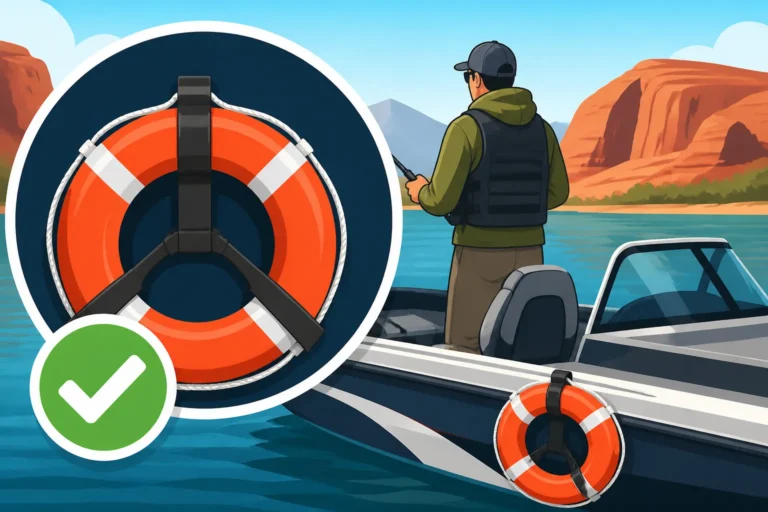
No matter how calm the water looks, safety should always be your top priority. A U.S. Coast Guard-approved Personal Flotation Device (PFD), or life jacket, is not just recommended; it's legally required to be on board for every person on a paddleboard in Utah, and it's always best practice to wear it. Choose a PFD designed for paddle sports – one that's comfortable, allows for full range of motion for paddling and casting, and ideally has pockets for small essentials. Learn more about Life Jacket Requirements on a Utah Boat.
Beyond the PFD, a paddle leash is a smart idea, especially if you're prone to dropping things (who isn't?). It keeps your paddle attached to your board, so it doesn't float away in a moment of excitement. A dry bag is also indispensable for keeping your phone, keys, wallet, and any extra layers of clothing safe and dry. Take a look at Best Dry Bag to Keep Gear Safe on a Utah Lake Boat for recommendations. Sun protection is critical in Utah's intense sun, so wide-brimmed hats, sunglasses, and plenty of sunscreen are a must. Finally, hydration is key – bring plenty of water, especially during those long summer days. A comfortable fishing seat, if your board allows for one, can also significantly extend your time on the water.
Top Considerations for Fishing Specific Utah Waters
Utah's diverse waters offer an incredible array of fishing opportunities, and the "best" paddleboard really depends on where you plan to cast your line. The challenges and ideal setups can vary wildly between a large, windswept reservoir and a calm, high-mountain lake.
Large Reservoirs (e.g., Willard Bay, Utah Lake, Deer Creek)
When you're heading out onto vast bodies of water like Willard Bay, Utah Lake, or Deer Creek Reservoir, you're not just contending with fish; you're often battling Mother Nature herself. Wind can pick up quickly, creating choppy waves that can test even the most stable paddleboard. Covering significant distances to reach prime fishing spots is also often a necessity.
For these larger reservoirs, stability and glide are paramount. Look for wider boards (34 inches or more) that offer excellent primary and secondary stability, so you feel confident when standing and casting, even with a bit of chop. Boards with a pointed nose (displacement hull) will cut through the water more efficiently than rounded ones, making longer paddles less exhausting. Consider hard-shell boards for their rigidity and performance, or a high-quality iSUP that is known for its stiffness. Having a reliable anchoring system is crucial to hold your position against wind and current. Many anglers on these waters also invest in a Best Fish Finders for Utah Reservoirs to locate structure and fish, making the most of their time on these expansive waters. Some specific spots that might challenge your paddleboard include Best Fishing Spots at Willard Bay, Best Fishing Spots at Deer Creek Reservoir, and Best Fishing Spots at Jordanelle Reservoir.
Smaller Lakes and Community Ponds
Utah is dotted with countless smaller lakes and community ponds, many of which are regularly stocked with trout, bass, and panfish. These are often ideal proving grounds for paddleboard fishing, offering easier access, calmer conditions, and less boat traffic. They're also fantastic for introducing beginners or kids to the sport.
For these intimate waters, portability and quick setup are often the top priorities. An iSUP truly shines here, as you can easily transport it in your vehicle and inflate it quickly at the water's edge. You might not need the ultimate in speed or long-distance tracking. Instead, focus on a board that's stable enough for comfortable casting and has enough deck space for a small tackle box and a cooler. The ability to glide silently into tight corners or navigate around shoreline vegetation is a huge advantage. These spots are perfect for honing your paddleboard fishing skills without the added stress of large waves or strong currents. Think of the peaceful mornings at your local Best Community Ponds for Kids to Fish in Salt Lake City – a paddleboard is the perfect silent companion.
High Mountain Lakes
For the adventurous angler, Utah's high mountain lakes offer unparalleled beauty and incredible trout fishing, but they demand a specific kind of gear. Reaching these pristine waters often involves hiking, sometimes for miles, over rugged terrain. Hauling a traditional boat or even a hard-shell paddleboard is simply not feasible.
This is where the inflatable paddleboard becomes the undisputed champion. Their ability to pack down into a backpack makes them the only practical option for accessing these remote gems. Look for a lightweight iSUP that is still durable and stable enough for fishing. You'll need to carry everything on your back – the board, paddle, pump, and all your fishing gear. The effort is absolutely worth it, as you'll be rewarded with stunning scenery and eager, wild trout that rarely see human pressure. Being able to stand up and sight fish in the clear, alpine waters is an unforgettable experience. If you're planning such a trip, be sure to consult Uinta Mountains High Lakes Fishing for locations and tips, and consider gear advice from Best Backpacks for Hiking to Uinta Lakes to make your trek as smooth as possible.
Tips for a Successful Paddleboard Fishing Trip in Utah
Once you've got your perfect paddleboard and all your accessories, a few key tips can make your Utah flatwater fishing trips even more enjoyable and productive. It's about preparedness, practice, and embracing the unique experience of paddleboard fishing.
Weather and Water Conditions
Utah weather can be notoriously unpredictable, especially in the mountains or on large reservoirs. Before you even think about loading up your board, always check the forecast. Pay close attention not just to temperature and precipitation, but critically, to wind. Wind is the biggest challenge for paddleboard anglers. Even a gentle breeze can make paddling difficult and holding a spot frustrating. If sustained winds are predicted to be above 10-15 mph, it might be best to reconsider or choose a more sheltered location.
Beyond wind, keep an eye on water temperatures and clarity. Cold water means fish might be deeper or less active, requiring different techniques. Very muddy water (common after heavy rains or snowmelt in some areas) can also make fishing tougher. Understanding how factors like runoff affect fishing can be really helpful, so checking reports from local bait shops or online forums for your chosen body of water is always a smart move. Always prioritize safety; if conditions look questionable, err on the side of caution.
Practicing Your Paddle and Cast
Don't let your first time fishing from a paddleboard be your first time on a paddleboard. Just like learning How to Cast a Spinning Rod for the First Time, there's a learning curve. Before you add the complexities of fishing, spend some time simply paddling and getting comfortable with your balance, both kneeling and standing. Practice your paddle strokes, learn how to turn, and get a feel for how the board responds to your weight shifts.
Once you're comfortable with the basics of paddling, introduce casting. Start with an empty hook or a practice plug in a calm area. This will help you understand how your casting motion affects the board's stability and how to adjust your stance. Practice casting from different angles, and get used to retrieving your line while maintaining balance. The more comfortable and intuitive your paddling and casting become, the more you can focus on the fishing itself. Remember, a smooth, controlled motion is key to not falling in!
Packing Smart and Light
One of the biggest advantages of paddleboard fishing is its simplicity, but that can quickly be undermined by overpacking. You have limited space, and every item adds weight and potential clutter. The key is to pack smart and light, bringing only the essentials you'll truly need for your outing.
Start with your safety gear (PFD, whistle, leash) and then your core fishing tackle. A small tackle box with a few essential lures, extra line, and pliers is usually sufficient. Carry a couple of rods (secured in rod holders!), and a small cooler with drinks and snacks. Secure everything with bungee cords or tie-downs so nothing goes overboard if you take an unexpected dip. Use dry bags for anything that absolutely cannot get wet. Every item should have a purpose and a designated spot on your board. This minimalist approach not only makes for a less cluttered, more efficient fishing experience but also enhances your mobility and overall enjoyment on the water. For more ideas on efficient packing, especially if you're venturing to different types of waters, consider tips from How to Fish From a Kayak in Utah, as many principles apply.
Here's a quick comparison of common fishing paddleboard types:
| Feature | Inflatable (iSUP) Fishing Paddleboard | Hard-Shell (Rigid) Fishing Paddleboard | Hybrid Kayak/SUP Design |
|---|---|---|---|
| Portability | Excellent (packs into backpack/bag) | Moderate to Poor (requires roof rack/truck) | Moderate (often larger, may need roof rack) |
| Durability | Very Good (resists dings, scrapes from impacts) | Good (prone to dings/scratches from hard impacts) | Good (material dependent, can be robust) |
| Stability | Excellent (when properly inflated, wide designs) | Excellent (solid platform, often wider) | Excellent (often very wide, can have outriggers) |
| Performance | Good (can be slower, less glide than rigid) | Excellent (better glide, tracking, speed) | Good to Excellent (can be slower, but efficient) |
| Deck Features | D-rings, bungee, often accessory mounts | Integrated tracks, storage, cooler tie-downs | Elevated seating, pedal drives, motor mounts, storage |
| Best For | Remote access, hiking, car camping, urban ponds | Consistent local use, larger reservoirs, performance | Comfort, hands-free propulsion, versatility |
| Setup Time | 5-15 mins (inflation) | Instant | Minimal if seat/propulsion is permanent |
Disclaimer
This article is for general informational purposes only and does not constitute professional advice. Laws, prices and regulations vary by location and change over time. Consult a qualified professional for guidance on your specific situation.