Best Tackle Box Organizer for a Trout Angler
There's nothing quite as frustrating as finally getting to your favorite Utah trout stream or reservoir, ready to cast your line, only to open your tackle box and find a chaotic mess of tangled lines, rusty hooks, and lost lures. You know the feeling – rummaging through a jumble of gear while precious fishing time ticks away, or worse, missing that perfect bite because you couldn't find the right bait. This guide is here to help you conquer the chaos and equip you with the knowledge to choose the best tackle box organizer for a trout angler, ensuring your next fishing trip is smooth, efficient, and filled with more catches and less frustration.
Why a Good Tackle Box Organizer is Crucial for Trout Anglers
When you're out chasing trout across Utah's diverse waters, from the swift currents of the Provo River to the vast expanse of Strawberry Reservoir, every moment counts. A disorganized tackle box isn't just an inconvenience; it can actively hinder your success and even damage your valuable gear. Think about it: a well-organized system means you spend less time searching and more time fishing, adapting to changing conditions, and ultimately, reeling in those beautiful trout.
The Cost of Disorganization
We've all been there. You spot a rising trout, quickly identify the hatch, and know exactly which fly or micro-jig you need. But then the frantic search begins. You dig through a mountain of miscellaneous items, hooks snag your fingers, and your carefully tied leaders get kinked. By the time you find what you need, the rise might be over, or the fish has moved on. This lost time isn't just annoying; it's a missed opportunity. Beyond that, a messy tackle box often leads to bent hooks, dulled jig heads, and even compromised line. Imagine reaching for that specialized Best Tackle for Utah Trout only to find its delicate treble hooks are mangled because they were crammed next to a heavy sinker. It’s a real headache, and frankly, a waste of money.
Protecting Your Delicate Trout Tackle
Trout fishing often involves smaller, more delicate tackle compared to, say, bass or catfish angling. Tiny dry flies, delicate nymphs, small spoons, micro-jigs, and specialized soft plastics are easily damaged or lost in a cavernous, unorganized box. Imagine carefully tying a size 20 midge pattern only for it to be crushed by a heavier lure in a chaotic compartment. Or perhaps your favorite Best Lures for a Utah Tackle Box gets scratched and loses its reflective coating, making it less effective. Proper organization protects these sensitive items, keeping hooks razor-sharp, lures pristine, and flies ready for their moment on the water. This also extends the life of your gear, saving you money in the long run. When everything has its place, it's less likely to suffer wear and tear from jostling around during transport or storage.
Types of Tackle Box Organizers: Finding Your Perfect Match
The market offers a huge array of tackle box organizers, and what works best for one angler might not suit another. It really boils down to your personal fishing style, the amount of gear you carry, and the specific types of trout fishing you do most often here in Utah. Do you prefer wading rivers, boat fishing reservoirs, or hitting up local community ponds? Each scenario might lend itself to a different type of organizer.
Traditional Hard-Shell Boxes vs. Soft-Sided Bags
Traditional Hard-Shell Boxes: These are the classic, rigid plastic boxes with hinged lids and various trays or compartments. They're often very durable, resistant to crushing, and offer good protection from the elements.
- Pros: Excellent physical protection for contents, often stackable for storage, easy to wipe clean, generally more affordable. Many feature robust latches to prevent accidental spills. They’re fantastic for anglers who primarily fish from a boat or a stationary spot on shore, providing a stable platform. Brands like Plano, a staple in the fishing world, offer a huge variety of hard-shell options that are readily available at stores like Bass Pro Shops.
- Cons: Can be bulky and heavy, less flexible for carrying odd-shaped items, and fixed compartments might not suit all gear sizes. When you're hiking to high-altitude Uinta Lakes, lugging a heavy, rigid box can be a real pain. Accessing lower trays can also mean unstacking or opening multiple levels, which isn't ideal for quick lure changes.
Soft-Sided Bags: These are essentially fishing-specific backpacks, duffel bags, or messenger-style bags designed to hold multiple plastic utility boxes (often referred to as 3600 or 3700 series boxes, referring to their dimensions).
- Pros: Highly portable, comfortable to carry, often have external pockets for additional gear like pliers, maps, or even a water bottle. The utility boxes inside allow for incredible customization and easy swapping of gear for different fishing scenarios. They are perfect for anglers who are constantly on the move, wading rivers, or fishing from a kayak. Many soft-sided bags are designed with comfortable shoulder straps, making them ideal for carrying your Best Fishing Rod Size for Utah Trout and tackle over varied terrain. Amazon offers a wide selection of these, often with customer reviews that can help you gauge their real-world performance.
- Cons: Less rigid protection for delicate items if not paired with sturdy utility boxes, can be harder to clean if they get muddy, and might not offer the same level of water resistance as a truly sealed hard box (though many now come with waterproof bottoms or rain covers). The initial cost can sometimes be higher if you're buying a quality bag and a full set of utility boxes.
Modular Systems and Utility Boxes
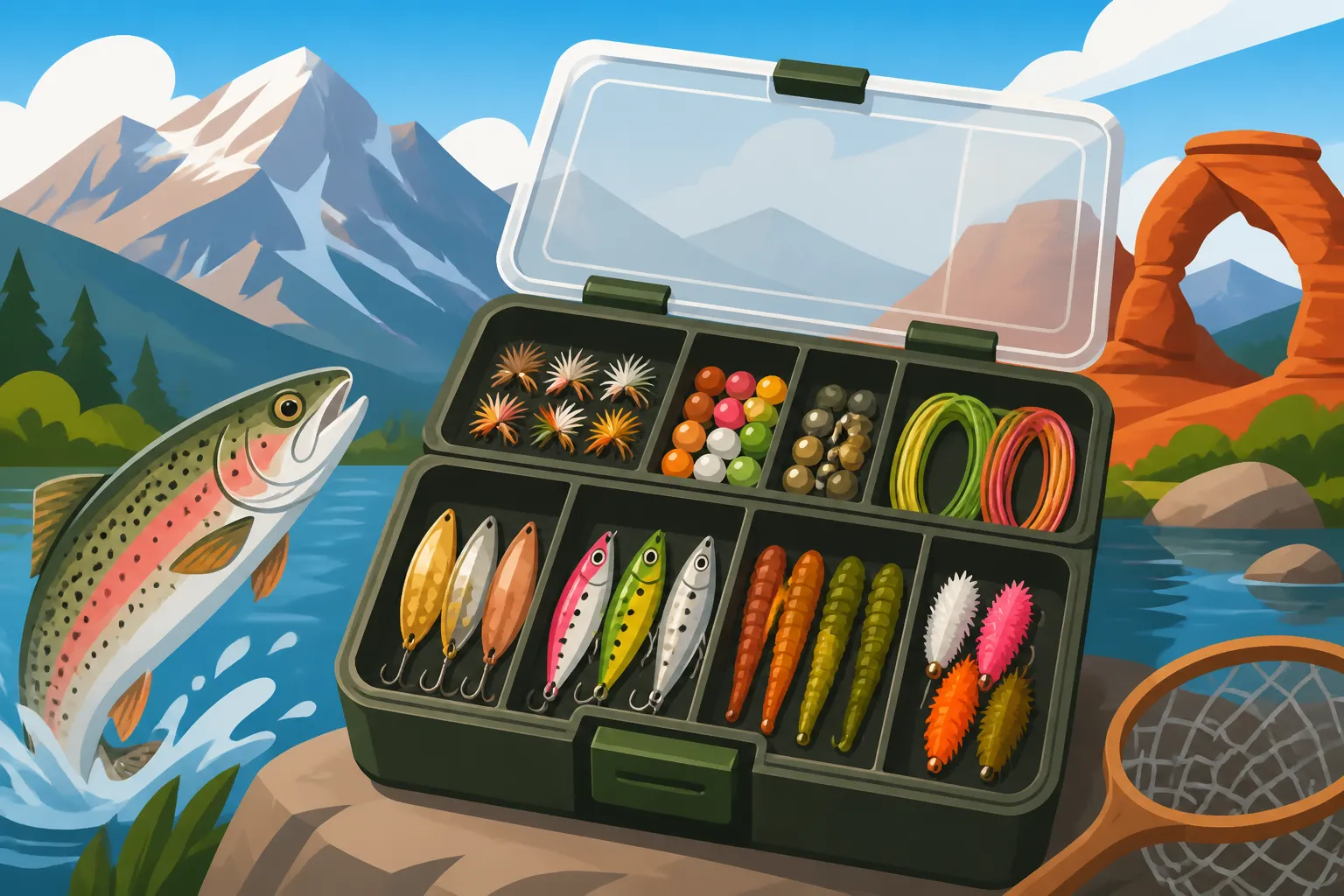
This is where true customization shines for trout anglers. Modular systems often involve a larger soft-sided bag or a robust hard-shell container that houses several smaller, standardized utility boxes. These utility boxes, commonly made by companies like Plano or Flambeau, are the workhorses of organization.
- Customization is King: Each utility box typically comes with adjustable dividers, allowing you to create compartments precisely sized for your specific lures, flies, hooks, weights, and swivels. This means you can have one box dedicated to dry flies, another for nymphs, a third for small spoons and spinners, and a fourth for all your terminal tackle. If you're heading to the Provo River Fishing Guide one day and then Strawberry Reservoir Fishing Guide the next, you can simply swap out the relevant utility boxes in your main bag, rather than emptying and repacking an entire traditional tackle box.
- Efficiency on the Water: When you need a specific item, you just grab the designated utility box, find what you need, and put it back. No more digging through layers of tackle. This system is a dream for anyone who carries a wide variety of tackle or needs to quickly change tactics. It also helps in keeping How to Keep Bait Alive in Cold Weather separate from your lures, if you're using both.
- Specialized Storage: Beyond the standard utility boxes, there are also specialized organizers:
- Fly Wallets/Boxes: Thin, compact boxes specifically designed to hold flies, often with foam inserts to keep them secure and dry.
- Bait Binder Wallets: Perfect for soft plastics, these binders keep different colors and styles separated and organized without taking up much space.
- Small Parts Organizers: Tiny compartment boxes ideal for swivels, split shot, beads, and other minuscule terminal tackle.
When you're dealing with the intricate world of Utah Fly Fishing Guide, these specialized containers become absolutely essential.
| Organizer Type | Best For | Pros | Cons | Common Materials |
|---|---|---|---|---|
| Hard-Shell Box | Boat fishing, shore fishing (stationary), heavy gear protection | Durable, crush-resistant, often waterproof, stable, cost-effective | Bulky, heavy, fixed compartments, less portable, can be loud when opening/closing | Plastic |
| Soft-Sided Bag | Wading, kayak fishing, active anglers, varied gear | Portable, comfortable to carry, customizable (with utility boxes), extra pockets | Less rigid protection, harder to clean (if fabric), can be pricier overall | Nylon, polyester |
| Modular Utility Box | Highly organized, adaptable, species-specific setup | Extreme customization, easy gear swapping, efficient access, versatile | Requires a main carrier bag, individual boxes can be lost, some aren't fully waterproof | Plastic (polypropylene) |
Key Features to Look for in a Trout Tackle Box Organizer
Choosing the best organizer isn't just about picking a type; it's about evaluating the features that matter most for your trout fishing adventures in Utah. Considering the varied conditions, from bright sun to sudden downpours, and the delicate nature of trout tackle, certain features stand out as non-negotiable.
Adjustable Compartments and Dividers
This is arguably the most crucial feature for a trout angler. Trout lures and flies come in a vast range of sizes and shapes. A box with fixed, large compartments will quickly become a jumbled mess. Look for organizers, especially utility boxes, that come with plenty of removable or adjustable dividers.
- Customization for Every Lure: You should be able to create compartments that perfectly fit your tiny spinners and spoons, your various jig heads, soft plastics, and especially your fly patterns if you're a multi-technique angler. This prevents hooks from tangling, paint from chipping, and delicate materials from being crushed. Imagine having a compartment just for your favorite Panther Martin spinners, another for Kastmaster spoons, and a third for PowerBait nuggets, all neatly separated.
- Adaptability: Your tackle collection will grow and change over time. Being able to reconfigure your compartments as needed ensures your organizer remains useful for years. Maybe you decide to focus more on How to Fish a Streamer for Brown Trout in Utah and need more space for streamers, or perhaps you're planning a trip specifically for Strawberry Reservoir Trout and Kokanee Limit and need to allocate more room for trolling gear. Adjustable dividers make this simple.
Durability and Water Resistance
Utah weather can be unpredictable. One moment it's sunny, the next a sudden thunderstorm rolls in, or you accidentally drop your box in a puddle by the riverbank. Protecting your tackle from the elements is vital.
- Robust Construction: Look for sturdy plastics that won't crack under pressure or in cold weather. Quality latches are essential to prevent accidental spills, especially if you're wading or moving around in a boat. A cheap latch can spell disaster for your meticulously organized gear. Many reputable brands like Plano offer reinforced construction built to withstand outdoor abuse.
- Water-Resistant Seals: While few tackle boxes are truly submersible, many offer O-ring or gasket seals around the lid. These seals create a barrier against rain, splashing water, and even dust. This is particularly important for protecting hooks from rust and keeping flies dry. If you fish a lot from a kayak or float tube, or simply expect to be out in all conditions, prioritizing water resistance will save your tackle and your sanity. Consider how easily a downpour can soak through a cheap bag, ruining flies or rusting hooks, making that small investment in a sealed box incredibly worthwhile.
Portability and Ease of Access
Trout fishing often involves moving around, whether it's hiking along a river, exploring different coves on a lake, or simply walking from your vehicle to a favorite fishing spot. Your tackle box organizer needs to be easy to carry and allow for quick access to your gear.
- Comfortable Carry Options: If you opt for a soft-sided bag, look for padded shoulder straps and a comfortable handle. If it's a hard-shell box, consider the handle design – is it ergonomic? Will it dig into your hand during a longer walk? A lightweight yet durable design is ideal. For instance, a small, compact tackle box with a simple handle is perfect for a quick trip to a local Best Community Ponds for Kids to Fish in Salt Lake City.
- Quick-Access Pockets and Layout: Many soft-sided bags feature external pockets for items you need frequently, like line clippers, forceps, a multi-tool, or a small first-aid kit. Hard-shell boxes might have top-access compartments for these items. The internal layout should allow you to quickly identify and retrieve what you need without having to unpack everything. For instance, being able to open a single utility box and immediately see your selection of small spoons is far more efficient than rummaging through a deep, undifferentiated bin. This ease of access becomes particularly valuable when you're trying to Adjust Technique When Fish Aren't Biting and need to experiment with different presentations.
Organizing Your Trout Tackle for Maximum Efficiency
Once you've got the perfect tackle box organizer, the real magic happens in how you arrange your gear. A thoughtful organization strategy will make every fishing trip more enjoyable and productive, allowing you to focus on the fish, not the clutter.
Categorizing Your Gear
The key to an efficient tackle box is to group similar items together. This might sound obvious, but it’s often overlooked in the rush to just stuff everything in. Think about how you use your gear and organize it logically.
- Lures by Type and Size: Dedicate separate compartments or utility boxes to different types of lures. For example, all your inline spinners in one, small spoons in another, and micro-jigs in a third. Within these categories, you might further organize by size or color. This way, when you're looking for a specific lure, you know exactly which box to grab. If you're planning on How to Troll for Kokanee in Utah, having a dedicated box for kokanee gear (small spoons, dodgers, and leaders) will save you a ton of time.
- Terminal Tackle Together: Hooks, swivels, split shot, weights, and beads should all have their own small, clearly defined compartments. This prevents them from scattering and makes it easy to find the exact size you need for your Best Fishing Rods for Utah Anglers. Consider small, multi-compartment boxes specifically for these tiny items. No more fumbling for a size 12 hook when you need it most!
- Soft Plastics and Baits: If you use soft plastics or prepared baits like PowerBait, keep them in their original packaging or in sealed plastic bags within a dedicated compartment. This prevents their scents and oils from contaminating other tackle and helps them last longer. A separate, well-ventilated pocket on a soft-sided bag can be great for a small container of How to Keep Bait Alive in Cold Weather like worms or mealworms.
- Fly Patterns: For fly anglers, a dedicated fly box (or several) is non-negotiable. Organize flies by type (dry, nymph, streamer, emerger), size, and color. This allows for quick identification when trying to How to Match the Hatch on the Provo River or experimenting with different patterns. Many fly boxes have foam inserts that securely hold flies, preventing them from tangling or getting crushed.
Seasonal and Location-Specific Organization
Utah's diverse fishing opportunities often mean you're fishing different species with different techniques throughout the year and across various waters. Your tackle organization should reflect this adaptability.
- Swap-Out Utility Boxes: This is where modular systems really shine. Instead of having one massive tackle box for everything, use separate utility boxes pre-packed for specific scenarios.
- Winter Ice Fishing: One box for Utah Ice Fishing Guide gear (jigs, spoons, ice flies, tip-up accessories).
- Spring River Fishing: Another box for river-specific flies, small spinners, and terminal tackle, perfect for How to Fish a Utah River With Spin Tackle.
- Summer Reservoir Trolling: A box dedicated to trolling lures, dodgers, and heavier weights for lake trout or kokanee.
- Community Pond Quick Trip: A small, simple box with basic bobber and bait rigs, small jigs, and a few PowerBait options – ideal for teaching a kid to fish using How to Fish With Bobber and Bait for Beginners.
This approach allows you to grab only the gear you need for that particular trip, reducing weight and clutter. When you're heading to a new water body, this system also makes it easier to reference your How to Fish a New Reservoir You've Never Been To guide and pack accordingly.
- Regular Review and Maintenance: At the end of each season, or even a few times a year, take some time to go through your tackle box. Remove any rusty hooks, empty bait containers, or tangled line scraps. Restock items that are running low. This not only keeps your tackle in top condition but also helps you remember what you have and what you might need to purchase. It’s also a great time to ensure your gear is ready for How to Store Fishing Gear Over a Utah Winter. A little bit of proactive organization goes a long way in ensuring your next trip is always a positive experience.
Taking the time to invest in and properly organize your tackle box isn't just about neatness; it's about making you a more effective, efficient, and ultimately, happier trout angler on Utah's beautiful waters.
Disclaimer
This article is for general informational purposes only and does not constitute professional advice. Laws, prices and regulations vary by location and change over time. Consult a qualified professional for guidance on your specific situation.