Utah Fishing Gear for Beginners
So, you're itching to cast a line into Utah's incredible waters, maybe you've watched a few fishing videos, or perhaps a friend has convinced you to give it a try. But when you walk into a sporting goods store, or even browse online, the sheer volume of gear can feel utterly overwhelming. Hooks, lures, rods, reels, lines of every color and strength – where on earth do you even begin? This guide is designed to cut through that noise, helping first-time anglers understand the fundamental gear needed to get started fishing successfully in Utah, without breaking the bank or feeling lost in a sea of specialized equipment.
Understanding the Basics: What Every New Angler Needs to Know
Starting a new hobby like fishing often comes with the misconception that you need all the latest, most expensive gadgets. Let me tell you, that's simply not true, especially not for your first foray into Utah's lakes and rivers. What you really need is a solid foundation of reliable, easy-to-use gear that will get you fishing quickly and effectively. Think of it as building a small, versatile toolkit that can handle most common scenarios you'll encounter as a beginner, particularly when targeting the abundant trout in our community ponds and reservoirs.
Getting the right basics means you'll spend more time actually fishing and less time untangling lines or struggling with complicated equipment. It's about finding that sweet spot between functional and user-friendly, allowing you to focus on the joy of the catch, the beauty of Utah's outdoors, and the simple pleasure of being on the water. Don't let the pros with their fancy boats and specialized gear intimidate you; everyone starts somewhere, and a well-chosen basic setup will serve you well.
The "Bare Bones" Kit: Rod, Reel, and Line
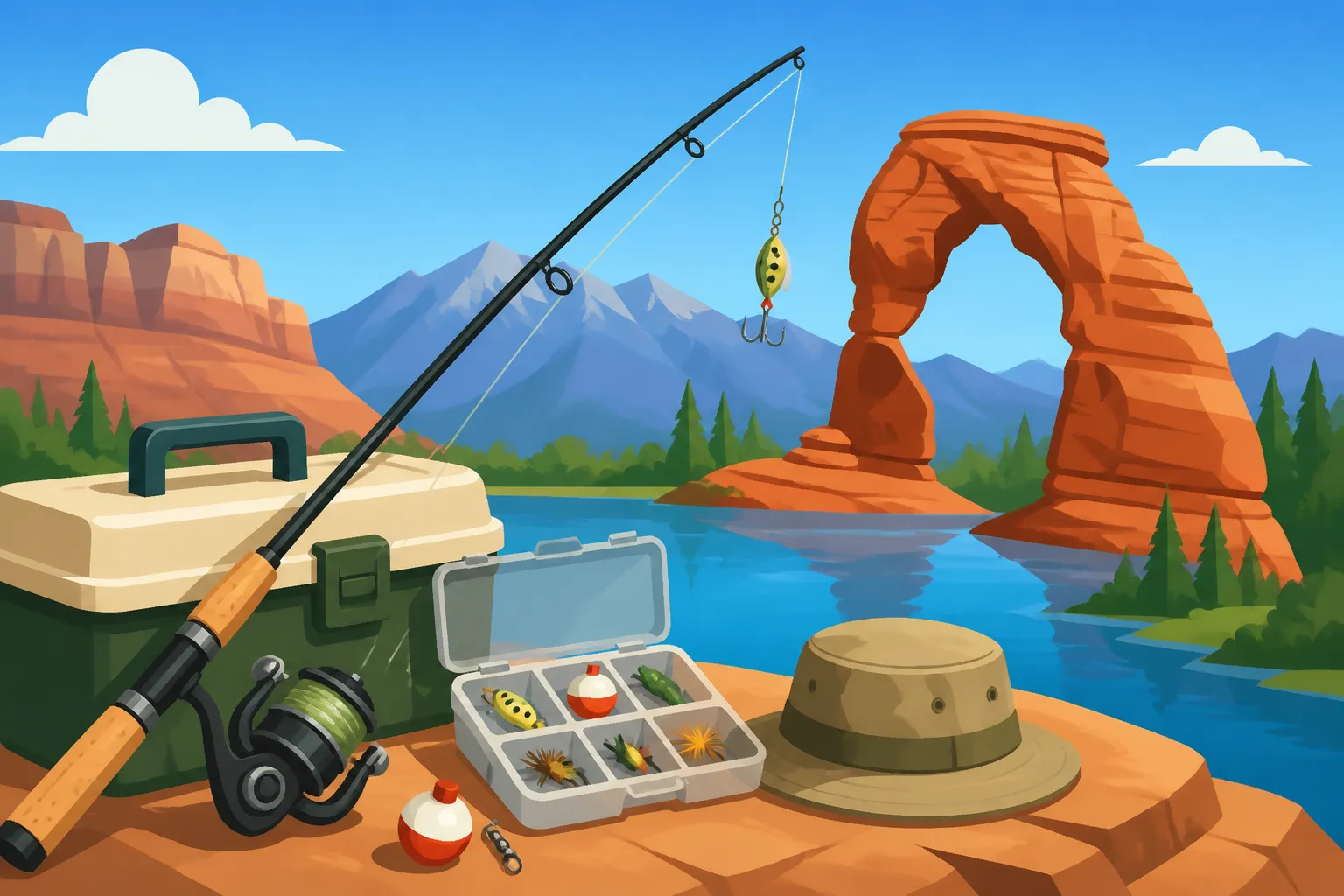
The absolute core of your fishing setup is a rod, a reel, and fishing line. These three components work in harmony to allow you to cast your bait or lure, fight a fish, and reel it in. For beginners, the best approach is often to look for a pre-assembled "spinning combo," which includes a rod and reel already matched for balance and general use. These combos are widely available and take the guesswork out of pairing components, making them incredibly user-friendly for learning the ropes.
A good beginner combo will typically feature a medium-light or medium action rod, around 6 to 7 feet long, paired with a small to medium-sized spinning reel. This combination is versatile enough for everything from panfish in urban ponds to trout in larger reservoirs. The reel will come pre-spooled with line, which is a huge convenience. While you might consider upgrading your line later, the factory-spooled line is perfectly adequate for your initial trips. Many reputable brands offer excellent entry-level combos that provide great value and performance for the price.
This basic setup allows for easy casting and retrieval, which are crucial skills to develop without the added complexity of other reel types. You'll quickly get a feel for how the rod bends, how much pressure to apply, and how to control your line, building confidence with every cast. Focus on learning these fundamentals before you ever consider moving on to more specialized gear.
Essential Terminal Tackle: Hooks, Weights, and Bobbers
Beyond your rod and reel, you'll need what anglers call "terminal tackle"—the small but critical components at the very end of your fishing line. This includes hooks, weights (or sinkers), and bobbers. These items are inexpensive individually, but together they determine how your bait is presented to the fish and how you detect a bite. Having a small assortment of each will cover most beginner fishing scenarios.
For hooks, start with a variety of small, sharp single hooks, perhaps sizes 6, 8, and 10, as these are ideal for trout and panfish. You might also want a few treble hooks if you plan on using dough baits that stick better to multiple points. Weights come in many forms, but a small pack of split-shot weights (which pinch onto your line) and a few egg sinkers (which slide freely) will be incredibly useful. Bobbers, whether the classic red-and-white round ones or slip bobbers, are essential for suspending your bait at a desired depth and visually indicating when a fish is biting. How to Tie a Basic Fishing Knot for Trout Fishing is a great resource for connecting all these pieces.
Having a selection of these basics means you're prepared for different conditions. If the fish are biting near the surface, a bobber keeps your bait suspended. If they're deeper, weights get your offering down. This simple versatility ensures you're not caught off guard, allowing you to adapt to what the fish are doing on any given day.
Choosing the Right Bait and Lures for Utah
Once you have your rod, reel, and terminal tackle, the next big question is: what do you put on your hook? For beginners in Utah, especially when targeting stocked trout in community ponds or popular reservoirs, there are a few tried-and-true options that rarely disappoint. The goal here is simplicity and effectiveness.
One of the most popular and effective baits for stocked trout is PowerBait, particularly the "PowerBait dough" or "PowerEggs." These come in a rainbow of colors and scents and are designed to float, lifting your hook off the bottom where trout often cruise. Another perennial favorite, and perhaps the most universal bait, is the humble worm. Nightcrawlers or smaller garden worms are incredibly effective for a wide range of fish species, including trout, panfish, and even catfish. They're easy to use, readily available, and fish find them irresistible. For a more active approach, small inline spinners (like Panther Martins or Mepps) or small spoons can be incredibly effective lures for trout and other predatory fish. They mimic small baitfish and trigger an aggressive bite. How to Fish PowerBait for Stocked Trout offers more specific tips on using this popular choice.
It’s a good idea to start with a couple of these options. Maybe pick up some PowerBait and a container of worms, along with one or two small spinners. This gives you versatility without overwhelming you. Over time, as you gain experience, you'll discover your own favorites and what works best in different waters.
Rods and Reels: Your Primary Tools for Success
The rod and reel are truly extensions of yourself when you're fishing. A good setup feels balanced, responsive, and allows you to accurately present your bait. While the market is flooded with high-tech options, a beginner's focus should be on reliability, ease of use, and versatility. You want something that can handle a variety of situations without requiring a degree in mechanical engineering to operate.
Many new anglers try to go straight for what they perceive as "pro" gear, only to find it too complicated or specialized for their initial needs. Resist that urge! Start with something simple and effective. You can always upgrade later, once you truly understand what you like and what kind of fishing you want to pursue more seriously. For now, the goal is to successfully get fish from the water to your net, and the right entry-level gear can do that wonderfully.
Spinning Combos: The Beginner's Best Friend
As mentioned, a spinning combo is hands-down the best choice for a beginning angler. These setups consist of a spinning rod and a spinning reel, typically sold together. The spinning reel sits under the rod and has an open-faced spool, making it incredibly easy to cast by simply flipping a bail and letting the line fly. Retrieving is just as straightforward with a simple handle turn. This simplicity is invaluable when you're first learning the motion of casting and how to manage your line.
Most spinning combos designed for beginners are affordable and durable, making them perfect for those inevitable first few bumps and drops. Look for a combo in the medium-light to medium power range, generally between 6 and 7 feet in length. This size offers a good balance of casting distance, the ability to handle a decent-sized fish, and ease of maneuverability. Brands like Ugly Stik, Shakespeare, or Zebco often have excellent, budget-friendly options that you can find at Bass Pro Shops or even on Amazon. Best Rod and Reel Combo for Beginners goes into more detail about what to look for.
The beauty of a spinning combo is its versatility. You can cast lightweight baits, heavier lures, and it's forgiving if your casting technique isn't perfect yet. It's the type of setup I recommend to anyone, young or old, who wants to experience the thrill of fishing without a steep learning curve.
Understanding Rod Action and Power for Utah Waters
When you're looking at fishing rods, you'll often hear terms like "action" and "power." These describe how a rod bends and how much force it takes to bend it. While they might sound intimidating, understanding the basics can help you choose the right tool for the job. "Power" refers to the rod's strength or backbone (e.g., ultralight, light, medium, heavy), indicating what weight of line and lure it's designed to handle. "Action" refers to where the rod bends (e.g., slow, moderate, fast, extra-fast), which affects how quickly it transfers energy and how sensitive it is.
For general beginner fishing in Utah, a rod with medium-light to medium power and a moderate to fast action is ideal.
- Medium-light or Medium Power means the rod has enough backbone to cast a variety of baits (from small weights to medium lures) and handle most common fish species in Utah like trout, bass, and panfish without feeling overpowered or underpowered.
- Moderate to Fast Action means the rod bends primarily in the top third or half of its length. This provides a good balance of casting distance, sensitivity to feel light bites, and enough flexibility to absorb the shock of a fighting fish, reducing the chances of pulling the hook.
A moderate-fast action rod is a fantastic all-rounder. It allows for decent casting distances, gives you good feedback when a fish nibbles, and provides enough backbone to set the hook effectively. You'll find that many beginner combos are designed with this versatility in mind, which is exactly what you need to cover diverse fishing situations across Utah. Best Fishing Rod Size for Utah Trout also helps narrow down options for specific species.
Selecting the Right Fishing Line
The fishing line is the direct connection between you and the fish, so choosing the right type and strength is more important than you might think. For beginners, the primary options are monofilament and fluorocarbon, with braided line being a more advanced choice.
- Monofilament (Mono) Line: This is the most common and often the best choice for beginners. It's affordable, easy to tie knots with, and has a good amount of stretch, which acts as a shock absorber when a fish bites or pulls hard. Its stretch also makes it more forgiving if your drag isn't set perfectly. Mono is a great all-around line for most freshwater applications in Utah. For stocked trout and panfish, a 4 to 6-pound test monofilament line is generally perfect.
- Fluorocarbon Line: While more expensive, fluorocarbon is nearly invisible underwater, which can be a huge advantage in clear waters. It has less stretch than mono and is more sensitive, allowing you to feel subtle bites. However, it can be a bit stiffer and harder to tie knots with, making it less ideal for absolute beginners.
- Braided Line: This line has almost no stretch, offers incredible strength for its diameter, and casts very far. However, it's highly visible, and its lack of stretch means every head shake from a fish is directly transferred to your rod, requiring more skill to prevent hooks from pulling out. It's generally not recommended for beginners.
Start with a good quality monofilament line, pre-spooled on your combo, or buy a small spool of 4-6 pound test line to re-spool if needed. It's forgiving, easy to manage, and perfectly capable of helping you catch plenty of fish. You'll find plenty of options at any outdoor retailer or on Amazon. Best Pound Test Line for Utah Stocked Trout offers more guidance on line strength.
Terminal Tackle: The Small Details That Make a Big Difference
Terminal tackle might be small, but it's where your creativity and understanding of fish behavior really come into play. These are the components that are closest to the fish, influencing how your bait moves, how easily a fish can take it, and ultimately, whether you land your catch. Neglecting these small pieces can lead to frustration, while choosing them wisely can dramatically increase your success.
I've seen so many beginners overlook these crucial elements, only to wonder why they're not getting bites. It's often because their hook is too big, their weight is too heavy, or their bobber isn't doing its job. Paying attention to these details will quickly set you apart from other novice anglers.
Hooks: Sizes, Styles, and When to Use Them
Hooks are arguably the most important piece of terminal tackle. A dull, rusty, or improperly sized hook can mean the difference between landing a fish and watching it swim away with your bait. For beginners targeting smaller fish like trout and panfish in Utah, you'll want to focus on a few key types and sizes.
- J-Hooks (or Bait Holder Hooks): These are the classic curved hooks you probably picture. They often have small barbs on the shank to help hold bait like worms in place. Sizes 6, 8, and 10 are excellent starting points for most trout and panfish. A smaller number means a larger hook (e.g., a size 6 is larger than a size 10).
- Treble Hooks: These hooks have three points and are often used with dough baits (like PowerBait) because the multiple points help the bait adhere better. They are also common on many lures. A size 12 or 14 treble hook is good for PowerBait.
- Circle Hooks: While less common for beginners, circle hooks are designed to hook fish in the corner of the mouth, making them ideal for catch-and-release fishing as they minimize harm. They require a different hook-setting technique (just reel tight, don't yank).
Always ensure your hooks are sharp. You can check this by lightly dragging the point across your thumbnail – if it digs in, it's sharp; if it slides, it's dull and needs sharpening or replacing. Having a small variety allows you to adapt. If you're using a tiny piece of worm, a smaller hook is better. If you're molding a big ball of PowerBait, a small treble hook might be more effective. What Size Hook Should You Use for Utah Stocked Trout? can guide you further.
Sinkers and Weights: Getting Your Bait Down
Weights, or sinkers, serve a few crucial purposes: they help you cast further, get your bait down to the desired depth, and keep your bait in place in currents or wind. Just like hooks, having a small assortment will cover most beginner needs.
- Split Shot Weights: These are small, round lead (or lead-free) weights with a slit that allows you to pinch them directly onto your fishing line. They are incredibly versatile because you can easily add or remove them to adjust your bait's depth or casting weight. A small container with assorted sizes (from BB to 3/0) is a must-have for any beginner.
- Egg Sinkers: These are oval-shaped weights with a hole through the center, allowing them to slide freely on your line. They are often used when you want your bait to stay on the bottom but allow a biting fish to pull line without immediately feeling the weight of the sinker, making for a more natural presentation.
- Bullet Weights: Primarily used in bass fishing with soft plastic lures, these cone-shaped weights also slide on the line and help lures navigate through cover. You likely won't need these for initial trout or panfish endeavors, but they're good to know about.
When using weights, start light and add more only if needed. Too much weight can make your presentation unnatural and turn fish off. The goal is just enough weight to get your bait where the fish are holding.
Bobbers and Strike Indicators: Seeing the Bite
How do you know when a fish is interested in your bait? That's where bobbers and strike indicators come in! These simple tools provide a visual cue when a fish takes your bait, allowing you to react and set the hook.
- Traditional Clip-On Bobbers: These are the iconic red-and-white plastic spheres that clip directly onto your line. They're excellent for beginners because they're easy to attach, highly visible, and clearly show any movement when a fish bites. They keep your bait suspended at a fixed depth, which is great for shallow water or when fish are feeding near the surface.
- Slip Bobbers: These bobbers have a small hole through the center and slide freely on your line. You set your desired depth using a small knot or bobber stop above the bobber. This setup allows you to fish much deeper water than a clip-on bobber, as the bobber can slide down to your hook when casting and then float up to the stop once in the water. They offer a more subtle presentation and are favored by many experienced anglers, but require a little more setup. How to Set Up a Slip Bobber Rig provides a step-by-step guide.
For your first few trips, a few clip-on bobbers will be perfect. They are simple, effective, and will help you learn to identify a bite. As you gain confidence, you might explore slip bobbers for increased versatility. Watching a bobber disappear under the surface is one of the most exciting parts of fishing for many beginners!
Baits and Lures: What Utah Fish Are Biting On
The world of baits and lures is vast and exciting, but for a beginner, it's best to stick to proven options that consistently catch fish in Utah's diverse waters. You don't need a tackle box full of every newfangled lure; a few reliable choices will give you plenty of action. The key is understanding what works well for the species you're likely to encounter first, predominantly trout and panfish.
Remember, fish are often opportunistic eaters. If something looks, smells, or moves like food, they're likely to investigate. Simplicity and natural presentation are often more important than complexity when you're starting out.
PowerBait and Dough Baits: Stocked Trout Favorites
If you're planning to fish any of Utah's community ponds, state park reservoirs, or other waters regularly stocked by the Division of Wildlife Resources (DWR), PowerBait and other dough baits are practically a cheat code for trout. These synthetic baits are designed to attract trout with their vibrant colors, strong scents, and buoyant properties.
- PowerBait Dough: This comes in a small jar, often in neon colors like chartreuse, orange, or rainbow. You pinch off a small piece, roll it into a ball, and mold it around a small treble hook or a single J-hook. Because it floats, it lifts your hook off the bottom, presenting your bait right at the trout's eye level. Pair it with a sinker to get it down to depth, and use a bobber if you want to suspend it. What Color PowerBait Works Best in Utah Reservoirs? can help you pick some popular hues.
- PowerEggs/Worms: These are small, pre-formed egg- or worm-shaped baits that are also buoyant and scented. They're often easier to put on a hook than dough bait for beginners.
The beauty of PowerBait is its consistent effectiveness for stocked trout, which are often accustomed to pellet food. It requires minimal technique – just cast it out, let it sit, and watch your bobber or rod tip. Keep a variety of colors on hand, as fish can sometimes show a preference for one over another on any given day.
Worms and Live Baits: The Universal Appeal
There's a reason worms have been used as bait for centuries: they work! Live worms, such as nightcrawlers or smaller garden worms, are arguably the most effective and versatile natural bait you can use. Nearly every freshwater fish species in Utah will take a worm, making them an excellent choice for beginners who want to catch a variety of fish.
- Nightcrawlers: These large worms are great for bigger trout, bass, and especially catfish. You can hook them once through the head or thread them onto the hook to keep them on securely.
- Red Wigglers/Garden Worms: Smaller worms are perfect for panfish like bluegill and perch, as well as smaller trout. They're easy to find in your garden or at bait shops.
The key to fishing with worms is often to present them naturally. A single worm on a small hook, perhaps with a split shot or two a foot or so above it, drifting near the bottom or suspended under a bobber, is a deadly setup. They're easy to acquire, relatively inexpensive, and require no special technique beyond getting them on the hook. It's truly the universal bait for a reason!
Simple Lures for All-Around Success
While bait fishing is passive, lures require a bit more active engagement, but they can be incredibly rewarding. For beginners, small inline spinners and spoons are fantastic choices because they are easy to cast and retrieve, and their action in the water is irresistible to many predatory fish.
- Inline Spinners: Lures like Panther Martin, Mepps, or Rooster Tail spinners feature a blade that rotates around a central shaft when retrieved, creating flash and vibration that mimic a struggling baitfish or insect. They come in various colors and sizes, but small ones (1/8 oz to 1/4 oz) with silver, gold, or brass blades, often adorned with a colored skirt, are highly effective for trout and small bass. Simply cast them out and reel them in at a steady pace.
- Spoons: Spoons are metal lures, often curved, that wobble and flash as they're retrieved, imitating injured baitfish. Small Kastmaster or Daredevil spoons (1/8 oz to 1/4 oz) in silver, gold, or with red and white patterns are classic trout catchers. They can be cast and retrieved steadily, or you can "jig" them by lifting and dropping your rod tip.
These lures are a great way to introduce yourself to active fishing. They teach you about retrieve speed, casting accuracy, and how to "read" the water for potential fish-holding structure. Don't feel you need to buy dozens; a couple of each in different colors and sizes will give you plenty of options. Lures Every Beginner's Tackle Box Needs has more suggestions.
Essential Accessories: Beyond the Rod and Reel
While your rod, reel, and tackle are the core, a few essential accessories can make your fishing trip much more comfortable, safer, and ultimately more successful. These aren't just "nice-to-haves"; many of them serve crucial practical functions, especially for a beginner who is still figuring out the ropes. Think about these as the supporting cast that makes the main act shine.
Having these basics organized and accessible will allow you to react quickly to changing conditions, handle fish safely, and enjoy your time outdoors without unnecessary distractions.
Landing Nets and Pliers: Handling Your Catch Safely
Once you hook a fish, the job isn't over! Safely landing and unhooking your catch is a critical skill, and a few tools make it much easier on both you and the fish.
- Landing Net: A small, rubberized landing net is invaluable for bringing fish aboard, especially for beginners. It reduces the chance of losing a fish at the very last moment, prevents fish from thrashing on the bank or boat floor, and minimizes stress on the fish. Look for nets with knotless, rubberized mesh, as this is gentler on a fish's delicate slime coat and fins, and less likely to tangle hooks. A telescoping handle is a bonus for reaching out from shore or a dock.
- Needle-Nose Pliers or Hemostats: These tools are absolutely essential for safely removing hooks. Fish have sharp teeth and often swallow hooks deeply. Pliers allow you to grasp the hook firmly and twist it out without putting your fingers at risk or harming the fish unnecessarily. Hemostats (small locking forceps) are particularly useful for smaller hooks and delicate work. Keep them easily accessible in your tackle box or clipped to your belt.
Using these tools properly shows respect for the fish and ensures a smoother, safer experience for you. Even if you plan to release fish, a net minimizes handling time, and pliers ensure a quick, clean unhooking.
The Humble Tackle Box: Organization is Key
You might only start with a few hooks, weights, and bobbers, but these small items have a knack for getting lost or tangled. A tackle box (or even a small utility box with compartments) is crucial for keeping your gear organized, protected, and easily accessible.
- Simple Compartmented Box: For beginners, a small, single-tray or multi-compartment plastic tackle box is perfect. It allows you to separate different hook sizes, weights, and lures, preventing them from becoming a jumbled mess. Clear lids are a bonus, letting you see what's inside without opening every compartment.
- Soft-Sided Bags with Utility Boxes: As you accumulate more gear, a soft-sided tackle bag filled with smaller, clear plastic utility boxes (like those from Plano or Flambeau) offers even more versatility. Each box can be dedicated to a specific type of tackle (e.g., one for hooks, one for weights, one for lures), making it incredibly efficient to find what you need.
An organized tackle box saves you time and frustration on the water. No one wants to spend precious fishing minutes digging through a mess of tangled line and hooks. Invest in something simple and efficient from the start.
Sun Protection and Comfort: Staying Safe Outdoors
Fishing often means spending hours outdoors, exposed to the elements. Protecting yourself from the sun and staying comfortable are just as important as having the right fishing gear. Utah's sun can be intense, especially at higher elevations or on reflective water.
- Sunscreen and Hat: Apply broad-spectrum sunscreen liberally, even on cloudy days, and wear a wide-brimmed hat or a baseball cap to protect your face, ears, and neck.
- Polarized Sunglasses: These are a game-changer. Polarized lenses reduce glare off the water, allowing you to see deeper into the water, spot fish, and avoid submerged obstacles. They also protect your eyes from harmful UV rays and stray hooks. I always recommend these as one of the first non-fishing gear purchases.
- Comfortable Clothing: Dress in layers, as weather conditions in Utah can change rapidly. Moisture-wicking fabrics are great for warmer days, and a waterproof jacket is a wise choice for unexpected showers. Comfortable, closed-toe shoes are also important for navigating uneven terrain around shorelines.
- Water and Snacks: Always bring plenty of water to stay hydrated, and pack some non-perishable snacks to keep your energy up.
Prioritizing your comfort and safety ensures that your fishing experience is enjoyable, not just successful. A miserable angler is unlikely to become a passionate one. Remember, fishing is about connecting with nature, and being prepared for it is part of the fun. First Aid Items for a Utah Boat's Kit offers more safety considerations.
Safety and Regulations: Protecting Yourself and Utah's Waters
Before you even think about casting your first line in Utah, it's absolutely crucial to understand the rules and regulations that govern fishing in our beautiful state. These aren't just suggestions; they are laws designed to protect our fish populations, maintain healthy ecosystems, and ensure a safe and enjoyable experience for everyone. Ignoring them can lead to hefty fines and a ruined day.
It's easy to get caught up in the excitement of new gear and the thought of catching fish, but taking a few minutes to learn the basics of licenses, safety, and invasive species prevention is paramount. As a responsible angler, you're not just enjoying the resource; you're also a steward of it.
Getting Your Utah Fishing License
The very first piece of "gear" you need, even before a rod, is a valid Utah fishing license. Nearly everyone over the age of 12 needs one to fish in Utah's public waters. There are different licenses for residents and non-residents, and prices vary based on age and duration (annual, 3-day, 7-day, etc.). You might even qualify for discounts.
Purchasing a license is easy: you can do it online through the Utah Division of Wildlife Resources (DWR) website, at a DWR office, or at many sporting goods stores and retailers throughout the state, including Bass Pro Shops. Make sure to carry your license with you while fishing, either as a physical copy or a digital version on your phone. Fishing without a license is a serious offense and can result in significant fines. Utah Fishing License Guide is an excellent starting point for understanding all the ins and outs, and How to Buy a Utah Fishing License walks you through the purchase process.
Think of your license as your ticket to enjoying Utah's incredible fisheries. The fees collected from licenses directly fund conservation efforts, fish stocking programs, and wildlife management, ensuring that these opportunities remain available for future generations.
Basic Water Safety for Anglers
Even if you're just fishing from shore, understanding basic water safety is important. Accidents can happen quickly, and being prepared can make all the difference.
- Let Someone Know: Always tell someone where you're going and when you expect to return, especially if you're fishing alone or in a remote area.
- Know Your Limits: Don't wade into water that's too deep or too swift for your comfort level. Be aware of slippery rocks, uneven banks, and sudden drop-offs.
- Weather Awareness: Check the weather forecast before you go and be prepared for sudden changes. Utah weather can be unpredictable, with thunderstorms, strong winds, and temperature drops occurring quickly.
- Personal Flotation Device (PFD): If you're fishing from a boat, float tube, or kayak, wearing a PFD is not just smart, it's often legally required. Even from shore, if you're in a situation where falling in could be dangerous (e.g., cold water, fast current), consider wearing one.
- First Aid Kit: A small, basic first aid kit is a good idea for any outdoor excursion. You never know when you might get a minor cut from a hook or a scrape from a rock.
Fishing is a wonderfully relaxing activity, but it takes place in nature, which always demands respect and preparedness. A little common sense and a few safety precautions go a long way.
Understanding Aquatic Invasive Species (AIS) Rules
Utah takes aquatic invasive species (AIS) like quagga and zebra mussels very seriously. These tiny invaders can devastate native ecosystems, clog waterways, and impact recreation. As an angler, you play a critical role in preventing their spread.
The golden rule for preventing AIS is Clean, Drain, Dry:
- Clean: Inspect all your gear (boats, waders, buckets, even fishing lines) and remove any visible mud, plants, or debris after leaving the water.
- Drain: Drain all water from your boat, livewell, bilge, and engine.
- Dry: Allow all equipment to dry completely before launching into another water body. A thorough drying in the sun is often the best defense.
If you're fishing at waters known to have AIS (like Lake Powell), there are often specific decontamination requirements for boats and sometimes even gear. Pay attention to signage at boat ramps and DWR warnings. Spreading AIS isn't just irresponsible; it carries significant penalties. Utah Aquatic Invasive Species Rules for Anglers provides detailed information on what's expected of you. By following these simple steps, you're doing your part to protect Utah's precious fisheries for everyone.
Planning Your First Utah Fishing Trip: Putting It All Together
Okay, you've got your gear, you understand the regulations, and you're ready to hit the water. But where do you go? How do you actually get started? Your first fishing trip doesn't have to be an epic expedition. In fact, for beginners, a simpler, more accessible location is often the best choice. The goal is to build confidence, learn the basic motions, and hopefully, catch a few fish!
This is where all your preparation comes together. Don't be afraid to start small. A successful first trip isn't about landing a trophy; it's about enjoying the process and feeling that first tug on your line.
Choosing a Beginner-Friendly Fishing Spot
Utah is blessed with an incredible variety of fishing opportunities, but for your first few trips, you'll want to choose waters known for being accessible and having a good chance of catching fish.
- Community Ponds and Urban Fisheries: These are fantastic starting points. Found in or near many Utah cities, they are regularly stocked with trout by the DWR, have easy shore access, and often feature amenities like restrooms and picnic areas. They're perfect for a quick outing with minimal fuss. Places like Highland Glen Pond, Decker Lake, or Farmington Pond are prime examples. Best Community Ponds for Kids to Fish in Salt Lake City is a great resource.
- State Park Reservoirs: Many of Utah's state parks feature reservoirs that are well-stocked and offer good shore fishing or easy boat access (if you have one). Popular options include Deer Creek Reservoir, Jordanelle Reservoir, or East Canyon Reservoir. These often have good populations of trout, perch, and sometimes bass.
- Accessible River Sections: Some rivers, like certain stretches of the Provo River (especially the lower sections) or the Weber River, have designated public access points that are relatively easy to fish from shore with spin gear. However, rivers can be more challenging due to currents and snags, so perhaps save these for a slightly later stage.
The key is to pick a spot where you can easily cast, where you won't get easily snagged, and where there's a good chance of a bite. Don't feel you need to drive hours into the wilderness for your first attempt.
Packing Smart for a Day on the Water
Once you've chosen your spot, it's time to pack your bag. Overpacking can be just as problematic as underpacking. Focus on essentials and ease of transport.
Here’s a simple checklist for a beginner's day trip:
| Item | Description | Why it's essential |
|---|---|---|
| Fishing License | Your valid Utah fishing license | Required by law to fish in public waters. |
| Rod and Reel Combo | Assembled and ready to fish | Your primary tool for casting and reeling. |
| Tackle Box | Organized with hooks, weights, bobbers, and a few lures/baits | Keeps small but critical gear protected and accessible. |
| Baits/Lures | PowerBait, worms, a couple of spinners/spoons | What the fish will bite on! |
| Pliers/Hemostats | For hook removal | Safely unhook fish without injuring yourself or the fish. |
| Landing Net | Small, rubberized mesh | Aids in safely landing fish, especially active ones. |
| Small Cooler | With ice or ice packs | To keep your water/snacks cold, and any kept fish fresh. |
| Water Bottle | Reusable or disposable | Stay hydrated! Utah's sun can be intense. |
| Snacks | Easy-to-eat, non-perishable | Keeps energy up during long stretches of fishing. |
| Sunscreen | High SPF | Protects skin from harmful UV rays. |
| Hat and Sunglasses | Wide-brimmed hat, polarized sunglasses | Sun protection and glare reduction for better visibility. |
| Comfortable Shoes | Closed-toe, suitable for uneven terrain | For safety and comfort around the shoreline. |
| Small Towel/Rag | To wipe hands, clean fish, or dry gear | Practical for keeping things tidy. |
| Trash Bag | Small plastic bag | Pack out everything you pack in – Leave No Trace! |
This list ensures you have everything you need without hauling unnecessary weight. Focus on efficiency and preparedness.
Learning the Ropes: Practice Makes Perfect
Your first few casts might not go where you want them, your knots might be a little messy, and you might not catch a fish every time. And that's perfectly okay! Fishing is a skill, and like any skill, it takes practice.
- Practice Casting: Before your first trip, or even at home in your yard (without a hook!), practice casting. Get a feel for the weight of your line and lure, the timing of your rod swing, and how to release the line for accuracy. How to Cast a Spinning Rod for the First Time provides simple instructions.
- Learn a Few Basic Knots: Master one or two reliable knots, like the improved clinch knot or the Palomar knot, for tying on hooks and lures. Practice them at home until they become second nature.
- Observe and Adapt: Once you're on the water, pay attention. Are other anglers catching fish? What are they using? How are they fishing? Watch for signs of fish activity. If what you're doing isn't working, don't be afraid to change your bait, your depth, or even move to a different spot.
- Be Patient and Enjoy: Fishing is as much about the experience as it is about catching fish. Embrace the quiet, enjoy the scenery, and celebrate every small victory, whether it's a perfectly executed cast or a nibble on your line.
Don't let initial challenges discourage you. Every experienced angler started exactly where you are. The joy of fishing in Utah is immense, and with a little patience, the right basic gear, and a willingness to learn, you'll be creating your own fish stories in no time. Best Fishing Spots for Beginners in Utah can help you find a great place to start your journey.
Disclaimer
This article is for general informational purposes only and does not constitute professional advice. Laws, prices and regulations vary by location and change over time. Consult a qualified professional for guidance on your specific situation.